
Sora AI Video Generator: 2026 Ultimate Guide & Review
The landscape of digital content creation has shifted dramatically over the last few years, and no tool sparked more conversation than the Sora AI video generator. Originally unveiled as a revolutionary leap in text-to-video technology, Sora promised to bridge the gap between imagination and cinematic reality. However, as we navigate the mid-point of 2026, the story of Sora has taken an unexpected turn. From its technical milestones in early February to the shocking announcements regarding its discontinuation, understanding the trajectory of this tool is essential for any creator or tech enthusiast looking to master the current state of generative media.
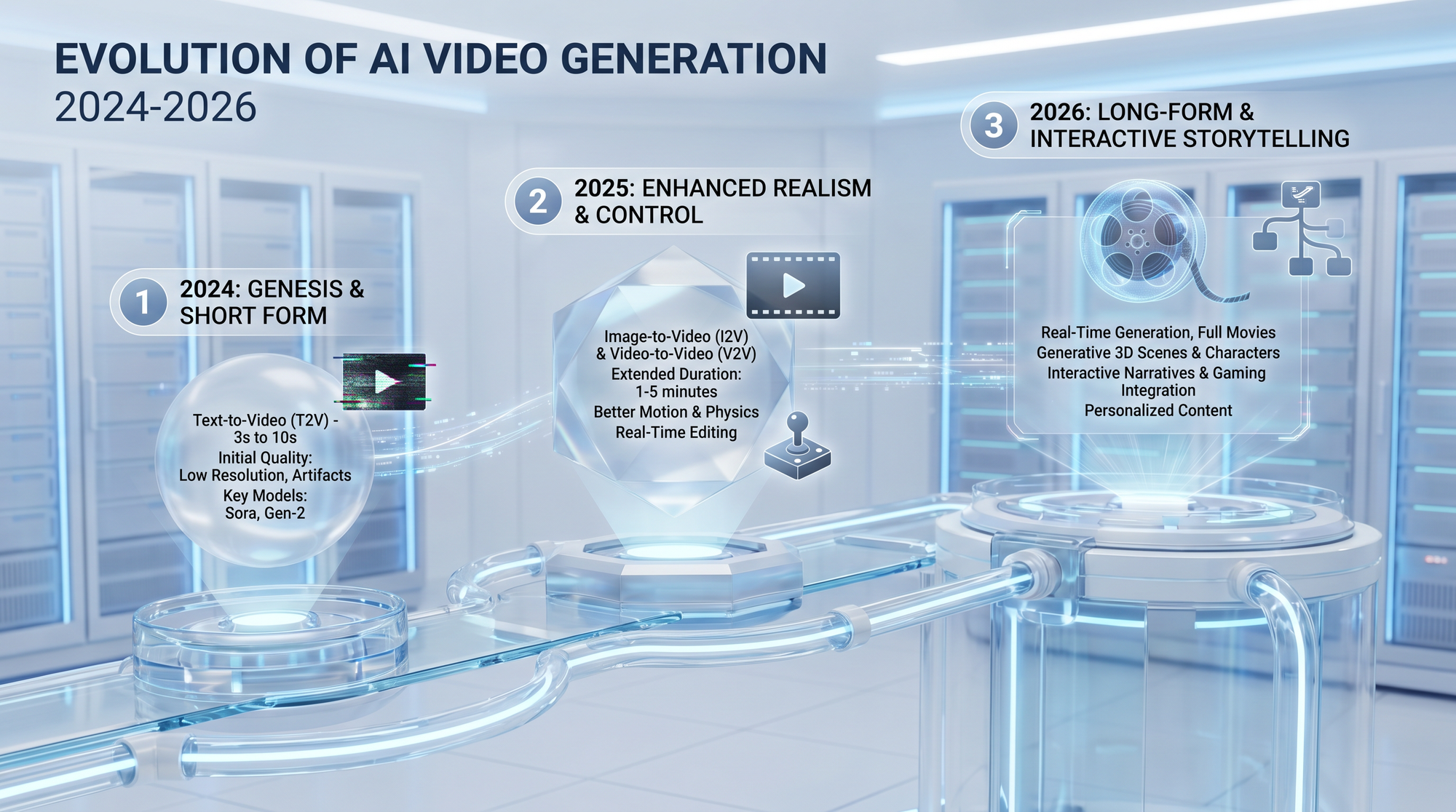
The Sora AI video generator is a generative artificial intelligence model developed by OpenAI designed to create high-definition, realistic videos from text prompts. While it set the industry standard for temporal consistency and visual fidelity, OpenAI officially announced the shutdown of the Sora project in early 2024, citing strategic shifts and complex copyright challenges.
- ✓ Sora was officially discontinued by OpenAI in late March 2026, marking the end of its public development cycle.
- ✓ The model's default use of copyrighted content became a primary point of legal and ethical contention in the industry.
- ✓ Despite its shutdown, Sora's underlying architecture influenced a new generation of video synthesis tools.
- ✓ Market shifts in 2026 have led creators to explore more sustainable, rights-cleared AI video alternatives.
The Evolution and Impact of the Sora AI Video Generator
When OpenAI first introduced Sora in February 2026, it was hailed as a "world simulator." The model demonstrated an uncanny ability to understand physical properties, such as gravity and fluid dynamics, which previous video models struggled to replicate. By utilizing a transformer architecture—similar to the GPT series—Sora could process video data as patches, allowing for greater scalability and detail in output. Creators were suddenly able to generate 60-second clips that looked like they were pulled from a big-budget Hollywood production, all through simple text descriptions.
According to reports from OpenAI (February 15, 2026), the initial goal of Sora was to teach AI to understand and simulate the physical world in motion. This wasn't just about making pretty pictures; it was about spatial reasoning. The impact on the marketing and film industries was immediate. Production houses began experimenting with Sora for rapid prototyping and storyboarding, significantly reducing the time required for pre-visualization. However, this rapid adoption also brought to light the immense computational costs and the ethical implications of such powerful technology.
Technical Milestones in Video Synthesis
The Sora AI video generator utilized a diffusion model that starts with static noise and gradually transforms it into a clear video. What set it apart in 2026 was its ability to maintain character consistency across different camera angles. In earlier versions of AI video, a character's face might shift or morph during a pan; Sora largely solved this by maintaining a deep internal map of the scene's geometry. This technical prowess made it the gold standard for nearly two months before the corporate landscape shifted.
The Controversy: Copyright and Training Data
One of the most significant hurdles for the Sora AI video generator involved the data used to train the model. In April 2026, reports surfaced indicating that Sora would use copyrighted content by default in its generation processes. This revelation sparked a massive backlash from the creative community, including guilds and digital artists who argued that their intellectual property was being ingested without compensation or consent. According to MSN (April 26, 2026), this move to utilize copyrighted material by default was a strategic choice by OpenAI to maintain the model's high visual quality, even at the risk of legal friction.
The legal pressure mounted quickly. Unlike text-based models where "fair use" arguments had some standing, the direct replication of visual styles and cinematic sequences felt much more predatory to many industry observers. This tension created a divide: on one side, tech optimists who saw it as the natural evolution of art; on the other, professional creators who saw it as an existential threat to their livelihoods. The debate over Sora became a microcosm of the larger 2026 struggle between rapid AI advancement and the protection of human intellectual property.
| Feature/Aspect | Sora AI Video Generator (OpenAI) | 2026 Industry Standards |
|---|---|---|
| Max Video Length | 60 Seconds | 120+ Seconds |
| Training Data Ethics | Copyrighted Content by Default | Licensed/Opt-in Only |
| Physical Simulation | High (Advanced Physics) | Moderate to High |
| Availability | Discontinued (March 2026) | Active/Subscription Based |
Why OpenAI Decided to Shutdown Sora
The tech world was stunned on March 24, 2026, when The New York Times reported that OpenAI was shutting down Sora. For a product that had garnered so much hype and represented the pinnacle of generative video, the sudden closure seemed counterintuitive. However, internal reports suggested that the combination of astronomical server costs, looming legal battles over copyrighted training data, and a strategic pivot toward "Agentic AI" led to the decision. According to The Hill (March 25, 2026), OpenAI's decision to shut down the video generator was a calculated move to reallocate resources toward more stable and legally compliant projects.
Another factor in the demise of the Sora AI video generator was the "black box" nature of its outputs. As regulators in the EU and the US began demanding more transparency in AI training sets, the default-copyright approach of Sora became a liability that the company was no longer willing to carry. Yahoo Finance noted on April 2, 2026, that many observers guessed the "why" wrong—it wasn't just about the technology failing, but rather about the unsustainable legal and social ecosystem surrounding it. The cost of defending the model in court potentially outweighed the projected revenue from its subscription tiers.
The Shift to Agentic AI Systems
By mid-2026, the focus of major AI labs shifted from pure content generation to "agents" that can perform tasks. While Sora could create a video of a cat cooking, the industry began demanding AI that could actually manage a YouTube channel or edit a full-length film autonomously. The Sora AI video generator was a brilliant creative tool, but it lacked the interactive utility that 2026 investors were looking for. Consequently, the "Sora experiment" is now viewed as a transitional phase in the history of artificial intelligence.
The Post-Sora Landscape: What Creators Use Now
With the vacuum left by the Sora AI video generator, other platforms have rapidly gained ground. Bloomberg reported on April 1, 2026, that several AI video apps are now thriving by offering what Sora didn't: transparent, ethical training data and lower barrier-to-entry pricing. These new competitors have focused on "Small Language Models" for video that can run on local hardware, reducing the reliance on massive cloud clusters that ultimately made Sora's operation too expensive to maintain.
Creators in 2026 are now prioritizing tools that offer "Creative Control Layers." Unlike the original Sora, which was often criticized for being a "one-shot" generator where you had little control over the final output, current tools allow for frame-by-frame editing and integrated 3D environment exports. This allows filmmakers to use AI as a component of their workflow rather than a replacement for the entire process. The death of Sora didn't kill AI video; it simply forced the industry to mature and adopt more sustainable practices.
Emerging Trends in 2026 Video Tech
One of the biggest trends following the Sora era is the rise of "Hyper-Niche Models." Instead of one giant model that tries to generate everything, we are seeing specialized AI generators for architecture, fashion, and medical visualization. These models are trained on smaller, high-quality, licensed datasets, avoiding the copyright pitfalls that plagued the Sora AI video generator. This shift has led to more accurate and professional-grade results for specific industries.
The Future of Generative Video and Ethical AI
Looking ahead into the latter half of 2026 and beyond, the legacy of the Sora AI video generator will be its role as a proof-of-concept. It proved that high-fidelity video generation is possible, but it also served as a cautionary tale about the importance of data provenance. The "Wild West" era of scraping the entire internet for training data appears to be closing, replaced by a more structured environment where creators and AI companies coexist through licensing agreements.
The lessons learned from the Sora project are already being applied to the next generation of multimodal models. We are seeing a move toward "Hybrid Intelligence," where AI generates the base assets and human editors refine them using traditional tools. This ensures that the final product has the human touch required for emotional resonance while benefiting from the speed of AI. While we may no longer have Sora, the technology it pioneered is now embedded in almost every creative software suite available today.
Is the Sora AI video generator still available for use?
No, as of late March 2026, OpenAI has officially shut down the Sora project and discontinued access to its video generation services. The company has pivoted its focus toward other AI initiatives.
Why was Sora discontinued by OpenAI?
The discontinuation was driven by a combination of high operational costs, significant legal challenges regarding the use of copyrighted content, and a strategic shift toward Agentic AI systems.
Did Sora use copyrighted videos for training?
According to reports in April 2026, Sora was designed to use copyrighted content by default, which led to significant controversy and legal pressure from the creative industry.
What are the best alternatives to the Sora AI video generator in 2026?
Current popular alternatives include specialized niche models and platforms that utilize licensed datasets, offering creators more ethical and controllable video generation options.
Can I still find videos made by Sora?
Yes, many videos generated during the Sora beta and initial launch period are still available on social media and archives, serving as a record of the model's capabilities in early 2026.
Comments ()