
AI Video for Social Media Marketing: 2026 Strategy Guide
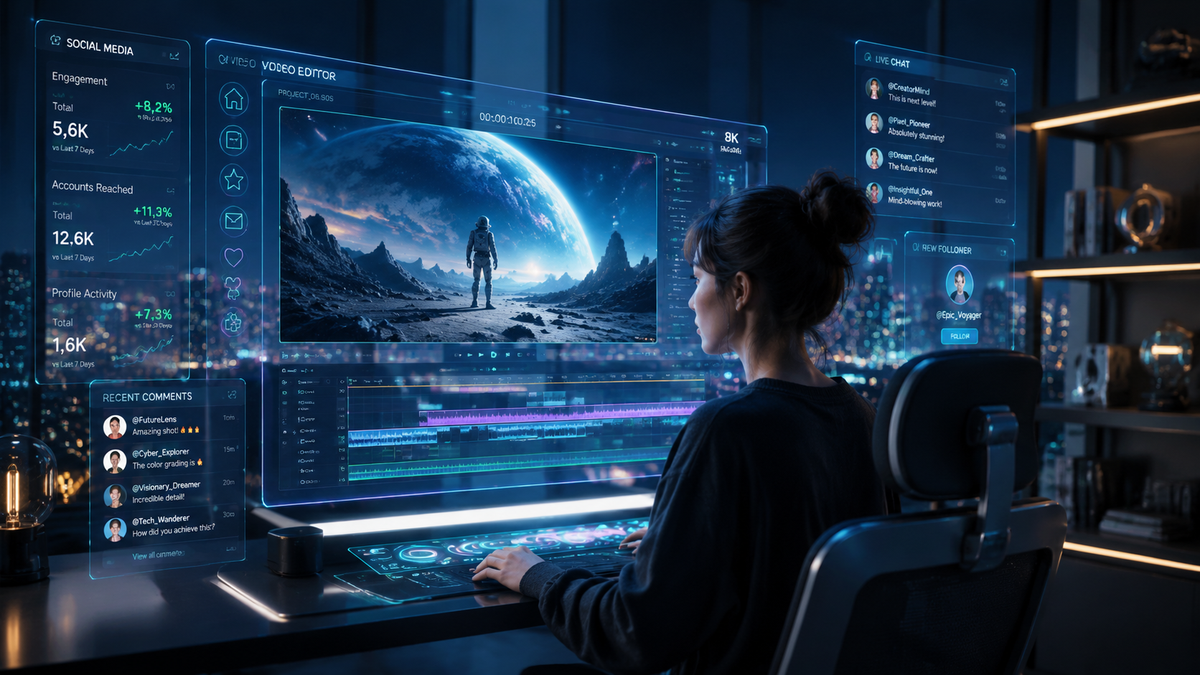
Using ai video for social media marketing in 2026 involves leveraging generative models to automate the production of high-fidelity, short-form content that resonates with algorithmic feeds. By integrating AI-driven scriptwriting, visual synthesis, and automated editing, brands can now scale their video output by over 1,000% while maintaining a consistent brand voice. This strategy is essential for capturing a share of the projected $80 billion digital video ad market.
AI video for social media marketing is the strategic use of artificial intelligence tools—such as generative video models and automated editors—to create, optimize, and distribute video content across platforms like TikTok, Instagram, and YouTube. In 2026, it serves as the primary driver for democratizing high-quality video advertising for businesses of all sizes.
- ✓ AI video generators have democratized high-quality production, allowing small businesses to compete with global brands.
- ✓ Digital video ad spend is projected to exceed $80 billion in the U.S. by the end of 2026.
- ✓ Data-driven tool selection is critical for maintaining content authenticity in an AI-saturated market.
- ✓ Successful 2026 strategies focus on "human-in-the-loop" workflows rather than 100% automation.
How to Implement AI Video for Social Media Marketing
Transitioning to an AI-first video strategy requires a shift from traditional linear production to a modular, generative approach. According to Social Media Examiner, the goal is to create high-quality content that grows your business by simplifying the technical barriers to entry. In 2026, the process is no longer about learning complex editing software but about mastering prompt engineering and brand alignment.
To get started with your 2026 video strategy, follow these essential steps to integrate AI into your marketing mix:
- Define Your Brand Persona: Feed your brand guidelines, tone of voice, and visual assets into an AI "Brand Kit" to ensure generated videos remain consistent.
- Generate Scripts and Storyboards: Use Large Language Models (LLMs) to analyze trending topics on social media and generate high-retention scripts optimized for the first 3 seconds.
- Select a Generative Video Model: Choose a tool based on your needs—whether it is "text-to-video" for abstract concepts or "avatar-based" video for educational content.
- Automate Versioning: Use AI to automatically resize and reformat a single master video into vertical (TikTok), square (Instagram), and horizontal (YouTube) formats.
- Review and Humanize: Always perform a final human review to ensure the emotional resonance and factual accuracy of the AI-generated output.
The Evolution of AI Video for Social Media Marketing in 2026
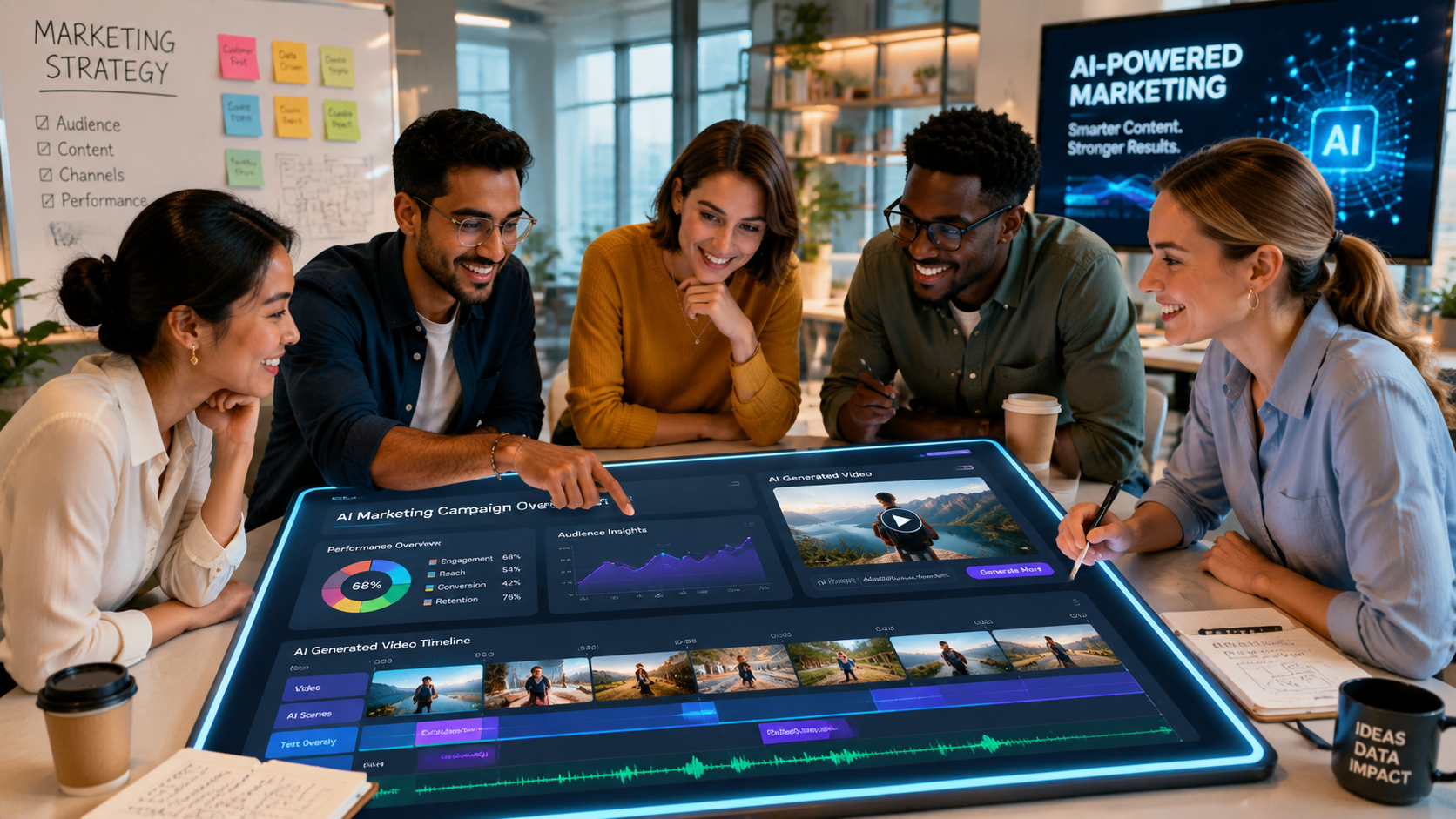
As we navigate through 2026, the landscape of digital content has been fundamentally altered. As reported by PC Tech Magazine, AI video generators are changing social media marketing by moving beyond simple "deepfakes" into sophisticated, high-fidelity world-building. These tools now allow marketers to generate hyper-realistic footage that was previously only possible with six-figure production budgets.
This evolution is driven by the need for speed. In the current social media climate, trends emerge and dissipate within 48 hours. Traditional production cycles of 2-3 weeks are no longer viable. AI allows brands to react to cultural moments in real-time, producing reactive video content that feels native to the platform. MarketingProfs notes that this technology is effectively democratizing video advertising, allowing even solo entrepreneurs to run professional-grade video campaigns.
The Rise of Hyper-Personalization
In 2026, ai video for social media marketing is no longer a "one-size-fits-all" medium. Advanced algorithms now allow for dynamic video insertion, where the background, language, or even the products featured in a video can change based on the viewer's profile. This level of personalization has led to a significant increase in conversion rates, as users are more likely to engage with content that feels tailor-made for their specific interests and geographic location.
Closing the Creative Gap
The "creative gap"—the distance between a marketing idea and its execution—has virtually disappeared. With the latest 2026 iterations of AI tools, marketers can describe a scene in natural language and receive a 4K, 60fps video clip in seconds. This allows for rapid A/B testing of visual hooks. Instead of testing two different videos, brands are now testing hundreds of variations to see which lighting, pacing, and color palette drives the highest engagement.
Data-Driven Comparison of 2026 AI Video Tools
Selecting the right platform is the cornerstone of a successful ai video for social media marketing strategy. According to a data-driven comparison by SQ Magazine, the market has bifurcated into specialized tools for different marketing objectives. Some platforms focus on "talking head" avatars for B2B LinkedIn content, while others prioritize cinematic B-roll for B2C lifestyle brands.
The following table outlines the key features and performance metrics of the leading AI video categories available in 2026:
| Tool Category | Primary Use Case | Key Feature (2026 Update) | Production Speed |
|---|---|---|---|
| Generative Cinematic AI | Brand Storytelling & Ads | Physics-accurate fluid dynamics | < 5 Minutes |
| AI Avatar Platforms | Explainer & Training Videos | Real-time emotional mirroring | Instant (Real-time) |
| Automated Social Editors | Repurposing Long-form Content | Multi-platform "Viral Score" prediction | < 2 Minutes |
| Dynamic Ad Generators | E-commerce Retargeting | Automated product-in-scene insertion | < 1 Minute |
When evaluating these tools, SQ Magazine emphasizes looking at the "Latent Consistency" of the models. In 2026, the best tools are those that can maintain the same character or product appearance across multiple different scenes, a technical hurdle that was finally overcome late last year.
Strategic Integration: Designing Your 2026 Workflow
Expert guidance from Sprout Social suggests that designing an AI marketing strategy for social media requires more than just buying a subscription to a tool. It requires a holistic redesign of the creative workflow. The focus in 2026 is on "Prompt-to-Platform" pipelines where the human acts as the Creative Director rather than the technician.
According to Sprout Social, the most successful brands are those that use AI to handle the "grunt work"—such as subtitling, color grading, and basic assembly—while keeping human creators focused on high-level strategy and emotional storytelling. This hybrid approach ensures that while the volume of content increases, the "soul" of the brand remains intact.
Optimizing for Platform Algorithms
Each social media platform in 2026 has a unique AI-driven recommendation engine. Your ai video for social media marketing must be optimized for these specific environments. For instance, TikTok's 2026 algorithm prioritizes "Lo-Fi Authenticity," meaning AI videos that look too polished may actually underperform. Conversely, Instagram's "Aesthetic Engine" favors high-contrast, cinematically lit AI outputs. Using AI to analyze these platform-specific trends before generating content is now a standard industry practice.
Budgeting for the $80 Billion Video Era
As U.S. digital video ad spend passes the $80 billion mark in 2026 (as reported by ALM Corp), the competition for attention is fiercer than ever. This massive spend is driving up the cost-per-mille (CPM) on major platforms. To remain profitable, marketers are using AI to lower the "Cost Per Creative." By reducing the cost to produce a video from thousands of dollars to just a few cents, brands can afford to run the high-volume campaigns necessary to win in a crowded marketplace.
Future-Proofing Your Social Media Presence
To stay ahead in 2026, marketers must anticipate the next wave of AI integration: Interactive Video. We are already seeing the first stages of social media videos that allow viewers to change the narrative or the environment in real-time using voice commands or gestures. This requires an underlying AI architecture that can render video frames on the fly.
Furthermore, ethical considerations have become a pillar of ai video for social media marketing. With the 2026 "Transparency in Media Act," all AI-generated content must be clearly labeled. Brands that are transparent about their use of AI—and use it to enhance rather than deceive—are seeing higher levels of consumer trust. According to MarketingProfs, the democratization of these tools means that "authenticity" is now the most valuable currency in social media.
Scalability Through AI-Driven Insights
The final piece of the 2026 strategy is the feedback loop. AI tools now provide predictive analytics that tell you how a video will perform before you even post it. By analyzing the visual components of your video—such as the colors used, the pace of the cuts, and the sentiment of the script—AI can predict engagement rates with up to 85% accuracy. This allows social media managers to pivot their strategy weekly rather than quarterly.
Frequently Asked Questions
Is AI video for social media marketing ethical in 2026?
Yes, provided that brands follow the latest transparency guidelines and label AI-generated content. Ethics in 2026 focus on avoiding misinformation and ensuring that AI is used to augment human creativity rather than replace it entirely.
How much does it cost to implement an AI video strategy?
While U.S. digital video ad spend is hitting record highs, the cost of entry for AI tools has dropped. Most enterprise-grade AI video platforms in 2026 offer tiers starting at $50-$100 per month, making it accessible for small to medium-sized businesses.
Do I need technical skills to use AI video generators?
No, the 2026 generation of tools is designed for natural language interaction. If you can describe what you want in a text prompt, you can generate a professional-grade video. The focus has shifted from technical editing skills to creative direction.
Can AI video content rank on Google and social feeds?
Absolutely. Search engines and social algorithms in 2026 prioritize user engagement and relevance over the method of production. High-quality AI video that answers user intent will rank just as well as traditionally filmed content.
What is the biggest mistake brands make with AI video?
The biggest mistake is "over-automation." Brands that remove the human element entirely often produce content that feels "uncanny" or lacks emotional depth. Maintaining a human-in-the-loop for final edits and strategy is crucial for success.
Comments ()