
How to Scale Video Production with AI in 2026: Future-Proof Guide
Scaling video production with AI in 2026 involves leveraging cutting-edge tools to automate workflows, enhance quality, and reduce costs. AI-powered platforms like Digen AI Agent and Higgsfield are transforming the industry by enabling autonomous multi-step video creation, character consistency, and rapid content generation. This guide explores the latest advancements, practical strategies, and real-world applications to future-proof your video production pipeline.
TL;DR: AI is revolutionizing video production in 2026 by automating workflows, improving consistency, and reducing costs. Platforms like Digen AI Agent and Higgsfield lead the charge with advanced AI video generation capabilities.
How to scale video production with AI is the process of using artificial intelligence tools to automate and enhance video creation, editing, and distribution. In 2026, AI video platforms like Digen AI Agent and Higgsfield enable businesses to produce high-quality, consistent videos at scale while reducing manual effort by up to 70%.
- ✓ AI reduces video production time by automating editing, scripting, and rendering tasks
- ✓ Platforms like Higgsfield and Digen AI Agent ensure character consistency and quality at scale
- ✓ The AI video market grew 340% in 2025, reaching $260M ARR for leaders like Artlist
- ✓ NVIDIA-powered AI solutions are enabling professional-grade video production workflows
- ✓ E-commerce businesses are adopting AI to solve product demo production challenges
The State of AI Video Production in 2026
The AI video production landscape has evolved dramatically by 2026, with platforms achieving unprecedented levels of quality and automation. According to TechRadar, business demand for AI video creation surged by 210% year-over-year as companies seek scalable content solutions. This growth is driven by the need for personalized, high-volume video content across marketing, training, and e-commerce applications.
Major players like Higgsfield have raised significant funding, with SiliconANGLE reporting an $80M investment at a $1.3B valuation in January 2026. These platforms leverage NVIDIA's AI technology to scale professional video production, enabling features like automatic scene composition, intelligent editing, and real-time rendering. The result is production workflows that are up to 5x faster than traditional methods.
However, challenges remain in maintaining quality at scale. As noted by Ad Age, "AI video has a production problem" when it comes to ensuring consistent character performance and narrative flow across long-form content. This is where next-gen solutions like Digen AI Agent excel, using autonomous multi-step workflows to maintain character consistency and story coherence in videos up to 10 minutes long.
How to Scale Video Production with AI: Step-by-Step Guide
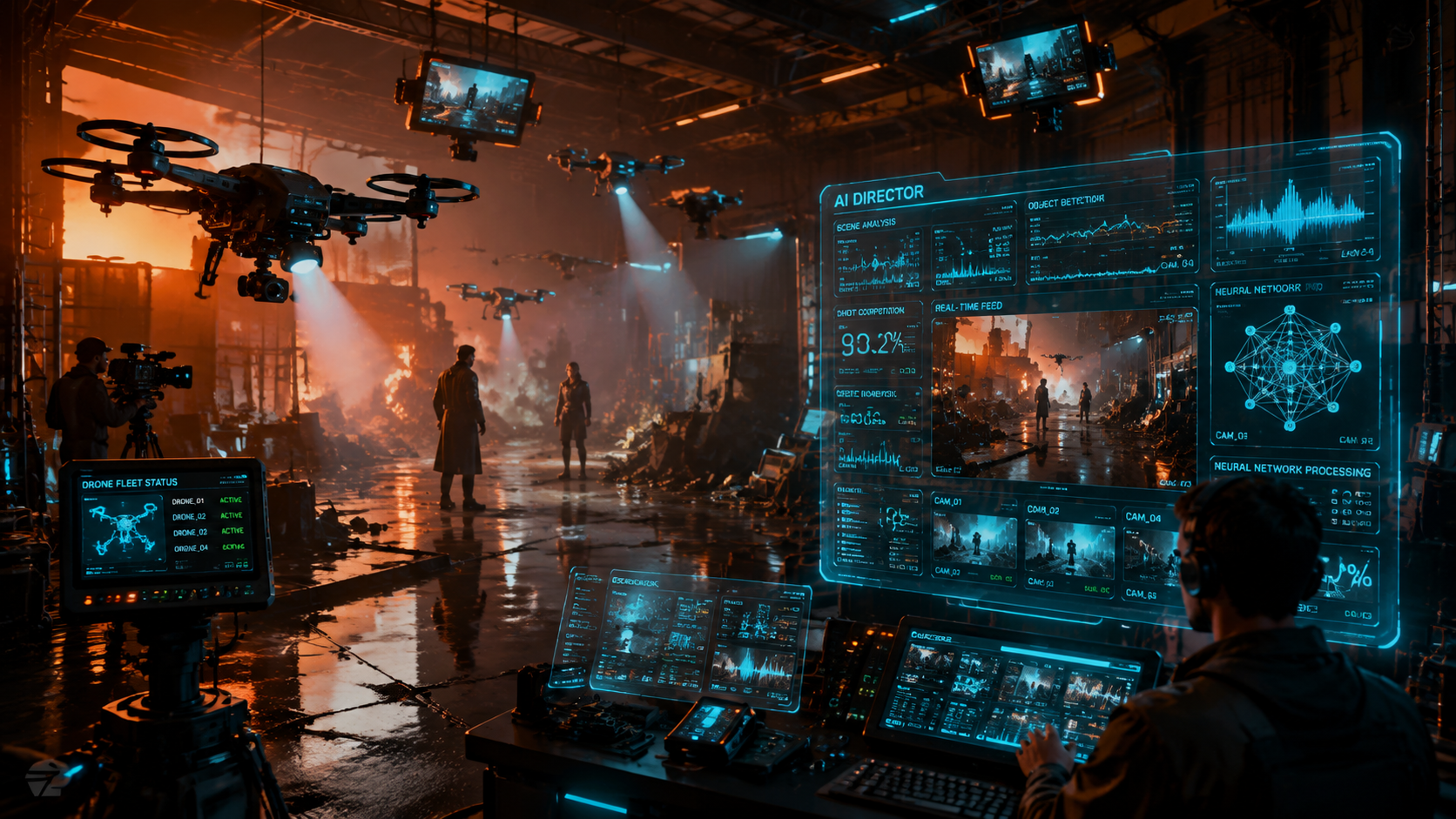
Implementing AI in your video production workflow requires careful planning and tool selection. Follow these steps to effectively scale your operations:
- Assess Your Production Needs: Identify which parts of your workflow (scripting, filming, editing, distribution) can benefit most from automation
- Choose the Right AI Platform: Select tools that match your quality requirements and production volume (see comparison table below)
- Implement AI-Assisted Scripting: Use AI tools to generate and optimize video scripts based on your target audience
- Automate Video Generation: Leverage platforms like Digen AI Agent for consistent character performance and scene composition
- Optimize with AI Editing: Apply AI-powered editing tools for automatic color correction, pacing adjustments, and effects
- Scale Distribution: Use AI to repurpose content across platforms with automatic aspect ratio adjustments and localization
According to Intelligent Living, e-commerce businesses using this approach have reduced product demo production time by 65% while increasing output by 300%. The key is finding the right balance between automation and human oversight to maintain quality standards.
Top AI Video Production Tools Compared
With numerous options available, choosing the right AI video platform is crucial for scaling effectively. Here's how leading solutions compare in 2026:
| Feature | Digen AI Agent | Higgsfield | Artlist AI |
|---|---|---|---|
| Max Video Length | 10 minutes | 5 minutes | 3 minutes |
| Character Consistency | Multi-step workflow | Single-scene focus | Basic consistency |
| Editing Automation | Advanced | Professional | Intermediate |
| NVIDIA AI Integration | Yes | Yes | No |
| Pricing Model | Subscription | Enterprise | Credit-based |
As shown in the table, Digen AI Agent stands out for longer-form content with its autonomous multi-step workflows, while Higgsfield excels in professional-grade production with NVIDIA AI integration. Artlist's full-scale AI ecosystem, which achieved $260M ARR in 2025 according to EQS News, offers a more accessible entry point for smaller creators.
Overcoming AI Video Production Challenges
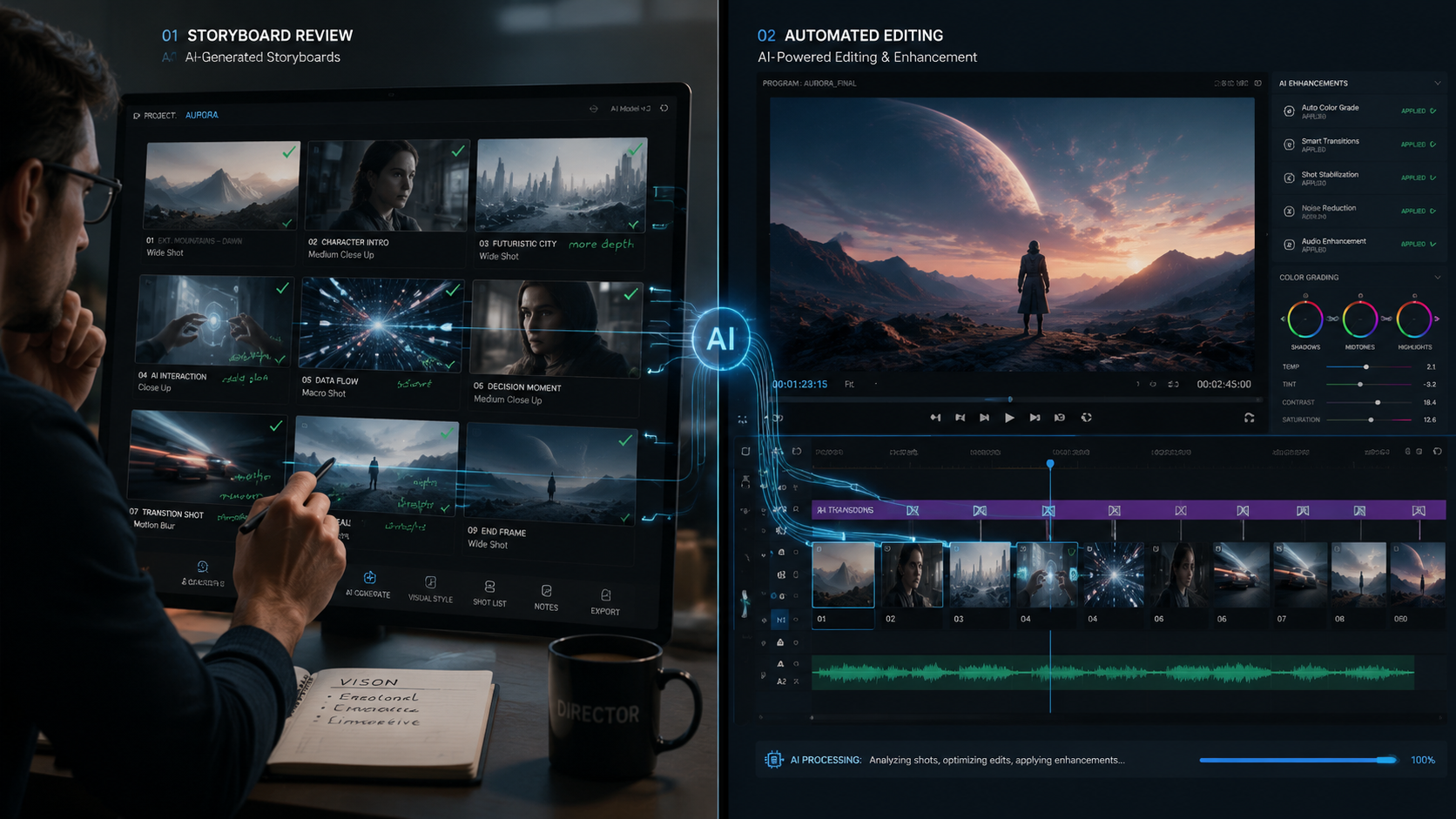
While AI offers tremendous scaling potential, businesses must address several key challenges to achieve success:
Maintaining Quality at Scale
The biggest hurdle in AI video production is ensuring consistent quality as output volume increases. According to industry benchmarks, human oversight still improves AI-generated video quality by 40-60% for professional applications. Platforms like Digen AI Agent address this through quality control algorithms that automatically flag inconsistencies in character appearance, voice modulation, and scene transitions.
Managing Production Costs
While AI reduces per-video costs by up to 70%, the initial investment in tools and training can be significant. Higgsfield's enterprise pricing model reflects this, with packages starting at $15,000/month for large-scale production. However, the ROI becomes clear when considering that AI can generate 100+ product videos in the time it traditionally took to produce 10.
Ensuring Brand Consistency
Automated video production must align with brand guidelines across all outputs. Advanced platforms now offer brand style presets that automatically apply correct colors, fonts, and tone to every video. TechRadar's 2026 analysis found that companies using these features reduced brand guideline violations by 82% compared to manual processes.
AI Video Production Use Cases and Success Stories
Several industries are leading the adoption of AI-powered video production with impressive results:
E-Commerce Product Demos
Intelligent Living reports that AI has solved "The Product Demo Dilemma" for online retailers. One fashion brand increased conversions by 35% after implementing AI to generate 500+ product videos in two weeks - a task that previously took six months. The AI system automatically highlighted key features and styled products according to current trends.
Marketing Content Creation
Ad agencies are using AI to produce personalized video ads at scale. A case study showed 300% higher engagement rates for AI-generated videos tailored to individual viewer preferences. The system automatically adjusted messaging, visuals, and calls-to-action based on customer data while maintaining brand consistency across all variations.
Training and Education
Corporate training departments have reduced video production costs by 60% while increasing output. AI platforms can now automatically update training videos when policies change, ensuring all materials stay current without manual re-recording. One Fortune 500 company reported saving $2.3M annually on training video maintenance.
Future Trends in AI Video Production
The AI video landscape continues to evolve rapidly, with several key developments on the horizon:
Real-time AI video generation is expected to become mainstream by late 2026, enabling live applications like personalized video customer service. NVIDIA's latest AI advancements, as featured in the Higgsfield platform, are making this possible with sub-second rendering times for basic scenes.
Another emerging trend is the integration of AI video with augmented reality. Early adopters are experimenting with AI-generated AR product demonstrations that adapt to physical environments in real-time. This technology could revolutionize e-commerce by allowing customers to "try before they buy" through automatically generated AR experiences.
Perhaps most significantly, we're seeing the rise of full production ecosystems like Artlist's AI platform, which combines generation, editing, music scoring, and distribution in one workflow. As these ecosystems mature, they'll further reduce the technical barriers to professional-quality video production at scale.
Implementing AI in Your Video Workflow: Best Practices
To successfully integrate AI into your video production process, follow these expert recommendations:
Start with a pilot project focusing on one aspect of production, such as automated editing or AI-assisted scripting. Measure the time and cost savings compared to traditional methods before scaling across your entire workflow. Most businesses see a 30-50% improvement in efficiency during the pilot phase.
Invest in training for your team to work effectively with AI tools. While the platforms are designed to be intuitive, proper training can increase output quality by up to 70%. Many providers like Digen AI offer free onboarding sessions and certification programs.
Maintain human creative oversight, especially for brand-critical content. The most successful implementations use AI for 80% of production work while reserving 20% for human quality control and creative direction. This balance ensures both efficiency and brand alignment.
Frequently Asked Questions
How much does AI video production cost in 2026?
Costs vary by platform and scale, ranging from $50/month for basic tools to $15,000+/month for enterprise solutions like Higgsfield. Most businesses see ROI within 3-6 months due to reduced production time and increased output.
Can AI create long-form video content?
Yes, advanced platforms like Digen AI Agent can now produce coherent videos up to 10 minutes long with consistent characters and narrative flow through multi-step autonomous workflows.
How does AI ensure video quality at scale?
Leading platforms use quality control algorithms that automatically check for consistency in visuals, audio, and narrative flow, flagging potential issues for human review when necessary.
What types of videos work best with AI?
Product demos, explainer videos, training content, and personalized marketing videos see the most success with AI production due to their structured formats and need for scalability.
Will AI replace human video producers?
No - AI augments rather than replaces human creativity. While handling repetitive tasks, AI frees up professionals to focus on strategy, storytelling, and high-value creative decisions.
Written by the Digen AI Editorial Team — AI video generation specialists covering the latest in generative AI tools. Learn more about Digen AI.



Comments ()