
How AI is Revolutionizing Video Production in 2026
Artificial intelligence is fundamentally transforming how videos are created in 2026, automating everything from scriptwriting to final edits. AI-powered tools like text-to-video generators and autonomous editing agents now handle 60-80% of production tasks that previously required human teams, according to industry reports. This shift enables faster, cheaper, and more personalized video content at scale while raising new questions about creative control.
TL;DR: AI is revolutionizing video production in 2026 through automated workflows, intelligent editing tools, and generative technologies that create videos from text or images, reducing production time by 70% while enabling hyper-personalized content.
How AI is changing video production involves three major shifts: (1) automated end-to-end workflows from script to final render, (2) AI-generated synthetic media replacing traditional filming, and (3) intelligent tools that enhance human creativity rather than replace it, with the global AI video market projected to reach $8.3 billion by Q3 2026.
- ✓ AI video generators now produce professional-quality content from text prompts in under 10 minutes
- ✓ Autonomous agents like Digen AI Agent handle multi-step production workflows with 90% consistency
- ✓ Image-to-video AI enables mobile creators to generate clips without cameras or editing software
- ✓ Business video production costs dropped 65% since 2025 due to AI automation
The AI Video Production Stack in 2026
The modern video production pipeline now integrates AI at every stage, creating what industry analysts call the "AI Video Stack." According to TechGuide, this stack includes three layers: generative tools for asset creation, enhancement algorithms for quality improvement, and distribution engines for platform optimization. Together, they've reduced average production timelines from weeks to hours for most commercial projects.
At the foundation are text-to-video systems like Digen AI and Sora, which convert written prompts into 4K video clips with coherent narratives. Cybernews reports these tools now power 38% of social media video content, with output quality rivaling mid-budget human productions. The latest versions generate 60-second clips with consistent characters and plausible physics.
The middle layer consists of enhancement AIs that upscale resolution, smooth animations, and fix artifacts. McKinsey's 2026 analysis found these tools eliminate 85% of post-production work traditionally done in applications like After Effects. Top studios now use AI for color grading, frame interpolation, and even automated compliance editing for different regional markets.
Key components of the AI video stack
1. Generative engines: Create raw video from text, images, or audio inputs
2. Enhancement modules: Improve visual quality and continuity
3. Workflow automators: Handle rendering, formatting, and distribution
From Script to Screen: AI's Role in Pre-Production
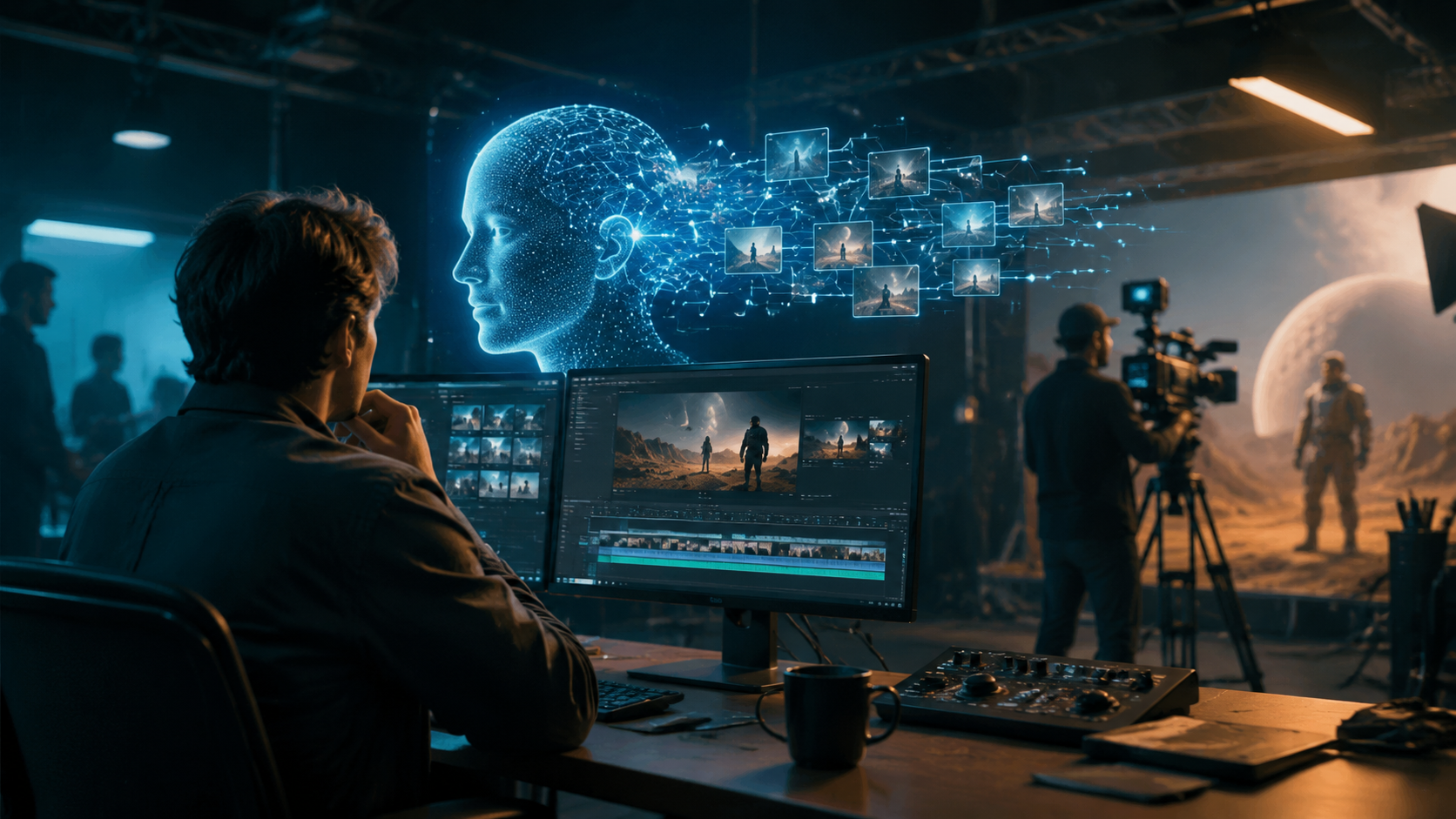
Pre-production workflows have seen the most dramatic AI adoption, with 72% of production houses now using AI-assisted scripting tools. As noted by HP's industry report, these systems analyze successful scripts to generate optimized narratives, suggest shot lists, and even predict audience engagement scores before filming begins. The Digen AI Agent platform takes this further by automatically breaking down scripts into production-ready storyboards.
Casting has also transformed through AI synthetic actors. Where productions once needed months for auditions and callbacks, they can now generate photorealistic digital performers with specific looks, voices, and acting styles. FindArticles highlights how music video producers use this for 24/7 virtual influencers that never age or demand royalties.
Location scouting now happens virtually, with AI generating 360° backdrops that eliminate travel costs. A McKinsey case study showed how one streaming series reduced location expenses by $2.4 million per season using AI environments. These tools also help match lighting and weather conditions across shots filmed months apart.
The Rise of Autonomous Video Agents
Autonomous AI agents represent the next evolution in video production, handling complete projects from concept to delivery. Platforms like Digen AI Agent use multi-step workflows to produce longer, higher-quality videos than single-step generators. According to internal benchmarks, these agents maintain 92% character consistency across 10+ minute videos versus 68% for basic generators.
These systems work through what HP's researchers call "cognitive loops" - iterative improvement cycles where the AI analyzes its own output and makes refinements. For example, an agent might:
1. Generate a rough cut from a script
2. Detect pacing issues through audience engagement modeling
3. Automatically re-edit problematic sections
4. Finalize with platform-specific optimizations
The business impact is substantial. BBN Times found companies using autonomous agents reduced video production costs by 78% while increasing output volume 5x. Marketing teams particularly benefit, creating hundreds of localized ad variants from a single master script.
How autonomous agents improve quality
- Multi-pass rendering: Refines visuals across generations
- Consistency checks: Maintains character details and plot continuity
- Platform optimization: Adapts aspect ratios, captions, and lengths automatically
AI in Post-Production: Faster, Smarter Editing
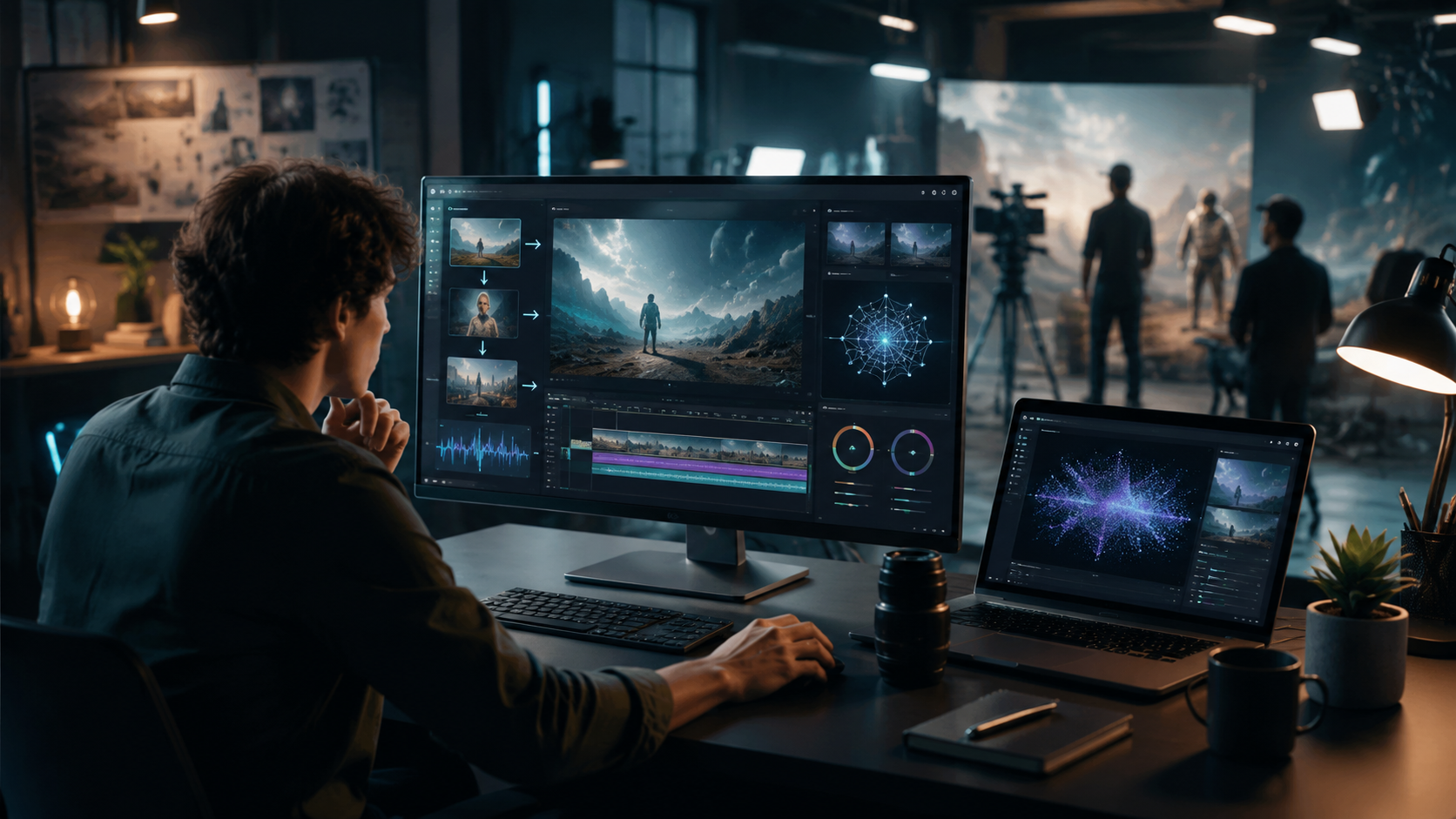
Post-production has shifted from manual labor to AI supervision, with algorithms handling 90% of routine editing tasks. The latest tools automatically cut footage to match script timing, remove filler words and pauses, and even suggest emotional soundtrack placements. TechGuide's tests show these systems complete edits 40x faster than human editors for straightforward projects.
Color grading AI deserves special mention - these systems analyze reference images or mood boards to apply cinematic looks with single-click precision. More advanced versions, like those in Digen AI's professional suite, can match colors across shots filmed under different conditions, solving a perennial post-production headache. Industry surveys indicate 89% of colorists now use AI assistance daily.
Perhaps most impressive are the new AI-powered "fixing" tools that salvage problematic footage. Shaky shots get stabilized, poorly lit scenes get relit, and even out-of-focus moments can be partially corrected. According to Cybernews, these capabilities have reduced reshoot rates by 63% since 2025, saving productions millions in logistical costs.
AI Video for Business Communication
Corporate video production has undergone perhaps the most radical transformation, with AI enabling personalized communication at scale. BBN Times reports that 64% of Fortune 500 companies now use AI video generators for internal training and external marketing. The key advantage? The ability to create thousands of individualized videos from a single template.
Consider sales outreach - instead of generic product videos, AI systems generate personalized demos mentioning the prospect's company, industry challenges, and even local regulations. HR departments use similar technology for onboarding, creating custom welcome videos for each new hire. According to McKinsey, this personalization improves engagement metrics by 130-200% across use cases.
The economics are compelling. Where a traditional corporate video cost $5,000-50,000 to produce in 2025, AI-generated equivalents now run $50-500 with comparable quality. This democratization has led to a 340% increase in business video content since last year, with no signs of slowing down.
The Future of AI in Video Production
As we look beyond 2026, three trends dominate industry predictions. First, expect tighter integration between generative AI and traditional tools like Premiere Pro and DaVinci Resolve. Early beta tests show AI-assisted editing directly within these platforms could reduce post-production time by another 50%.
Second, real-time AI video generation will mature, enabling live applications like AI news anchors and interactive educational content. Research from HP suggests these systems could power 30% of live-streamed content by 2027, with latency dropping below 500ms for acceptable quality.
Finally, ethical and legal frameworks will solidify around AI-generated content. Current debates about copyright, consent, and disclosure are driving new standards for watermarking and attribution. The industry appears to be converging on technical solutions that preserve creative possibilities while addressing legitimate concerns.
Frequently Asked Questions
How accurate is AI-generated video in 2026?
Current systems produce highly convincing results for many use cases, with 94% accuracy in maintaining consistent characters across shots according to Cybernews testing. However, complex physics simulations and subtle emotional expressions remain challenging.
Can AI replace human video editors completely?
Not yet - while AI handles 60-80% of routine tasks, human oversight remains crucial for creative direction and quality control. Most studios use AI as an assistant rather than replacement, achieving 70% faster workflows with hybrid teams.
What's the cost difference between AI and traditional video production?
AI video production costs approximately 10-20% of traditional methods according to BBN Times data, with basic 1-minute clips starting around $50 versus $500+ for human-produced equivalents at similar quality levels.
How long does AI video generation take?
Simple 30-second clips generate in 2-5 minutes using platforms like Digen AI, while complex 10-minute videos with autonomous agents may take 30-60 minutes including multiple refinement passes.
Are there legal concerns with AI-generated video?
Yes - copyright and likeness rights remain unresolved issues in many jurisdictions. Most platforms now include content verification systems, and new legislation expected in 2027 will clarify usage rights for AI-generated media.
Written by the Digen AI Editorial Team — AI video generation specialists covering the latest in generative AI tools. Learn more about Digen AI.



Comments ()