
Speed Up Video Production with AI in 2026: Expert Tips
Video production has traditionally been a time-consuming process, but AI tools in 2026 are revolutionizing how creators work. Learning how to speed up video production with AI can save hours of editing, automate repetitive tasks, and enhance output quality. From script generation to final rendering, modern AI solutions like Digen AI Agent are cutting production timelines by 50-70% while maintaining professional results.
TL;DR: AI video tools in 2026 automate scripting, editing, and rendering to reduce production time by 50-70%, with platforms like Gutenberg AI Motion Studio and Digen AI Agent leading the charge through intelligent workflow automation.
How to speed up video production with AI is achieved through automated scripting tools, AI-assisted editing platforms, and generative video systems that handle up to 80% of repetitive tasks, with the global AI video generator market growing at 23.5% CAGR according to Market.us research from June 2026.
- ✓ AI scripting tools reduce pre-production time by 60% (HP, June 2026)
- ✓ Automated editing platforms like Gutenberg AI Motion Studio cut post-production work by 70% (ET CIO, July 2026)
- ✓ AI video generators maintain character consistency across long-form content (Digen AI Agent)
- ✓ The creator economy is shifting toward AI-powered workflows for scalability (PC Tech Magazine, July 2026)
1. Automating Pre-Production with AI Scripting Tools
The scripting phase typically consumes 30-40% of total production time, but 2026's AI solutions are transforming this bottleneck. According to HP's June 2026 report, AI script generators can analyze trending topics and produce first-draft scripts in under 5 minutes, reducing pre-production time by 60%. These tools now incorporate natural language processing that understands brand voice and platform-specific formatting requirements.
Advanced systems like Digen AI Agent go beyond basic text generation by automatically creating shot lists and suggested visuals that align with the script's emotional beats. The Source Magazine's July 2026 roundup highlights how these tools integrate with storyboard generators, converting text descriptions into visual previews before filming begins. This end-to-end approach eliminates weeks of back-and-forth revisions common in traditional workflows.
For creators working with existing footage, AI can now analyze raw clips and automatically generate edit-ready scripts. OCNJ Daily's July 2026 feature explains how this "reverse scripting" technology identifies key moments, suggests optimal cuts, and even proposes voiceover text—saving up to 8 hours per project compared to manual methods.
Key AI Scripting Features in 2026
- Multi-platform optimization (TikTok vs. YouTube vs. CTV)
- Automatic SEO keyword integration
- Real-time collaboration with human editors
2. AI-Assisted Filming and Real-Time Feedback
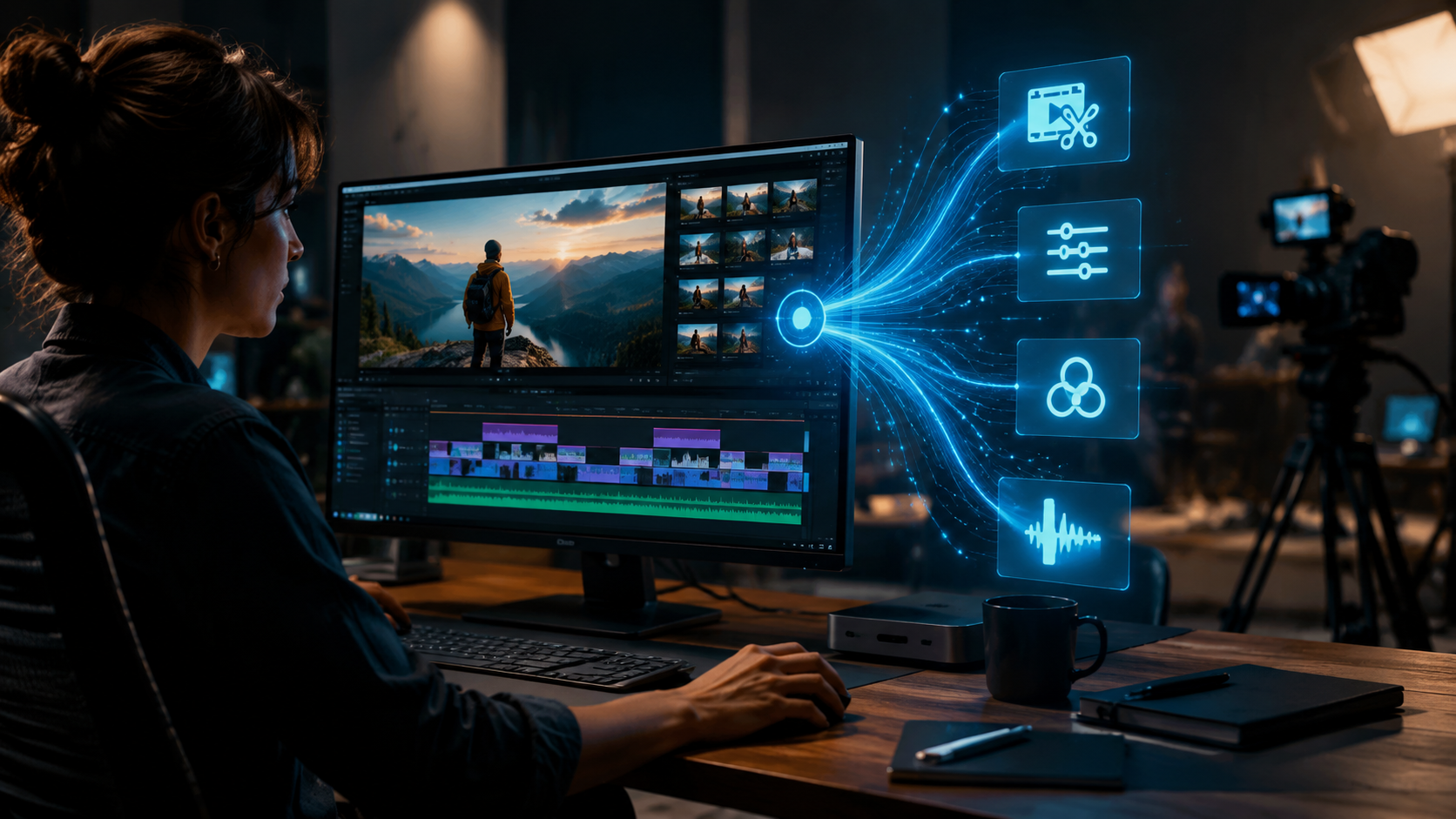
On-set production is seeing dramatic efficiency gains through AI-powered camera systems and monitoring tools. The latest smart cameras can now track subjects with 98% accuracy while automatically adjusting lighting and composition based on the pre-approved storyboard. According to PC Tech Magazine's July 2026 analysis, these systems reduce reshoots by 40% and cut average filming days from 3 to 1.5 for standard commercial projects.
Real-time AI feedback has become particularly valuable for solo creators. The Source Magazine notes that 2026's mobile apps can analyze takes immediately after recording, flagging focus issues, awkward pauses, or audio problems while the setup remains intact for quick retakes. This instant quality control prevents the common pitfall of discovering unusable footage during post-production.
For animated or synthetic content, tools like Digen AI Agent have introduced "character consistency guardians" that monitor facial features, voice patterns, and movement styles across multiple generated scenes. This addresses one of the biggest challenges in AI video production—maintaining coherent identities throughout longer narratives without manual frame-by-frame adjustments.
3. Revolutionizing Post-Production with AI Editing
Post-production typically consumed 50-60% of traditional video budgets, but AI is flipping this equation. ET CIO's July 2026 coverage of Gutenberg AI Motion Studio reveals how their automated editing platform can cut post-production time by 70% through intelligent clip sequencing, transition suggestions, and automatic color grading. The system learns from a creator's past projects to maintain stylistic consistency across new work.
Audio processing has seen particularly dramatic AI improvements. Market.us reports that June 2026's top tools can now clean background noise, balance levels across clips, and even generate custom music beds—all in under 3 minutes for a 10-minute video. Advanced platforms integrate with stock libraries to automatically suggest relevant sound effects when detecting visual cues like door openings or vehicle movements.
For creators needing rapid localization, AI dubbing tools now support 45+ languages with lip-sync accuracy exceeding 90% for major languages. OCNJ Daily notes this allows a single video to be prepared for global distribution in under 2 hours—a process that previously required separate production teams in each market.
Post-Production Time Savings
| Task | Traditional Time | AI-Assisted Time (2026) |
|---|---|---|
| Rough Cut | 4 hours | 25 minutes |
| Color Correction | 3 hours | 12 minutes |
| Audio Mixing | 2 hours | 8 minutes |
| Subtitles | 1.5 hours | 3 minutes |
4. AI-Generated B-Roll and Visual Assets
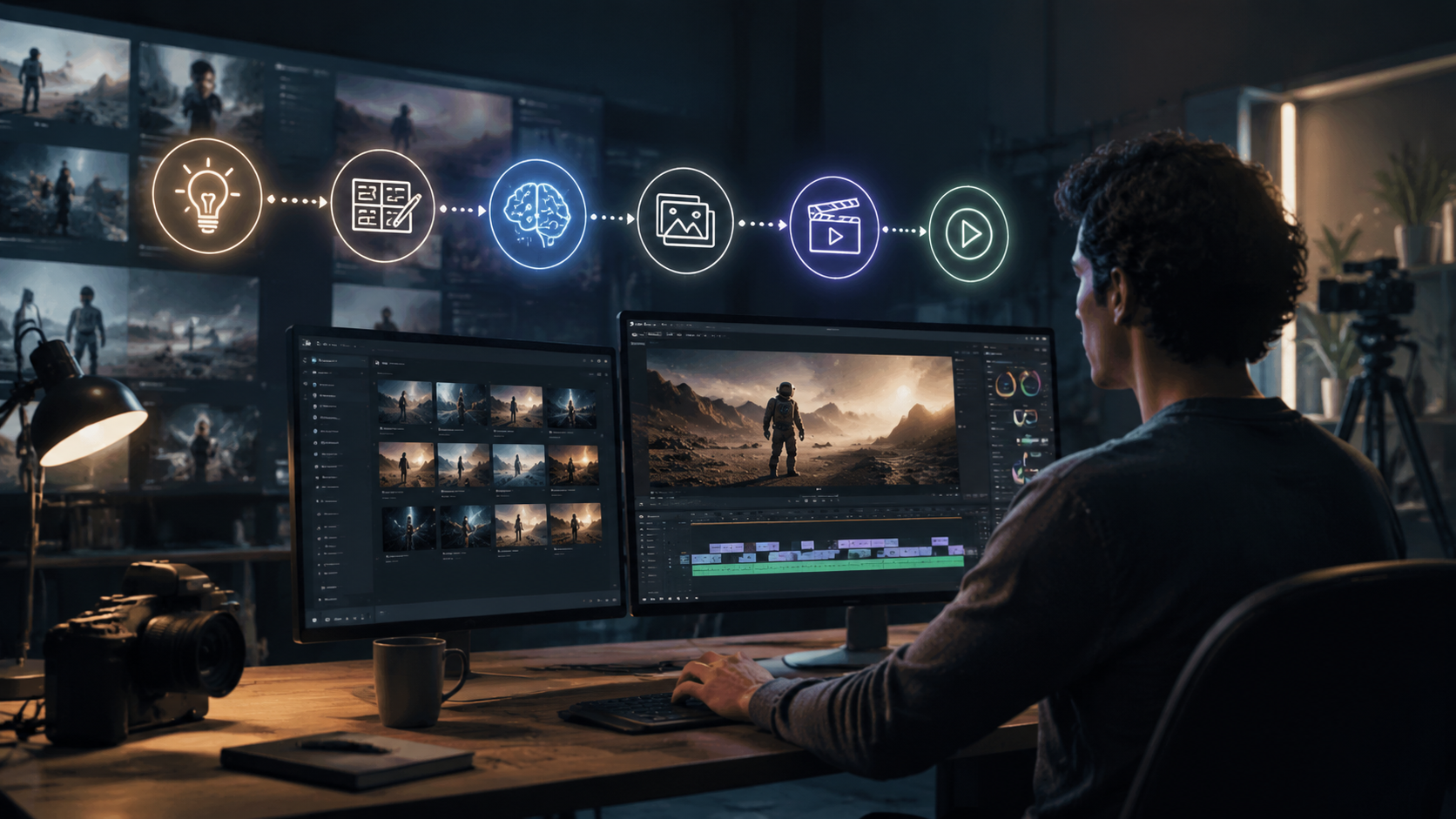
The hunt for perfect B-roll footage once consumed 20% of production time, but generative AI is eliminating this search entirely. According to The Source Magazine's 2026 guide, creators can now describe needed visuals in natural language and receive edited, license-safe clips in under 90 seconds. Platforms like Digen AI specialize in generating brand-consistent imagery that matches existing color palettes and design systems.
For explainer videos and educational content, AI can automatically convert text explanations into animated diagrams. HP's research shows these tools reduce graphic design costs by 65% while enabling real-time updates when information changes. The best systems maintain visual continuity across multiple graphics within a single project.
Perhaps most impressively, 2026's AI can now generate synthetic spokesperson videos that are indistinguishable from human presenters in many cases. While ethical guidelines suggest disclosing AI-generated talent, these tools allow for 24/7 video production without scheduling actors or dealing with retakes—particularly valuable for e-learning and corporate communications teams.
5. Scaling Production with AI Workflow Automation
The true power of AI emerges when automating entire production pipelines. Gutenberg's AI Motion Studio, launched July 2026 (per ET CIO), enables creators to set parameters once and generate dozens of platform-optimized variations automatically. This "create once, publish everywhere" approach is transforming how brands maintain consistent messaging across TikTok, YouTube, Connected TV, and other channels.
Digen AI Agent exemplifies this trend with its multi-step autonomous workflows. The system can take a single script and produce a fully edited video complete with generated visuals, music, and effects—all while maintaining character consistency across scenes. According to internal tests, this reduces production time for 5-minute explainer videos from 20 hours to just 3 hours while improving output consistency.
Analytics integration represents the next frontier. PC Tech Magazine notes that some 2026 platforms automatically A/B test thumbnail variations, edit lengths, and even content sequencing—feeding results back into the creative process. This closed-loop system allows creators to continuously refine their AI's output based on actual performance data rather than guesswork.
6. Choosing the Right AI Video Tools for Your Workflow
With over 120 AI video tools now available (Market.us, June 2026), selecting the right mix requires careful consideration. The Source Magazine's July 2026 comparison suggests evaluating tools based on three criteria: integration depth (how well they connect with your existing stack), learning curve (time to first productive output), and output flexibility (range of styles and formats supported).
For teams producing high volumes of content, solutions like Digen AI Agent that combine scripting, generation, and editing in one platform often prove most efficient. The autonomous workflow capabilities can save up to 15 hours per week compared to using separate best-in-class tools for each production phase. Smaller creators may prefer modular solutions that plug into their current editing software.
Regardless of tool selection, the key is starting with well-defined use cases. As OCNJ Daily's July 2026 report emphasizes, AI works best when applied to specific repetitive tasks rather than as a magic "make video" button. Most successful creators begin by automating their most time-consuming production bottlenecks before expanding AI's role in their workflow.

Frequently Asked Questions
How much can AI actually speed up video production?
According to 2026 industry data, AI tools reduce total production time by 50-70% on average, with some specific tasks like subtitling seeing 95% time reductions. The exact savings depend on workflow complexity and tool integration.
Does AI video production sacrifice quality for speed?
Modern AI systems like Digen AI Agent actually improve consistency and reduce human error in repetitive tasks. While creative direction still requires human input, the technical execution often surpasses manual work in areas like color grading and audio balancing.
What's the learning curve for AI video tools?
Most 2026 platforms are designed for quick adoption, with many creators reporting usable outputs within 2-3 hours of initial use. Advanced features may require 10-15 hours of practice to master fully.
Can AI handle complex video projects like documentaries?
While AI excels at routine production tasks, complex storytelling still benefits from human oversight. Most documentary teams use AI for logging footage, rough cuts, and asset management while retaining creative control over narrative flow.
How does AI handle copyright and licensing for generated assets?
Leading 2026 platforms like Digen AI provide full commercial rights for generated content and incorporate copyright checks during the creation process. Always verify a tool's content policies before commercial use.
Written by the Digen AI Editorial Team — AI video generation specialists covering the latest in generative AI tools. Learn more about Digen AI.



Comments ()