
Best Text to Video AI Comparison: 2026 Top Tools Ranked
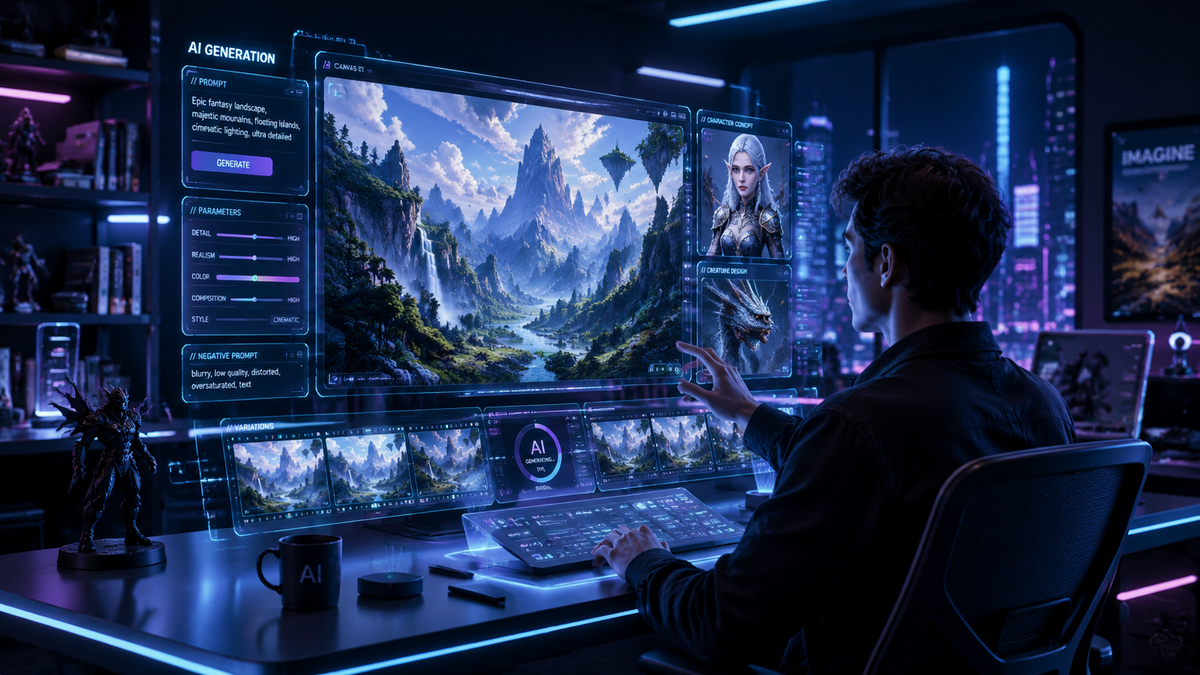
A text to video AI comparison involves evaluating the latest generative models that transform written prompts into high-fidelity cinematic footage. In 2026, the landscape has shifted from experimental clips to professional-grade production, with tools like Seedance 2.0, Pollo AI, and Luma AI leading the industry in temporal consistency and physics-based rendering. Choosing the right platform depends on your specific needs for motion accuracy, duration, and stylistic control.
Text to video AI is a generative technology that uses deep learning models to synthesize video frames from natural language descriptions. In 2026, the best tools are categorized by their ability to maintain "character constancy" and "physical realism," allowing creators to produce 4K-resolution content without traditional filming equipment.
- ✓ Seedance 2.0 is the 2026 leader for developer-grade customization and complex motion.
- ✓ Pollo AI and Luma AI remain the top choices for high-fidelity cinematic realism.
- ✓ ByteDance has disrupted the market with new models focusing on physics-based accuracy.
- ✓ Professional workflows now prioritize tools with "Directorial Control" features over simple prompting.
The State of Text to Video AI in 2026
As we move through the second quarter of 2026, the generative video space has matured significantly. According to Exploding Topics, interest in AI video generation has seen a massive surge this year, with seven key players dominating the professional market. We are no longer seeing the "uncanny valley" distortions that plagued earlier models; instead, the focus has shifted toward hyper-realism and the ability to follow complex physics. This text to video AI comparison highlights how different architectures—ranging from diffusion transformers to autoregressive models—handle the nuances of human movement and environmental lighting.
The industry reached a new milestone in March 2026 with the release of Seedance 2.0 by ByteDance. This model introduced a breakthrough in how AI interprets "action-intent," allowing users to specify not just what is happening, but the weight and momentum of objects in the scene. As noted by SitePoint, this has made Seedance a favorite for developers looking to integrate video generation into larger software ecosystems. Meanwhile, established giants like Luma AI have refined their interfaces to cater to the "prosumer" market, bridging the gap between casual hobbyists and professional cinematographers.
According to CNET, the best AI video generators of 2026 are now judged on their "temporal stability"—the ability of the video to remain flicker-free over long durations. While 2024 models struggled with clips longer than five seconds, the 2026 standard is now 30 to 60 seconds of continuous, high-quality motion in a single generation. This evolution has fundamentally changed how marketing agencies and independent creators approach visual storytelling.
How to Use AI for Professional Video Generation
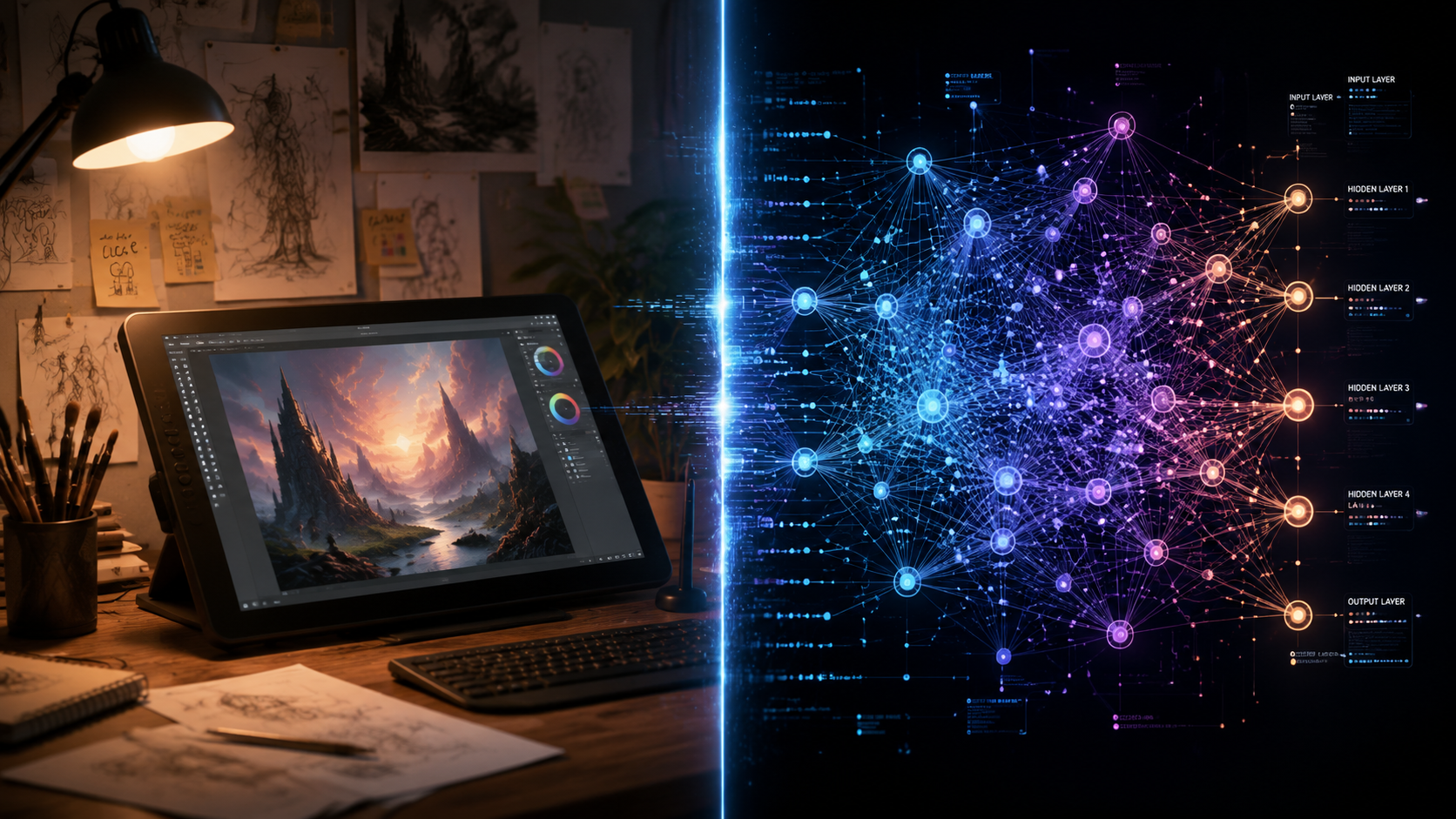
If you are looking to integrate these tools into your workflow, the process has become more structured than the "random" prompting of previous years. Follow these steps to maximize the output of a text to video AI comparison workflow:
- Define the Visual Style: Choose between photorealistic, 3D render, or stylized animation. Most 2026 tools now have dedicated "Style LoRAs" to maintain consistency.
- Draft a Physics-Aware Prompt: Include details about lighting (e.g., "golden hour"), camera movement (e.g., "dolly zoom"), and the physical interaction of subjects.
- Utilize Seed Control: Use the "Seed" feature to iterate on a specific composition without changing the entire scene layout.
- Apply Temporal Smoothing: Use the built-in 2026 refinement tools to ensure that character features do not "morph" between frames.
- Upscale and Export: Export in 4K or 8K resolution, applying AI-driven sharpening for final delivery.
Comprehensive Text to Video AI Comparison Table
To help you decide which tool fits your budget and technical requirements, we have compiled a data-driven comparison based on the latest 2026 performance metrics.
| AI Model | Primary Strength | Max Resolution | Best For |
|---|---|---|---|
| Seedance 2.0 | Physics & Momentum | 8K (Upscaled) | Developers & Technical Directors |
| Pollo AI | Cinematic Lighting | 4K Native | Marketing & Commercials |
| Luma AI (2026 Edition) | User Interface | 4K Native | Content Creators & Social Media |
| Pika Labs Pro | Animation Styles | 4K | Explainer Videos & Webtoons |
| Sora (Enterprise) | Long-form Narrative | 4K | Film Pre-visualization |
Deep Dive: Pollo AI vs. Luma AI in 2026
One of the most debated matchups this year is Pollo AI vs. Luma AI. As reported by Technology Org, these two platforms represent different philosophies in generative video. Pollo AI has gained a reputation for its "aesthetic intelligence," which automatically adjusts color grading and framing to match professional cinematic standards. It is frequently used by small production houses that need to generate high-end b-roll without a full camera crew. Its 2026 update introduced "Dynamic Lighting Response," where shadows move accurately based on the movement of the light source within the prompt.
Luma AI, on the other hand, excels in "spatial awareness." It is particularly adept at maintaining the geometry of a room or a landscape as the camera moves through it. This makes it the superior choice for real estate tours or architectural visualizations. While Pollo AI focuses on the "look" of the video, Luma AI focuses on the "space." In a direct text to video AI comparison, users often find that Pollo AI produces more "beautiful" shots, while Luma AI produces more "structurally accurate" ones.
According to Breaking AC, which reviewed the top 15 AI video generators in March 2026, the gap between these two is narrowing. Both have introduced "Multi-Character Consistency" (MCC) features, allowing users to upload a reference image of a person and have that exact person appear across multiple generated clips. This was the "holy grail" of AI video, and its realization in 2026 has revolutionized the creation of episodic content and brand storytelling.
Seedance 2.0: The Developer’s Choice
Seedance 2.0, ByteDance’s flagship model released in early 2026, has taken a different approach by focusing on the developer community. Unlike "black box" models where you have little control over the internal generation process, Seedance provides extensive API hooks and "ControlNet" features for video. This allows users to provide a skeleton or a depth map to guide the AI, ensuring that the motion follows a specific path. This level of precision is why SitePoint recommends it as the top choice for studios building their own proprietary creative tools.
The Rise of Specialized Models
Beyond the "Big Three," 2026 has seen the rise of niche models. For instance, Perfect Corp has tested over 22 different generators this year, finding that certain models are now specialized for "Beauty and Fashion" or "Industrial Simulation." These specialized tools use smaller, curated datasets to ensure that specific textures—like silk fabric or liquid metal—behave exactly as they would in the real world. This fragmentation of the market means that a text to video AI comparison must now consider the specific industry use case rather than just general "quality."
Key Features to Look for in a 2026 Video Generator
When evaluating these tools, you should look beyond the initial "wow factor" of the generated images. In 2026, professional utility is defined by three specific technical capabilities: Temporal Consistency, Prompt Adherence, and Editability.
Temporal Consistency and Physics
Temporal consistency refers to the AI's ability to keep objects stable from frame one to frame sixty. In older models, a person's shirt might change color or their hair might grow and shrink. The top-ranked tools in our 2026 text to video AI comparison use "Attention-Based Temporal Layers" to lock in these details. Furthermore, the introduction of physics engines into the latent space means that if a ball is dropped in a video, it bounces with the correct gravity and friction. CNET's April 2026 review highlighted that Seedance 2.0 currently leads in this category, showing virtually zero "warping" in complex action sequences.
Directorial and Camera Controls
The best tools now offer a "Virtual Camera" interface. Instead of just typing "camera moves," you can specify focal length (e.g., 35mm), f-stop for depth of field, and specific movements like "Pan," "Tilt," or "Truck." This allows traditional directors to use their existing vocabulary to communicate with the AI. Pollo AI has been praised for its intuitive "Director's Dashboard," which provides a visual map for camera paths, making it easier for non-technical users to achieve cinematic results.
Audio-Visual Integration
By mid-2026, "Silent AI Video" is becoming a thing of the past. Leading platforms are now integrating "Text-to-Video-to-Audio" (TV2A) capabilities. This means the AI analyzes the visual movement—such as a glass breaking—and automatically generates the perfectly synced sound effect. When performing a text to video AI comparison, check if the tool offers "Auto-Foley" or integrated background music generation, as this significantly reduces post-production time.
Future Outlook: What’s Next for AI Video?
As we look toward the latter half of 2026 and into 2027, the trend is moving toward "Interactive Video." Imagine a video where you can click on an object and tell the AI to "change this car to a red motorcycle" while keeping the rest of the scene identical. This "In-Painting" for video is already in beta for several of the top-ranked tools. Exploding Topics suggests that by the end of the year, we may see the first full-length feature film where every shot was generated from a text prompt, then refined through these interactive tools.
Ethical considerations also remain at the forefront. Most reputable 2026 tools have integrated "C2PA" watermarking, which provides a digital trail showing the video was AI-generated. This transparency is becoming a requirement for commercial use, especially in news and political advertising. As you choose your tool, ensure it complies with these emerging global standards for AI transparency.
Which AI video generator is best for beginners in 2026?
Luma AI is widely considered the best for beginners due to its intuitive interface and "Magic Prompt" feature that expands simple ideas into detailed scripts. It balances high-quality output with a very low learning curve compared to developer-centric tools.
Is Seedance 2.0 better than Pollo AI?
It depends on your goals: Seedance 2.0 offers superior control for developers and technical creators who need to direct specific motions. Pollo AI is generally preferred for marketing and artistic projects where cinematic "beauty" and lighting are the priorities.
How much does professional text-to-video AI cost in 2026?
Most professional tiers range from $30 to $100 per month. These plans typically include 4K export, commercial usage rights, and "Priority Rendering" to bypass wait times during peak usage hours.
Can these AI tools create videos longer than one minute?
Yes, as of 2026, several tools like Sora and Seedance 2.0 allow for "Extended Generation" or "Stitching," which can produce continuous scenes up to 3-5 minutes long while maintaining character consistency. However, the standard single-prompt clip is usually 30-60 seconds.
Do I need a powerful computer to run these AI tools?
No, most of the top-ranked AI video generators in 2026 are cloud-based. All the heavy processing is done on the provider's servers, meaning you can generate high-end 4K video from a standard laptop or even a mobile device.
Comments ()