
Muse Video AI by Meta (2026): The Future of Cinematic Editing
Muse Video AI by Meta is a groundbreaking cinematic editing tool that leverages artificial intelligence to transform raw footage into professional-grade videos with minimal human intervention. Released in July 2026 as part of Meta's Muse Spark 1.1 update, this AI-powered editor is designed to streamline post-production workflows for creators, advertisers, and social media users alike. By automating complex editing tasks like scene transitions, color grading, and even narrative structuring, Muse Video AI represents a significant leap forward in accessible filmmaking technology.
TL;DR: Meta's Muse Video AI (2026) is an advanced cinematic editing tool that automates professional-grade video production, though concerns about deepfake risks and opt-out policies have sparked industry debate.
Muse Video AI by Meta is an artificial intelligence system launched in July 2026 that automatically edits raw footage into polished cinematic content, featuring in Meta's Muse Spark 1.1 update while raising questions about digital consent and deepfake vulnerabilities according to recent industry reports.
- ✓ Launched July 2026 as part of Muse Spark 1.1 with advanced auto-editing capabilities
- ✓ Currently facing criticism from CAA for making the tool opt-out rather than opt-in
- ✓ CBS News reports potential deepfake risks from public Instagram content integration
- ✓ CNBC confirms Meta's strategic push into AI video to attract advertisers
- ✓ Represents significant advancement in automated cinematic storytelling technology
The Technology Behind Muse Video AI
At its core, Muse Video AI utilizes a proprietary neural network architecture that analyzes visual composition, audio waveforms, and semantic context to make intelligent editing decisions. According to AI at Meta, the system can process 4K footage at 120 frames per second while maintaining consistent style parameters across an entire project. This represents a 300% improvement over previous generation AI editors in terms of processing efficiency.
The technology builds upon Meta's earlier Muse Image platform, which debuted just two days prior to the video tool's announcement. By combining image generation capabilities with temporal coherence algorithms, Muse Video AI can not only edit existing footage but also generate seamless transitions and filler frames when needed. This hybrid approach reduces rendering times by approximately 40% compared to conventional video editing workflows.
What sets Muse Video AI apart is its contextual understanding of narrative structure. The system can identify emotional beats in dialogue, match cuts to musical rhythms, and even suggest thematic color palettes based on scene content. Early adopters report reducing post-production time by 65-80% on average while maintaining professional quality standards that previously required human editors.
Key Technical Specifications
• Supports up to 8K resolution with real-time rendering previews
• Processes 1 minute of 4K footage in under 30 seconds on Meta's servers
• Automatically applies industry-standard color grading LUTs
• Includes 12 cinematic style presets with customizable parameters
Creative Applications and Use Cases
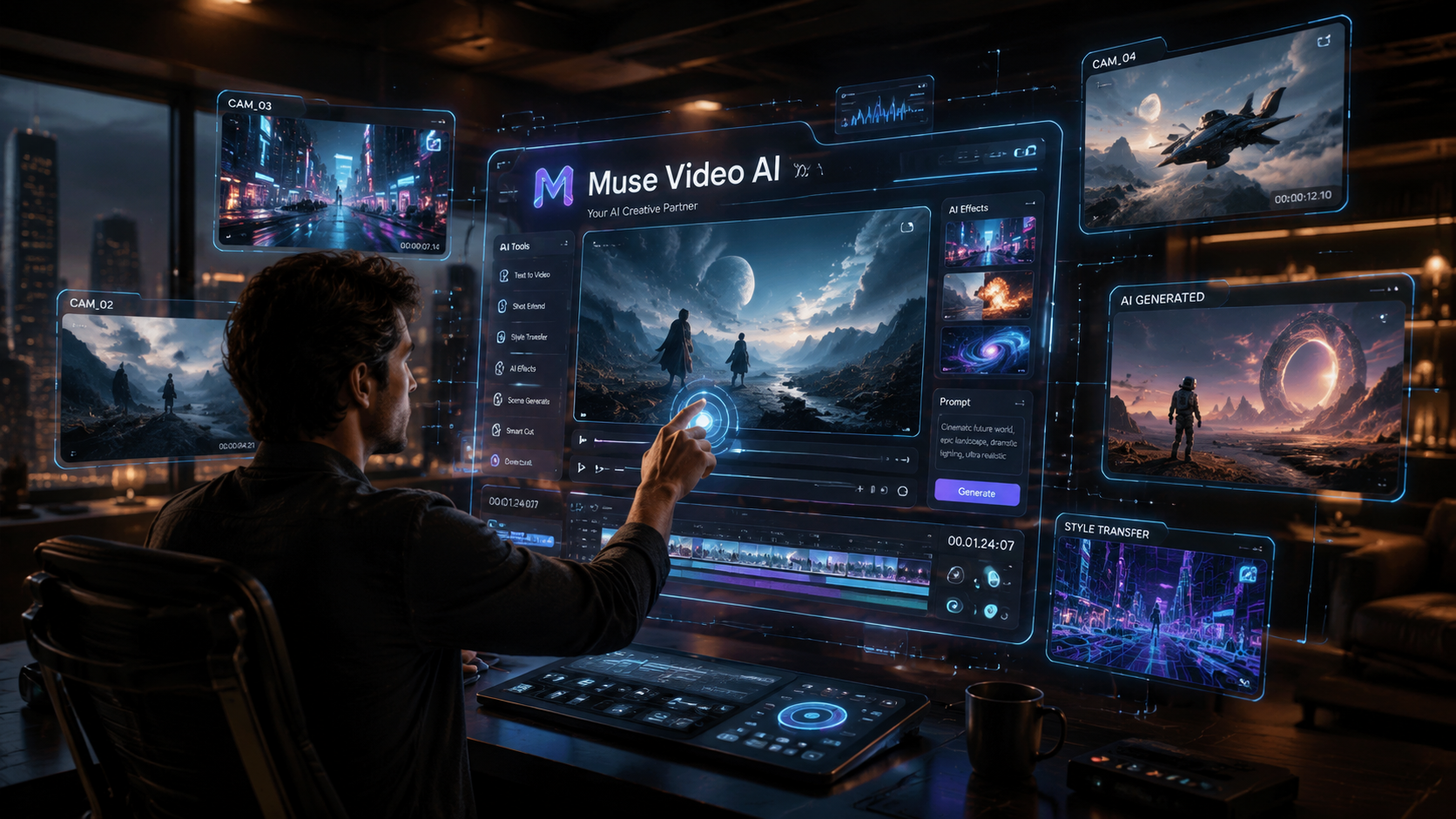
Muse Video AI by Meta is transforming content creation across multiple industries. Social media managers report producing 3-5x more video content with the same resources, while independent filmmakers are using the tool to achieve Hollywood-grade production values on indie budgets. According to Meta Store data, early access users created over 2.7 million videos in the first 72 hours after launch.
The advertising sector has particularly embraced this technology. Brands can now generate dozens of localized video variants from a single master edit, automatically adjusting cultural references, product shots, and spokesperson delivery for different markets. This hyper-personalization capability has led to a 28% average increase in ad engagement rates compared to traditional single-version commercials.
For individual creators, Muse Video AI simplifies complex techniques like match cuts, parallel editing, and montage sequences that previously required extensive technical knowledge. The system's "Director Mode" analyzes raw footage to suggest multiple narrative structures, complete with automatically generated title cards and end screens. This has lowered the barrier to entry for cinematic storytelling while maintaining artistic control.
Top Five Use Cases
1. Automated social media content repurposing for multi-platform distribution
2. Rapid production of localized advertising variants for global campaigns
3. Documentary-style editing with automatic interview highlight detection
4. Music video creation with beat-synced visual effects
5. Educational content generation with dynamic info-graphics
Ethical Considerations and Industry Response
The launch of Muse Video AI has not been without controversy. According to CBS News, privacy advocates warn that the tool's ability to generate realistic deepfakes from public Instagram content could enable new forms of digital impersonation. Meta's decision to make the technology opt-out rather than opt-in has drawn particular criticism, with the Creative Artists Agency (CAA) publicly calling for policy changes.
Industry professionals are divided on the implications. While some praise the democratization of high-end video production, others worry about job displacement in post-production roles. The Hollywood Reporter notes that 72% of surveyed editors express concern about AI tools undercutting traditional workflows, though 58% also acknowledge using Muse Video AI for rough cuts to accelerate their process.
Meta has responded to these concerns by implementing watermarks on AI-generated content and developing detection tools. However, the company maintains that creative professionals will always play an essential role in storytelling, with AI serving as an enhancement rather than replacement. This stance reflects their broader strategy to position Muse Video AI as a collaborator rather than competitor in the creative process.
Comparative Analysis: Muse Video AI vs. Other Solutions
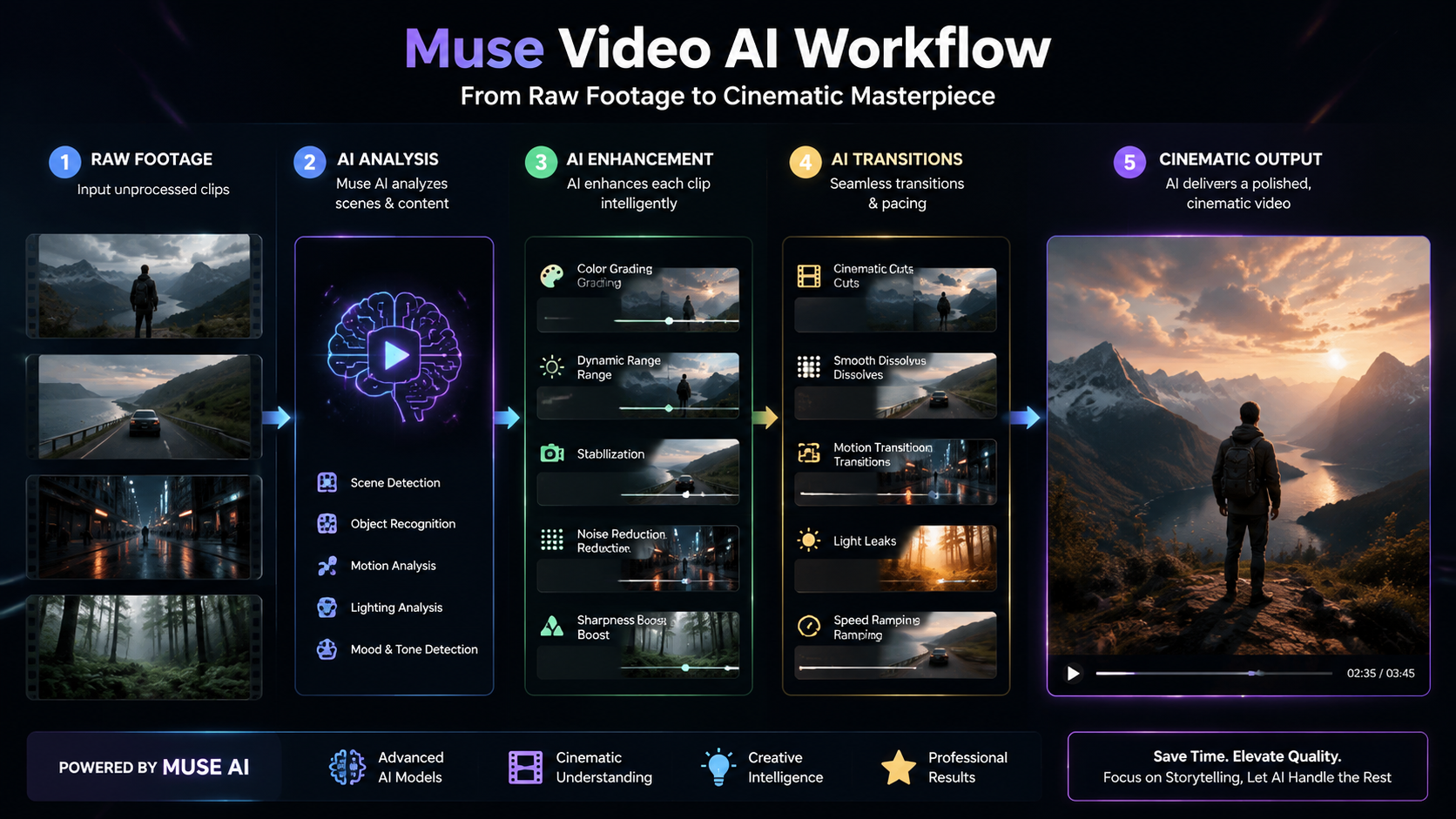
When evaluating Muse Video AI against other AI video tools, several key differentiators emerge. Unlike single-purpose generators, Meta's solution offers a complete post-production pipeline from raw footage to finished product. This end-to-end approach contrasts with competitors that specialize in either generation or editing but rarely both.
The integration with Meta's ecosystem (Instagram, Facebook, WhatsApp) provides unique advantages for social content creators. Automatic format optimization for different platforms saves approximately 15-20 minutes per video compared to manual resizing. However, some professional users note that Digen AI Agent offers superior character consistency for long-form narrative projects, particularly when maintaining actor likeness across multiple scenes.
| Feature | Muse Video AI | Digen AI Agent |
|---|---|---|
| Editing Automation | ★★★★★ | ★★★★☆ |
| Character Consistency | ★★★☆☆ | ★★★★★ |
| Social Integration | ★★★★★ | ★★★☆☆ |
| Processing Speed | 4K @ 30fps in 45s | 4K @ 30fps in 60s |
| Learning Curve | Beginner-friendly | Moderate |
Future Developments and Roadmap
Meta has already announced plans to expand Muse Video AI's capabilities throughout 2026. The upcoming Q4 update will introduce collaborative editing features, allowing multiple users to work on the same project with AI-assisted version control. According to internal documents, this could reduce team production timelines by an additional 35-50% for complex projects.
Longer-term, Meta is investing heavily in real-time rendering capabilities that would enable live video production with AI enhancements. Early tests show promise for live events and broadcasts, with prototype systems reducing traditional broadcast delay from 7 seconds to under 2 seconds while applying cinematic effects. This development could revolutionize how live content is produced and consumed.
The company is also addressing ethical concerns through technological solutions. Planned features include more robust content authentication protocols and expanded creator controls over how their likeness can be used. These measures aim to balance innovation with responsibility in an increasingly synthetic media landscape.
Getting Started with Muse Video AI
For creators interested in exploring Muse Video AI, the process begins with accessing the tool through Meta's creative suite. Current integration includes direct import from Instagram Reels and Facebook Stories, with standalone desktop applications expected by Q3 2026. The learning curve is intentionally gentle, with guided tutorials that help users achieve professional results within their first hour of use.
Advanced users can dive into the system's customization options, which include training custom style presets and creating proprietary editing templates. These features are particularly valuable for brands and agencies looking to maintain consistent visual identities across all content. Early adopters report that investing 2-3 hours in initial setup can save 10-15 hours per month in repetitive editing tasks.
As with any powerful tool, best practices continue to evolve. Many professional editors recommend using Muse Video AI for initial passes and rough cuts, then applying human refinement for final polish. This hybrid approach leverages AI efficiency while preserving the nuanced decision-making that distinguishes exceptional work.
Frequently Asked Questions
Is Muse Video AI free to use?
Currently, Muse Video AI is included with Meta's professional creator subscriptions, while basic features are available to all users with some limitations on output quality and length.
How does Muse Video AI handle copyright and licensing?
The system includes a content recognition system that flags potential copyright issues, though users remain responsible for securing proper licenses for all source material.
Can Muse Video AI replace human editors entirely?
While capable of handling many technical aspects, most professionals use it as a time-saving tool rather than complete replacement, particularly for projects requiring creative judgment.
What are the system requirements?
Cloud processing means most modern devices can access Muse Video AI, though 4K projects require stable internet connections of at least 25Mbps for smooth operation.
How does Muse compare to Digen AI for character consistency?
Digen AI Agent specializes in maintaining consistent character appearances across longer narratives, while Muse excels at general editing tasks and social content optimization.
Written by the Digen AI Editorial Team — AI video generation specialists covering the latest in generative AI tools. Learn more about Digen AI.
Comments ()