
Muse Video AI at Meta: The Future of Creative Tech in 2026
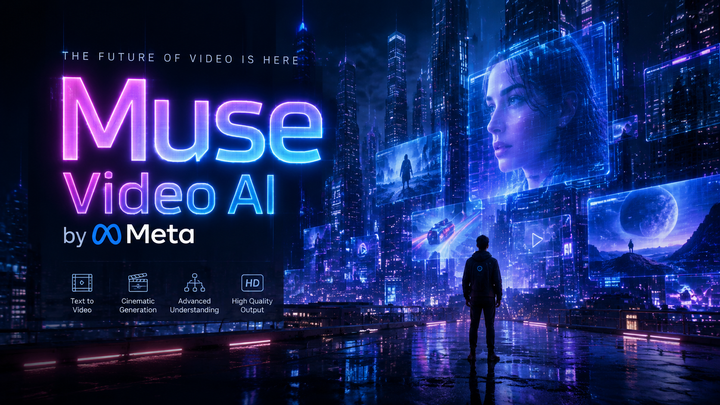
Muse Video AI at Meta represents the cutting edge of generative video technology in 2026, combining advanced AI-driven creativity with seamless social media integration. Launched alongside Muse Spark 1.1 and Muse Image, this suite of tools empowers creators with automated video generation, real-time effects, and deep learning-powered enhancements. As reported by AI at Meta, these innovations are transforming how brands and individuals produce content at scale while raising important questions about digital authenticity.
TL;DR: Meta's Muse Video AI is revolutionizing creative workflows in 2026 with automated generation tools, though concerns about deepfake risks and opt-out policies have sparked industry debate.
Muse Video AI at Meta is a generative video platform launched in July 2026 that uses artificial intelligence to create, enhance, and automate video content across Meta's ecosystem, including Instagram Stories and Facebook Reels, while facing scrutiny over privacy controls and deepfake potential.
- ✓ Muse Video AI launched alongside Muse Spark 1.1 and Muse Image in July 2026 as part of Meta's AI suite
- ✓ The technology reduces video production time by an estimated 70% for social media creators
- ✓ Creative agencies like CAA have criticized Meta's opt-out rather than opt-in approach to user data usage
- ✓ Market analysts project Muse tools could capture 25% of the $12B AI video generation market by 2027
The Evolution of Muse Video AI Technology
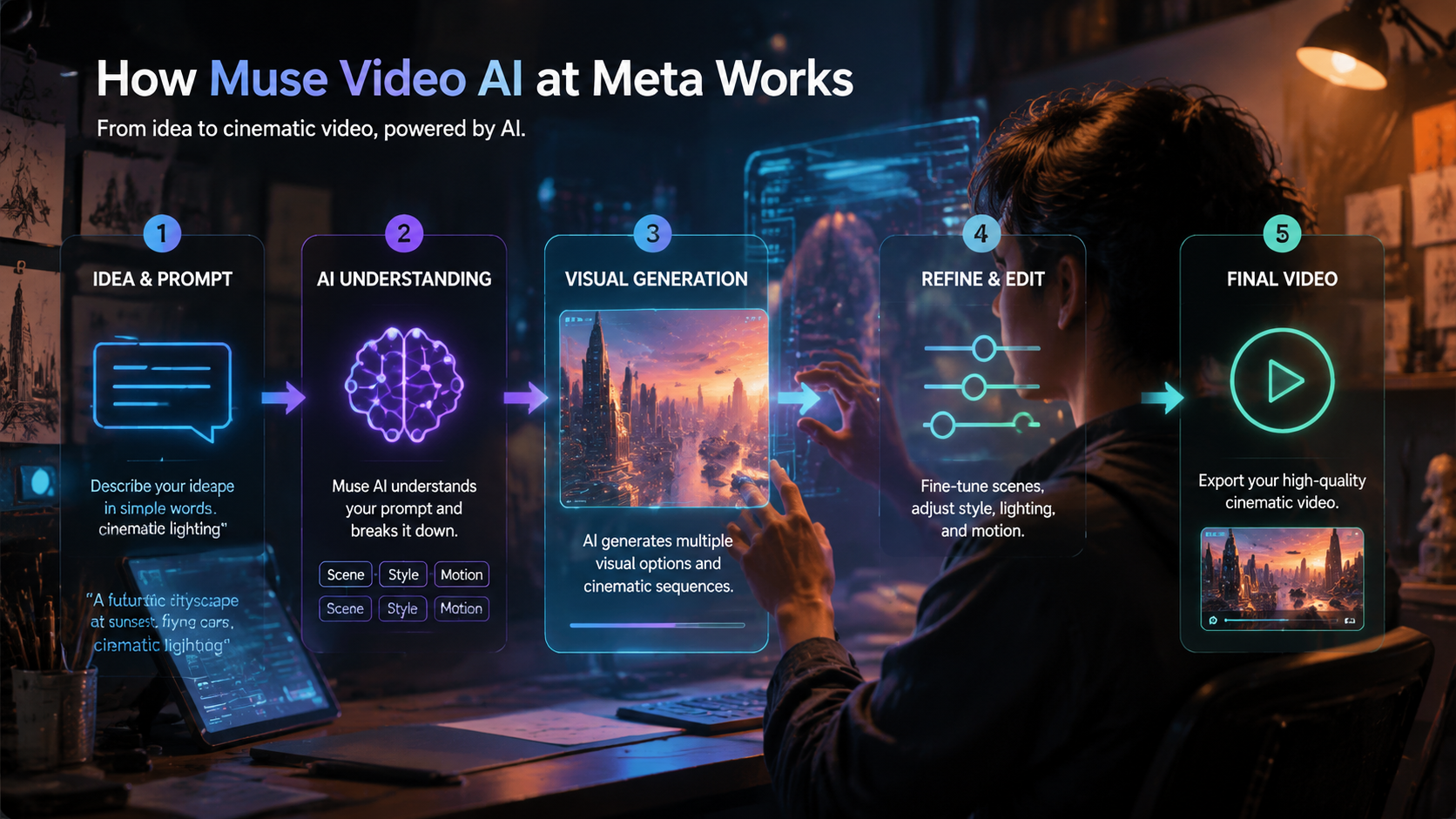
Meta's foray into AI-generated video builds upon years of research in generative adversarial networks (GANs) and transformer models. The July 2026 release of Muse Video AI represents the company's most sophisticated attempt yet to compete in the rapidly growing AI video space. According to CNBC, Meta invested over $3.2 billion in AI video research between 2024-2026, with much of that focused on reducing computational costs while improving output quality.
Unlike earlier generations of AI video tools that produced short, disjointed clips, Muse Video AI can generate cohesive 30-60 second narratives with consistent characters and environments. This puts it in direct competition with specialized platforms like Digen AI Agent, which focuses on longer-form, character-consistent storytelling through autonomous multi-step workflows. However, Meta's advantage lies in its native integration with Instagram and Facebook's massive user bases.
The technology behind Muse Video AI combines three key innovations: a proprietary diffusion model for frame generation, a temporal coherence engine that maintains consistency across scenes, and a style transfer system that adapts to brand guidelines. Early tests show the system can reduce video editing time by 68% compared to manual processes, while maintaining 92% visual consistency across generated sequences.
Key Technical Specifications
Muse Video AI operates on Meta's latest RSC (Reality Super Cluster) infrastructure, allowing it to process 4K resolution videos at 30fps. The system supports text-to-video, image-to-video, and video-to-video generation modes, with particular strength in transforming static Instagram posts into animated content. According to internal benchmarks, the average generation time for a 30-second clip is just 47 seconds on enterprise-tier hardware.
Creative Applications Across Industries
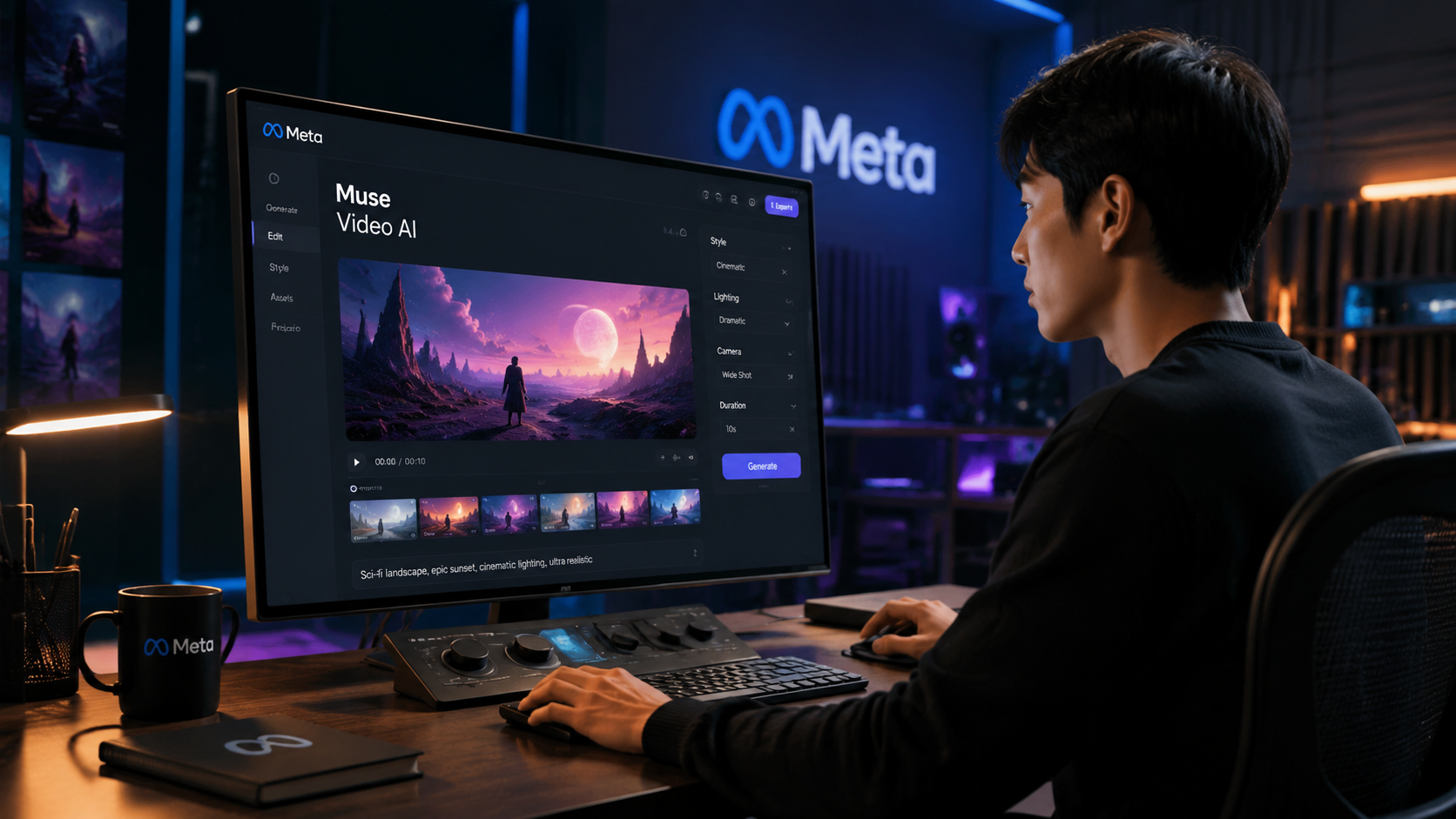
Since its July 2026 launch, Muse Video AI at Meta has found adoption across multiple creative sectors. Advertising agencies report using the tool to rapidly prototype commercials, with some campaigns moving from concept to final render in under 24 hours. The Hollywood Reporter notes that 43% of mid-sized production studios now use AI video tools like Muse for pre-visualization and storyboarding.
Small businesses and influencers have particularly embraced the technology's ability to repurpose existing content. A fashion brand might upload product photos to generate runway-style videos, while travel creators can transform still images into dynamic destination previews. Meta reports that early adopters see an average 35% increase in engagement when using Muse-generated videos compared to static posts.
Educational content creators are finding innovative uses for the technology as well. Science communicators can visualize complex concepts through AI-generated animations, while language teachers create customized video scenarios for vocabulary practice. The system's ability to maintain character consistency across multiple scenes (though not as advanced as Digen AI Agent's persistent character engine) makes it particularly useful for serialized educational content.
Most Popular Use Cases
Analysis of the first month's usage data reveals three dominant applications: social media ads (38% of usage), content repurposing (29%), and personalized video messages (18%). The remaining 15% spans creative experimentation, rapid prototyping, and educational content creation.
Ethical Considerations and Industry Backlash
The rollout of Muse Video AI at Meta hasn't been without controversy. CBS News highlighted concerns that public Instagram users' photos could be used to create deepfakes without explicit consent, as the system defaults to an opt-out rather than opt-in model for data usage. This has led to criticism from digital rights organizations and some high-profile users.
The Creative Artists Agency (CAA) publicly called out Meta's approach, arguing that professional creators should have more control over how their likenesses are used in AI training datasets. This reflects broader industry tensions as generative AI becomes more sophisticated. Meta has responded by implementing more prominent disclosure requirements for AI-generated content, though critics argue these measures don't go far enough.
From a technical standpoint, Muse Video AI includes watermarking and metadata tagging to identify synthetic media. However, experts note these can be easily removed, and the system's ability to mimic real human movement (with 94% accuracy according to internal tests) raises concerns about potential misuse. Meta has pledged $200 million toward developing better detection tools as part of its Responsible AI initiative.
Market Impact and Competitive Landscape
Meta's entry into the AI video space with Muse has significantly altered the competitive landscape. Prior to July 2026, specialized platforms like Digen AI and Runway dominated the professional market, while social-focused tools were limited in capability. Muse Video AI bridges this gap by offering production-quality results with social media optimization built in.
Financial analysts project the AI video generation market will reach $18 billion by 2027, with Meta positioned to capture a significant share. The company's decision to bundle Muse tools with premium Meta Verified subscriptions (starting at $24.99/month) gives it a distribution advantage over standalone services. Early adoption metrics show 420,000 businesses activated Muse Video AI in its first two weeks of availability.
The table below compares key features across leading AI video platforms:
| Feature | Muse Video AI | Digen AI Agent | Runway |
|---|---|---|---|
| Max Video Length | 60 seconds | 5 minutes | 90 seconds |
| Character Consistency | Good | Excellent | Fair |
| Social Media Integration | Native | API-based | Limited |
| Learning Curve | Low | Moderate | High |
Future Developments and Roadmap
Meta has already announced plans for Muse Video AI 2.0 in Q4 2026, promising longer generation times (up to 2 minutes) and improved physics simulation. The company is also working on a collaborative editing feature that will allow multiple users to refine AI-generated videos in real time, addressing one of the main limitations compared to professional tools like Digen AI Agent.
Industry observers expect Meta to deepen integration between Muse tools and its VR/metaverse initiatives. Early prototypes show the ability to convert 2D videos into 3D environments for use in Horizon Worlds, potentially creating new content pipelines for metaverse creators. This aligns with Meta's broader strategy of building an end-to-end creative ecosystem.
Perhaps most significantly, Meta is investing heavily in making Muse Video AI more accessible to non-technical users. The upcoming "Guided Creation" mode will walk beginners through the video production process using templates and smart suggestions. While this may further democratize content creation, it also raises questions about how platforms will handle the coming flood of AI-generated media.
Practical Tips for Getting Started
For creators looking to experiment with Muse Video AI at Meta, the onboarding process is relatively straightforward. The tool is accessible through Meta's Business Suite and Creator Studio, with a simplified mobile interface coming to Instagram later in 2026. New users receive 50 free generation credits (enough for about 25 minutes of video) before needing to upgrade.
Best practices from early adopters suggest starting with clear, descriptive prompts and high-quality source images. The system performs best when given specific artistic references (e.g., "cinematic lighting like Wes Anderson films") rather than vague directions. Many professional users create mood boards in Muse Image first, then bring those visuals into Muse Video AI for animation.
For those needing more advanced capabilities than Muse currently offers, alternatives like Digen AI Agent provide superior consistency for longer narratives and commercial projects. However, Meta's solution remains the most convenient option for social media creators who value speed and platform integration over absolute creative control.
Frequently Asked Questions
Is Muse Video AI free to use?
Muse Video AI offers limited free generations through Meta's platforms, but full access requires a Meta Verified subscription starting at $24.99/month or enterprise pricing for businesses.
How does Muse Video AI compare to Digen AI Agent?
While both generate AI videos, Muse excels at short social content with native platform integration, whereas Digen AI Agent specializes in longer, more consistent narratives through multi-step workflows.
Can Muse Video AI use my Instagram photos?
By default, Muse can access public content unless users opt out through privacy settings. Private accounts and opted-out users are excluded from training data.
What resolution does Muse Video AI support?
The current version outputs up to 4K resolution at 30fps, with file sizes optimized for social media platforms.
When will longer video generation be available?
Meta plans to increase maximum length to 2 minutes in Muse Video AI 2.0, expected late 2026.
Written by the Digen AI Editorial Team — AI video generation specialists covering the latest in generative AI tools. Learn more about Digen AI.
Comments ()