
Future of AI Video 2026: Trends and Tech Transformation
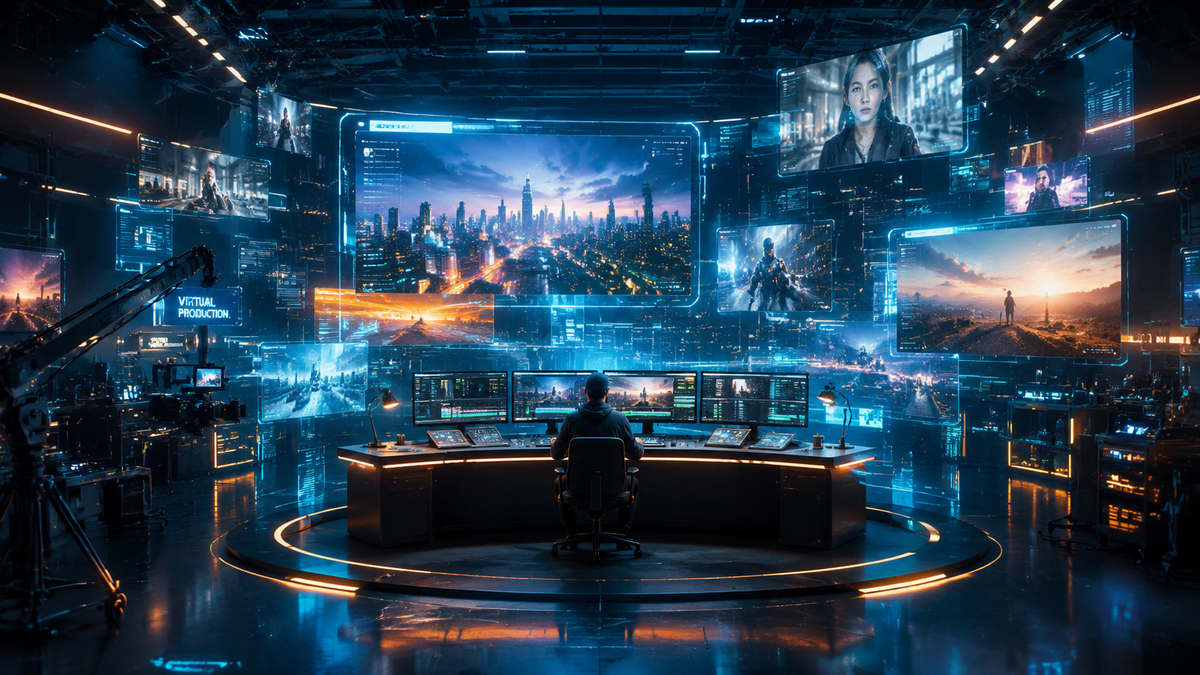
The future of ai video 2026 is defined by a shift from centralized, experimental tools toward decentralized, high-fidelity production workflows and autonomous video-to-video transformations. As we navigate the midpoint of 2026, the landscape has been reshaped by the sunsetting of early pioneers like OpenAI’s Sora and the rise of breakthrough models that prioritize consistency, real-time defense applications, and marketing automation. This evolution marks the transition from "generative novelties" to essential infrastructure for global digital communication.
The future of AI video 2026 is a landscape dominated by specialized video-to-video AI models and autonomous production agents. Following the 2026 shutdown of OpenAI’s Sora, the industry has pivoted toward high-consistency tools that integrate directly into marketing stacks and defense systems, enabling real-time, high-fidelity visual synthesis for enterprise and security applications.
- ✓ The sunsetting of OpenAI’s Sora has cleared the path for niche, specialized video-to-video AI models.
- ✓ Real-time autonomous video generation is now a critical component of global defense and cybersecurity strategies.
- ✓ Marketing workflows in 2026 rely on AI for end-to-end video campaign orchestration rather than just clip generation.
- ✓ Video-to-video (V2V) technology has surpassed text-to-video in terms of commercial adoption and temporal consistency.
The Great Transition: Why the Future of AI Video 2026 Changed Direction
In early 2026, the AI industry witnessed a monumental shift that few predicted a year prior. According to reports from understandingai.org and Creative Bloq, OpenAI officially shut down its Sora AI video application in March 2026. While Sora was once the poster child for the generative video movement, its sunsetting did not signal the death of the medium; rather, it signaled a "maturation phase." The industry moved away from the "all-in-one" black-box generators toward more controllable, modular systems that professionals can actually use in production pipelines.
The decision to sunset Sora was largely driven by the high compute costs and the emergence of more efficient "video-to-video" (V2V) architectures. As noted by PitchBook, the end of Sora is not the end of AI video generation but a pivot toward sustainable, enterprise-grade tools. These new 2026 models focus on maintaining structural integrity across frames—a problem that plagued earlier iterations. By focusing on transforming existing footage rather than generating from scratch, developers have unlocked a level of realism that was previously unattainable.
Furthermore, the future of ai video 2026 is now inextricably linked to the concept of "Autonomous Video." We are no longer just prompting a machine to create a cat playing a piano; we are deploying agents that can storyboard, film (via virtual engines), edit, and localize a 30-second advertisement in minutes. This shift from "generative" to "agentic" video is the hallmark of this year’s technological transformation.
How to Implement AI Video in Your 2026 Workflow
- Define the Source Geometry: Use a low-fidelity mobile recording or a 3D block-out to establish the spatial layout of your scene.
- Select a Breakthrough V2V Model: Choose a specialized 2026 video-to-video model (such as those highlighted by The Business Standard) that matches your desired aesthetic.
- Apply Temporal Consistency Filters: Utilize the latest 2026 diffusion-correction layers to ensure that lighting and textures do not "flicker" between frames.
- Integrate Autonomous Defense Layers: If working with sensitive data, ensure your video pipeline includes real-time deepfake detection and watermarking.
- Deploy via Marketing Automation: Use an AI orchestrator to format the video for multiple platforms (TikTok, VR, Cinema) simultaneously.
Marketing Transformations and the 2026 Video Landscape

Marketing has undergone a total metamorphosis. According to ContentGrip, the future of marketing by mid-2026 is defined by "hyper-personalization at scale." It is no longer enough to have one video for a million people; brands now use AI to generate a million videos for a million individuals. These videos are not just static advertisements but dynamic entities that can change their dialogue, background, and even the products shown based on the viewer’s real-time data and preferences.
The technical backbone of this transformation is the integration of AI video with Large Language Models (LLMs) that act as "creative directors." These systems analyze current market trends and instantly adjust video assets to stay relevant. For instance, if a specific color palette starts trending on social media in the morning, an AI marketing suite can update a brand’s entire video catalog by the afternoon. This level of agility was impossible in the pre-2026 era of manual post-production.
Moreover, the future of ai video 2026 includes a heavy focus on "shoppable video" where the AI identifies objects in the frame in real-time and creates interactive overlays. This bridges the gap between entertainment and commerce, making the video the storefront itself. The efficiency gains are staggering, with some agencies reporting a 70% reduction in lead time for video content production compared to 2024 standards.
| Feature/Metric | 2024 (Experimental) | 2026 (Modern Standard) |
|---|---|---|
| Primary Input | Text-to-Video (Prompts) | Video-to-Video & Agentic Control |
| Temporal Consistency | High "jitter" and morphing | Near-perfect frame stability |
| Production Speed | Hours for 5-10 seconds | Real-time for 60+ seconds |
| Defense Utility | Minimal/Experimental | Autonomous Defense & RSAC Standard |
| Mainstream Tool | OpenAI Sora (Beta) | Specialized V2V Breakthrough Models |
Breakthrough Video-to-Video AI Models of 2026
As The Business Standard reported in April 2026, the market has shifted toward specialized video-to-video (V2V) models. Unlike the general-purpose generators of the past, these models are trained on specific domains—such as architectural visualization, fashion, or high-octane sports. This specialization allows for a level of physical accuracy that early models lacked. For example, a 2026 AI model designed for fluid dynamics can accurately render the way water splashes against a moving car, something that was a "hallucination nightmare" just two years ago.
These breakthrough models also utilize a "latent-consistency" framework, which allows them to run on consumer-grade hardware. We have moved away from needing massive server farms to generate a simple video. The future of ai video 2026 is local. Many creators now run high-end V2V transformations directly on their local workstations, ensuring better privacy and lower latency. This democratization of high-end visual effects has led to a surge in high-quality independent cinema and niche content creation.
Another key feature of 2026 models is "semantic editing." Instead of re-rendering an entire video to change a single detail, creators can now use natural language to modify specific layers. "Change the protagonist's jacket to leather and make the sunset more purple" is now a standard command that takes seconds to execute. This granular control is what finally convinced Hollywood studios to integrate AI video tools into their primary VFX pipelines.
The Rise of Autonomous Defense and AI Video
Beyond entertainment, AI video has become a cornerstone of national security and defense. At the RSAC 2026 conference, Nadir Izrael of Armis discussed the concept of "Autonomous Defense." As highlighted by Armis, the "AI Arms Race" is no longer just about code; it is about the visual processing and generation of data in real-time. AI video systems are now used to simulate thousands of battlefield scenarios per second, providing commanders with a "visualized future" of potential tactical outcomes.
These defense-grade AI video tools are also used for "counter-synthesis." As deepfakes become more sophisticated, autonomous defense systems use AI video analysis to detect microscopic inconsistencies in light reflection and blood flow (photoplethysmography) that are invisible to the human eye. In 2026, the same technology that allows us to create beautiful movies is being used to protect the integrity of our visual information landscape.
The Technical Transformation: From Pixels to Latent Space
The future of ai video 2026 is built on a fundamental change in how computers "understand" motion. In 2024, AI tried to predict the next pixel. In 2026, AI understands the underlying physics of the objects within the video. According to recent technical audits, 2026 models utilize "Neural Physics Engines" that sit alongside the generative layers. This means that if an AI generates a video of a glass falling, it isn't just guessing what a broken glass looks like; it is calculating the trajectory and impact based on simulated physical laws.
This transformation has also solved the "long-form" problem. Early AI video was limited to short bursts of 3 to 10 seconds. Today’s models use "Recursive Latent Memory," allowing the AI to remember what happened at the beginning of a ten-minute film and ensure that the characters and environment remain consistent until the end. This was the final hurdle for AI to be taken seriously as a storytelling medium.
The integration of multimodal inputs has also matured. In 2026, a video model doesn't just take text or images as input; it can take audio, MIDI data, haptic feedback, and even real-time sensor data from IoT devices. This allows for the creation of "responsive environments" in VR and AR, where the video world reacts instantly to the user's physical presence and movements. The line between a pre-rendered video and a real-time game engine has almost entirely vanished.
Economic Implications of the 2026 AI Video Shift
The economic landscape of the video industry has been permanently altered. While the shutdown of Sora caused initial concern among investors, the subsequent rise of specialized V2V companies has led to a more robust and diversified market. PitchBook notes that venture capital is now flowing into "Vertical AI"—companies that build video tools specifically for healthcare (surgical simulations), real estate (virtual walkthroughs), and education (historical recreations).
For the average creator, the cost of producing "Hollywood-level" visuals has dropped by over 90%. This has created a "Content Explosion" where the barrier to entry is no longer technical skill or capital, but pure imagination. However, this has also led to a saturated market, where the future of ai video 2026 demands higher standards for storytelling and emotional resonance to stand out in an ocean of AI-generated content.
What happened to OpenAI's Sora in 2026?
OpenAI officially shut down the Sora app in March 2026. The company shifted its focus away from a standalone video app toward integrating its video intelligence into broader, more sustainable enterprise API services and video-to-video architectures.
Is video-to-video (V2V) better than text-to-video in 2026?
Yes, for professional use, V2V is preferred because it offers significantly higher temporal consistency and control. It allows creators to use a base video as a structural guide, eliminating the "hallucinations" common in pure text-to-video generation.
How is AI video used in defense in 2026?
As discussed at RSAC 2026, AI video is used for autonomous defense, including real-time battlefield simulations and the detection of sophisticated deepfakes through high-speed visual analysis of lighting and biological markers.
Can AI generate full-length movies in 2026?
While fully autonomous "one-click" movies are still rare, AI tools in 2026 can maintain consistency over long durations (10+ minutes), enabling small teams to produce feature-length films with high-end VFX at a fraction of the traditional cost.
What is the "future of ai video 2026" for small businesses?
Small businesses now use autonomous marketing agents that handle the entire video lifecycle—from trend analysis and scriptwriting to generating localized video ads that automatically adapt to different social media platforms and audience demographics.



Comments ()