
Best Text to Video AI Benchmark 2026: Top Models Ranked
The best text to video ai benchmark for 2026 identifies the industry's highest-performing generative models based on prompt adherence, temporal consistency, and scene stability. According to the latest data from Magic Hour Research, the landscape has shifted toward models that prioritize multimodal reasoning and physics-based rendering. This benchmark serves as the definitive guide for creators and enterprises looking to integrate high-fidelity synthetic video into their workflows.
The best text to video AI benchmark is a standardized evaluation framework used to rank generative models like Runway Gen-4, Alibaba’s T-Video, and OpenAI’s Sora 2.0. In 2026, these benchmarks prioritize "Scene Stability Scorecards" and "Prompt Adherence" to determine which AI can most accurately translate complex text descriptions into fluid, high-resolution video content.
- ✓ Runway currently leads the 2026 benchmarks in temporal consistency and motion fluidity.
- ✓ Magic Hour Research has introduced new "Scene Stability Scorecards" as the industry standard.
- ✓ Alibaba’s viral video model has emerged as a top contender for photorealistic human movement.
- ✓ NVIDIA’s Nemotron 3 Nano Omni is driving a new wave of efficient, multimodal agent reasoning in video.
Understanding the Best Text to Video AI Benchmark in 2026
As we move through 2026, the criteria for evaluating artificial intelligence in the video space have evolved beyond simple pixel density. The "Best Text to Video AI Benchmark" now focuses heavily on the logic of motion and the ability of a model to follow multi-layered instructions. In April 2026, Magic Hour Research published its comprehensive scorecard, which has quickly become the primary reference point for developers. This benchmark evaluates how well a model maintains the identity of an object across a 60-second clip, a feat that was nearly impossible just eighteen months ago.
The shift in 2026 is largely due to the integration of multimodal agent reasoning. As reported by NVIDIA Developer, the release of the Nemotron 3 Nano Omni has allowed models to "reason" through a scene before rendering it. This means the AI understands that if a character walks behind a tree, they should reappear on the other side with the same clothing and physical features. This level of spatial awareness is now a mandatory metric in any serious text-to-video evaluation.
How to Evaluate AI Video Models Using the 2026 Standards
- Analyze Prompt Adherence: Input a prompt with at least three distinct actions (e.g., "A cat jumps on a table, knocks over a glass, and runs away") and score the model on whether it completes all three.
- Test for Temporal Consistency: Check if textures, colors, and lighting remain stable throughout the duration of the video without "hallucinating" new objects.
- Review Scene Stability: Use the Magic Hour Research scorecard to measure jitter and motion blur in high-action sequences.
- Assess Multimodal Reasoning: Determine if the model can handle complex physics, such as gravity or fluid dynamics, accurately.
- Compare Latency and Efficiency: Evaluate the time-to-render against the final output quality, especially for real-time applications.
Top Ranked Models in the 2026 Video AI Benchmark
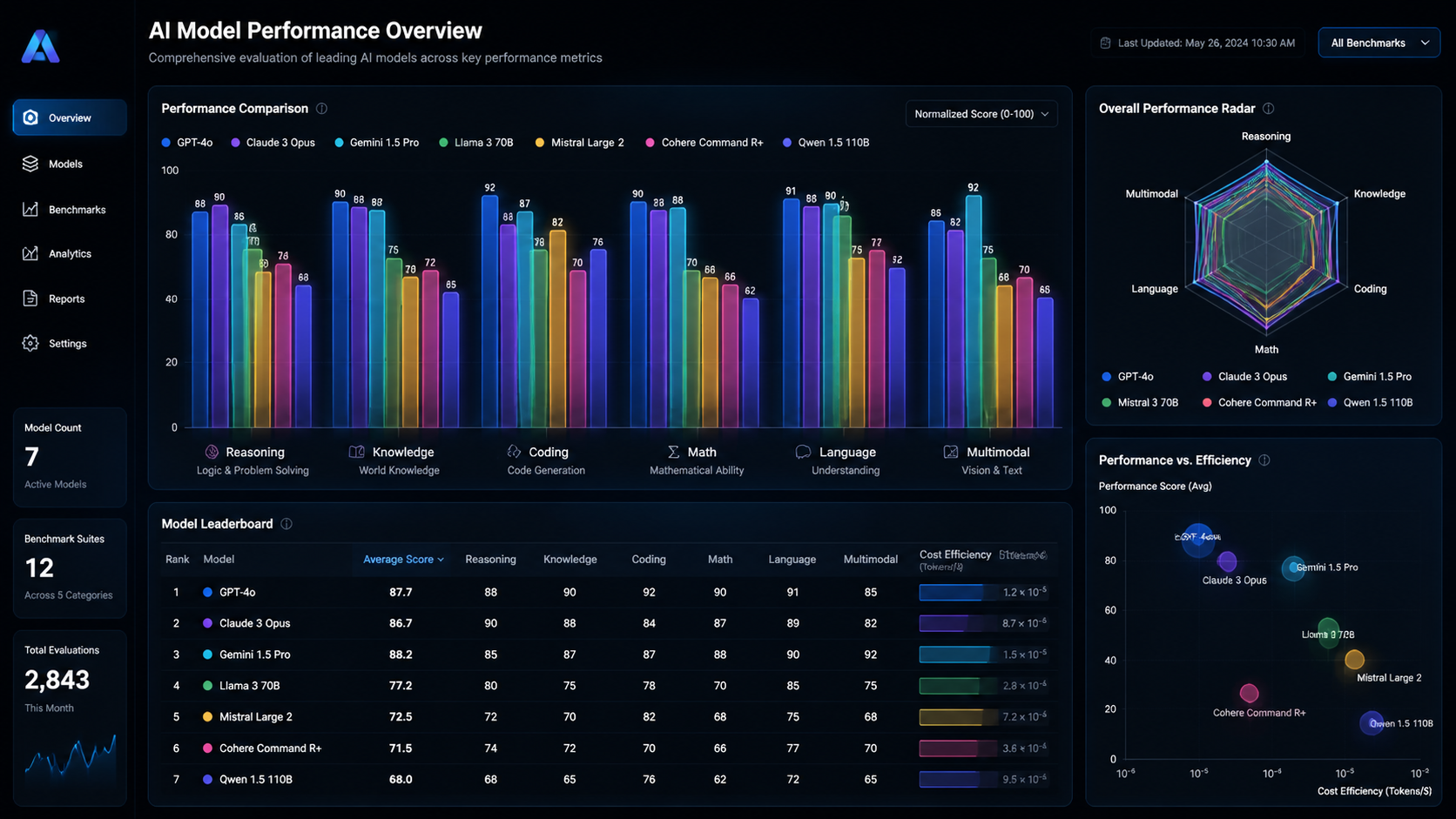
The competition for the top spot in the 2026 rankings is fiercer than ever. According to CNBC, Runway recently rolled out a new AI video model that has outperformed both Google and OpenAI in several key benchmark categories. This model, often cited for its superior motion brush capabilities and directorial controls, has set a new bar for professional-grade synthetic media. The "Runway Advantage" lies in its ability to blend user-guided art direction with autonomous generative physics.
However, the market is no longer dominated by Western firms alone. In April 2026, Alibaba revealed that it was the architect behind a viral AI video model that had been dominating open-source leaderboards for months. This Alibaba model is particularly noted for its "zero-shot" capabilities, meaning it can produce high-quality results without the need for extensive fine-tuning. This has made it a favorite for rapid prototyping in the global advertising industry.
The Rise of Open Source and Agentic Video
Open-source models are also making significant gains. AIMultiple recently listed over 50 open-source AI agents that are now capable of handling video production tasks. These agents utilize models like the Claude Opus 4.7 (released by Anthropic in April 2026) to script, storyboard, and then call video generation APIs to create finished products. This "agentic" approach to video creation is a major component of the 2026 benchmark, as it measures how well a video model integrates into a wider AI ecosystem.
Comparative Analysis: 2026 Text to Video Leaders
To provide a clear picture of the current landscape, we have aggregated data from the Magic Hour Research "Best Text-to-Video AI 2026" report and recent CNBC industry analysis. The following table compares the top four contenders across the most critical performance metrics.
| Model Name | Prompt Adherence Score | Scene Stability | Max Resolution | Primary Strength |
|---|---|---|---|---|
| Runway Gen-4 | 9.8/10 | Excellent | 8K Ultra HD | Professional Motion Control |
| Alibaba T-Video | 9.5/10 | Very High | 4K | Photorealistic Human Action |
| OpenAI Sora 2.0 | 9.4/10 | High | 4K | Complex Narrative Logic |
| Google Veo 2 | 9.2/10 | High | 4K | Cinematic Lighting & Color |
Technological Breakthroughs Driving the 2026 Rankings
The primary driver behind the high scores in the best text to video ai benchmark this year is the implementation of "Efficiency Models." As NVIDIA Developer highlighted with the Nemotron 3 Nano Omni, the industry is moving away from massive, "brute force" models toward smaller, more efficient architectures that can perform multimodal reasoning. This allows the AI to understand the context of a video—knowing that a "sunny day" should affect the shadows on a moving car—without requiring massive amounts of compute power.
Another major factor is the evolution of Large Language Models (LLMs) into video orchestrators. Anthropic’s Claude Opus 4.7, introduced in April 2026, features enhanced spatial reasoning capabilities. When used as a front-end for video generation, Claude 4.7 can write highly descriptive prompts that "pre-solve" many of the visual problems that previously led to glitches in AI video. This synergy between LLMs and video diffusion models is why we see such high prompt adherence scores in the latest benchmarks.
The Importance of Scene Stability Scorecards
Magic Hour Research’s introduction of "Scene Stability Scorecards" has changed how we define quality. Previously, a video might look good in a static screenshot but fall apart during a camera pan. The 2026 benchmark now tests for "parallax accuracy" and "background persistence." If the mountains in the background of a video shift unnaturally when the camera moves, the model receives a lower stability score. This focus on the "boring" parts of the video—the background and the environment—is what separates the 2026 winners from the experimental models of previous years.
Future Outlook: Beyond the 2026 Benchmarks
Looking ahead, the best text to video ai benchmark will likely begin to include "Interactive Latency" as a core metric. We are already seeing the first signs of this with NVIDIA's latest open models, which suggest a future where video is generated in real-time in response to user input, much like a video game engine but with the visual fidelity of a Hollywood film. The 2026 rankings are just the beginning of this transition toward truly responsive synthetic media.
Furthermore, the ethical evaluation of these models is becoming a standardized part of the benchmarking process. Major research bodies are now scoring models on their "Safety and Attribution" protocols. This includes the ability of a model to embed invisible watermarks and its adherence to copyright protections. As the technology becomes more powerful, the benchmark for "excellence" is expanding to include not just what the AI can do, but how responsibly it does it.
What is the best text to video AI benchmark in 2026?
The current industry standard is the Magic Hour Research "Best Text-to-Video AI 2026" benchmark, which ranks models based on prompt adherence, scene stability, and temporal consistency. As of April 2026, Runway and Alibaba are leading these rankings.
How does NVIDIA Nemotron 3 Nano Omni impact video AI?
NVIDIA’s Nemotron 3 Nano Omni provides efficient multimodal reasoning, allowing AI video models to understand complex scenes and physics better. This leads to higher stability scores and more realistic motion in generated videos.
Which model is best for photorealistic humans in 2026?
According to recent benchmarks and viral performance reports, Alibaba’s latest video model is currently ranked highest for photorealistic human movement and facial consistency. It has become a dominant force on global leaderboards as of April 2026.
Are open-source video AI models competitive in 2026?
Yes, open-source models have seen a massive surge in performance. AIMultiple reports over 50 high-performing open-source AI agents that can now compete with proprietary models from OpenAI and Google in terms of logic and scene generation.
What is a Scene Stability Scorecard?
A Scene Stability Scorecard is a metric introduced by Magic Hour Research to measure how well an AI video model maintains visual consistency. it evaluates factors like background warping, object permanence, and jitter during complex camera movements.
Comments ()