
Sora vs Runway Gen-3: 2026 Comparison of AI Video Leaders
The battle for AI video supremacy has reached a fever pitch in 2026, with the sora vs runway gen 3 debate evolving as both platforms release iterative updates. While Runway has moved aggressively into its Gen-4 and Gen-4.5 architectures, OpenAI’s Sora 2 Pro remains a titan of cinematic consistency and physical simulation. Choosing between them depends on whether you prioritize Runway's rapid feature deployment and API flexibility or Sora’s unmatched narrative depth and app-based accessibility.
Sora vs Runway Gen 3 (and its successor Gen-4.5) is a comparison of two distinct philosophies: OpenAI focuses on high-fidelity, long-form coherence and physical realism, whereas Runway leads in professional creative control, real-time editing tools, and developer-friendly API integration. In 2026, Runway Gen-4.5 currently holds the edge in raw benchmark performance and versatility for production pipelines.
- ✓ Runway Gen-4.5 has officially surpassed Sora 2 Pro in benchmarks according to recent reports from WinBuzzer and GIGAZINE.
- ✓ OpenAI’s Sora App has become a massive consumer hit, though user reviews highlight a gap between cinematic previews and daily usability.
- ✓ Developers are increasingly pivoting toward Seedance 2.0 and Runway Gen-4 for API-based video generation over Sora's closed ecosystem.
- ✓ Physical simulation and "world modeling" remain Sora's primary strengths, while Runway excels in multimodal control (camera, motion, and style).
To help you decide which tool fits your workflow, follow these steps to evaluate the current 2026 landscape:
- Assess Your Technical Needs: Determine if you need a standalone app for quick content (Sora) or a deep creative suite with API access (Runway).
- Compare Temporal Coherence: Test both models for "object permanence"—the ability of a character to remain identical across a 60-second clip.
- Evaluate Integration: Check if your current editing software (like Premiere or Resolve) supports the latest Runway Gen-4.5 plugins or OpenAI’s proprietary connectors.
- Review Pricing Tiers: Compare the credit-based system of Runway against the subscription model of the Sora Pro app.
The Evolution of sora vs runway gen 3 in 2026
As we navigate through 2026, the landscape of generative video has shifted from experimental clips to production-ready assets. The original sora vs runway gen 3 rivalry laid the groundwork for the current generation of models. Runway has since accelerated its development cycle, releasing Gen-4 and Gen-4.5, which have redefined what creators expect from AI. According to WinBuzzer, the latest Runway Gen-4.5 model has effectively "dethroned" previous leaders by offering superior motion brush precision and reduced artifacting in high-motion scenes.
OpenAI, meanwhile, has focused on the "Sora 2 Pro" iteration. While Runway focuses on the "how" of video—giving directors granular control over camera angles and lighting—Sora focuses on the "what." Sora’s underlying world model understands the physics of a scene better than most competitors. If you prompt a glass to break, Sora 2 Pro calculates the trajectory of the shards with startling accuracy. However, ForkLog reports that Runway’s latest model now surpasses Sora 2 Pro in specific creative benchmarks, particularly in rendering human skin textures and complex fluid dynamics.
The market reception has also diverged. The Sora App, released by OpenAI to the general public, has become a cultural phenomenon. BGR notes that while the app is a "massive hit" in terms of download numbers, power users often find the lack of fine-tuned controls frustrating compared to the professional-grade interface found in Runway’s ecosystem. This highlights the core of the 2026 comparison: Sora is the king of accessibility, while Runway remains the choice for the technical artist.
Technical Specifications and Performance Benchmarks
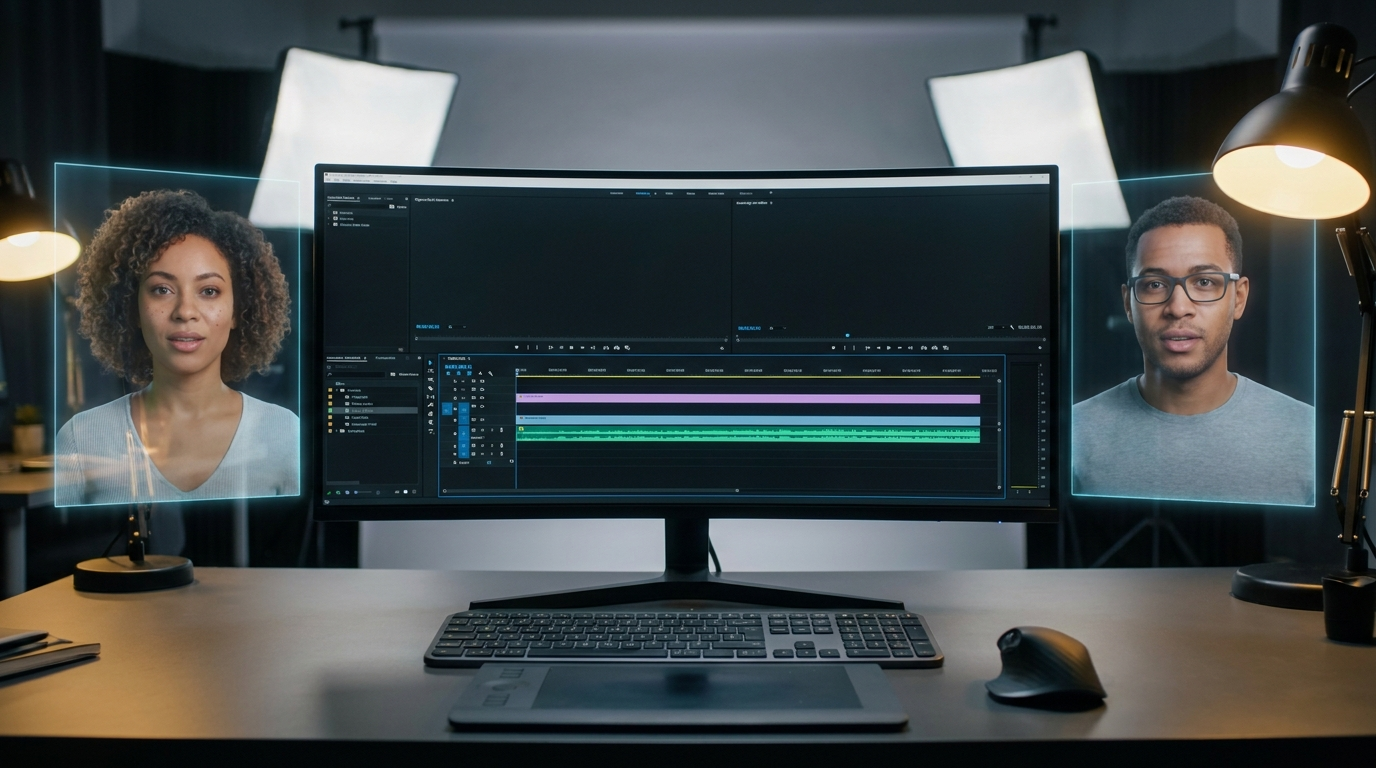
When looking at the raw data, the gap between these two leaders has narrowed significantly. In 2025 and early 2026, the industry moved toward 4K native generation as the standard. Runway Gen-4.5 introduced "Hyper-Realism Mode," which utilizes a latent diffusion transformer architecture optimized for 120fps output. This is a significant jump from the 60fps ceiling seen in earlier versions of Sora.
| Feature | OpenAI Sora 2 Pro | Runway Gen-4.5 |
|---|---|---|
| Max Resolution | 4K (Upscaled) | 4K (Native) |
| Max Duration | Up to 3 minutes | Up to 2 minutes (Loopable) |
| Control Tools | Prompt-based + Director Presets | Motion Brush, Camera Control, Multi-Motion |
| API Availability | Limited / Waitlist | Full Public API (Gen-4) |
| Physics Accuracy | Industry-Leading | High (Improved in v4.5) |
According to GIGAZINE, Runway Gen-4.5 outperformed both Sora 2 and Google’s Veo 3 in blind aesthetic tests conducted in late 2025. The study found that Runway’s lighting engine handles global illumination more naturally, especially in outdoor environments. Sora 2 Pro, however, still holds the record for "Temporal Consistency," meaning characters in Sora videos are less likely to "morph" or change clothing styles during long-duration shots.
The Rise of the Sora App
The launch of the Sora App was a pivotal moment for OpenAI. By simplifying the prompt-to-video pipeline, they captured the creator economy. However, as Tom's Guide pointed out after 200 hours of testing, the "black box" nature of Sora can be a hindrance for professional workflows. You get what the AI gives you, and while it is often beautiful, it is difficult to replicate the exact same camera move across different prompts—a task that Runway’s "Director Mode" handles with ease.
Runway's Professional Creative Suite
Runway has doubled down on its identity as the "Adobe of AI." Their Gen-4.5 model isn't just a prompt box; it's part of a larger ecosystem that includes Gen-1 (Video-to-Video) and Gen-2 (Image-to-Video) legacy tools that have been updated for 2026. The ability to upload a character reference sheet and have the AI maintain that character across twenty different clips is a feature Runway has perfected, whereas Sora still relies heavily on the strength of the initial text prompt.
Developer Integration and API Capabilities
For those building the next generation of apps, the sora vs runway gen 3 and Gen-4 comparison is heavily weighted toward Runway. SitePoint recently compared the API offerings of Seedance 2.0, Sora, and Runway Gen-4, noting that Runway offers the most robust documentation and lowest latency for developers. This has led to a surge of "AI-first" video editing platforms built entirely on top of Runway’s infrastructure.
OpenAI has been more protective of the Sora API. While select partners have access, the broader developer community has been left waiting. This has allowed competitors to gain ground in the enterprise sector. Companies looking to automate video ad production or personalized video messages at scale are gravitating toward Runway Gen-4.5 due to its predictable cost per frame and reliable uptime. According to SitePoint, the "developer experience" (DX) for Runway is currently rated the highest in the industry for 2026.
Furthermore, the introduction of "Seedance 2.0" has added a third player to this race. While not as famous as Sora or Runway, Seedance 2.0 has carved out a niche in high-speed, low-cost API calls. This pressure has forced Runway to keep its pricing competitive, while Sora remains a premium, high-cost luxury in the generative space.
Content Fidelity and Physics Simulation
One area where Sora 2 Pro continues to dominate is in the "World Model" approach. OpenAI’s researchers have long maintained that Sora is not just a video generator, but a simulator of physical reality. This shows in the way water ripples, how shadows fall on uneven surfaces, and how hair moves in the wind. In 2026, Sora’s ability to handle complex collisions—like a person walking through a crowded street—is still the gold standard.
Runway Gen-4.5 has made massive strides in this department, but it still occasionally suffers from "hallucinated physics." In high-speed action sequences, you might see a car wheel clip through the ground or a hand merge with a door handle. However, for 90% of commercial use cases—such as fashion b-roll, travel content, and talking head segments—these minor glitches are negligible. ForkLog highlights that Runway’s "Surpassing" of Sora 2 Pro is largely due to its visual "pop" and cinematic color grading, which many users prefer over Sora’s more "documentary-style" realism.
The choice between sora vs runway gen 3 (and its 2026 successors) often comes down to the "vibe" of the output. Sora's videos feel like they were captured on a high-end cinema camera with natural lighting. Runway's videos feel like they were meticulously crafted in a high-end post-production house with stylized color palettes and dramatic framing. Both are valid, but they serve different creative masters.
Pricing and Accessibility in 2026
As we look at the cost of these tools, the industry has shifted away from the "free-for-all" beta periods of 2024. In 2026, high-quality AI video is an investment. Runway Gen-4.5 operates on a "Pro" and "Enterprise" tier, with a "Pay-as-you-go" option for high-resolution 4K exports. This allows small studios to scale their costs based on project needs.
OpenAI’s Sora is packaged differently. It is primarily accessed through the "Sora Pro" subscription, which is bundled with other OpenAI services. While this offers great value for individual creators who already use ChatGPT and DALL-E 4, it can be restrictive for large agencies that need multi-user seats and centralized billing. Tom's Guide notes that the "cost-per-minute" of high-quality AI video has dropped by 40% since 2025, but it remains significantly more expensive than text or image generation due to the massive compute power required.
Finally, the "Free" tiers of these tools have become more of a "trial" experience. To get the watermark-free, 4K, high-bitrate video that is necessary for professional work, a paid plan is unavoidable. Runway’s credit system is often seen as more transparent, whereas Sora’s "usage caps" on the Pro plan have been a point of contention in user reviews, as reported by BGR.
Is Runway Gen-4.5 better than Sora 2 Pro?
In terms of creative control and API integration, Runway Gen-4.5 is currently considered superior. However, Sora 2 Pro still leads in physical simulation and long-form narrative consistency.
Can I use Sora for free in 2026?
OpenAI offers a limited trial of the Sora App, but professional-grade features and high-resolution exports require a Sora Pro subscription. Free users typically face longer wait times and watermarked content.
Does Runway Gen-4.5 support 4K video?
Yes, Runway Gen-4.5 supports native 4K generation with high dynamic range (HDR), making it suitable for professional film and television post-production workflows.
What is the main difference between Sora and Runway?
Sora is designed as a "world simulator" that creates highly realistic video from simple prompts, while Runway is a "creative suite" that provides tools like Motion Brush and Camera Control for precise artistic direction.
Which AI video generator is best for developers?
According to SitePoint, Runway Gen-4 is the preferred choice for developers due to its robust API, comprehensive documentation, and integration flexibility compared to the more closed Sora ecosystem.


Comments ()