
Best AI Video Generator for Filmmakers: 2026 Studio Guide
Finding the best ai video generator for filmmakers in 2026 requires looking beyond simple text-to-video prompts and focusing on tools that offer granular control, ethical sourcing, and high-fidelity output. As of mid-2026, the industry has shifted away from generalist models toward specialized cinematic platforms like Flick, Higgsfield, and the newly supercharged Invideo, which integrate directly into professional production workflows.
The best AI video generator for filmmakers is Flick, which recently secured a $6M seed round to redefine cinematic AI through high-fidelity temporal consistency. While OpenAI's Sora has officially shut down as of March 2026, platforms like Higgsfield AI and Invideo (powered by NVIDIA compute) have emerged as the primary professional-grade alternatives for ethical and high-resolution film production.
- ✓ Flick is the current industry leader for cinematic consistency following its 2026 funding round.
- ✓ OpenAI’s Sora is no longer available, having been shut down in March 2026 after being labeled a "meme generator."
- ✓ Higgsfield AI has become the gold standard for ethical AI video practices in filmmaking.
- ✓ Invideo now utilizes NVIDIA’s advanced compute infrastructure to handle high-bitrate film renders.
- ✓ Pro-level filmmaking now requires "All-in-One" platforms rather than isolated prompt tools.
The landscape of digital cinema has undergone a seismic shift this year. For professional creators, the "novelty phase" of AI is over. Filmmakers are no longer looking for tools that simply create 5-second clips; they are seeking end-to-end solutions that respect the craft of cinematography. This guide explores the top-tier platforms that have survived the 2026 market consolidation and are now defining the future of the silver screen.
The Evolution of the AI Video Generator for Filmmakers in 2026
In early 2026, the filmmaking community witnessed a major turning point with the closure of once-hyped platforms. According to Notebookcheck, OpenAI officially shut down its Sora platform in March 2026, a move celebrated by anti-AI advocates and traditional cinematographers alike. The consensus among adland professionals, as reported by Little Black Book, was that Sora had become "little more than a meme generator," lacking the precision required for high-stakes commercial and narrative work.
This vacuum was quickly filled by "Flick," a startup that raised $6M in May 2026 specifically to redefine how AI films are structured. Unlike its predecessors, Flick focuses on "Temporal Narrative Logic," ensuring that characters and environments remain identical across hundreds of generated shots. This shift marks the transition from "AI video" to "AI cinematography," where the filmmaker maintains control over lighting, lens focal length, and blocking.
How to Integrate AI into Your Filmmaking Workflow
- Pre-Visualization: Use Higgsfield AI to generate ethical, high-fidelity storyboards that can be converted into motion tests.
- Asset Generation: Utilize Flick to create consistent character models and environmental plates that match your film's color grade.
- Upscaling and Rendering: Process your sequences through Invideo’s NVIDIA-powered compute engine to ensure 4K or 8K delivery standards.
- Ethical Auditing: Run your final output through ethical AI verification tools to ensure all training data used was licensed, a standard now required by most major festivals.
Top Professional AI Video Platforms Compared
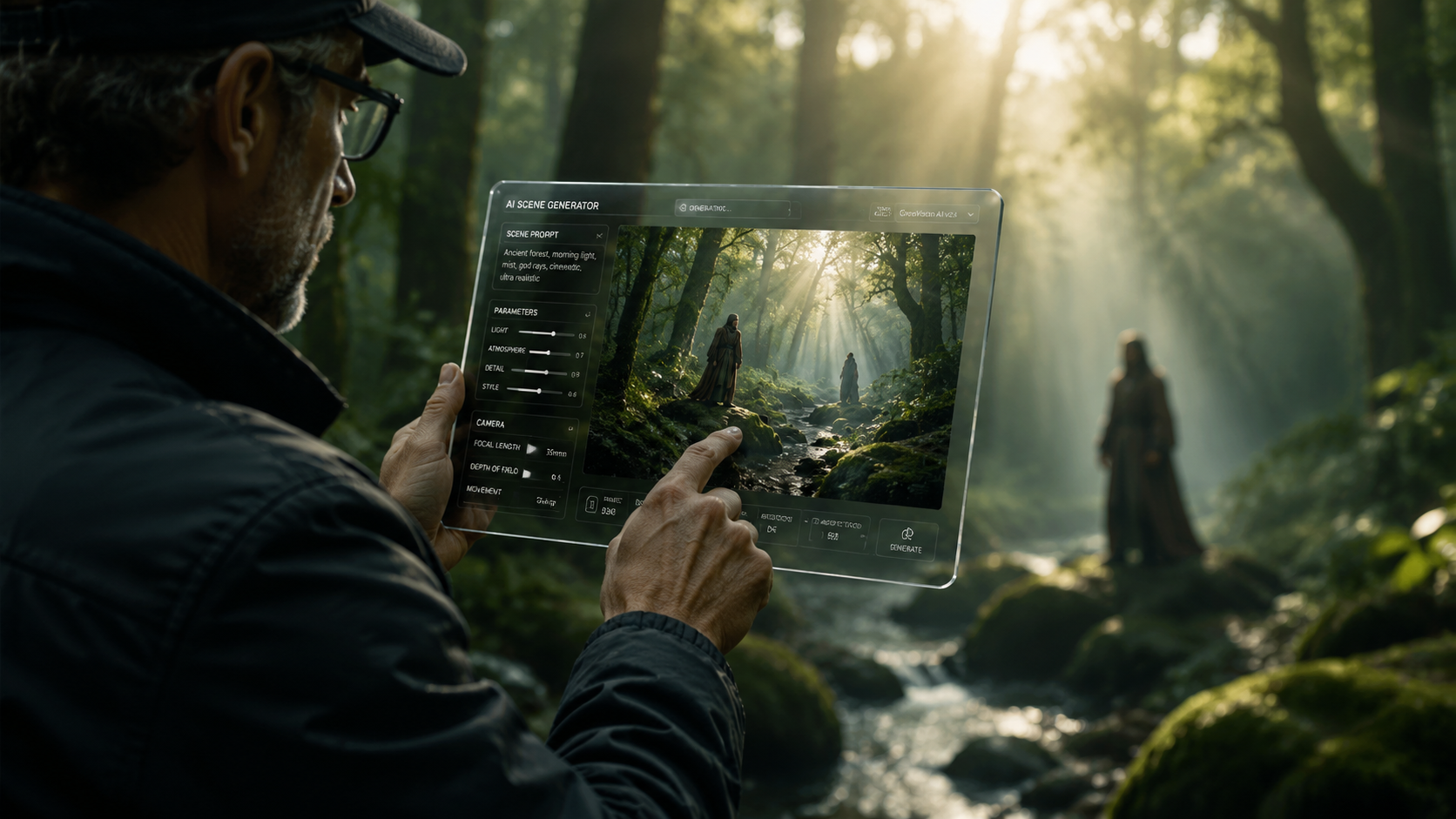
Selecting the right ai video generator for filmmakers depends on your specific production needs. Whether you are working on a high-budget commercial or an indie feature, the compute power and ethical framework of the tool are paramount. The following table breaks down the leading contenders in the 2026 market based on the latest industry data.
| Platform | Primary Strength | Compute Source | Ethical Status |
|---|---|---|---|
| Flick | Cinematic Consistency | Proprietary Seed-Funded Cloud | Fully Licensed Sets |
| Higgsfield AI | Social & Narrative Motion | Edge Computing | Creator-First Ethics |
| Invideo | All-in-One Production | NVIDIA Dedicated Compute | Commercial Grade |
| Sora (Legacy) | N/A (Discontinued) | N/A | Controversial |
Higgsfield AI and the Rise of Ethical Filmmaking
Ethics have become the centerpiece of the AI conversation in 2026. As reported by CineD, Higgsfield AI has launched a new "Ethical AI Video for Filmmakers" curriculum to guide pros through the complexities of the current legal landscape. This platform is designed for those who refuse to use "black box" models that scrape artist data without consent. Higgsfield’s architecture allows filmmakers to train "micro-models" on their own footage, ensuring the output is a direct extension of their personal style.
The Higgsfield platform excels in realistic human movement. While previous generations of AI struggled with "uncanny valley" physics, Higgsfield uses advanced skeletal mapping to ensure that characters move with the weight and gravity of real actors. For filmmakers, this means the ability to create complex crowd scenes or stunt sequences that would be too expensive or dangerous to film practically, all while maintaining a clear ethical conscience.
Why Ethical AI Matters for Distribution
According to No Film School, becoming a "pro" in AI filmmaking now requires a deep understanding of rights management. Major streaming platforms and film festivals in 2026 have implemented strict "Source Provenance" requirements. Using a tool like Higgsfield AI, which provides a transparent ledger of its training data, ensures that a filmmaker's work won't be disqualified from distribution due to copyright infringement issues—a problem that plagued users of the now-defunct Sora platform.
Invideo and the Power of NVIDIA Integration
One of the biggest technical leaps this year came from Invideo. In February 2026, Analytics India Magazine confirmed that Invideo integrated NVIDIA’s latest compute architecture directly into its cloud rendering engine. This integration solved the "render bottleneck" that previously made AI video impractical for long-form content. Filmmakers can now generate and iterate on high-resolution scenes in near real-time, significantly reducing post-production schedules.
Invideo has positioned itself as an "All-in-One" platform, moving away from the "prompt-and-pray" method. The interface now resembles a professional Non-Linear Editor (NLE), allowing users to manipulate AI-generated layers as if they were standard video tracks. This level of control is essential for the ai video generator for filmmakers keyword, as it bridges the gap between generative AI and traditional editing software like Premiere Pro or DaVinci Resolve.
Flick: The New Standard for Narrative Consistency
With its $6M seed round announced in May 2026, Flick has addressed the single greatest complaint of AI filmmakers: flickering and character drift. Business Wire reports that Flick’s new "Seed-to-Sequence" technology allows a filmmaker to lock in a character’s facial structure and wardrobe across an entire project. This is a revolutionary step for independent creators who can now produce feature-length content with a consistent visual language.
The platform’s focus on "Redefining How AI Films Are Created" involves a workflow where the AI acts as a digital camera crew. Users can specify camera heights, lens types (e.g., 35mm anamorphic), and even the specific type of film stock emulation. By treating the AI as a technical tool rather than a creative replacement, Flick has gained rapid adoption among traditional cinematographers looking to augment their practical shoots.
The Death of Sora and the Lesson for Filmmakers
The shuttering of Sora in March 2026 serves as a cautionary tale for the industry. While the platform initially wowed audiences with its visual fidelity, it failed to provide the "director-level" controls required for professional work. As noted by Little Black Book, the filmmaking community eventually rejected tools that prioritized "viral" visuals over narrative utility. The lesson for 2026 is clear: the best ai video generator for filmmakers is one that serves the story, not just the algorithm.
The Future of AI in the Director’s Chair
As we move through 2026, the role of the director is evolving into that of a "Creative Architect." Tools like Flick and Invideo are not replacing the need for vision; they are lowering the barrier to entry for complex visual storytelling. According to No Film School, the most successful "AI Pros" are those who combine traditional film theory—lighting, pacing, and performance—with the technical ability to prompt and refine generative models.
The integration of AI into filmmaking is no longer about replacing actors or sets; it is about expanding the boundaries of what is possible on an indie budget. With NVIDIA’s compute power and ethical frameworks from Higgsfield, the 2026 studio is more efficient, more creative, and more accessible than ever before. The "Studio Guide" for this year emphasizes that the tool is only as good as the filmmaker's intent.
What is the best AI video generator for filmmakers in 2026?
Flick is currently considered the top choice for filmmakers due to its $6M seed investment focused on cinematic consistency and character stability. It offers the most "director-centric" controls compared to other generative platforms.
Is OpenAI Sora still available for film production?
No, OpenAI officially shut down Sora in March 2026. The platform was criticized by professional filmmakers for being a "meme generator" and lacking the necessary controls for serious narrative work.
How does Invideo utilize NVIDIA technology?
Invideo integrated NVIDIA’s high-end compute infrastructure in February 2026 to provide faster rendering times and higher resolution outputs, making it suitable for professional film sequences.
What makes Higgsfield AI "ethical"?
Higgsfield AI focuses on "Ethical AI Video" by using transparent, licensed training data and offering lessons to filmmakers on how to use AI responsibly without infringing on creator rights.
Can I create a full-length movie with AI in 2026?
Yes, by using platforms like Flick for character consistency and Invideo for high-compute rendering, filmmakers are now producing feature-length content that maintains a professional, consistent aesthetic throughout.



Comments ()