
Adobe Firefly vs Runway Gen-3: 2026 AI Video Comparison
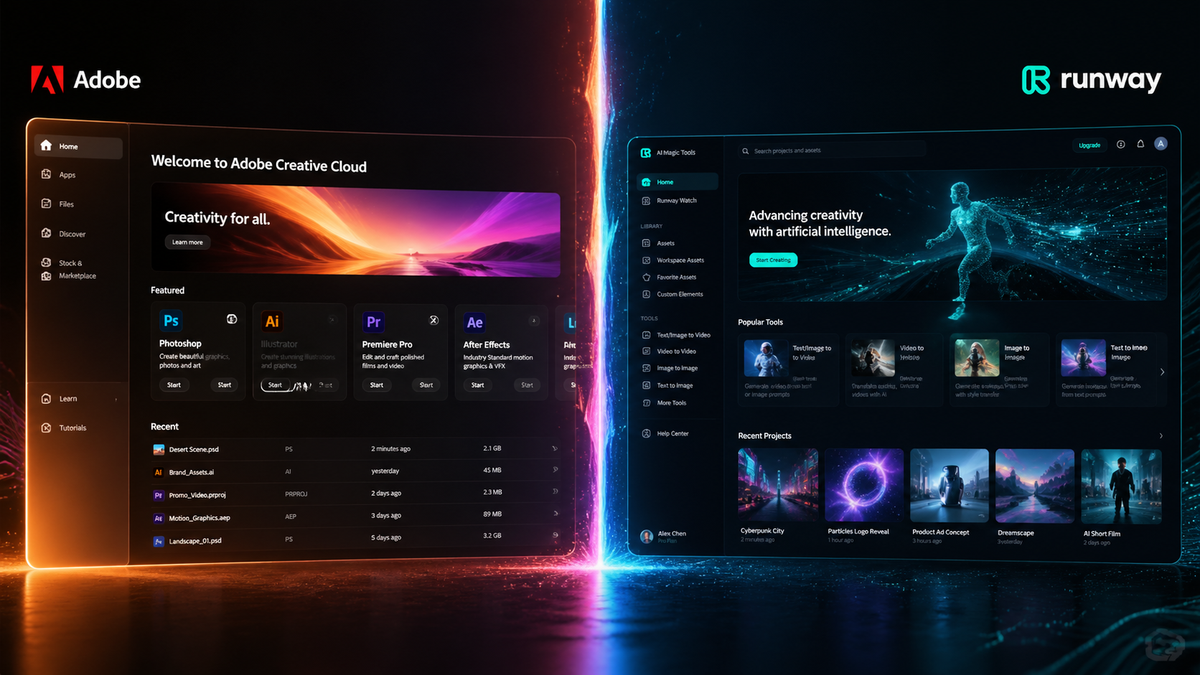
When comparing adobe firefly vs runway gen 3 in 2026, the choice depends on whether you prioritize seamless creative integration or cinematic physics. Adobe Firefly has evolved into a comprehensive creative studio offering unlimited generations and deep integration with Premiere Pro through its new Quick Cut AI editor, while Runway Gen-3 remains the industry standard for high-fidelity, physics-defying cinematic motion and granular temporal control. Both platforms have defined the 2026 landscape by moving beyond simple prompting into sophisticated, professional-grade video orchestration.
The comparison between Adobe Firefly and Runway Gen-3 centers on workflow versus raw power. Adobe Firefly is an all-in-one creative AI studio featuring unlimited generations and native integration with the Creative Cloud ecosystem. Runway Gen-3 is a specialized high-performance video model known for superior photorealism, complex motion synthesis, and advanced director-level controls for professional filmmakers.
- ✓ Adobe Firefly now offers unlimited video and image generations, making it the most cost-effective solution for high-volume creators.
- ✓ Runway Gen-3 maintains a slight edge in realistic human movement and complex fluid dynamics for high-end cinematic productions.
- ✓ The new "Firefly Boards" feature allows for collaborative, multi-model ideation that bridges the gap between concept art and final video.
- ✓ Adobe’s "Quick Cut AI Video Editor" (launched February 2026) automates the assembly of Firefly-generated clips directly into timelines.
The Evolution of AI Video: Adobe Firefly vs Runway Gen-3 in 2026
As we navigate the creative landscape of 2026, the rivalry between Adobe and Runway has shifted from basic clip generation to full-scale production ecosystems. The adobe firefly vs runway gen 3 debate is no longer just about which model looks better, but which one fits more naturally into a professional's daily routine. According to CNET’s 2026 review of AI video generators, both tools have achieved "near-perfect" scores in temporal consistency, meaning the flickering and warping issues of previous years are now a thing of the past.
Adobe has taken a bold stance by making Firefly an "all-in-one creative AI studio." By offering unlimited generations, Adobe has removed the "credit anxiety" that previously hindered the creative process. This allows artists to iterate hundreds of times without worrying about a monthly quota. On the other hand, Runway has doubled down on its "Gen-3" architecture, focusing on the "General World Model" approach that understands gravity, lighting, and material properties better than any other model on the market.
How to Use Adobe Firefly for Professional Video Workflows
- Open the Adobe Firefly web portal or the integrated "Firefly Boards" to begin the ideation phase.
- Select the "Video" module and input your descriptive prompt, or upload a reference image to maintain stylistic consistency.
- Use the "Quick Cut AI" toggle to automatically generate multiple variations of a scene with different camera angles.
- Export the generated assets directly into Premiere Pro or After Effects for final compositing and color grading.
- Utilize the unlimited generation tier to refine specific motions until they align perfectly with your project's pacing.
Key Feature Comparison: Adobe Firefly vs Runway Gen-3

To understand which tool is right for your project, it is essential to look at the technical specifications and accessibility features. In early 2026, Adobe disrupted the market by including third-party models within the Firefly interface. As reported by 9to5Mac, Adobe Firefly now offers unlimited image and video generations, and it even allows users to plug in specialized third-party models for specific tasks, ensuring that the Firefly ecosystem remains the most versatile platform available.
Runway Gen-3, while not offering an unlimited free tier comparable to Adobe’s latest move, provides a level of "Director Control" that is hard to match. Its camera manipulation tools allow for precise pans, tilts, and zooms that feel mechanical and intentional, rather than AI-randomized. While Firefly focuses on the "all-in-one" experience, Runway is built for the user who wants to act as a cinematographer.
| Feature | Adobe Firefly (2026) | Runway Gen-3 |
|---|---|---|
| Generation Limit | Unlimited (for Pro/Enterprise) | Credit-based / Tiered Subscription |
| Primary Strength | Workflow Integration & Ideation | Cinematic Motion & Physics |
| Key New Feature | Firefly Boards & Quick Cut AI | Advanced Director Controls |
| Ecosystem | Full Creative Cloud Integration | Standalone Web & API Focus |
| Third-Party Support | Included/Integrated | Proprietary Only |
The Power of Unlimited Generations in Adobe Firefly
One of the most significant shifts in the adobe firefly vs runway gen 3 comparison occurred in February 2026. Adobe announced that Firefly would offer unlimited AI video and image generations. This move, highlighted by ZDNET, changed the economic model of AI video. For creators working on tight budgets or high-volume social media content, the ability to generate without limits is a game-changer. It encourages experimentation, allowing users to "fail fast" and find the perfect visual style through sheer volume of iteration.
This unlimited model is supported by Adobe's massive server infrastructure, ensuring that even with high demand, generation times remain competitive. Furthermore, the inclusion of third-party models within the Firefly interface means that if the native Firefly video model doesn't achieve a specific look, users can swap to a different architecture without leaving the Adobe environment. This "hub" approach makes Firefly more of a platform than a singular tool.
Firefly Boards: Redefining the Ideation Phase
Released in late 2025 and expanded worldwide in 2026, Firefly Boards represent a new way for teams to collaborate. Instead of a single text prompt, a "Board" acts as a collaborative canvas where multiple AI-generated assets—images, videos, and vectors—can be organized and evolved together. According to Adobe, Firefly Boards "redefine ideation" by providing a space where AI-powered exploration features can suggest complementary styles and movements based on the existing content on the board.
Runway Gen-3: The Choice for Cinematic Realism
While Adobe wins on volume and integration, Runway Gen-3 remains the preferred choice for high-fidelity visual effects. Runway’s Gen-3 model is built on a "General World Model" that simulates the physical world with startling accuracy. Whether it is the way light refracts through a glass of water or the complex movement of a person’s muscles while running, Runway Gen-3 often produces a more "filmic" result than Firefly. For a professional colorist or VFX artist, the raw output from Runway often requires less post-production cleaning.
Runway also continues to lead in "Multi-Motion Brush" technology. This allows users to paint specific areas of an image and dictate exactly how those areas should move. While Adobe’s Quick Cut AI focuses on editing and assembly, Runway’s tools focus on the "performance" within the frame. This distinction is vital for directors who need a specific character action that a standard text-to-video prompt might struggle to capture accurately.
Director Tools and Temporal Consistency
Runway Gen-3’s 2026 updates have focused heavily on temporal consistency. In the past, AI video often suffered from "morphing" where objects would change shape between frames. Runway has effectively solved this for clips up to 30 seconds in length. This makes it viable for commercial work, where a product must look identical from the first frame to the last. For high-end brand work, the precision of Runway Gen-3 often justifies its credit-based pricing over the unlimited nature of Firefly.
Adobe Firefly vs Runway Gen 3: Integration and Accessibility
The "Quick Cut AI Video Editor," launched by Adobe in February 2026, has bridged the gap between generation and post-production. This tool can take a series of Firefly-generated clips and automatically suggest an edit based on a music track or a script. This level of automation is currently unmatched by Runway, which still requires a human editor to take the clips into a separate NLE (Non-Linear Editor) like Premiere Pro or DaVinci Resolve. For creators who need to produce content at the speed of social media trends, Adobe’s integrated workflow is a massive advantage.
Accessibility is another area where Adobe excels. Because Firefly is bundled with Creative Cloud, millions of existing subscribers have immediate access to these tools without an additional learning curve. The interface is designed to be intuitive for those already familiar with Photoshop or Premiere. Runway, while user-friendly, still caters to a more "AI-native" audience that is comfortable with more technical parameter tuning and iterative prompting outside of a traditional design suite.
The Impact of Third-Party Model Inclusion
The decision by Adobe to include third-party models within Firefly is a strategic masterstroke in the adobe firefly vs runway gen 3 rivalry. Studies show that no single AI model is perfect for every artistic style. By allowing users to access various models under one subscription, Adobe has positioned Firefly as the "operating system" for creative AI. This flexibility ensures that as new, niche models emerge for specific types of animation or 3D rendering, Adobe users will likely be able to access them through the Firefly interface.
Final Verdict: Which Tool Should You Choose in 2026?
Choosing between Adobe Firefly and Runway Gen-3 comes down to your specific needs as a creator. If you are a social media manager, a corporate video producer, or a graphic designer who needs to incorporate video into a broader project, Adobe Firefly is the clear winner. Its unlimited generations, Firefly Boards for collaboration, and the Quick Cut AI editor make it a powerhouse for efficiency and volume. The fact that it is "free" for many Creative Cloud users makes it an unbeatable value proposition in 2026.
However, if you are a filmmaker, a VFX artist, or a creative director working on high-budget commercials, Runway Gen-3 is still the gold standard for visual quality. Its understanding of physical motion and its precise "Director Controls" allow for a level of artistry that Firefly’s more automated systems cannot yet match. Runway is a specialized instrument for those who need total control over every pixel’s movement.
Is Adobe Firefly video generation really unlimited?
Yes, as of February 2026, Adobe offers unlimited image and video generations for Firefly Pro and Enterprise users. This allows creators to iterate without the constraints of a credit-based system, though some speed throttling may occur after extremely high usage.
Can I use Runway Gen-3 within Premiere Pro?
While Runway does not have the same native deep integration as Firefly, you can still export clips from Runway and import them into Premiere Pro. Adobe Firefly, however, offers the Quick Cut AI editor which automates much of this process natively.
Which model is better for realistic human faces?
Runway Gen-3 currently holds a slight lead in rendering realistic human faces and micro-expressions. While Adobe Firefly has improved significantly with its 2026 updates, Runway’s General World Model provides more nuanced skin textures and eye movements.
What are Firefly Boards?
Firefly Boards are collaborative digital canvases launched by Adobe that allow teams to brainstorm and generate AI assets in a shared space. It integrates video, image, and text generation to help streamline the pre-production and ideation phases of a project.
Does Runway Gen-3 support third-party models?
No, Runway Gen-3 is a proprietary model developed by Runway. Unlike Adobe Firefly, which has begun integrating third-party models into its ecosystem, Runway focuses on the development and refinement of its own specialized AI architectures.


Comments ()