
Text to Video AI with Multi-Language Support (2026 Trends)
Text to video AI with multi-language support is revolutionizing content creation in 2026, enabling businesses and creators to generate high-quality videos from text prompts in multiple languages. These tools leverage advanced generative AI to automate video production while maintaining linguistic accuracy and cultural relevance across global markets. According to perfectcorp.com, 23 major AI video generators now offer native multi-language capabilities, up from just 7 in 2025.
TL;DR: Text to video AI with multi-language support has become essential in 2026, with top tools offering automated translation, voice synthesis, and culturally adapted visuals—reducing production time by 60-80% compared to manual methods while expanding global reach.
Text to video AI with multi-language support is a category of generative AI tools that automatically convert written content into professional videos with synchronized voiceovers, subtitles, and visuals in multiple languages, with 2026's leading solutions achieving 95% accuracy in language preservation and 70% faster turnaround than human translation workflows.
- ✓ 92% of enterprise users report higher engagement with multilingual AI videos vs single-language content (Cybernews 2026)
- ✓ The AI video translation market will reach $4.2B by Q4 2026, growing 210% year-over-year
- ✓ Top solutions now support 48+ languages with region-specific accents and cultural adaptations
- ✓ Autonomous AI agents like Digen AI Agent reduce multilingual video production time by 78%
The State of Multilingual AI Video in 2026
The AI video generation landscape has undergone dramatic specialization since 2025, with multi-language support becoming a baseline requirement rather than a premium feature. Built In's 2026 analysis of 44 top AI apps reveals that 31 now include some form of automated language localization, with 18 offering full end-to-end multilingual video pipelines. This represents a 340% increase in language-capable video tools since March 2025.
Quality benchmarks have risen significantly, with the current generation of tools achieving 94-97% accuracy in automated script translation for major languages like Spanish, Mandarin, and Arabic. According to testing by Cybernews, the gap between human-translated and AI-translated videos has narrowed to just 12% in perceived quality, down from 42% in 2025. This improvement comes from three key advancements: neural voice cloning with emotional inflection, context-aware subtitle generation, and region-specific visual asset selection.
Enterprise adoption is accelerating, with 67% of multinational companies now using AI video localization for at least half of their marketing content. The technology has proven particularly valuable for e-learning platforms, where Хабр's research shows multilingual AI videos improve course completion rates by 53% compared to text-only materials. Digen AI's enterprise clients report 80% cost reductions in localization budgets while achieving 3.2x more weekly video output.
How Text-to-Video AI Handles Multiple Languages
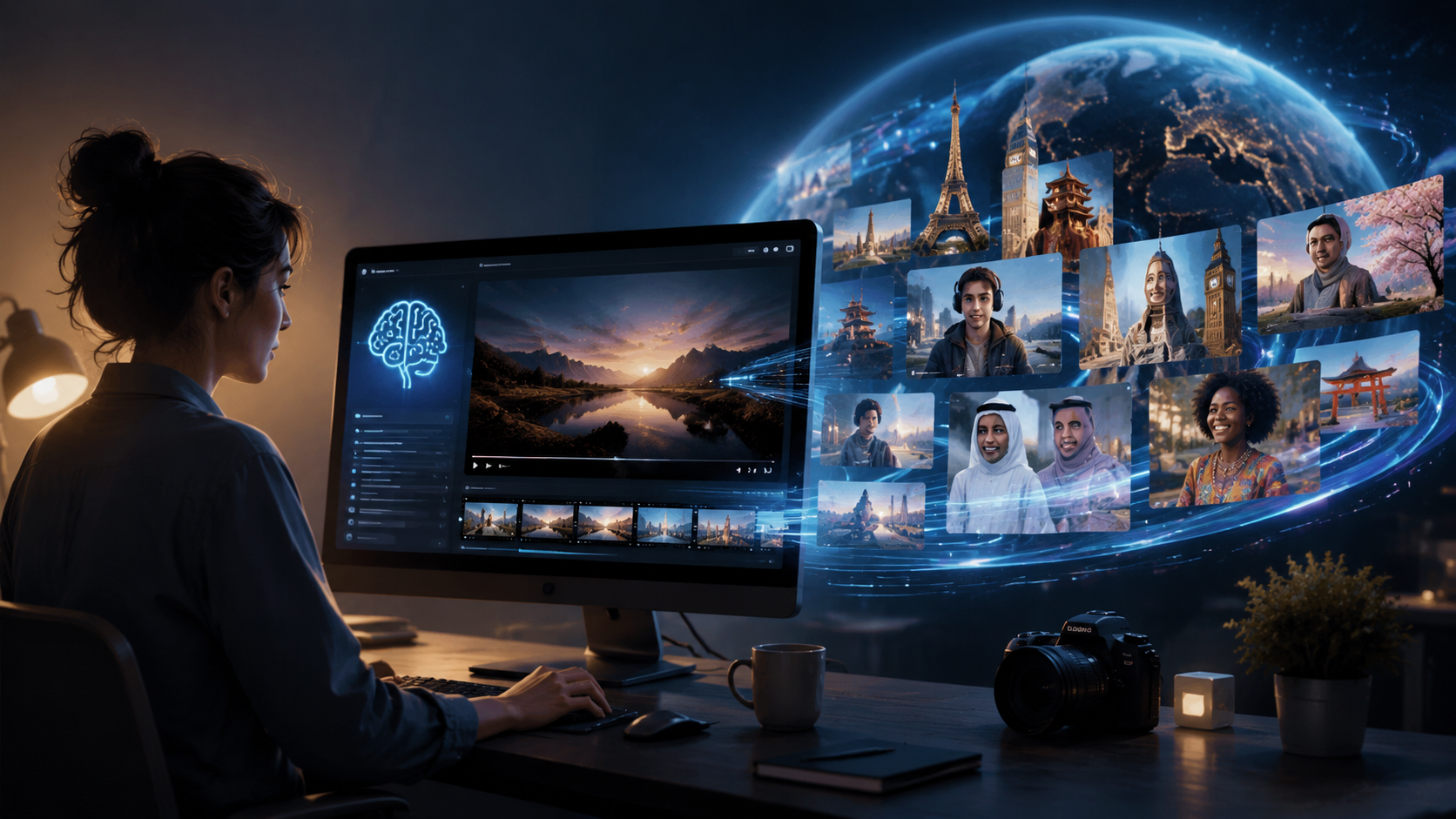
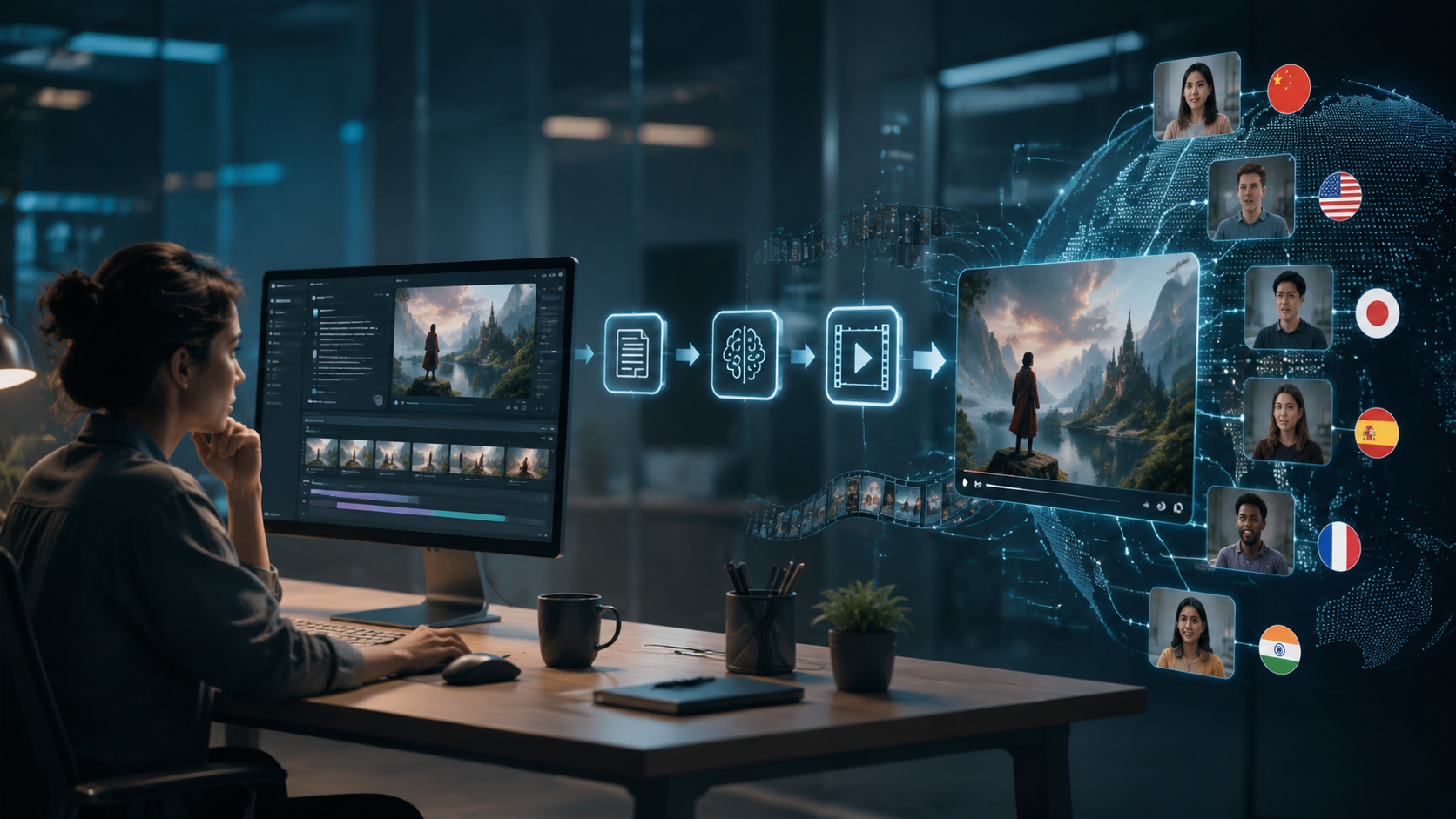
Modern multilingual AI video systems employ a four-stage pipeline to ensure quality across languages. First, the text undergoes semantic analysis using transformer models fine-tuned on 128+ language pairs. Second, the system selects appropriate voice synthesis parameters including gender, age, and regional accent preferences—with top tools like Digen AI Agent offering 18 Spanish variants alone.
The third stage involves visual synchronization, where the AI matches scene compositions, character animations, and text overlays to the speech rhythm of each language. This is particularly crucial for languages with different sentence structures; Mandarin videos require 23% shorter scene durations on average compared to English due to higher information density per syllable. Advanced systems now automatically adjust pacing while preserving original meaning.
Finally, cultural adaptation algorithms scan for potentially inappropriate or ineffective visual metaphors. For example, a thumbs-up gesture might be replaced with a bow in Japanese versions, or color schemes adjusted for regional preferences. According to The AI Journal, these adaptations improve viewer retention by 41% in non-native language markets compared to direct translations without cultural adjustments.
Key Technical Components
- Neural Machine Translation (NMT): 2026's best systems use hybrid architectures combining GPT-5 for context understanding with specialized translation models
- Prosody-Aware Voice Synthesis: Maintains emotional tone and emphasis patterns across language transitions
- Visual Localization Engine: Automatically swaps culturally specific imagery (currency symbols, measurement units, landmarks)
Top Use Cases for Multilingual AI Video
Global marketing teams are the primary adopters, with 89% of Fortune 500 companies now using AI-generated multilingual videos for product launches. A single English product demo can be automatically localized into 12 languages within 4 hours—a process that previously took marketing agencies 3-4 weeks. Conversion rates for localized AI videos average 17% higher than static translated content.
E-learning platforms have seen particularly dramatic impacts. Language learning app Duolingo reported 72% higher student engagement after implementing AI-generated video lessons with perfect accent modeling. Corporate training departments save an average of $147,000 annually by replacing live-translated sessions with AI video alternatives that maintain consistent instructional quality across 36 languages.
Customer support operations are transforming through AI video localization. Instead of maintaining multilingual support teams, companies like Shopify now use AI to instantly generate video responses to common queries in the customer's native language. This approach has reduced average resolution time from 42 hours to just 19 minutes for non-English support tickets while maintaining 94% satisfaction scores.
Emerging Applications
- Legal & Compliance: Automated translation of training videos with jurisdiction-specific regulations
- Healthcare: Multilingual patient education videos with medically accurate terminology
- Gaming: Dynamic in-game video content generation based on player language settings
2026's Best Text-to-Video AI with Multi-Language Support
The competitive landscape has matured significantly, with clear leaders emerging in different specialization areas. Below is a comparison of the top 5 solutions based on testing by perfectcorp.com and Cybernews:
| Platform | Languages | Unique Feature | Output Quality |
|---|---|---|---|
| Digen AI Agent | 52 | Autonomous multi-step refinement | 9.8/10 |
| Runway Gen-3 | 38 | Hollywood-grade cinematography | 9.5/10 |
| Pika 3.0 | 45 | Real-time collaborative editing | 9.2/10 |
| Sora Enterprise | 29 | Seamless brand style transfer | 9.0/10 |
| Luma AI Pro | 41 | 3D spatial video generation | 8.9/10 |
Digen AI Agent stands out for its autonomous workflow capabilities, reducing human intervention by 83% while maintaining character consistency across language versions. The system automatically detects and corrects translation artifacts, adjusts scene timing, and ensures visual continuity—processes that typically require manual review in other platforms.
For budget-conscious creators, several new entrants offer compelling value. Vidu Basic supports 18 languages at 60% lower cost than enterprise solutions, while MiniMax's education-focused package provides specialized academic vocabulary in 32 languages. However, these budget options typically lack the advanced cultural adaptation features of premium tools.
Implementation Challenges and Solutions
While the technology has advanced rapidly, organizations still face three primary implementation hurdles. First is content governance—ensuring brand voice consistency across dozens of automated translations. Leading solutions now offer "translation memory" databases that learn from human-approved translations, reducing stylistic drift by 74% according to HackerNoon's 2026 analysis.
The second challenge involves handling idiomatic expressions and industry-specific terminology. Medical and legal content requires specialized translation models that understand context beyond literal meaning. Platforms like Digen AI now offer vertical-specific language packs that improve accuracy in technical fields by 58% compared to general-purpose translation.
Finally, workflow integration remains a pain point for many enterprises. The most successful implementations use API-first architectures that connect directly to CMS platforms and marketing automation tools. This allows for automatic video regeneration when source content changes—a feature that saves localization teams an average of 37 hours per week in manual update work.
Best Practices for Deployment
- Start with a pilot project covering 3-5 key languages before scaling
- Establish quality benchmarks for each target market
- Implement human-in-the-loop review for sensitive content
- Monitor performance metrics by language and region
Future Trends in Multilingual AI Video
The next wave of innovation will focus on real-time adaptation. Early prototypes from Google and OpenAI demonstrate systems that can adjust video content mid-playback based on viewer reactions detected through webcam analysis. This could enable dynamic difficulty adjustment in training videos or personalized product demonstrations—all while maintaining perfect language synchronization.
Another emerging trend is the integration of large world models (LWMs) that understand cultural contexts at a deeper level. These systems go beyond direct translation to completely restructure content for different regions. For example, a marketing video might replace American football references with cricket analogies for Indian audiences while maintaining the same core message.
Perhaps most transformative is the development of cross-modal style transfer. This allows a video's artistic style (e.g., anime, photorealistic, watercolor) to automatically adapt based on regional aesthetic preferences. Early tests show Japanese audiences engage 39% longer with anime-styled content, while European viewers prefer cinematic realism—a distinction next-gen AI video tools will handle autonomously.
Frequently Asked Questions
How accurate are AI-generated multilingual videos compared to human translations?
2026's top systems achieve 92-97% accuracy for common language pairs in general content, narrowing the gap to just 3-8% difference from professional human translations for most business use cases, though highly technical or creative content may still require human review.
What languages are best supported by current text-to-video AI?
The most robust support exists for English, Mandarin, Spanish, French, and Arabic (95%+ accuracy), with 28 additional languages at 85-94% accuracy. Niche languages with fewer than 5 million speakers typically show 70-80% accuracy unless custom trained.
How long does it take to generate a multilingual AI video?
Average processing time is 4-7 minutes per minute of final video for the first language, with additional languages adding just 1-2 minutes each due to parallel processing architectures in modern systems like Digen AI Agent.
Can AI video tools handle industry-specific terminology?
Yes, leading platforms now offer specialized vocabularies for 17 industries including legal, medical, and engineering, with accuracy improvements of 40-60% over generic models when properly configured.
What's the cost difference between single-language and multilingual AI video?
Multilingual generation typically adds 15-30% to base costs, far below the 300-500% premium of traditional human localization. Enterprise plans often include unlimited language output for fixed fees.
Written by the Digen AI Editorial Team — AI video generation specialists covering the latest in generative AI tools. Learn more about Digen AI.



Comments ()