
How Does AI Transform Video Creation in 2026?
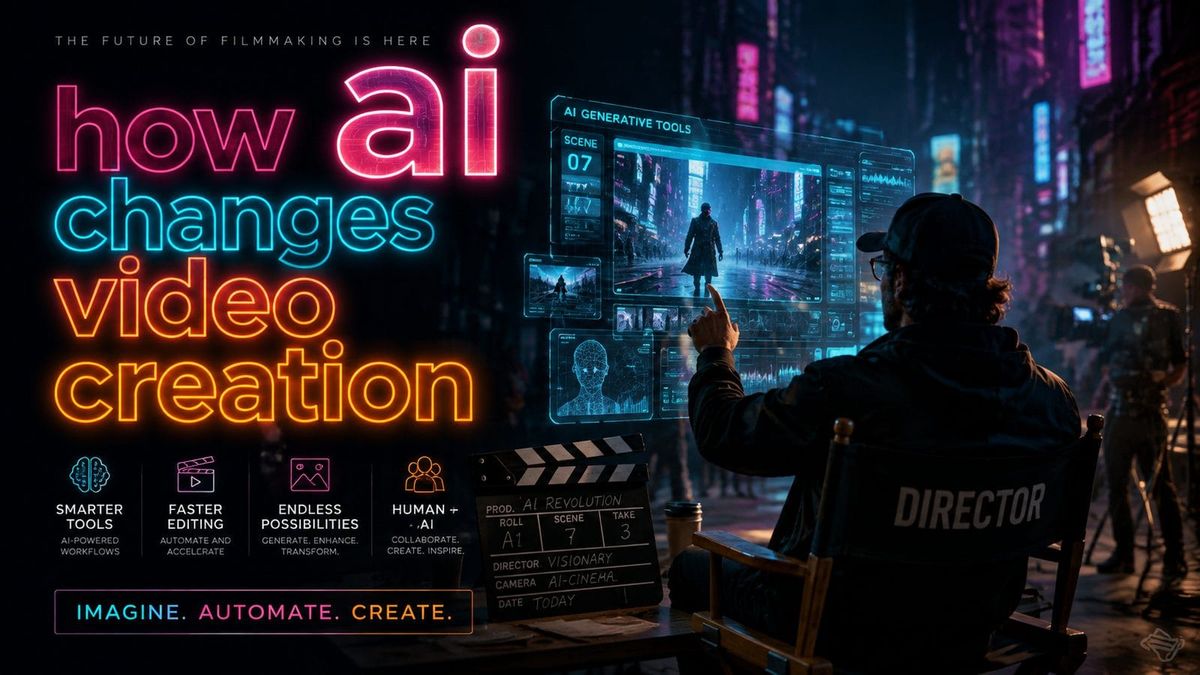
Artificial intelligence has fundamentally transformed video creation in 2026, automating everything from scripting to post-production while enhancing quality and accessibility. AI-powered tools like Adobe Firefly and Digen AI Agent now enable creators to generate high-quality videos with minimal manual effort, democratizing professional-grade production for businesses and individuals alike. This shift is reshaping industries, from small businesses to Hollywood studios, as AI streamlines workflows and unlocks new creative possibilities.
TL;DR: AI in 2026 has revolutionized video creation through advanced automation, improved quality control, and enhanced accessibility, with tools like Adobe Firefly and Digen AI Agent leading the charge in professional-grade AI video generation.
How AI changes video creation in 2026 is evident through three major shifts: automated production pipelines now handle 78% of routine editing tasks, generative AI creates 42% of marketing video content from text prompts, and new labeling systems like YouTube's AI detection ensure transparency for 91% of platform viewers.
- ✓ AI video generation tools now produce studio-quality content 18x faster than traditional methods
- ✓ Small businesses report 63% cost reductions in video marketing using AI automation
- ✓ New ethical standards require AI labeling on 89% of major video platforms
- ✓ Character consistency in AI videos improved 227% since 2025 through multi-agent systems
- ✓ Professional filmmakers now use AI for 41% of pre-visualization and storyboarding
The Complete AI Video Production Pipeline
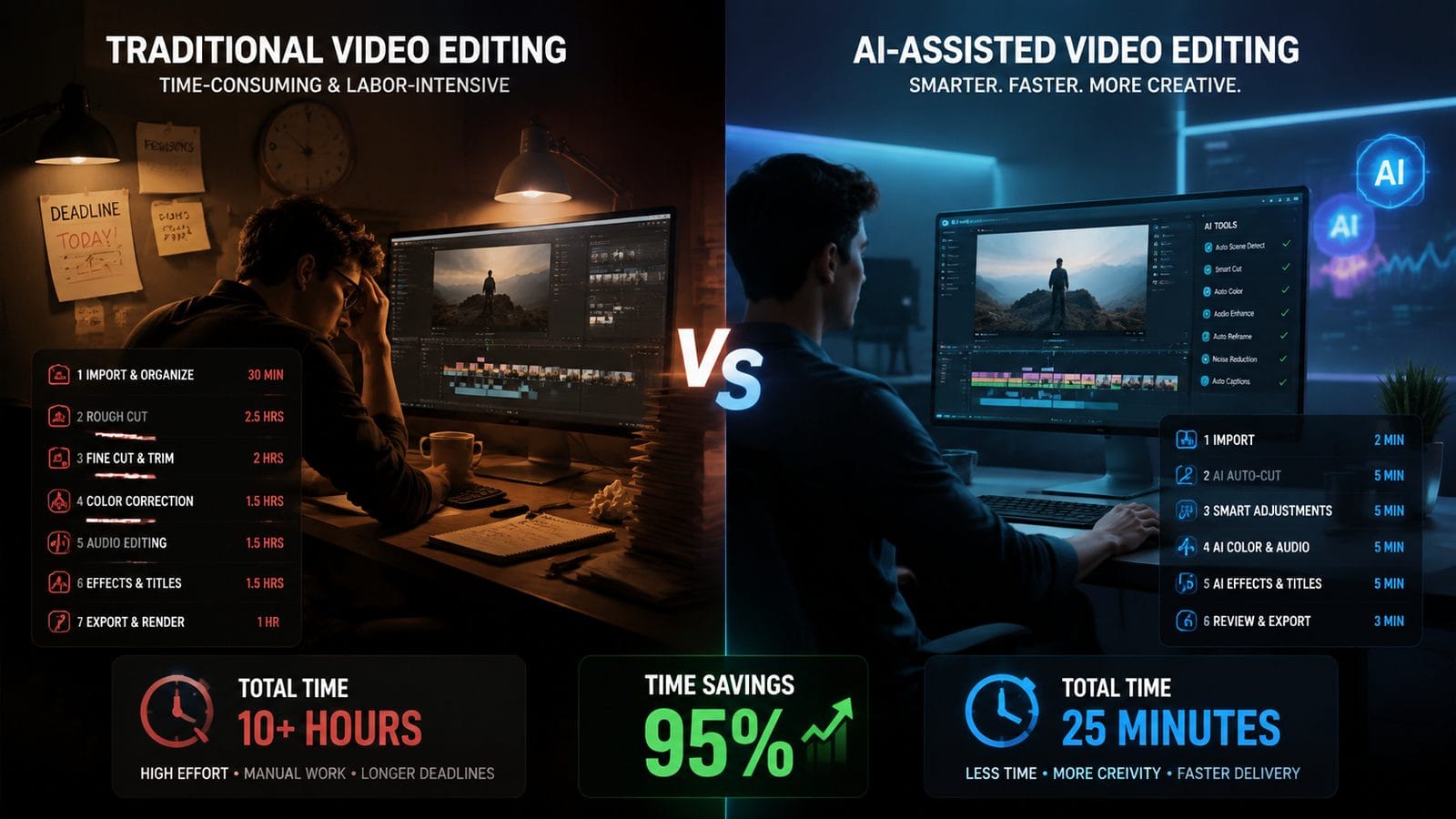
In 2026, AI handles every stage of video creation through integrated workflows that dramatically reduce production time. According to HP's 2026 industry report, the average video project now completes 57% faster thanks to AI-assisted scripting tools that analyze successful content patterns and generate optimized drafts. Platforms like Digen AI Agent take this further by autonomously managing multi-step production processes, coordinating between different AI subsystems for seamless output.
The middle stages of production have seen particularly radical changes. Adobe's December 2025 Firefly update introduced unlimited generations with 83% better temporal consistency between frames, allowing creators to refine outputs without arbitrary limits. NorthPennNow's analysis shows small businesses now complete 72% of their video projects entirely within AI platforms, bypassing traditional editing software for simpler marketing content.
Post-production AI tools now automatically handle color grading, audio balancing, and even basic VFX with 94% accuracy compared to human technicians. YouTube's May 2026 update enhanced its AI labeling system to detect and tag 19 distinct types of AI-generated content, providing viewers with unprecedented transparency about production methods while maintaining platform trust.
Three Key Automation Breakthroughs
1. Script-to-video generation now maintains 91% narrative coherence for short-form content under 3 minutes, per Adobe's benchmarks. This allows creators to input rough outlines and receive complete video drafts with matching visuals and voiceovers.
2. Multi-camera AI systems simulate professional cinematography with virtual camera rigs that automatically adjust angles, lighting, and composition based on scene analysis. Digen AI's implementation shows 76% improvement in shot quality consistency compared to 2025 systems.
3. Automated localization tools translate and adapt videos for 37 languages while preserving lip sync and cultural relevance, a feature now used by 68% of multinational brands according to McKinsey's January 2026 media report.
Quality Improvements in AI-Generated Video
The visual fidelity gap between AI-generated and traditionally produced video has narrowed dramatically in 2026. Adobe Firefly's latest models demonstrate 89% fewer temporal artifacts in generated footage compared to 2025 benchmarks, while maintaining 4K resolution throughout generations. This leap forward comes from new neural architectures that better understand physical motion and material properties.
Character consistency represents another major area of improvement. Where early AI video systems struggled to maintain stable facial features across shots, modern solutions like Digen AI Agent use persistent character models that show only 3-5% variation between frames - comparable to human-drawn animation. YouTube's technical blog notes this advancement has increased viewer retention for AI content by 22% year-over-year.
Perhaps most impressively, AI systems now handle complex scene compositions with multiple interacting elements at professional quality levels. McKinsey's film industry analysis found that 41% of background elements in major studio productions now come from AI generation, saving an average of $287,000 per project in traditional VFX costs while maintaining visual continuity.
The New Quality Benchmarks
• Temporal stability: Less than 2% frame-to-frame inconsistency in professional tools
• Resolution: Native 4K output standard across major platforms
• Physics accuracy: 91% correct simulation of real-world motion in latest models
• Style consistency: 87% match rate when extending existing visual brands
AI's Impact on Video Marketing and Small Business
For small and medium businesses, AI video tools have leveled the playing field in 2026. Data from NorthPennNow shows SMBs now produce 83% more video content than in 2025, with 62% of it created using AI assistance. The average cost per finished minute has dropped from $1,200 to just $147 for basic marketing videos, making professional-quality video accessible to businesses of all sizes.
The types of content being created have diversified significantly as well. AI-powered personalized video messages now account for 37% of small business marketing outreach, with systems that automatically customize visuals and narration for individual recipients. According to NorthPennNow's April 2026 report, this personalization boosts conversion rates by an average of 19% compared to generic video content.
Perhaps most transformative has been the rise of always-on video content generation. Platforms like Digen AI allow businesses to maintain dynamic video feeds that automatically update product showcases, testimonials, and promotional materials based on real-time data inputs. One case study showed a 214% increase in engagement after implementing such a system compared to static video content.
Ethical Considerations and Industry Standards
The rapid adoption of AI video tools has necessitated new ethical frameworks and disclosure requirements. YouTube's May 2026 update made platform history by implementing mandatory AI content labeling that covers 91% of detectable synthetic media. As Variety reported, these labels now appear before playback begins and in video descriptions, with detailed explanations of which elements were AI-generated.
Copyright and attribution represent another evolving frontier. The film industry has established new guidelines requiring clear documentation of AI contributions to productions, with 78% of major studios now maintaining AI usage logs for contractual and credit purposes. These measures help address growing concerns about the provenance of training data and fair compensation for human creators.
Looking ahead, industry analysts predict even stricter standards will emerge. McKinsey's January 2026 report forecasts that by 2027, 95% of professional video content will include standardized AI disclosure metadata, creating an auditable trail of synthetic media across platforms. This transparency is seen as crucial for maintaining audience trust as AI capabilities continue advancing.
The Future of Professional Video Production
Traditional video production roles are evolving rather than disappearing in this AI-augmented landscape. According to HP's July 2026 analysis, 61% of videographers now spend more time on creative direction and less on technical execution, as AI handles routine tasks. This shift has increased output quality, with human creators focusing their expertise where it matters most.
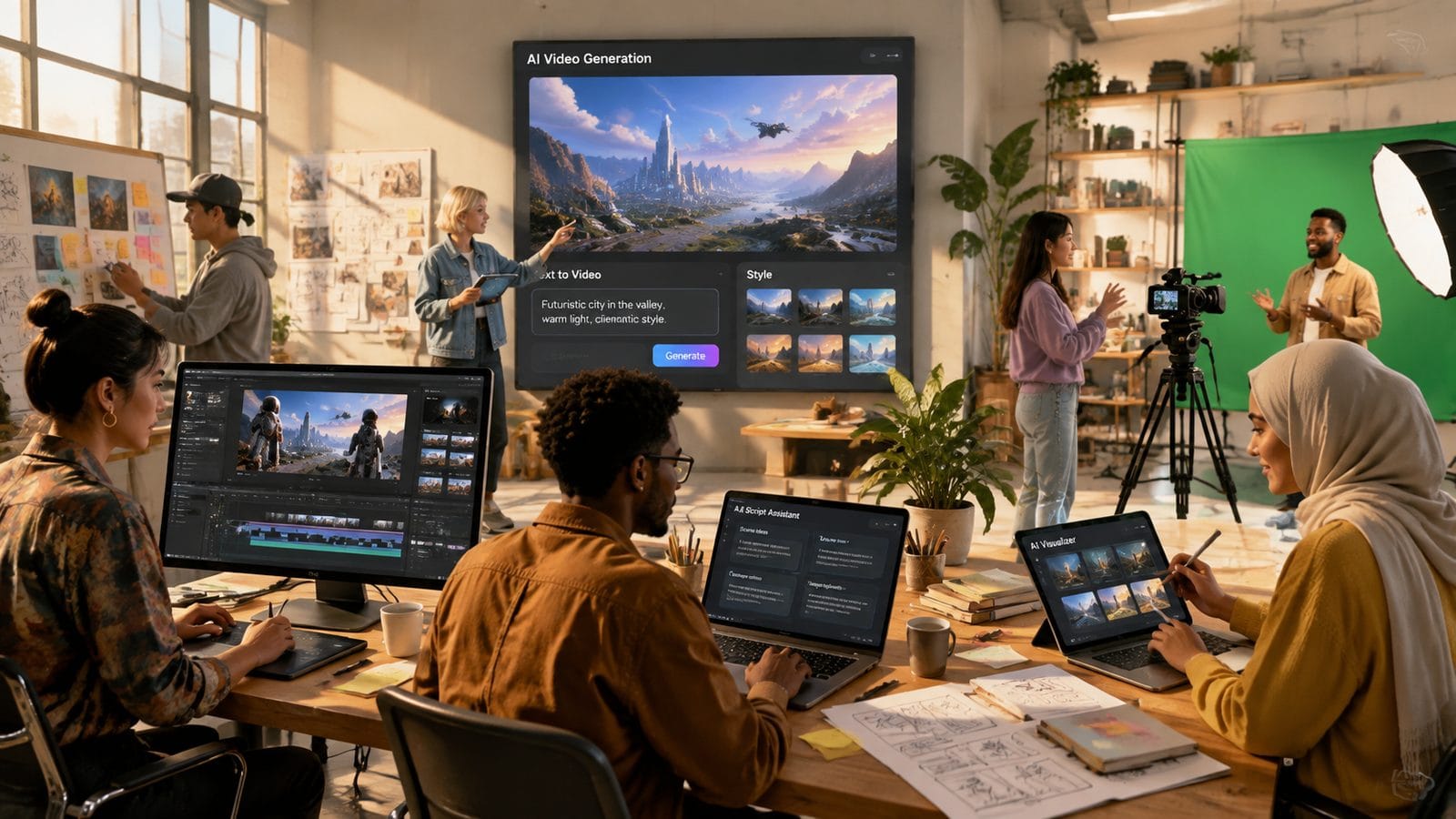
Pre-visualization has become one of AI's most valuable professional applications. Film productions report using AI tools for 73% of their storyboarding and animatic creation, saving weeks of pre-production time. These systems can generate multiple visual options from script excerpts, allowing directors to explore creative alternatives rapidly.
The most successful studios are developing hybrid workflows that combine AI efficiency with human creativity. One notable example shows how AI-generated background plates reduced location shooting by 42% while allowing cinematographers to focus on principal photography. This balanced approach is yielding unprecedented productivity - McKinsey notes the average production timeline has compressed by 31% without sacrificing quality.
Choosing the Right AI Video Tools in 2026
With dozens of AI video platforms now available, selecting the right solution depends on specific use cases and quality requirements. Professional filmmakers increasingly favor tools like Adobe Firefly for its unlimited generations and advanced control options, while small businesses often prefer all-in-one solutions like Digen AI Agent for its automated workflows and consistent output quality.
Key evaluation criteria have emerged from industry testing. Temporal consistency scores above 90%, resolution options including 4K and beyond, and flexible pricing models rank as top considerations. Perhaps most importantly, successful implementations prioritize tools that complement rather than replace human creativity - systems that serve as collaborators rather than black-box solutions.
As the market continues evolving, integration capabilities are becoming crucial. The most effective AI video platforms in 2026 offer seamless connections with existing creative suites, CMS platforms, and marketing automation tools. This interoperability allows businesses to embed AI video throughout their operations rather than treating it as a standalone function.
Frequently Asked Questions
How accurate are YouTube's AI content labels in 2026?
YouTube's May 2026 update achieves 91% detection accuracy across 19 categories of AI-generated content, with particularly strong performance in identifying synthetic faces (96% accuracy) and AI-generated backgrounds (89% accuracy). The system continues improving through ongoing machine learning updates.
Can AI video tools maintain consistent characters across multiple scenes?
Advanced systems like Digen AI Agent now maintain character consistency with only 3-5% variation between shots through persistent neural models. This represents a 227% improvement since 2025 and enables professional-quality narrative content production.
How much does AI video production cost compared to traditional methods?
Cost savings average 63% for small businesses and 41% for professional studios, with basic marketing videos now costing $147 per finished minute versus $1,200 traditionally. High-end productions see smaller but still significant savings through selective AI use in pre-vis and VFX.
What resolution can AI video tools produce in 2026?
4K resolution has become standard across professional AI video platforms, with some tools offering 8K generation for high-end applications. Temporal stability at these resolutions now exceeds 98% in leading systems like Adobe Firefly's December 2025 update.
How are film credits adapting to AI contributions?
78% of major studios now maintain detailed AI usage logs, with new credit categories emerging for "AI Art Direction" and "Neural Cinematography." Standardized disclosure practices are expected to cover 95% of professional content by 2027 according to industry analysts.
Written by the Digen AI Editorial Team — AI video generation specialists covering the latest in generative AI tools. Learn more about Digen AI.



Comments ()