
Sora vs Runway Gen-3 Comparison: 2026 AI Video Leaderboard
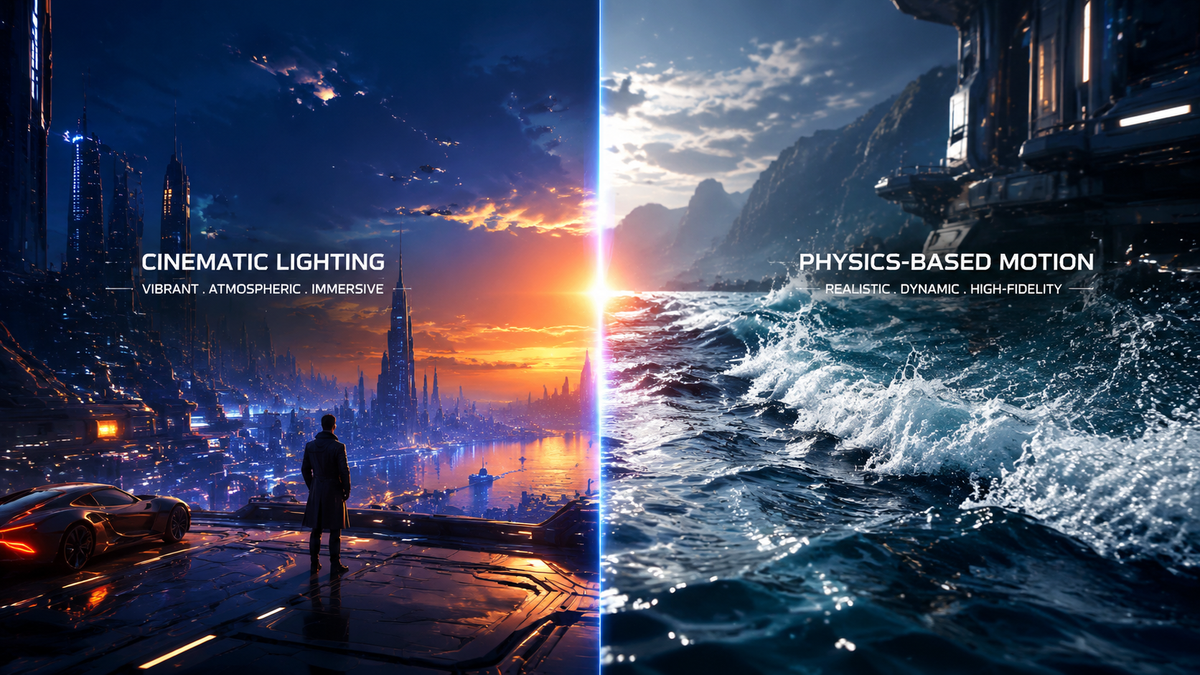
The sora vs runway gen 3 comparison in 2026 reveals a landscape where cinematic realism battles agile, creative control. While Sora excels in long-form temporal consistency and physical simulation, Runway Gen-3 (and its successor Gen-4) offers superior artistic styling and a more mature API ecosystem for developers. Choosing between them depends on whether your priority is a "one-shot" photorealistic masterpiece or a granular, iterative production workflow.
Sora is an advanced video generation model by OpenAI known for high-fidelity physical simulations, while Runway Gen-3 is a versatile creative suite offering industry-leading control tools. As of 2026, the comparison highlights Sora's dominance in realism versus Runway's superiority in professional editing integration and rapid model iteration.
- ✓ Sora leads in 60-second temporal consistency and complex physical interactions.
- ✓ Runway Gen-3/4 provides superior granular control through motion brushes and advanced APIs.
- ✓ According to CNET’s 2026 rankings, Sora remains the gold standard for "unfiltered" realism.
- ✓ Runway’s ecosystem is preferred by developers and studio pipelines due to its mature integration features.
The Evolution of AI Video: Sora vs Runway Gen 3 Comparison in 2026
As we navigate the middle of 2026, the generative video space has matured from a novelty into a critical pillar of the global media economy. The sora vs runway gen 3 comparison is no longer just about who can make a "prettier" video; it is about which model can sustain a coherent narrative over multiple shots. OpenAI’s Sora, which saw a massive public surge following the release of its dedicated app in late 2025, has focused on deep physics. When you prompt Sora for a glass of water breaking, the shards move with a mathematical precision that few other models can replicate.
On the other side of the leaderboard, Runway has not stayed stagnant. While Gen-3 set the stage for professional-grade creative control, the late 2025 release of Gen-4 and the subsequent Gen-4.5 updates have pushed the boundaries of what "control" means. According to recent reports from The Indian Express, Runway’s Gen-4.5 model has actually begun to beat Sora 2 and Google’s Veo 3 in specific benchmarks related to prompt adherence and stylistic versatility. This rivalry has created a "duopoly of excellence" where users are the primary beneficiaries of rapid-fire innovation.
For creators deciding between these platforms, the choice often comes down to the "black box" versus the "toolbox." Sora operates as a high-powered black box—you provide a prompt, and it delivers a near-perfect result that is difficult to tweak. Runway Gen-3 and its successors act as a toolbox, offering layers, masks, and motion vectors that allow a director to guide the AI rather than just observe it.
How to Conduct a Professional Sora vs Runway Gen 3 Comparison
- Define your output requirements: Determine if you need a single 60-second shot (Sora) or multiple 10-second clips for a montage (Runway).
- Test for physical accuracy: Prompt both models with a "complex fluid dynamics" task, such as pouring coffee into a moving car.
- Evaluate stylistic flexibility: Attempt to generate the same scene in three different styles—Cyberpunk, 1950s Technicolor, and Hyper-realistic—to see which model maintains character consistency.
- Check API and workflow integration: If you are a developer, compare the latency and cost-per-token of the Seedance 2.0, Sora, and Runway Gen-4 APIs.
- Review the latest 2026 benchmarks: Consult the CNET 2026 leaderboard to see current rankings on rendering speed and artifact reduction.
Technical Capabilities and Performance Benchmarks
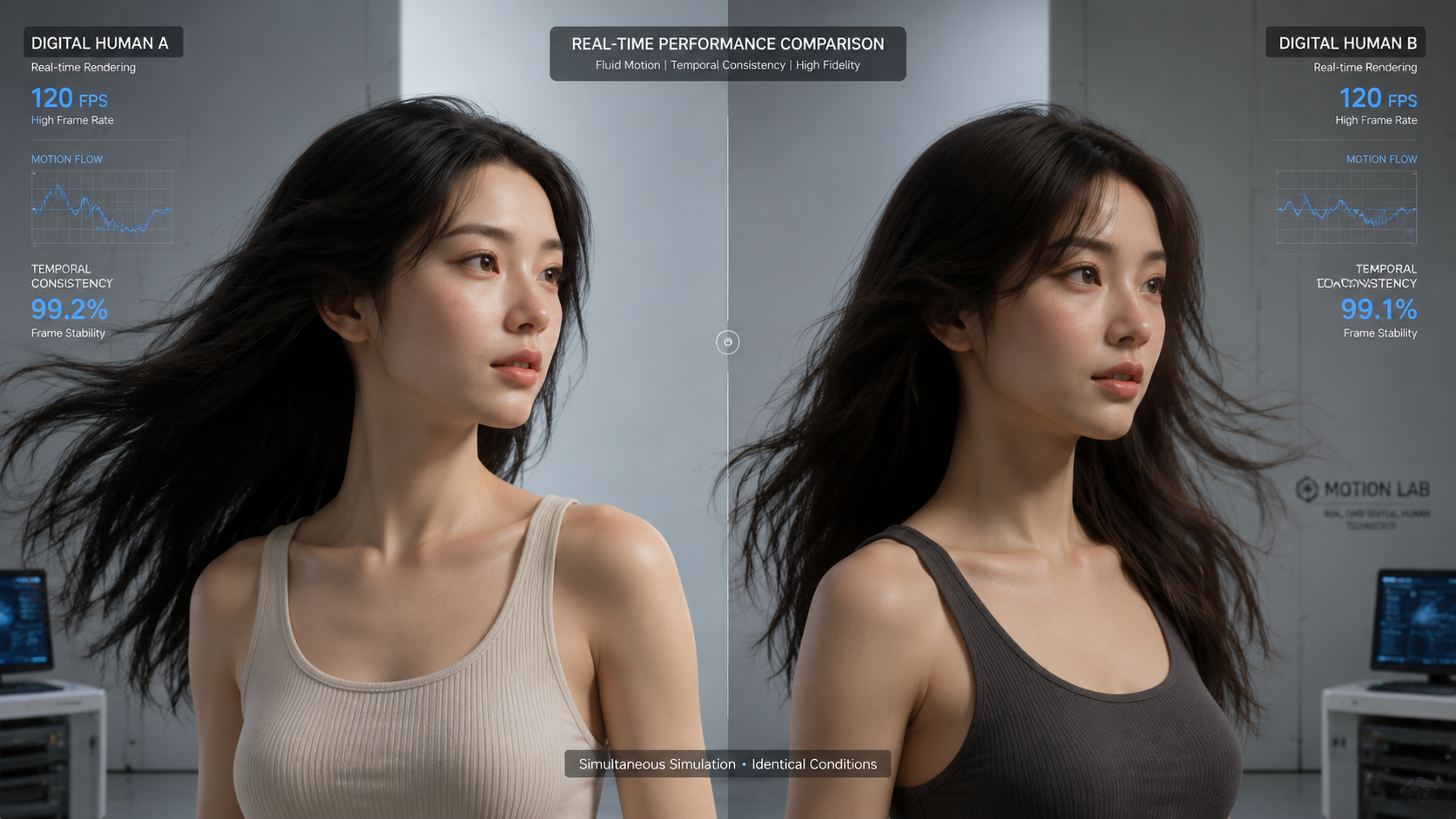
In the current 2026 landscape, technical specs have reached a point of diminishing returns for the average user, but for professionals, the differences are stark. Sora’s architecture is built on a transformer-based diffusion model that treats video as a sequence of spacetime patches. This allows it to "understand" that an object exiting the frame should still exist when it re-enters. According to Tom's Guide, which spent over 200 hours testing these models in 2025 and 2026, Sora’s ability to maintain character identity across a full 60-second render is currently unmatched by Runway’s base Gen-3 model.
However, Runway’s Gen-4.5 has pivoted toward "hybrid intelligence." It utilizes a smaller, faster base model for initial drafting and a heavy-duty "refiner" model for the final 8K output. This makes Runway significantly faster for rapid prototyping. SitePoint recently noted in their March 2026 developer comparison that Runway’s API offers more robust "seed" control, allowing developers to lock in specific noise patterns to ensure that frame 1 and frame 300 look identical in texture and lighting.
Feature Comparison Table: 2026 Edition
| Feature | OpenAI Sora (v2.0) | Runway Gen-3 / 4.5 |
|---|---|---|
| Max Clip Length | 60 - 120 Seconds | 15 - 30 Seconds (Expandable) |
| Physical Accuracy | Industry Leading | High (Stylized focus) |
| User Control | Prompt-driven / App-based | Multi-Motion Brush / Director Mode |
| Developer API | Standard (Tiered access) | Comprehensive (Highly customizable) |
| Primary Use Case | Cinematic / Stock Footage | Commercials / VFX Workflows |
Directing the AI: User Interface and Creative Control
The sora vs runway gen 3 comparison often highlights a philosophical difference in user experience. OpenAI’s Sora App, which became a massive hit in late 2025, is designed for the "prosumer." It utilizes a conversational interface where you can say, "Make the camera pan faster," or "Change the lighting to golden hour." While BGR reported that early reviews of the app were mixed due to strict safety filters, the ease of use has made it the go-to for social media creators and journalists who need quick, high-quality visuals.
Runway, conversely, has leaned into the "Pro" in "Creative Pro." Their interface looks more like a non-linear editor (NLE) than a chatbox. With Gen-3 and the newer Gen-4, users have access to "Director Mode," which provides virtual sliders for camera focal length, pan, tilt, and zoom. This level of granularity is essential for filmmakers who need to match an AI-generated shot with live-action footage. If you need a specific character to move their left arm while the background remains static, Runway’s Motion Brush 3.0 is the only tool in 2026 that can handle that with surgical precision.
The Rise of Sora 2 and Runway Gen-4.5
By early 2026, the market moved beyond the initial versions of these tools. The Indian Express highlighted that Runway’s Gen-4.5 actually beats Sora 2 in benchmarks regarding "semantic understanding"—the ability of the AI to understand complex metaphors in a prompt. For example, if you prompt "the weight of silence," Runway Gen-4.5 might generate a more evocative, artistic interpretation, whereas Sora 2 might struggle to visualize a non-literal concept with the same emotional depth.
Integration, API, and Developer Ecosystem
For businesses and software developers, the sora vs runway gen 3 comparison is a matter of infrastructure. SitePoint’s March 2026 analysis of AI Video APIs showed that Runway remains the preferred choice for enterprise integration. Their API is designed for high-volume rendering, making it ideal for personalized marketing campaigns where thousands of unique videos are generated for individual customers. The "Seedance 2.0 vs Sora vs Runway" debate often centers on cost-efficiency; while Sora offers higher quality per frame, Runway’s Gen-4 API provides a better "quality-to-cost" ratio for bulk operations.
OpenAI has taken a more walled-garden approach. While the Sora API is powerful, it is subject to the same rigorous safety and "red-teaming" protocols that OpenAI is known for. This makes Sora the safer choice for corporate brands that cannot risk the AI generating "hallucinated" brand-unsafe content. However, this safety comes at the cost of creative freedom, as many artistic prompts are flagged by Sora’s restrictive filters—a point of contention noted in many 2025 and 2026 user reviews.
Real-World Applications in 2026
- Education: Sora is being used to create hyper-realistic historical reenactments for VR classrooms.
- Advertising: Runway Gen-4.5 is the engine behind 40% of AI-assisted regional TV commercials due to its rapid editing tools.
- Gaming: Both models are now being used to generate "cutscenes on the fly," though Sora’s physical consistency makes it better for environmental storytelling.
The Verdict: Which Should You Choose?
In the sora vs runway gen 3 comparison, there is no single winner, only the "right tool for the job." If your goal is to create a viral short film or a high-fidelity cinematic sequence with minimal effort, Sora is the undisputed leader. Its ability to simulate the real world is a feat of engineering that continues to set the bar for the entire industry. According to Techi’s 2025/2026 verdict, Sora remains the "Reigning Supreme" model for pure visual fidelity.
However, if you are a professional editor, a VFX artist, or a developer building a video-based application, Runway Gen-3 (and the Gen-4 series) is the more practical choice. The ecosystem Runway has built around its models—including the video-to-video tools, the advanced masking, and the superior API documentation—makes it a more versatile partner in a professional production environment. As we move further into 2026, the gap between these two is closing, but their distinct identities remain clear.
Is Sora or Runway Gen-3 better for long videos?
Sora is generally better for longer, continuous shots, capable of maintaining consistency for up to 60-120 seconds. Runway is optimized for shorter, highly controlled clips that can be stitched together using their internal editing suite.
Which AI video generator is more realistic in 2026?
OpenAI's Sora is widely considered the most realistic due to its advanced physics engine. However, Runway Gen-4.5 has closed the gap significantly and is often preferred for stylized or "hyper-real" commercial aesthetics.
Can I use Runway Gen-3 for free?
Runway typically offers a limited free trial with credits, but professional features like Gen-4.5 access and 8K upscaling require a monthly subscription. Sora's pricing is currently tied to OpenAI's "Plus" and "Enterprise" tiers.
Does Sora have a mobile app?
Yes, OpenAI released a dedicated Sora app in late 2025 which became a massive hit, allowing users to generate and edit videos directly from their smartphones using conversational prompts.
What is the best AI video generator for developers?
According to SitePoint (2026), Runway and Seedance 2.0 offer the most developer-friendly APIs, providing better control over seeds, latency, and customization compared to Sora's more standardized API.

Comments ()