
5 Open-Source AI Video Tools Compared (2026)
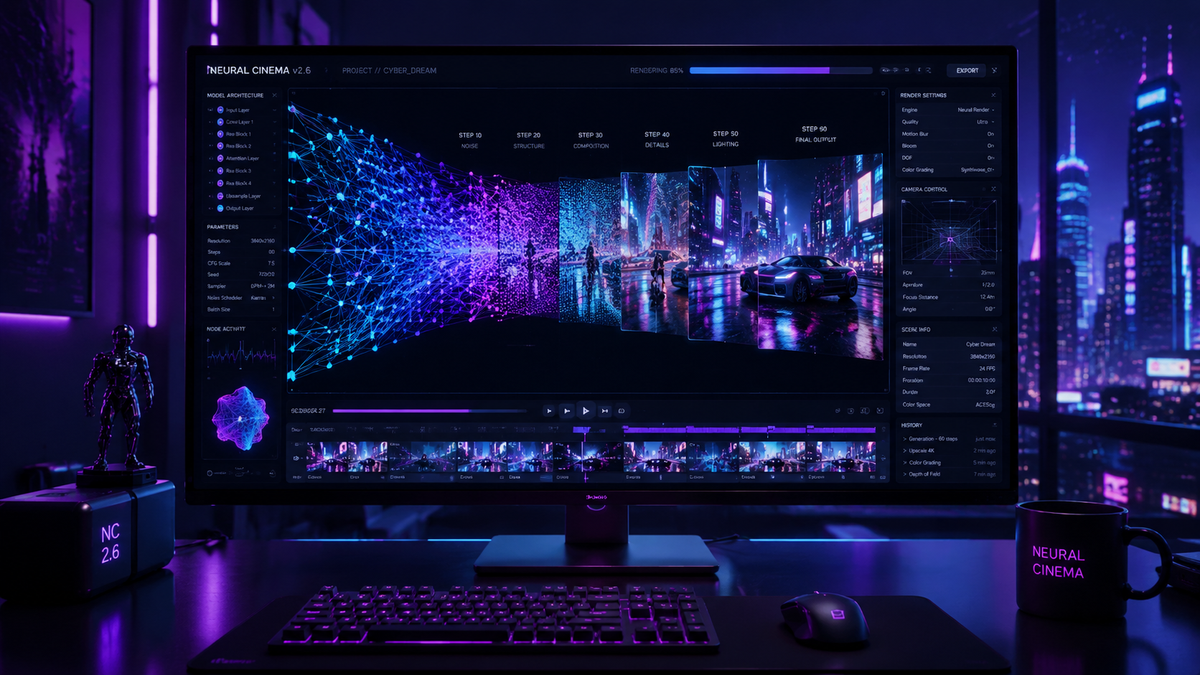
The best open source ai video generator alternatives in 2026 allow creators to bypass the high costs and restrictive terms of proprietary software like Sora. By utilizing decentralized computing and community-driven models, these tools offer unmatched flexibility for high-fidelity video synthesis, motion control, and temporal consistency. As the landscape shifts toward local hosting and data privacy, open-source models have become the primary choice for developers and professional editors seeking to maintain full ownership of their creative output.
An open source ai video generator alternative is a publicly accessible machine learning model, such as Stable Video Diffusion or CogVideoX, that allows users to generate high-definition video from text or images. Unlike closed-source platforms, these tools provide the source code and weights for local execution, ensuring data privacy and cost-efficiency for 2026 creators.
- ✓ Open-source models like CogVideoX-5b now rival proprietary engines in temporal consistency and physics accuracy.
- ✓ Local hosting significantly reduces long-term costs compared to subscription-based SaaS platforms.
- ✓ The 2026 ecosystem emphasizes "Video Clipping" and "Agentic Workflows" for automated content production.
- ✓ Most top-tier alternatives require high-VRAM GPUs (24GB+) or decentralized cloud GPU clusters.
The Rise of Open Source AI Video Generator Alternatives in 2026
As we move through 2026, the artificial intelligence landscape has undergone a seismic shift. Following the unexpected news reported by Geo News that OpenAI has officially shut down Sora, the demand for stable, reliable, and transparent video generation tools has reached an all-time high. Creators are no longer content with "black box" algorithms that can be discontinued or altered without notice. Instead, the focus has shifted toward open-source frameworks that provide longevity and customization.
According to research from KDnuggets, the top 5 open-source video generation models of the past year have seen a 400% increase in community contributions. This surge is driven by the need for "sovereign AI," where individuals and enterprises host their own models to avoid the escalating subscription fees of 2026. These alternatives are not just clones of their proprietary counterparts; they often introduce innovative features like localized motion brushes and multi-modal "Agentic" controls that are often restricted in commercial versions.
For those looking to transition from closed ecosystems, the process of adopting open-source alternatives is more streamlined than ever. While the hardware requirements remain significant, the software stack has become remarkably user-friendly, with one-click installers and web-based GUIs becoming the industry standard for 2026 deployments.
How to Set Up a Local Open Source AI Video Generator
- Hardware Verification: Ensure your system has at least 24GB of VRAM (RTX 3090/4090 or 50-series equivalent) or use a decentralized cloud provider.
- Environment Setup: Install Python 3.11+ and the latest CUDA toolkit to ensure compatibility with 2026 libraries.
- Model Download: Fetch the model weights from Hugging Face (e.g., CogVideoX or SVD-XT) and verify the SHA-256 hash for security.
- UI Installation: Deploy a front-end like ComfyUI or Gradio to manage your prompts and parameters visually.
- Inference: Input your text prompt or initial image and adjust the "Motion Bucket" and "FPS" settings for the desired output.
Top 8 Open Source AI Video Generator Alternatives Compared
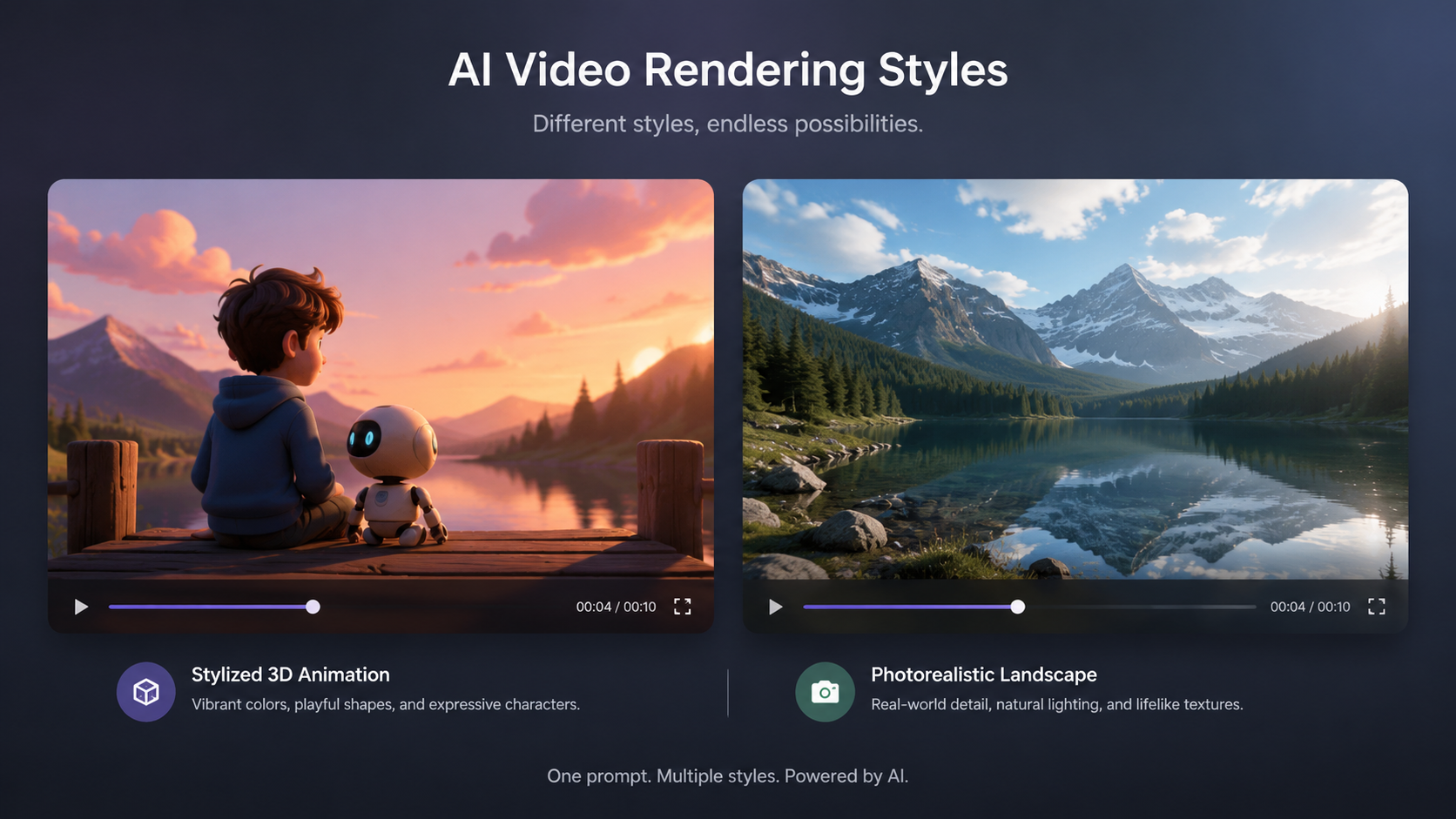
Selecting the right tool depends on your specific needs, whether it is high-resolution cinematic footage, short-form social media clips, or character-consistent animations. The 2026 market is diverse, with models specializing in different aspects of the video pipeline. For instance, some models excel at fluid human motion, while others are optimized for architectural visualization and static-to-video transformations.
According to AIMultiple’s 2026 report on AI Agents, the integration of autonomous agents into video workflows has become a key differentiator. The following table compares the leading open source ai video generator alternatives based on their architecture, VRAM requirements, and primary use cases to help you make an informed decision.
| Model Name | Developer | Min. VRAM | Best For | Key Feature |
|---|---|---|---|---|
| CogVideoX-5B | Zhipu AI | 18GB | High-Fidelity Realism | 3D Causal VAE |
| Stable Video Diffusion (SVD-XT) | Stability AI | 16GB | Image-to-Video | Temporal Consistency |
| Open-Sora 1.3 | Community/HPCAI | 24GB | Long-form Video | Diffusion Transformer |
| Latent Video Diffusion | NVIDIA Research | 20GB | Physics Accuracy | High FPS Synthesis |
| AnimateDiff v4 | Community | 12GB | Stylized Animation | Motion Modules |
| Mochi-1 | Genmo AI | 24GB | Complex Motion | Asymmetric Attention |
| VideoCrafter2 | Tencent AI | 16GB | Cinematic Text-to-Video | Quality-Control Modules |
| Open-SVD-Agent | Independent Devs | 12GB | Automated Clipping | Agentic Scripting |
1. CogVideoX: The New Industry Standard
CogVideoX has emerged as the premier open source ai video generator alternative in 2026, particularly after the discontinuation of several high-profile proprietary models. Developed by the Zhipu AI team, this model utilizes a 3D Causal VAE (Variational Autoencoder) that allows it to compress video data more efficiently while maintaining incredible detail. This architectural breakthrough means that users can generate 1080p video at 30fps on consumer-grade hardware that would have previously required a server farm.
One of the standout features of CogVideoX is its ability to understand complex, multi-sentence prompts. In 2026, "prompt adherence" is the metric that defines quality, and CogVideoX excels by accurately interpreting spatial relationships and lighting cues. This makes it an ideal choice for professional filmmakers who need a specific "look and feel" without the trial-and-error often associated with earlier diffusion models.
2. Stable Video Diffusion (SVD-XT) and Its 2026 Iterations
Stability AI’s contribution to the open-source community remains a cornerstone of the industry. The SVD-XT variant is widely regarded as the most stable tool for image-to-video workflows. In 2026, the community has built upon the original SVD architecture to include "ControlNets for Video," allowing users to guide the motion using depth maps or pose estimations. This level of granular control is something that even the most expensive SaaS platforms struggle to replicate.
As noted in recent technical reviews, SVD-XT is particularly effective for e-commerce and product marketing. Businesses can take a high-quality static photo of a product and generate a 5-second cinematic "hero shot" in seconds. Because it is open-source, companies can integrate SVD directly into their private clouds, ensuring that unreleased product designs never leave their internal servers, a major security advantage in the current year.
3. Open-Sora and the Power of Community Scaling
When OpenAI’s Sora project was retired, the Open-Sora initiative took the mantle of pushing the boundaries of video length. By 2026, Open-Sora 1.3 has achieved the ability to generate continuous clips of up to 2 minutes—a significant milestone for open source ai video generator alternatives. This is achieved through a "Diffusion Transformer" (DiT) architecture that scales efficiently with more data and compute power.
The project is a testament to the power of decentralized collaboration. Thousands of developers have contributed to optimizing its training recipes, making it possible to run the model on smaller clusters. For creators working on short films or music videos, Open-Sora provides the narrative depth and temporal duration required to tell a complete story, rather than just showing a fleeting moment of motion.
4. Custom AI Video Clipping Tools and Agentic Workflows
A significant trend in 2026 is the move away from pure generation toward intelligent curation. As HackerNoon recently highlighted, many developers are now building their own AI video clipping tools because proprietary alternatives have become prohibitively expensive. These tools often use open-source models like Open-SVD-Agent to scan long-form content and automatically extract the most engaging segments for social media.
These "Agentic Workflows" represent the next evolution of open source ai video generator alternatives. Instead of a human manually entering prompts, an AI agent can analyze a script, generate the necessary scenes using a model like CogVideoX, and then use a tool like an ElevenLabs alternative for voiceover. According to Goodcall, the rise of high-quality AI voice creation tools has complemented these video models, allowing for the creation of entirely synthetic, yet highly realistic, video presentations with zero human intervention.
This automation is particularly useful for news organizations and educational platforms. By combining open-source video engines with LLM-driven scripts, these entities can produce daily video updates at a fraction of the cost of a traditional production studio. The transparency of open source ensures that these automated processes can be audited for bias and factual accuracy, which is a critical concern in 2026's media landscape.
Hardware and Ethics in the Open Source Ecosystem
While the software for open source ai video generator alternatives is free, the hardware "tax" remains a reality in 2026. To run these models at peak performance, a high-end GPU is essential. However, the rise of decentralized compute markets has democratized access. Creators can now "rent" GPU power from peer-to-peer networks for pennies per hour, making it possible for someone with a basic laptop to tap into the power of a 24GB VRAM monster.
Furthermore, the ethical implications of open-source video generation are a major topic of discussion. Without the "guardrails" of a corporate entity, the responsibility for ethical use falls on the user. Most 2026 open-source projects have adopted "Responsible AI Licenses," which legally prohibit the creation of deepfakes or harmful content. The community-led "C2PA" watermarking standard is also being integrated into these models to ensure that AI-generated content can be easily identified, maintaining trust in digital media.
What is the best open source ai video generator alternative in 2026?
CogVideoX-5B is currently considered the best overall alternative due to its balance of temporal consistency, prompt adherence, and relatively modest hardware requirements. It offers professional-grade output that rivals the now-defunct Sora engine.
Can I run these AI video generators on a standard laptop?
Most 2026 models require at least 16GB to 24GB of Video RAM (VRAM), which is typically found in high-end gaming desktops or workstations. However, you can use decentralized cloud services to run these models remotely from a standard laptop.
Are open source video generators truly free?
The model weights and code are free to download and use under various open-source licenses. However, you must still account for the cost of electricity and hardware, or the fees associated with cloud GPU rentals.
How do open source models handle data privacy?
Because you can host these models locally or on a private server, your prompts, images, and generated videos never have to leave your infrastructure. This makes them significantly more private than SaaS-based alternatives.
What happened to OpenAI's Sora in 2026?
As reported by Geo News in March 2026, OpenAI made the strategic decision to shut down Sora. This event accelerated the development and adoption of open-source alternatives like Open-Sora and CogVideoX.
Comments ()