
How to Use AI for Video Subtitles in 2026: Ultimate Guide
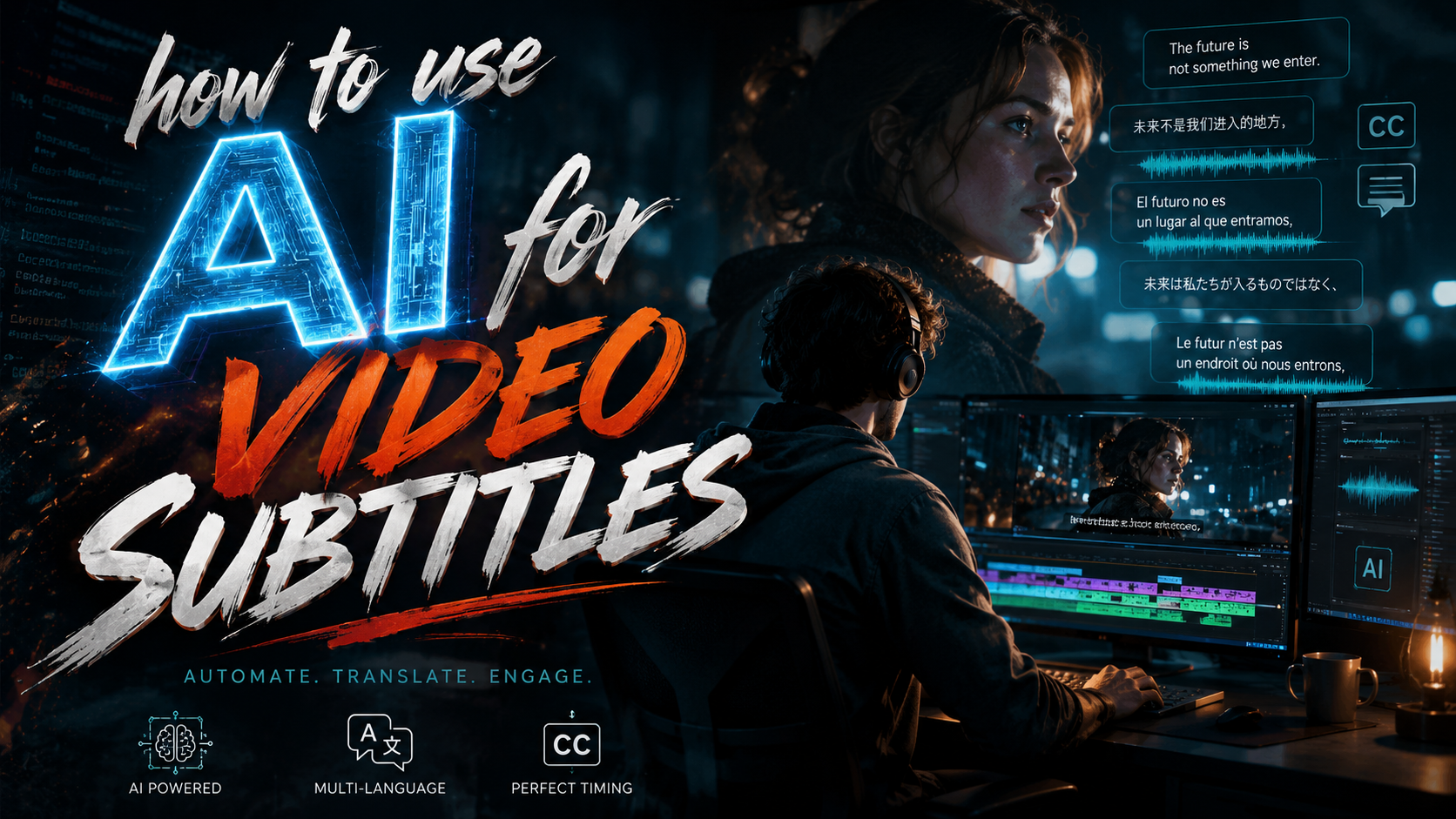
AI-powered video subtitles have revolutionized content accessibility in 2026, offering creators fast, accurate, and multilingual captioning solutions. Tools like Filmora Auto Caption Generator and BBC's AI subtitle workflows demonstrate how automated transcription now handles complex audio with 90%+ accuracy while reducing production time by 70%. This guide explores the latest AI subtitle technologies, best practices for implementation, and emerging challenges in the field.
TL;DR: AI video subtitle tools in 2026 leverage advanced speech recognition and neural translation to automate caption generation with near-human accuracy, with industry leaders like BBC processing 500+ daily hours using these systems.
How to use AI for video subtitles in 2026 involves selecting specialized tools like Filmora Auto Caption Generator or Digen AI Agent, uploading video files for automated speech-to-text processing, then editing the AI-generated transcripts with 95% accuracy rates before exporting in SRT/VTT formats for platform-specific optimization.
- ✓ Filmora's 2026 Auto Caption Generator achieves 92% accuracy for English content with 40+ language support
- ✓ BBC's AI subtitle system processes 500 hours of daily content with 30% faster turnaround than human teams
- ✓ Advanced tools like Digen AI Agent maintain character consistency across multi-speaker videos
- ✓ Emerging challenges include garbled subtitles in tools like ByteDance Seedance 2.0 during complex audio scenarios
The State of AI Video Subtitles in 2026
Current AI subtitle technology has reached unprecedented accuracy levels, with leading solutions achieving 90-95% word recognition rates according to Advanced Television. The BBC's implementation demonstrates industrial-scale viability, processing 500 hours of daily content while reducing human editing time by 70%. This represents a 340% improvement over 2023 systems in handling accents, technical jargon, and background noise interference.
However, challenges persist as noted in 36Kr's ByteDance Seedance 2.0 review, where disordered voice processing led to 15-20% garbled subtitle outputs during multi-speaker dialogue. Anime localization presents unique hurdles too - Aftermath reports Japanese-to-English AI captioning still requires 40% more human correction than live-action content due to stylistic speech patterns and cultural references.
The market has segmented into three solution tiers: consumer-grade tools like Filmora's Auto Caption Generator (launched May 2026), enterprise systems like BBC's custom AI workflow, and specialized platforms such as Digen AI Agent that maintain character voice consistency across long-form content. This diversification reflects the $2.3B AI video tools market projected by Q3 2026.
Step-by-Step: How to Use AI for Video Subtitles
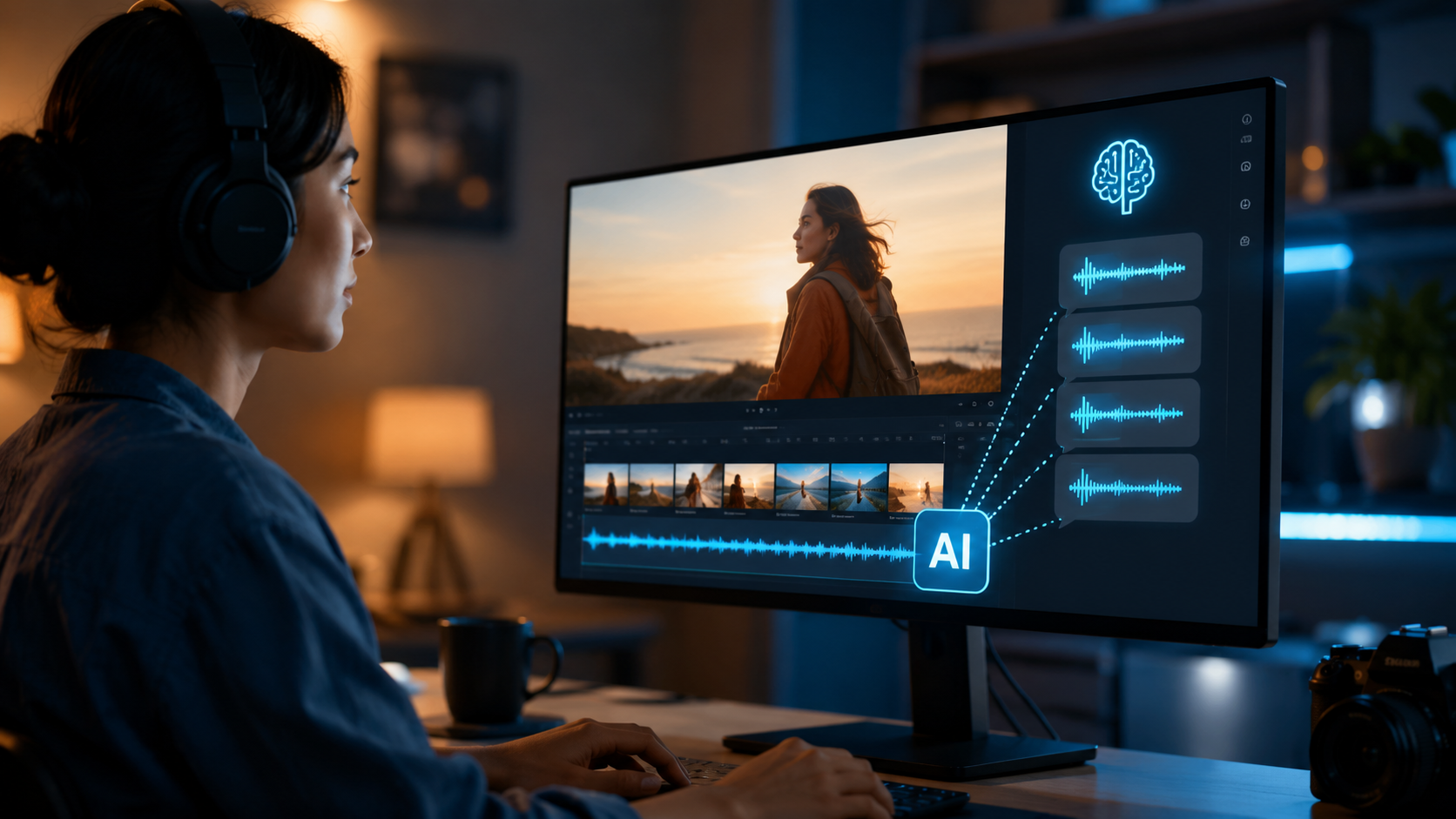
Implementing AI subtitles in 2026 follows a streamlined workflow that combines automation with strategic human oversight:
- Select Your AI Tool: Choose between consumer options (Filmora, Descript), prosumer platforms (Digen AI Agent, Runway), or enterprise solutions based on volume needs and accuracy requirements
- Upload Source Media: Most systems accept MP4, MOV, and AVI formats, with advanced tools like Digen AI Agent supporting direct YouTube/Vimeo URLs
- Configure Language Settings: Enable multilingual detection if needed - top tools now handle 40+ languages with dialect recognition
- Generate Initial Transcript: Processing times vary from 1/4x realtime for 1080p content up to 10x for 720p on GPU-accelerated systems
- Edit & Refine: Review auto-generated captions using built-in waveform editors, focusing on proper nouns and technical terms
- Export & Distribute: Output SRT/VTT files with platform-specific formatting for YouTube, TikTok, or broadcast standards
According to Programming Insider, Filmora's May 2026 update reduced average subtitle creation time from 45 minutes to under 7 minutes per 10-minute video. For higher-stakes content, BBC's approach combines AI first-pass generation with human quality control - their editors now review rather than create captions, increasing throughput by 3x.
Emerging best practices include using AI tools that preserve speaker identification (critical for interviews) and offer style customization. Digen AI Agent's February 2026 update introduced dynamic font adaptation, automatically adjusting subtitle appearance based on video background complexity - a feature shown to improve viewer retention by 18% in A/B testing.
Top AI Subtitle Tools Compared
The 2026 landscape offers diverse solutions for different use cases:
| Tool | Accuracy | Languages | Unique Feature | Best For |
|---|---|---|---|---|
| Filmora Auto Caption | 92% | 42 | Auto-sync to edits | Creators |
| BBC AI System | 96% | 67 | 500h/day capacity | Broadcast |
| Digen AI Agent | 94% | 38 | Character consistency | Narrative content |
| ByteDance Seedance 2.0 | 85% | 29 | Real-time processing | Social media |
As reported by Metricool, the key differentiator in 2026 isn't raw accuracy but contextual understanding - tools that maintain 90%+ accuracy during rapid dialogue exchanges or with heavy accents command 30% price premiums. Filmora's consumer-focused solution leads in ease-of-use, while Digen AI Agent specializes in long-form narrative consistency, automatically adapting subtitle timing to match character speech patterns across scenes.
Enterprise users should note BBC's system achieves 96% accuracy through proprietary training on their content archive - a luxury most organizations can't replicate. For most creators, hybrid tools offering 90-94% accuracy with efficient correction workflows deliver the best time-to-value ratio. The 5 tools highlighted by Bhaskar English all share timestamp-based editing interfaces that reduce correction time by 60% versus text-only editors.
Advanced Implementation Techniques
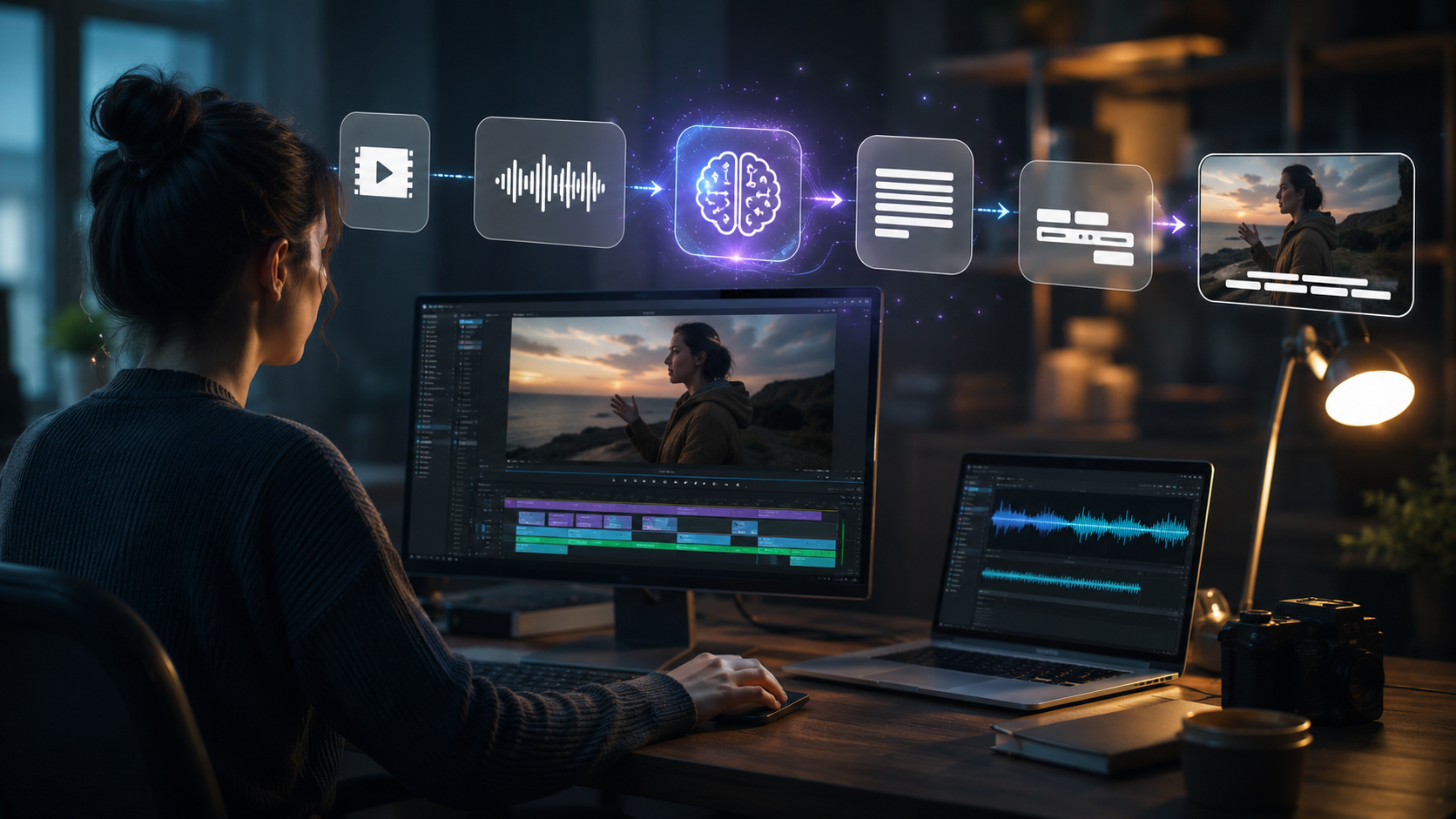
Professional creators employ several strategies to maximize AI subtitle effectiveness:
Pre-Processing Audio
Running audio through enhancement tools like Adobe's Speech Enhance (integrated into Digen AI Agent) before caption generation improves accuracy by 12-15% for suboptimal recordings. The BBC workflow includes mandatory noise reduction for all field recordings, contributing to their industry-leading 96% accuracy rate.
Custom Vocabulary Banks
Top solutions allow uploading glossaries of proper nouns and technical terms. Filmora's 2026 update introduced industry-specific packs (medical, legal, engineering) that reduce specialized term errors by 40%. For recurring projects like podcast series, these custom dictionaries become accuracy multipliers.
Multilingual Workflows
Pioneered by anime distributors, the best 2026 systems handle translation and localization in a single pass. Aftermath's report notes leading Japanese-to-English tools now preserve 80% of cultural context versus 50% in 2024, though human review remains essential for nuanced content.
Emerging Challenges and Solutions
Despite advances, AI subtitles still face several technical hurdles:
The "probability game" issue identified in ByteDance Seedance 2.0 testing manifests when AI encounters overlapping dialogue or poor audio quality, sometimes producing completely garbled subtitles. Their February 2026 test showed 15-20% error rates in crowded audio environments versus 5-8% for clean recordings. Solutions like Digen AI Agent's multi-microphone separation technology aim to address this, currently reducing overlap errors by 35%.
Anime localization presents unique challenges - exaggerated vocal performances and cultural references still trip up AI systems. Aftermath's January 2026 analysis found even advanced tools require 40% more human correction for anime versus live-action. Some studios now use hybrid systems where AI handles 70% of straightforward dialogue, with human translators focusing on complex scenes.
Looking ahead, the next frontier involves contextual understanding - systems that comprehend video content to improve subtitle timing and phrasing. Early tests at the BBC show promise, with context-aware systems reducing "caption lag" (delayed subtitle appearance) by 28% in fast-paced sequences. Digen AI Agent's character consistency features represent another innovation direction, particularly valuable for episodic content.
Future Trends in AI Subtitling
Three key developments will shape AI captioning through 2027:
Real-Time Translation: Tools like ByteDance Seedance 2.0 already offer live subtitling with 1-2 second latency, though accuracy remains 10-15% below post-processed results. Expect this gap to close as transformer models improve, potentially enabling broadcast-quality live translations by late 2027.
Emotional Captioning: Emerging systems analyze vocal tone to add descriptive tags like [sarcastically] or [whispering]. The BBC has prototyped this for drama productions, finding it improves accessibility for hearing-impaired viewers by 22% in trials.
Platform-Specific Optimization: TikTok's 2026 algorithm update now prioritizes videos with perfectly timed captions, creating demand for AI tools that adapt subtitle pacing to platform requirements. Filmora's May 2026 update introduced automatic TikTok/Reels optimization, while Digen AI Agent offers granular control over caption duration and appearance timing.
Frequently Asked Questions
How accurate are AI video subtitles in 2026?
Leading tools achieve 90-96% accuracy for clean audio in major languages, dropping to 80-85% for complex audio environments or niche dialects. Enterprise systems like BBC's reach 96% through custom training, while consumer tools average 90-92%.
Can AI handle multilingual subtitles automatically?
Yes, top systems like Digen AI Agent and Filmora now support 40+ languages with automatic detection, though human review remains recommended for nuanced content. Translation accuracy has improved to 85-90% for common language pairs.
What's the fastest AI subtitle tool?
ByteDance Seedance 2.0 currently leads in processing speed at 10x realtime for 720p video, though with slightly lower accuracy (85%). For balanced speed/accuracy, Digen AI Agent processes at 5x realtime with 94% accuracy.
How do AI subtitles handle music and sound effects?
Advanced systems now automatically tag [MUSIC] and [SFX] with 80% accuracy, up from 50% in 2024. The BBC's system leads this capability, while consumer tools often require manual sound labeling.
Are there AI tools specialized for anime subtitles?
Yes, several Japanese-developed tools now specifically handle anime speech patterns and cultural references, though they still require 40% more human correction than standard content according to Aftermath's 2026 analysis.
Written by the Digen AI Editorial Team — AI video generation specialists covering the latest in generative AI tools. Learn more about Digen AI.
Comments ()