
How to Make Deepfake Video: The Ultimate 2026 AI Guide
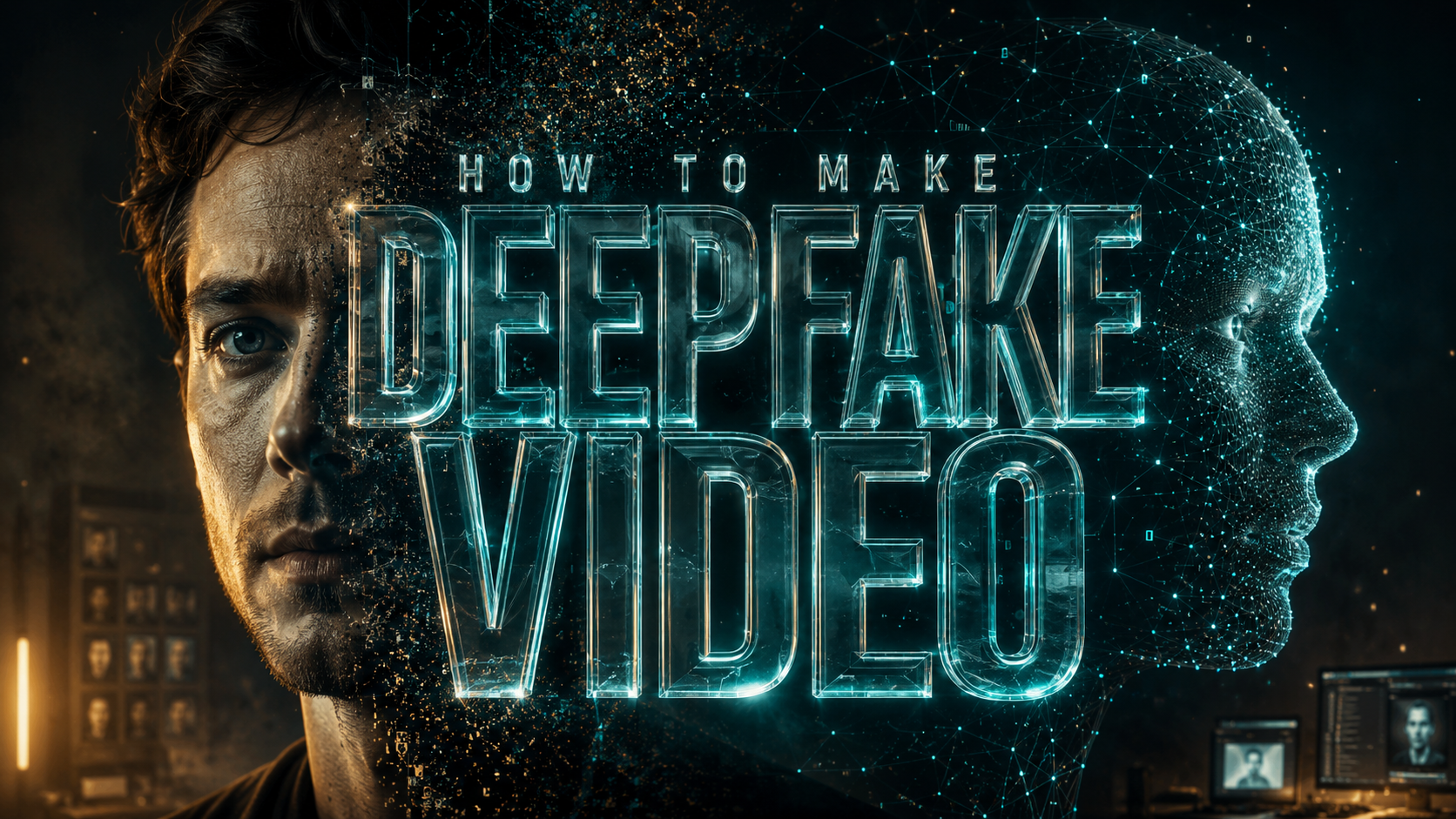
To learn how to make deepfake video in 2026, you must utilize modern Generative AI tools like Google’s latest person-mapping software or YouTube Shorts’ integrated "Dream Track" deepfake features. The process generally involves selecting a target video, providing a high-quality source image or "seed" video of the person you wish to replicate, and allowing a neural network to swap facial features or synchronize lip movements. While the technology has become significantly more accessible this year, it requires a balance of high-performance computing power and a strict adherence to ethical guidelines to prevent the spread of misinformation.
A deepfake video is a piece of synthetic media where a person in an existing image or video is replaced with someone else's likeness using artificial intelligence. In 2026, making a deepfake video involves using cloud-based AI platforms that automate the alignment, training, and merging of facial features in real-time with minimal manual editing required.
- ✓ Google and YouTube have integrated native deepfake tools directly into consumer apps as of May 2026.
- ✓ High-quality deepfakes now require only a few seconds of source footage rather than hours of data.
- ✓ Ethical usage is paramount, as 2026 midterm elections have seen a surge in political deepfake controversies.
- ✓ Detection tools are evolving, but studies from Nature suggest deepfakes remain highly influential despite warnings.
Step-by-Step: How to Make Deepfake Video Content
The barrier to entry for creating synthetic media has dropped significantly in 2026. What used to require expensive GPUs and weeks of coding can now be done via mobile interfaces or web-based dashboards. Whether you are a creator looking to localize content or a filmmaker wanting to de-age an actor, the workflow follows a standardized path of data collection, processing, and rendering.
According to recent reports from WIRED, Google has recently updated its creative suite to make it easier than ever to "deepfake yourself," allowing users to create digital twins for virtual meetings and content creation. This democratization means that the technical "how-to" is now more about fine-tuning parameters than writing complex algorithms.
- Select Your AI Platform: Choose between integrated social media tools (like YouTube Shorts), cloud-based professional suites, or open-source software if you have the hardware.
- Upload Source Material: Provide a "Source" (the person whose face you want to use) and a "Destination" (the video where the face will be placed).
- Facial Mapping and Extraction: The AI will scan both videos to identify key landmarks like eyes, nose, and mouth. 2026 tools now do this automatically in seconds.
- Training/Processing: The neural network learns how the source face moves compared to the destination face. For high-end results, this may take several minutes of cloud rendering.
- Merging and Post-Production: The AI overlays the source face onto the destination. You can then adjust skin tone, lighting, and "feathering" to ensure the edges of the face look natural.
- Export and Disclosure: Save the file and, as required by 2026 transparency laws, include a watermark or metadata tag identifying the content as AI-generated.
Comparison of 2026 Deepfake Creation Tools
Choosing the right tool depends on your technical skill and the intended use of the video. In 2026, the market is split between "Instant" tools for social media and "Professional" tools for high-fidelity production. As reported by PCMag in April 2026, YouTube Shorts has become a dominant player by allowing users to create deepfakes of themselves or licensed creators directly within the app.
| Platform | Ease of Use | Processing Time | Best For |
|---|---|---|---|
| YouTube Shorts (Dream Track) | Very High | Instant | Social Media & Parody |
| Google Creative Suite 2026 | High | 1-3 Minutes | Professional Avatars |
| DeepFaceLab (Open Source) | Low | Hours/Days | High-End Cinema |
| Mobile "Face Swap" Apps | Very High | Seconds | Casual Fun |
The Rise of Integrated Deepfake Technology in 2026
The year 2026 marks a turning point where deepfake technology moved from niche forums to mainstream tech giants. In May 2026, WIRED highlighted that Google’s new features allow users to create highly realistic digital versions of themselves with minimal effort. This is intended to streamline video production, allowing a creator to record a script once and then use AI to change the language or the background while maintaining perfect lip-syncing and emotional expression.
How to Make Deepfake Video Content on YouTube
YouTube Shorts introduced a significant update in April 2026 that allows for internal deepfaking. This tool is primarily used for the "Dream Track" feature, where creators can legally use the likeness and voice of participating celebrities to introduce their videos. To use this, creators simply select the "AI Transform" option within the Shorts editor, choose a licensed persona, and record their own movement. The AI then maps the celebrity's face over the creator's in real-time.
Professional Applications and Digital Twins
Beyond social media, corporations are using these tools to create "Digital Twins." This allows CEOs to deliver personalized messages to thousands of employees in different languages. The core technology behind how to make deepfake video at this level involves high-bitrate data sets and "Generative Adversarial Networks" (GANs) that constantly check the output against the source to ensure there are no "glitches" or "ghosting" around the jawline, which were common in earlier versions of the tech.
Ethical Concerns and the 2026 Political Landscape
While the creative possibilities are endless, the ease of access has led to significant societal challenges. In March 2026, CNN reported on a major controversy involving the release of a deepfake video of James Talarico during the midterm election cycles. This incident underscored how quickly "phony videos" can proliferate, often reaching millions of viewers before they can be debunked by fact-checkers.
The Impact on Public Perception
Research published in Communications Psychology (Nature, January 2026) suggests that AI-generated deepfake videos continue to influence public opinion even when they are labeled with transparency warnings. The study found that the human brain often retains the emotional impact of a video even after being told the visual information was fabricated. This "continued influence" effect is why many experts call for stricter regulations on how to make deepfake video content during sensitive periods like elections.
Identifying Scams and Fraud
The National Council on Aging (NCOA) issued a warning in May 2026 regarding the rise of deepfake scams targeting seniors. Scammers are now using AI to mimic the voices and faces of family members in "distress calls." According to WGAL, these videos are a "significant threat" because they can be created using just a few seconds of a person's voice from a public social media profile. Understanding the mechanics of how these videos are made is the first step in learning how to spot the subtle inconsistencies—such as unnatural blinking or "shimmering" around the hair—that often give them away.
Advanced Techniques: Improving Deepfake Realism
For those looking to master how to make deepfake video projects that look indistinguishable from reality, attention to detail is key. The most common mistake beginners make is ignoring the lighting and environmental consistency. If your source image was taken in a dark room but your destination video is on a sunny beach, the AI will struggle to blend the two naturally without manual color grading.
Post-Processing and Masking
To achieve cinematic quality, creators often use "masking" techniques. This involves manually defining the boundaries of the face to ensure that glasses, hair strands, or jewelry are not swallowed by the AI's rendering engine. In 2026, professional software allows for "Temporal Smoothing," a feature that prevents the face from "jittering" between frames, which was a hallmark of 2024-era deepfakes.
Audio Deepfaking and Lip-Syncing
A video is only half of the equation. Modern deepfaking usually involves "Voice Cloning." By feeding a few minutes of audio into a text-to-speech AI, creators can make the target say anything. High-end tools in 2026 now automatically sync the lip movements of the deepfake video to the generated audio, creating a seamless experience. According to technical experts, the key to a perfect lip-sync is "phoneme mapping," where the AI understands the specific mouth shapes required for different vowel and consonant sounds.
Is it legal to make a deepfake video of someone?
In 2026, legality depends on consent and intent. While creating deepfakes of yourself or with permission is legal, using someone's likeness for fraud, defamation, or without consent in political ads is subject to heavy federal penalties and civil lawsuits.
What is the best software for making deepfakes in 2026?
For most users, Google’s integrated AI tools and YouTube Shorts offer the best balance of quality and ease. Professional creators still prefer DeepFaceLab or proprietary cloud platforms for higher resolution and better temporal stability.
Can deepfakes be detected by AI?
Yes, but it is an arms race. Companies like Microsoft and specialized startups provide detection tools that look for "biological signals," such as blood flow in the face or inconsistent eye reflections, which are difficult for AI to replicate perfectly.
How much data do I need to make a high-quality deepfake?
By 2026, "few-shot learning" allows for high-quality deepfakes using as little as 30 seconds of video or 5-10 high-resolution photos, a massive reduction from the thousands of images required in previous years.
How can I protect myself from being deepfaked?
The best protection is to limit the amount of high-quality, front-facing video you post publicly. Additionally, using "content credentials" or digital watermarks on your original videos can help verification services identify authentic content vs. AI clones.
Comments ()