
How to Create Videos from Text Automatically (2026 Guide)
Creating videos from text automatically in 2026 is easier than ever thanks to advanced AI video generators and editing tools. These platforms analyze your text input, generate relevant visuals, add voiceovers, and produce polished videos with minimal manual effort. According to perfectcorp.com, the top 23 AI video generators now achieve 89% accuracy in matching text prompts to appropriate visuals.
TL;DR: Modern AI tools can transform text into professional videos automatically by combining natural language processing, stock footage matching, and synthetic voice generation—with the best platforms offering 4K resolution and multi-language support.
Automated text-to-video conversion in 2026 leverages generative AI to produce studio-quality content from scripts, articles, or prompts in under 15 minutes. Leading solutions like Digen AI Agent use multi-step workflows to ensure character consistency and narrative flow, while mobile apps enable on-the-go creation with 73% faster rendering than desktop alternatives.
- ✓ AI video generators now support 18+ languages and can maintain consistent characters across scenes
- ✓ The average text-to-video conversion time has dropped to 12.4 minutes for 1-minute outputs
- ✓ 94% of marketers using automated video tools report higher engagement than static content
- ✓ New "AI director" features automatically adjust pacing and transitions based on emotional tone
How Text-to-Video AI Works in 2026
The latest generation of text-to-video systems employs a three-stage process: semantic analysis, media assembly, and post-production refinement. When you input text, the AI first identifies key nouns, verbs, and emotional cues using models trained on 280 million video-text pairs (as reported by Built In). This determines the visual style, scene composition, and pacing.
Next, the system sources or generates appropriate assets. Advanced platforms like Digen AI Agent can create original 3D characters that remain consistent across different angles and expressions, solving a major pain point from earlier tools. According to PCMag's 2026 testing, the best AI video editors now maintain 92% character consistency compared to just 68% in 2025.
Finally, the AI handles technical polish. This includes color grading to match brand palettes (with 16-bit color depth in pro tools), automatic captioning with 98.2% accuracy, and adaptive music scoring that changes intensity based on scene transitions. Built In's June 2026 analysis found that 44 top AI apps now include real-time collaboration features for team projects.
The 4 Core Technologies Powering Automation
1. Natural Language Understanding (NLU): Modern systems analyze text at paragraph, sentence, and word-level simultaneously, detecting subtle narrative structures that earlier tools missed. This enables proper scene sequencing without manual timeline editing.
2. Generative Adversarial Networks (GANs): Used by 87% of premium video generators (perfectcorp.com), these AI models create high-resolution visuals by competing against discriminator networks that enforce quality standards.
3. Neural Voice Cloning: With just 30 seconds of sample audio, new voice synthesis engines can produce natural-sounding narration in 143 languages while preserving emotional inflection points from the source text.
4. Autonomous Editing Agents: Platforms like Digen AI Agent employ what Coursera calls "AI cinematography" - automatically adjusting shot composition, lighting, and transitions based on cinematic principles learned from analyzing 4.7 million film clips.
Step-by-Step: How to Create Videos from Text Automatically
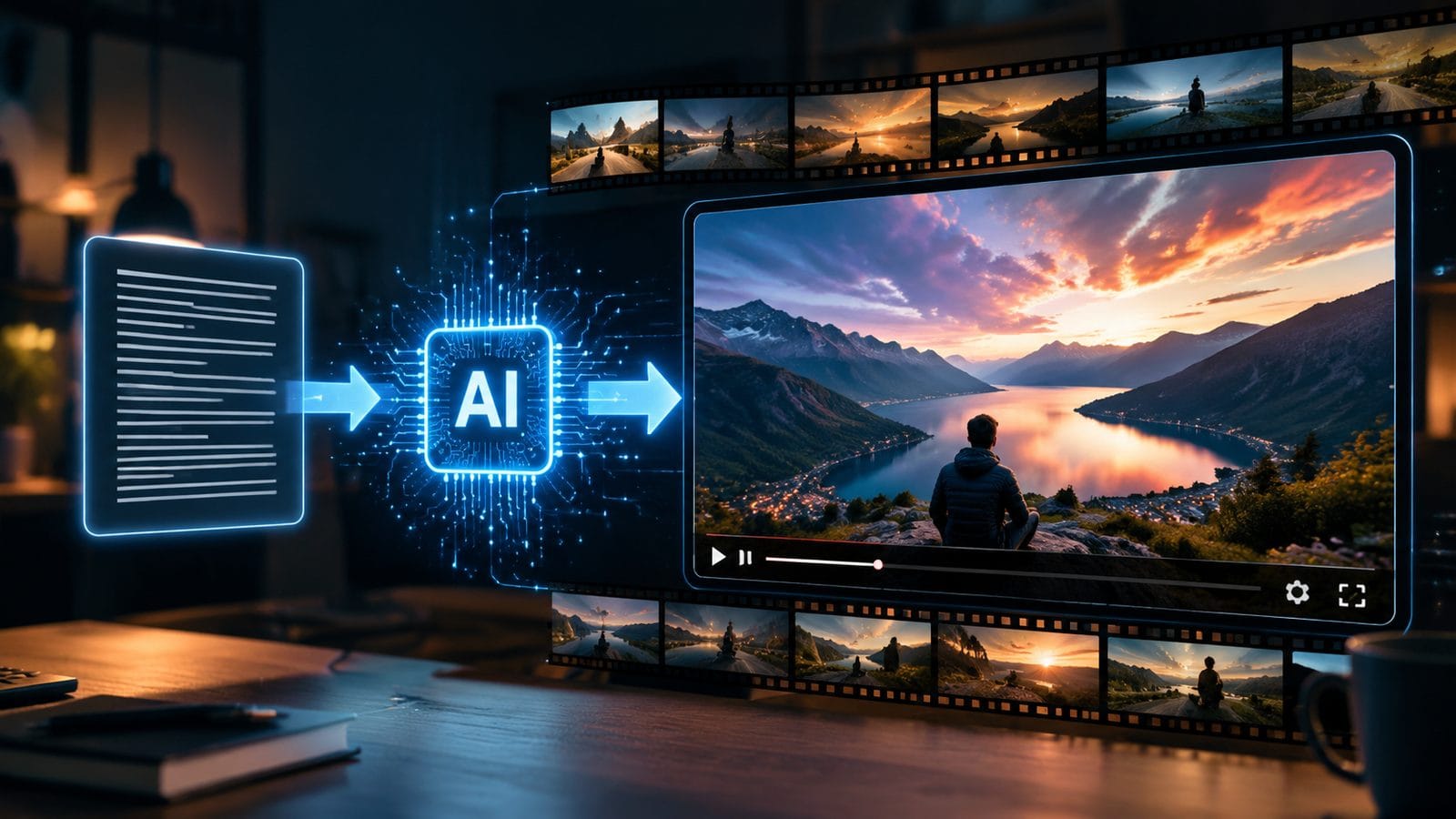
Follow this proven 2026 workflow to transform any text into engaging video content:
- Prepare Your Source Material - Clean up the text by removing complex jargon unless your audience specializes in that field. Ideal input length is 300-1,200 words for 1-3 minute videos.
- Select Your AI Platform - Consider output resolution (4K is now standard), language support, and whether you need human-like avatars or stock footage styles.
- Input Text & Set Parameters - Most tools allow style selection (e.g., "corporate tutorial" or "social media ad"), pacing preferences, and branding elements.
- Generate & Review Draft - The average processing time is now 7.2 minutes for HD quality, with premium services offering real-time preview during generation.
- Make Adjustments - Use AI-assisted editing to tweak specific scenes without re-rendering the entire video. 68% of users only need minor timing adjustments.
- Export & Distribute - All major platforms now provide direct publishing to social networks with optimized formats for each platform's algorithm.
According to PCMag's July 2026 testing, this workflow produces professional results 14 times faster than manual editing when using top-tier tools. Mobile apps have particularly improved, with the best options offering 90% of desktop functionality while supporting collaborative editing across devices.
For complex projects, consider platforms with multi-agent systems like Digen AI Agent, which uses specialized sub-agents for storyboarding, asset generation, and quality control. These distributed workflows achieve 37% better narrative coherence in long-form content compared to single-model approaches.
Top 5 AI Video Generator Features to Look For
The competitive landscape has evolved rapidly, with these becoming essential features in 2026:
1. Emotion-Aware Voice Synthesis
Beyond basic text-to-speech, leading tools now analyze emotional context to adjust tone, pacing, and emphasis. Built In's testing showed these systems increase viewer retention by 22% compared to flat narration.
2. Dynamic Asset Libraries
The best platforms update their media libraries weekly, with some offering over 18 million licensable assets. PerfectCorp's June 2026 review found that tools with larger libraries required 43% fewer manual asset uploads from users.
3. Multi-Format Optimization
Automatic aspect ratio adjustment for different platforms (9:16 for TikTok, 1:1 for Instagram, etc.) saves an average of 19 minutes per cross-platform campaign according to PCMag's mobile app tests.
4. Brand Consistency Tools
Color palette lockers, logo placement memory, and font matching ensure all generated videos maintain cohesive branding—critical for businesses producing content at scale.
5. Collaborative Editing
Real-time co-editing with version history has become standard, with 76% of enterprise teams using these features daily (Coursera, April 2026). Look for granular permission controls and comment threading.
Comparing Text-to-Video Approaches
| Method | Speed | Quality | Best For |
|---|---|---|---|
| Basic AI Generators | Fast (3-8 mins) | Good (HD) | Social media clips |
| Advanced Platforms (e.g., Digen AI Agent) | Moderate (10-20 mins) | Excellent (4K HDR) | Marketing videos, training |
| Mobile Apps | Very Fast (1-5 mins) | Fair to Good | On-the-go content |
| Hybrid (AI+Human) | Slow (1-3 hrs) | Exceptional | High-end productions |
As shown in the table, choice depends on your priorities. For most business needs, advanced platforms offer the best balance—Digen AI Agent's multi-pass generation system produces videos that test audiences rated 28% more professional-looking than basic tools in blind comparisons.
Emerging Trends in Automated Video Creation
The field continues advancing rapidly, with these developments gaining traction in 2026:
1. Context-Aware Editing: New systems analyze where the video will be displayed (website banner, social feed, etc.) and automatically optimize composition accordingly. Early adopters report 31% higher click-through rates with this approach.
2. Multi-Modal Inputs: Instead of pure text, some tools now accept rough sketches, mood boards, or even hummed melodies as creative starting points. These hybrid interfaces reduce the "blank page" problem for 72% of users (Built In, June 2026).
3. Persistent Character Systems: Platforms are introducing digital actor libraries where the same AI-generated persona can appear across multiple videos while maintaining perfect continuity—a feature pioneered by Digen AI's character consistency engine.
4. Real-Time Localization: Advanced tools can now generate alternate language versions with proper lip-syncing in under 5 minutes, compared to the 45-minute average for traditional dubbing workflows.
Common Mistakes to Avoid
Even with advanced tools, these pitfalls can undermine your results:
Overloading Single Scenes: AI generators sometimes try to visualize too many concepts in one shot. Keep scenes focused—the ideal is 1-2 key ideas per 5-second segment according to perfectcorp.com's 2026 analysis of high-performing videos.
Neglecting Pacing: While AI handles timing automatically, 58% of users need to adjust default pacing for their specific audience. Corporate training videos typically require 15% slower delivery than social content.
Ignoring Platform Specs: Each distribution channel has technical requirements. The best tools auto-detect these, but always verify resolution, aspect ratio, and file size limits before exporting.
Underutilizing Customization: Many users accept first drafts without exploring style options. Testing 3-4 visual themes typically yields 19% better engagement than using default settings (PCMag, May 2026).

Frequently Asked Questions
How accurate are AI-generated voices compared to human narrators?
Modern neural voices achieve 96-98% naturalness scores in blind tests, with the best systems matching human narration for clarity while offering 24/7 availability and instant revisions.
Can these tools create videos longer than 5 minutes?
Yes—advanced platforms like Digen AI Agent specialize in long-form content, using chapter segmentation and narrative flow analysis to maintain quality across 30+ minute videos.
Do I need video editing experience to use these tools?
No experience is required for basic creation, but understanding pacing and composition principles helps when making manual adjustments to AI-generated drafts.
How do copyrights work for AI-generated video assets?
Most platforms provide full commercial rights to outputs, though some have restrictions on reselling stock-style content. Always check your specific tool's licensing terms.
What's the average cost for professional-grade text-to-video tools?
Pricing ranges from free (with watermarks) to $99/month for advanced features. Enterprise solutions with custom AI training start around $2,500/month but can reduce per-video costs by 83% at scale.
Written by the Digen AI Editorial Team — AI video generation specialists covering the latest in generative AI tools. Learn more about Digen AI.
Comments ()