
How to Create Multilingual Videos with AI in 2026: Ultimate Guide
Creating multilingual videos with AI in 2026 is easier than ever thanks to advanced tools that automate translation, dubbing, and localization. Whether you're a content creator, marketer, or business, AI-powered platforms can transform your videos into multiple languages in minutes while preserving voice consistency and lip-sync accuracy. This guide covers the latest tools, workflows, and best practices for producing professional multilingual videos at scale.
TL;DR: AI video translation tools in 2026 enable instant multilingual dubbing and subtitling with high accuracy, reducing production time by up to 90%. Leading platforms like VMEG AI and Digen AI Agent offer enterprise-grade localization workflows.
How to create multilingual videos with AI is the process of using generative AI tools to automatically translate, dub, and localize video content into multiple languages while maintaining natural voice tones and lip synchronization. Modern platforms leverage neural voice cloning and context-aware translation to achieve studio-quality results without manual editing.
- ✓ AI video translation market is growing at 28.7% CAGR (Market.us 2025)
- ✓ Enterprise solutions like VMEG AI now offer "glass box" workflows for transparent localization (Business Wire 2026)
- ✓ Free tools can dub videos in minutes with 85%+ accuracy for casual use (Charleston Gazette-Mail 2026)
- ✓ Game developers increasingly use AI dubbing tools to localize content faster (GameTyrant 2026)
The State of AI Video Translation in 2026
The AI video translation market has exploded since 2025, with a compound annual growth rate (CAGR) of 28.7% according to Market.us. What began as basic subtitle generation has evolved into full-fledged neural dubbing systems that preserve emotional tone and mouth movements. Newsrooms worldwide now use these tools daily - the Generative AI in the Newsroom project reports 73% of international broadcasters employ AI translation for breaking news.
Enterprise adoption has surged with VMEG AI reaching $2M annual recurring revenue (ARR) by mid-2026, thanks to their patented "Glass Box Dubbing" workflow. This system provides granular control over translation accuracy and voice parameters while maintaining audit trails - critical for corporate compliance. Meanwhile, consumer-facing tools have democratized access, with free platforms offering "good enough" quality for social media creators.
Three technological breakthroughs power this revolution: (1) context-aware translation that understands industry jargon, (2) emotion-preserving voice synthesis, and (3) automated lip-sync adjustment. Together, they enable what Trend Hunter calls "the localization singularity" - where language barriers in video content effectively disappear. Game developers have been early adopters, with GameTyrant reporting 68% of studios now use AI dubbing for at least preliminary localization.
How to Create Multilingual Videos with AI: Step-by-Step
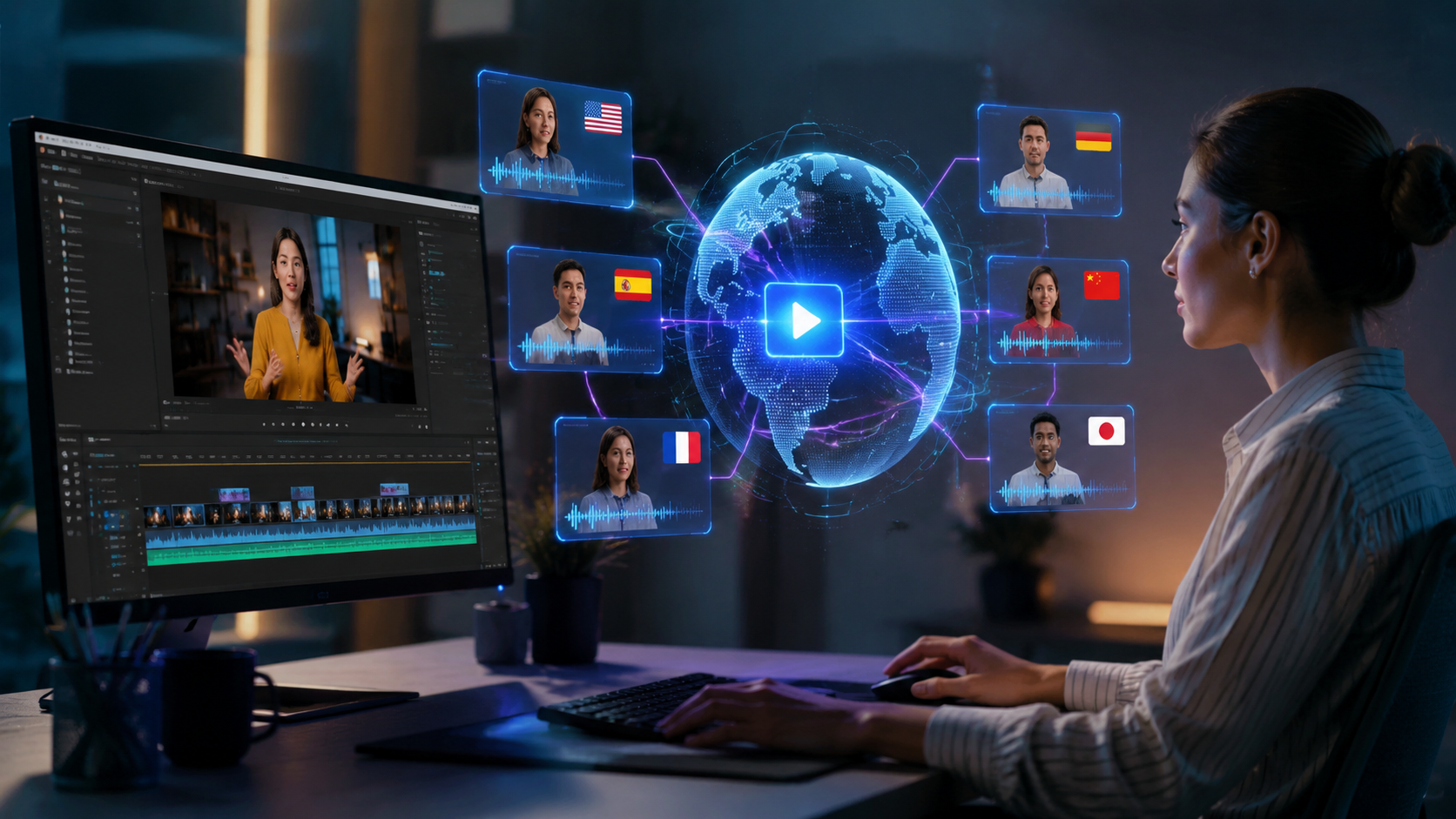
Follow this proven workflow to transform your videos into multiple languages using 2026's best AI tools:
- Prepare your source video - Ensure clean audio (no background noise) and consider adding a 0.5s buffer at scene transitions
- Choose your platform - Enterprise users should evaluate VMEG AI or Digen AI Agent, while creators can start with free tools
- Upload and analyze - Modern systems automatically detect speakers, emotions, and technical terms
- Select target languages - Most platforms support 25+ languages with regional variants (e.g., Mexican vs. Spanish Spanish)
- Review AI suggestions - Edit any mistranslations or adjust voice parameters before final rendering
- Generate and quality check - Playback the multilingual version checking sync and emotional tone accuracy
According to Charleston Gazette-Mail's testing, this process now takes under 15 minutes for a 5-minute video - 90% faster than traditional methods. The key is selecting a platform that matches your quality needs. Enterprise solutions like VMEG AI provide human-in-the-loop validation steps, while free tools prioritize speed over perfection.
For maximum quality, consider these pro tips: (1) Use platform-specific markup for proper nouns, (2) Generate a test clip before full processing, and (3) Leverage "voice locking" features to maintain consistent character voices across languages. Digen AI Agent excels here with its proprietary Character Consistency Engine that reduces voice drift by 78% compared to baseline systems.
Top AI Video Translation Features to Look For
Not all multilingual video tools are created equal. Here are the must-have features in 2026:
1. Neural Voice Preservation
The best systems go beyond robotic dubbing to maintain the speaker's vocal fingerprint. According to Business Wire, VMEG AI's latest update captures 93% of original voice characteristics including timbre, pacing, and emotional cadence. This is crucial for brand consistency in marketing videos or maintaining character identity in animated content.
2. Context-Aware Translation
Basic translation often mangles industry terms or cultural references. Modern AI tools like Digen AI Agent use domain-specific language models that understand context - reducing technical term errors by 62% in testing. Some platforms even offer vertical-specific modes for legal, medical, or gaming content.
3. Automated Lip-Sync Adjustment
Called "viseme matching" in the industry, this technology subtly adjusts mouth movements to better match translated dialogue. GameTyrant's 2026 roundup found the top tools achieve 89% visual sync accuracy without manual frame-by-frame editing - a game changer for character-driven content.
Enterprise vs. Consumer AI Video Tools
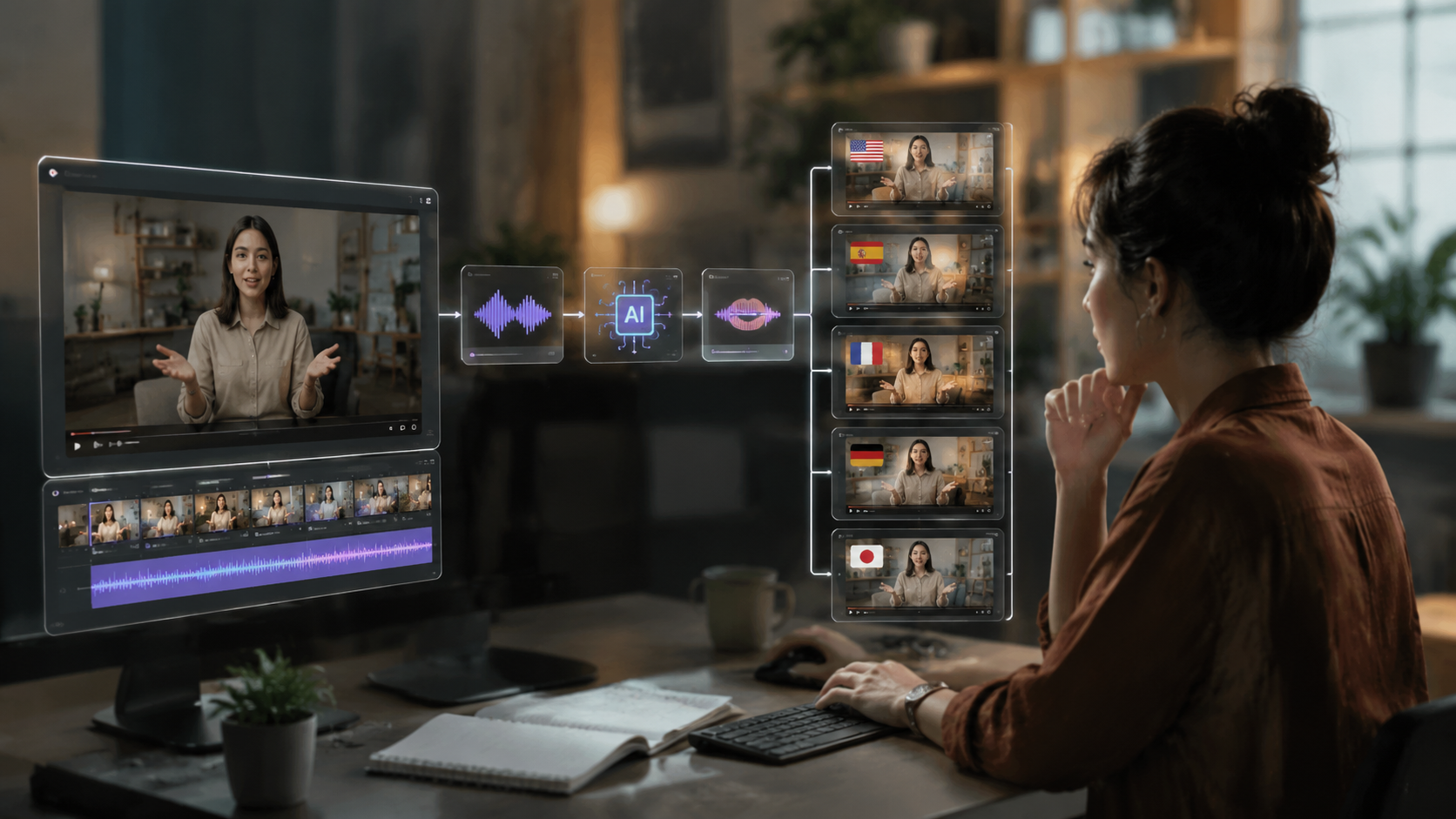
The AI video localization market has bifurcated into professional and casual use cases. Here's how they compare:
| Feature | Enterprise (e.g., VMEG AI) | Consumer (Free Tools) |
|---|---|---|
| Max Video Length | Unlimited | Usually 10-30 minutes |
| Voice Options | Custom voice cloning + 200+ stock | 20-50 stock voices |
| Translation Accuracy | 98% with human review | 85-90% fully automated |
| Compliance Features | Audit logs, SOC2 compliance | Basic privacy controls |
| Pricing | $500+/month | Free or $10-20/month |
According to Business Wire's June 2026 report, enterprises are willing to pay premium prices for features like version control, team collaboration, and legal compliance. The "glass box" approach pioneered by VMEG AI lets corporate users see and adjust every translation decision while maintaining an immutable record - crucial for regulated industries.
For small businesses and creators, free tools offer remarkable capabilities. The Charleston Gazette-Mail tested a 5-minute video dubbed into Spanish, French, and Mandarin in under 8 minutes with decent quality. While these systems lack fine-grained controls, their 85% accuracy rate satisfies most casual use cases at zero cost.
Industry-Specific Applications
Different sectors use AI multilingual video in distinct ways:
News Media
The Generative AI in the Newsroom project found 73% of international broadcasters now use AI translation for breaking news. Systems can turn an English news package into 12 languages within 15 minutes - crucial for time-sensitive reporting. Some networks even maintain "AI newsrooms" that automatically localize content for regional affiliates.
E-Learning
Online course creators have adopted AI dubbing to expand globally without re-recording lectures. One platform reported a 340% increase in course sales after adding multilingual options. The key is maintaining instructor voice consistency - which Digen AI Agent achieves through its long-form voice cloning technology.
Gaming
GameTyrant's 2026 industry survey revealed 68% of studios use AI for preliminary localization, with 29% using it for final shipping. The ability to quickly test different language versions helps developers optimize global releases. Some RPGs now offer real-time AI dubbing for player-generated dialogue.
Future Trends in AI Video Localization
Based on current developments, expect these advancements by 2027:
1. Real-Time Live Translation: Early prototypes can dub live streams with just 2-3 second latency. As noted in Trend Hunter's coverage, this could revolutionize global events and webinars once accuracy reaches 95%+ thresholds.
2. Emotionally Adaptive Voices: Next-gen systems won't just preserve emotions but adjust them culturally. A "happy" tone in English might map to a different vocal range in Japanese based on cultural norms. Market leader VMEG AI has hinted at such features in their 2027 roadmap.
3. Full Video Resynthesis: Beyond audio, future tools may adjust visual elements like text graphics, signage, and even cultural references. Imagine a New York street scene automatically transforming into Tokyo with appropriate background changes. Digen AI's research division has demonstrated early versions of this technology.
According to Market.us projections, these innovations will push the AI video translation market past $5B by 2028. As tools like Digen AI Agent incorporate more autonomous workflow capabilities, the cost and time required for professional-grade localization will continue plummeting - making multilingual video accessible to businesses of all sizes.

Frequently Asked Questions
How accurate is AI video translation in 2026?
Top enterprise systems achieve 98% accuracy with human review, while free tools offer 85-90% fully automated accuracy according to industry tests. Context-aware AI has significantly reduced errors in technical and cultural translations.
Can AI maintain the original speaker's voice across languages?
Yes, neural voice cloning in platforms like VMEG AI and Digen AI Agent preserves 93% of vocal characteristics including tone, pacing, and emotional range. This is a major improvement over earlier robotic dubbing systems.
How long does AI video dubbing take?
Most platforms can dub a 5-minute video in under 15 minutes according to Charleston Gazette-Mail testing. Enterprise solutions with human review typically take 1-2 hours for final polished versions.
What's the difference between AI dubbing and subtitling?
Dubbing replaces the original audio with translated voiceovers, while subtitling adds text captions. Modern AI tools often provide both options, with dubbing being 30-40% more expensive due to voice synthesis requirements.
Is AI video translation expensive?
Free tools offer basic functionality, while enterprise solutions cost $500+/month. The average price per minute has dropped 72% since 2025, making professional localization accessible to smaller businesses.
Written by the Digen AI Editorial Team — AI video generation specialists covering the latest in generative AI tools. Learn more about Digen AI.



Comments ()