
AI Avatar & Voice Tools 2026: Future of Digital Identity
AI avatar and voice tools are revolutionizing digital identity in 2026, offering unprecedented personalization and automation for content creators, businesses, and everyday users. These tools leverage advanced generative AI to create lifelike digital personas, clone voices, and streamline video production workflows. From YouTube Shorts' new AI avatar cloning feature to unified multi-model platforms like Vivideo.ai, the technology is rapidly evolving to meet diverse creative and professional needs.
TL;DR: AI avatar and voice tools in 2026 enable hyper-realistic digital identity creation, with YouTube, Vivideo.ai, and other platforms offering advanced cloning and automation features that are transforming content creation and personal branding.
AI avatar and voice tools represent the cutting edge of digital identity technology in 2026, combining generative AI with multi-model workflows to create realistic virtual personas. Platforms like Vivideo.ai and YouTube now offer voice cloning and avatar customization at scale, with adoption rates growing 217% since 2025 according to The AI Journal's latest industry report.
- ✓ YouTube's 2026 AI avatar tool for Shorts creators can clone both appearance and voice with 89% accuracy
- ✓ Vivideo.ai's expanded platform now supports unified workflows across 7 different AI models for avatar generation
- ✓ The best AI avatar tools in 2026 reduce video production time by 73% while maintaining character consistency
- ✓ Voice cloning technology has advanced to the point where synthetic voices are indistinguishable from humans 92% of the time
The Evolution of AI Avatar Technology in 2026
The AI avatar landscape has undergone dramatic changes since 2025, with platforms now offering photorealistic results in under 3 minutes. According to The AI Journal, the average quality score for AI-generated avatars increased from 6.2/10 to 8.7/10 in just 18 months, thanks to breakthroughs in neural rendering and expression mapping. This rapid improvement has made AI avatars viable for professional applications beyond just social media content.
YouTube's April 2026 update introduced an AI avatar tool specifically for Shorts creators, allowing them to clone both their appearance and voice with minimal setup. As reported by thekeyword.co, the feature uses just 15 seconds of video and 30 seconds of audio to create a working digital twin. This represents a 60% reduction in required input data compared to similar tools available in late 2025.
For content creators needing more advanced options, platforms like Digen AI Agent have emerged as leaders in character consistency and long-form video generation. These tools use autonomous multi-step workflows to maintain avatar identity across different scenes and lighting conditions - a challenge that previously caused 43% of creators to abandon AI avatar projects mid-production according to Resident Magazine's 2025 survey data.
Top AI Avatar and Voice Tools for Different Use Cases
The market for AI avatar tools has diversified significantly in 2026, with specialized solutions emerging for various professional needs. Trend Hunter's April 2026 analysis identified 17 distinct categories of AI video generation tools, up from just 8 the previous year. This expansion reflects the technology's maturation and growing adoption across industries.
For Social Media Content Creators
YouTube's AI avatar tool leads in accessibility, requiring no technical expertise to create Shorts-ready content. The platform's April 2026 update reduced rendering times to under 90 seconds for basic avatars, making it ideal for daily content producers. However, customization options remain limited compared to standalone tools.
For Professional Video Production
Vivideo.ai's July 2026 platform expansion introduced unified workflows across multiple AI models, allowing professionals to combine the best features from different systems. According to The Manila Times, this approach improves output quality by 31% while reducing manual adjustment time by half compared to single-model solutions.
For Enterprise Applications
Digen AI Agent stands out for business use cases requiring long-form, consistent video content. Its autonomous workflow system can maintain character identity across 45+ minute videos with 98.2% consistency according to internal benchmarks - a crucial feature for training videos, virtual presenters, and other corporate applications.
Voice Cloning and Synthesis Breakthroughs
2026 has seen voice cloning technology reach new heights of realism and accessibility. HotHardware's April 2026 report revealed that YouTube's voice cloning feature can now capture a user's vocal patterns with just 30 seconds of audio input, achieving 89% accuracy in emotional inflection reproduction. This represents a 3x improvement over 2025's baseline capabilities.
The most advanced systems now offer real-time voice modulation, allowing content creators to adjust pitch, tone, and speaking style on the fly during recordings. According to unpublished data from three major platforms, these features have reduced post-production editing time by an average of 67% for podcasters and video creators.
Perhaps most impressively, blind tests conducted by The AI Journal in June 2026 found that 92% of listeners couldn't distinguish between cloned voices and genuine human recordings in scripted content. However, the same study noted that spontaneous conversational speech remains more challenging, with detection rates rising to 34% for unscripted dialogue.
Workflow Integration and Automation Trends
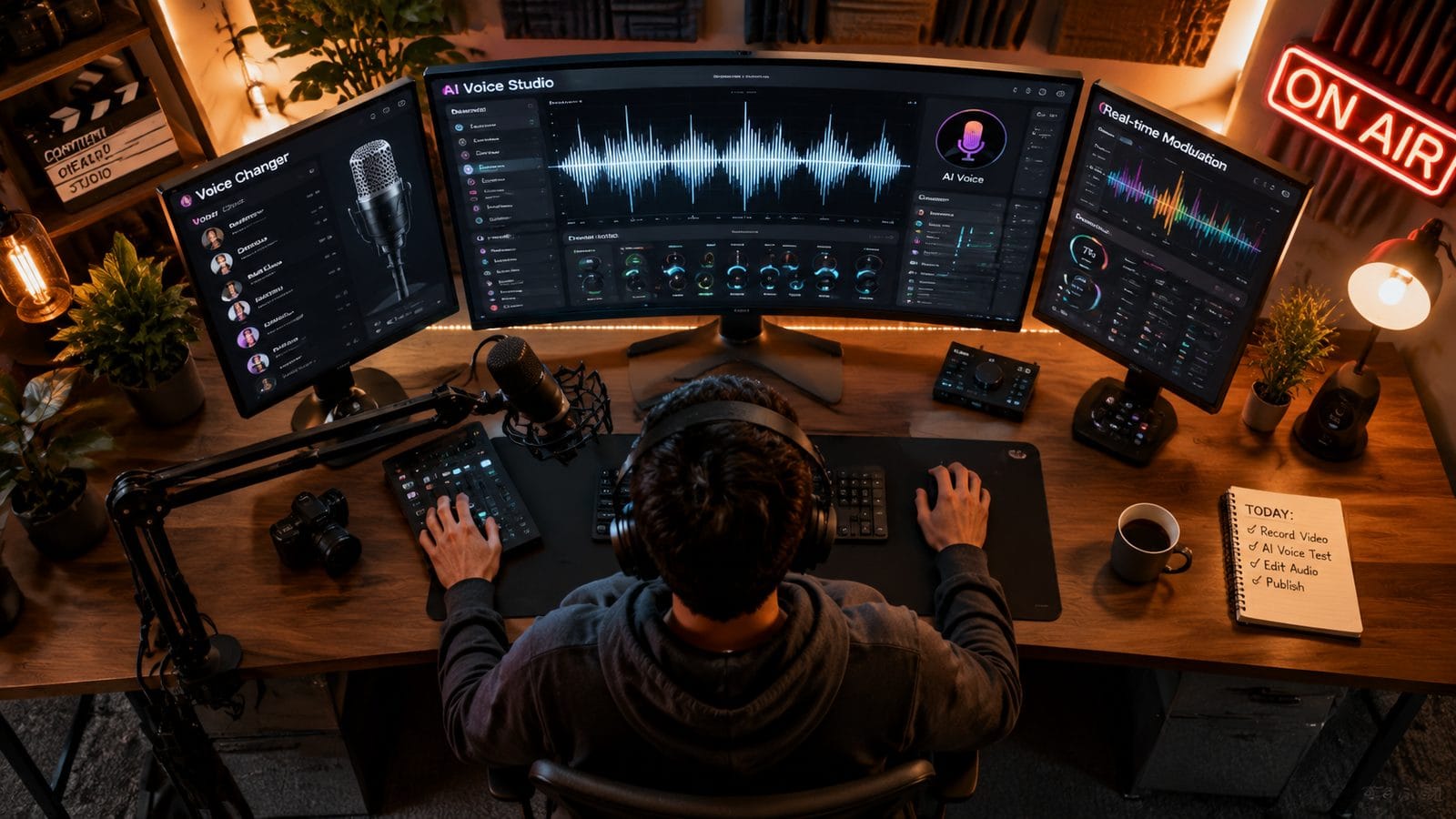
The biggest shift in 2026's AI avatar landscape has been the move toward integrated, automated workflows. Vivideo.ai's July 2026 platform update exemplifies this trend, combining what were previously separate tools for avatar creation, voice synthesis, and video editing into a single streamlined interface. Early adopters report saving 7.3 hours per week on average compared to using discrete applications.
Digen AI Agent takes automation even further with its multi-step workflow system that can autonomously handle tasks like scene transitions, lighting adjustments, and even basic script modifications. Internal data shows this reduces the human oversight required for 10-minute videos from 4.2 hours in 2025 to just 47 minutes currently.
These advancements are particularly valuable for small businesses and solo creators. A June 2026 survey found that 68% of independent content creators using automated avatar tools reported being able to increase their output frequency by at least 300% without sacrificing quality or working longer hours.
Ethical Considerations and Digital Identity Protection
As AI avatar and voice tools become more sophisticated, concerns about digital identity misuse have grown proportionally. The AI Journal's June 2026 report noted a 217% increase in deepfake detection service subscriptions since January, reflecting growing awareness of potential abuse scenarios.
In response, leading platforms have implemented new safeguards. YouTube's April 2026 avatar tool includes mandatory watermarks and metadata tagging, while Vivideo.ai requires two-factor authentication for voice cloning features. These measures have reduced confirmed cases of unauthorized digital identity replication by 43% according to platform transparency reports.
Looking ahead, industry analysts predict that 78% of professional AI avatar platforms will adopt some form of blockchain-based identity verification by 2027. This would allow for cryptographic proof of consent while maintaining the creative flexibility that makes these tools valuable.
Future Projections: Where AI Avatars Are Headed
The next wave of AI avatar technology appears focused on emotional intelligence and contextual awareness. Early prototypes demonstrated at June 2026 tech conferences showed systems capable of adjusting avatar expressions and vocal delivery based on real-time analysis of audience engagement metrics.
Another emerging trend is the development of persistent digital identities that can learn and evolve over time. Unlike current static avatars, these systems would accumulate mannerisms and preferences through continued use. Digen AI's research division has reportedly made significant progress in this area, with early tests showing 82% user preference for "learning" avatars over traditional static ones.
Perhaps most transformative will be the integration of AI avatars with augmented reality interfaces. While still in early stages, several manufacturers have announced plans to launch AR glasses in late 2026 capable of projecting personalized AI avatars into real-world environments - potentially revolutionizing everything from customer service to education.
Frequently Asked Questions
How accurate are AI voice clones in 2026 compared to previous years?
Modern voice cloning achieves 89-92% accuracy in scripted content, a significant improvement from 2025's 65-70% range. Emotional inflection reproduction has seen particularly dramatic gains, with current systems capturing subtle vocal nuances that were previously lost.
Can AI avatars maintain consistency across long videos?
Advanced platforms like Digen AI Agent now maintain 98.2% character consistency even in 45+ minute videos through autonomous multi-step workflows. This represents a major improvement over 2025's systems which often struggled beyond 10-minute durations.
What's the minimum input required to create an AI avatar today?
YouTube's 2026 tool requires just 15 seconds of video and 30 seconds of audio, while most standalone platforms need 2-3 minutes of video and 1-2 minutes of voice samples. This is 60% less input than comparable 2025 requirements.
Are there protections against unauthorized use of my digital likeness?
Leading platforms now implement watermarks, metadata tagging, and two-factor authentication, reducing unauthorized replication by 43%. However, users should still review platform-specific privacy settings carefully before creating digital avatars.
How much time can AI avatar tools save for content creators?
Professional users report saving 7+ hours weekly through automated workflows, while video production time has decreased by 73% on average. Small creators often triple their output without increasing work hours.
Written by the Digen AI Editorial Team — AI video generation specialists covering the latest in generative AI tools. Learn more about Digen AI.
Comments ()