
Generative AI Video Trends for 2026: The Future of Film
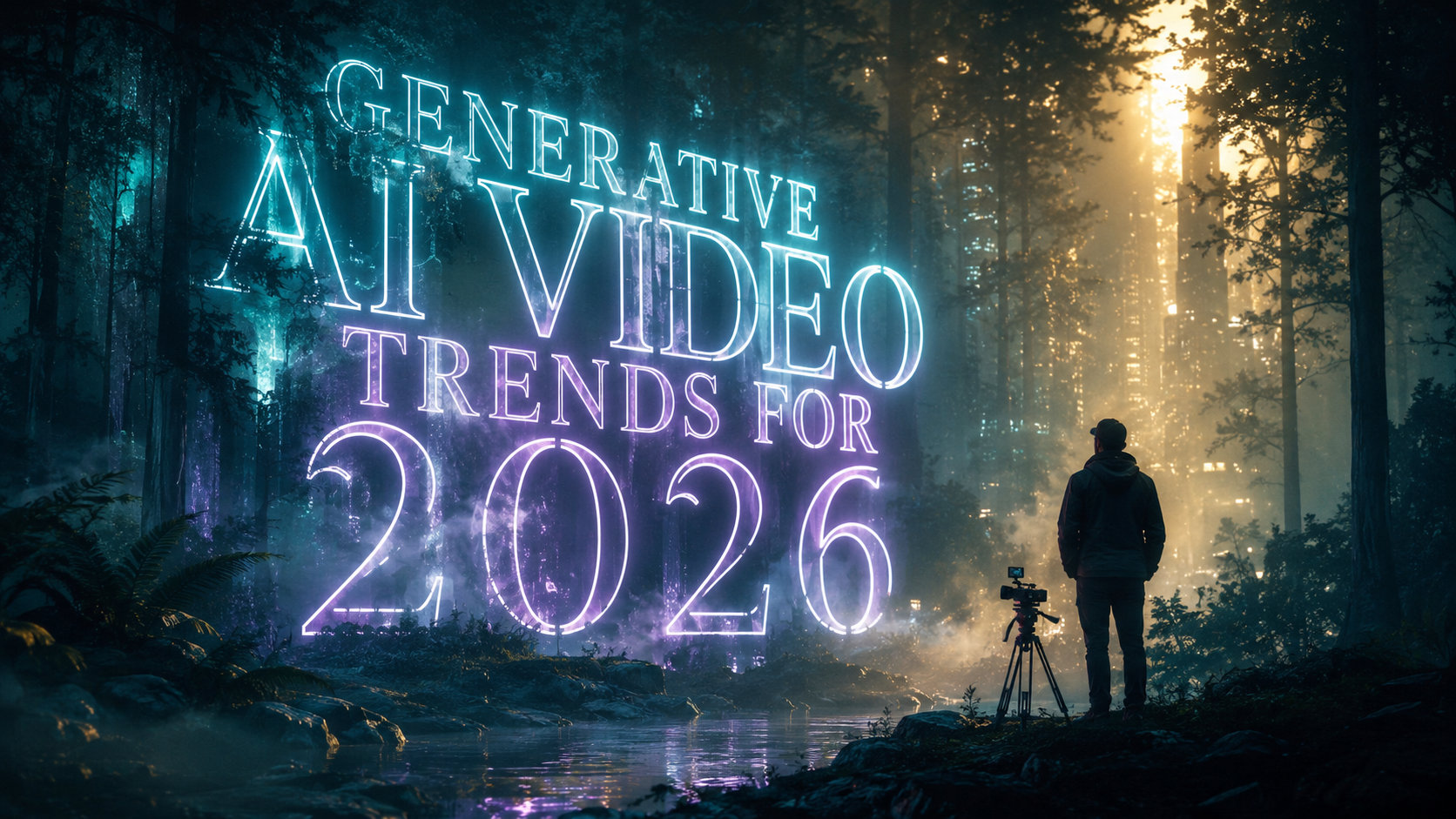
Generative AI video trends for 2026 are defined by the shift from experimental short-form clips to full-length, high-fidelity cinematic productions that integrate seamlessly with traditional filmmaking workflows. As we move through 2026, the industry is witnessing a convergence of real-time rendering, multi-modal narrative generation, and democratized visual effects that allow independent creators to produce studio-quality content. These generative ai video trends for 2026 represent a fundamental shift in how media is conceptualized, produced, and distributed across global platforms.
Generative AI video trends for 2026 involve the widespread adoption of "World Models" that understand physics, the rise of personalized interactive cinema, and the narrowing gap between AI-generated content and human-captured footage. According to recent industry reports, these technologies are now primary drivers in reducing production costs while increasing creative output for both Hollywood studios and independent digital creators.
- ✓ Real-time physics-based rendering has become the standard for high-fidelity AI video generation.
- ✓ The "AI gap" in technical proficiency is narrowing as tools become more intuitive for non-technical creators.
- ✓ Personalized media experiences allow viewers to influence narrative outcomes in real-time.
- ✓ Hybrid workflows combining human direction with generative "in-painting" are dominating the VFX industry.
- ✓ Ethical AI frameworks and provenance watermarking are now mandatory for commercial video distribution.
The Evolution of Narrative: Generative AI Video Trends for 2026
As of early 2026, the landscape of digital media has been irrevocably altered by the maturity of generative models. We have moved past the "uncanny valley" of 2024 and 2025, entering an era where generative video is indistinguishable from reality to the naked eye. This evolution is not merely about visual fidelity; it is about the structural way stories are told. Filmmakers are now using AI to iterate on storyboards that can be instantly converted into high-resolution "dailies," allowing for a level of creative flexibility previously reserved for high-budget animation studios.
According to the State of Generative Media 2026 report by Andreessen Horowitz, the cost of high-end visual effects has dropped by nearly 70% since 2024. This democratization means that a single creator can now manage the entire pipeline—from script to final color grade—using integrated generative suites. These suites don't just "generate" video; they understand the spatial consistency of a scene, ensuring that lighting, shadows, and character movements remain stable across multiple takes and angles.
The Rise of Physics-Aware World Models
One of the most significant generative ai video trends for 2026 is the implementation of physics-aware models. Unlike earlier iterations that merely predicted pixels based on patterns, current models simulate gravity, fluid dynamics, and light refraction. This means that if an AI-generated character drops a glass of water, the resulting splash and light reflections are calculated based on physical properties, leading to a level of realism that was previously only achievable through months of manual simulation in software like Houdini.
Interactive and Non-Linear Storytelling
The Boston Consulting Group's Video Gaming Report 2026 highlights how platforms are colliding, leading to a new era of growth where "film" and "game" are no longer distinct categories. We are seeing the rise of "Generative Cinema," where the viewer is not a passive observer. Using real-time generative video engines, a film can adapt its dialogue, setting, or even plot points based on the viewer’s preferences or previous interactions. This trend is transforming streaming services into interactive hubs where every viewer might see a slightly different version of the same movie.
Implementing AI in Your Production Workflow
For creators looking to stay competitive, adopting these generative ai video trends for 2026 requires a structured approach. The transition from traditional editing to AI-augmented production involves several key steps designed to maximize efficiency without sacrificing artistic integrity.
- Conceptualization and Script Analysis: Use LLMs to analyze scripts for pacing and emotional beats, automatically generating mood boards and style guides.
- Prompt Engineering for Spatial Consistency: Define the "World Seed"—a set of parameters that ensures characters and environments look the same across different scenes.
- Generative Pre-Visualization: Create low-resolution, high-speed renders of every scene to block out movements and camera angles before committing to high-fidelity generation.
- Multi-Modal Integration: Sync generative video with AI-composed soundtracks and synthetic voiceovers that match the emotional intensity of the visual performance.
- Refinement and In-Painting: Use generative fill tools to correct minor artifacts or change specific elements (like a character's clothing or a background building) without re-rendering the entire scene.
Comparison of 2026 Generative Video Technologies
The following table compares the primary categories of generative video technology currently dominating the market in 2026.
| Technology Category | Primary Use Case | Key Feature in 2026 | Latency/Processing |
|---|---|---|---|
| Latent Diffusion Models | Cinematic Film & Commercials | Temporal Consistency & 8K Output | High (Requires Server-Side GPU) |
| Neural Radiance Fields (NeRFs) | Virtual Production & Real Estate | 360-degree Volumetric Video | Medium (Real-time on High-end PCs) |
| Real-time Transformers | Live Streaming & Gaming | Instant Prompt-to-Video Feedback | Low (Millisecond Latency) |
| Hybrid GAN-Diffusion | Social Media & Short-form | Hyper-realistic Face/Body Swaps | Low (Mobile Optimized) |
Bridging the AI Gap: Insights for Industry Leaders
While the technology has advanced rapidly, Deloitte’s TMT Predictions 2026 notes that the "AI gap" narrows but persists. This gap is no longer about access to the tools, but rather the skill set required to direct them effectively. Leaders in the film and marketing industries are focusing on "Human-in-the-Loop" systems where the AI handles the repetitive, labor-intensive tasks of rotoscoping and lighting, while humans focus on the nuance of performance and narrative structure.
In the corporate world, MIT Sloan Management Review (January 2026) emphasizes that AI trends for 2026 are focused on "Generative Leadership." This involves using video AI to create personalized internal communications and training modules at scale. Imagine a CEO being able to deliver a personalized video message to 50,000 employees, each addressed by name and discussing their specific department's goals, all generated from a single master recording and a data spreadsheet.
Personalization at Scale in Digital Marketing
According to Google Business Profile's 2026 Marketing Trends, video is the dominant medium for consumer engagement. Generative AI allows brands to create "Hyper-Local" video advertisements. A national retailer can now deploy thousands of unique video ads that feature the specific storefront, local weather, and regional accents of the viewer's current location, significantly increasing conversion rates compared to static, one-size-fits-all video campaigns.
The Impact of Generative AI Video Trends for 2026 on Labor and Ethics
The rapid adoption of generative video has not been without its challenges. As highlighted by Forbes in their report on 10 Generative AI Trends in 2026, the transformation of work and life has necessitated new legal frameworks. The "Right to Likeness" has become a central legal battleground, leading to the creation of digital talent agencies that license the AI versions of actors for use in background roles or localized dubbing.
Furthermore, the industry has seen the rise of "Authenticity Certification." In a world where video can be generated from a text prompt, the value of "captured" (human-made) content has shifted. Many high-end productions now carry a digital watermark or blockchain-verified metadata to prove which parts of the film were captured by a physical camera versus those generated by an algorithm. This transparency is crucial for maintaining audience trust in news and documentary filmmaking.
Sustainable AI Production
Another emerging trend in 2026 is the focus on "Green AI." The massive computational power required for video generation has led to the development of more efficient models that require 40% less energy than the models used in 2024. Studios are now choosing generative platforms based on their carbon footprint, and "Edge-Generation"—where the video is rendered on the user's device rather than a central server—is becoming a popular way to reduce data center strain.
The Future of Virtual Production and Digital Twins
Virtual production has evolved from using LED walls (like The Volume) to fully generative environments. In 2026, filmmakers can use "Digital Twins" of any location on Earth. By combining satellite imagery with generative reconstruction, a director can "film" a scene in a photorealistic 3D recreation of 1920s Paris or a futuristic Martian colony without leaving the studio. This integration of generative ai video trends for 2026 with spatial computing is creating a new medium that is part film, part simulation.
The Boston Consulting Group notes that the collision of gaming and film platforms is most evident here. The same assets used to create a cinematic feature can be instantly ported into an interactive game environment, allowing for "Transmedia" releases where the movie and the game are launched simultaneously, sharing the exact same visual DNA and generative assets.
Frequently Asked Questions
What are the most significant generative ai video trends for 2026?
The most significant trends include physics-aware world models that simulate realistic environments, the rise of interactive generative cinema, and the democratization of high-end VFX for independent creators. Additionally, the integration of digital twins and real-time rendering is blurring the lines between film and gaming.
How has the cost of video production changed in 2026?
According to reports from Andreessen Horowitz, the cost of high-end visual effects and pre-visualization has decreased by approximately 70% due to AI automation. This allows smaller studios to produce content with the visual fidelity previously only possible for major Hollywood productions.
Are AI-generated videos legal for commercial use in 2026?
Yes, provided that creators adhere to new 2026 copyright and likeness laws. Most commercial platforms now require "provenance watermarking" to identify AI-generated content and ensure that all digital likenesses used are properly licensed from the original actors or estates.
Can generative AI create full-length movies yet?
In 2026, generative AI is capable of producing full-length features, though most high-end productions still utilize a hybrid approach. AI handles the environmental rendering and technical VFX, while human directors and actors provide the emotional nuance and narrative direction.
What is "Generative Cinema"?
Generative Cinema refers to films that use real-time AI to adapt their content to the viewer. This can include changing dialogue based on the viewer's language, altering the scenery to match the viewer's location, or even allowing the viewer to make choices that change the plot dynamically.
As we look toward the remainder of 2026, it is clear that generative ai video trends for 2026 are not just a technological fad but a foundational shift in human expression. The ability to translate thought into high-fidelity moving images in real-time is perhaps the most significant advancement in the history of the moving image since the invention of the camera itself. For creators, the message is clear: the tools are here, the "AI gap" is closing, and the only remaining limit is the depth of one's imagination.



Comments ()