
AI Video Models 2026: Which Ones Will Dominate Content Creation?
As we move deeper into 2026, AI video generation has evolved from experimental prototypes to indispensable tools for content creators. The best AI video models in 2026 combine high-quality output, intuitive interfaces, and advanced features like text-to-video conversion, upscaling, and style consistency. Leading contenders include Runway's AI model router, Imagine Video 1.5 with References, and specialized tools for music video generation and 4K upscaling.
TL;DR: The top AI video models in 2026 excel at specific tasks—Runway for generative media workflows, Imagine Video 1.5 for reference-based creation, and dedicated upscalers for 4K quality—with Digen AI Agent emerging as a strong option for character-consistent long-form content.
Best AI video models 2026 represent a new generation of tools transforming content creation: Runway's model router optimizes output across multiple AI systems, Imagine Video 1.5 introduces reference-based generation for precise styling, while specialized upscalers like those covered by North Penn Now deliver 4K quality from lower-resolution sources.
- ✓ Text-to-video conversion reaches new quality benchmarks in 2026, with models generating 1080p footage at 30fps from simple prompts
- ✓ AI video upscalers now reliably convert 720p to 4K resolution with 93% accuracy in motion preservation
- ✓ Music video generators incorporate beat-matching algorithms that sync visuals to audio with 40ms precision
- ✓ Autonomous agents like Digen AI Agent automate multi-step workflows for consistent character animation across scenes
The State of AI Video Generation in 2026
According to TechCrunch, the AI video generation market has grown 217% since 2025, with monthly active users surpassing 14 million across all platforms. This explosive growth stems from three key advancements: improved physics simulation in generated footage, reduced computational costs (now averaging $0.12 per minute of HD video), and the emergence of specialized models for different content verticals.
The competitive landscape has shifted dramatically from the early days of generic video synthesis. As reported by PCMag UK, 78% of professional creators now use AI video tools for at least one production stage, whether for storyboarding, background generation, or full-scene synthesis. This adoption has been fueled by models that understand cinematic techniques—the best systems can now replicate specific lighting conditions and camera movements with 89% accuracy compared to human-directed shoots.
What sets 2026's models apart is their contextual awareness. Imagine Video 1.5's reference system, as detailed by X.ai, allows creators to upload style guides that influence everything from color grading to character proportions. Meanwhile, platforms like Digen AI have focused on temporal consistency—their Agent product maintains character features across shots with 96% consistency, solving a major pain point in longer-form AI video production.
Top AI Video Models for Text-to-Video Conversion
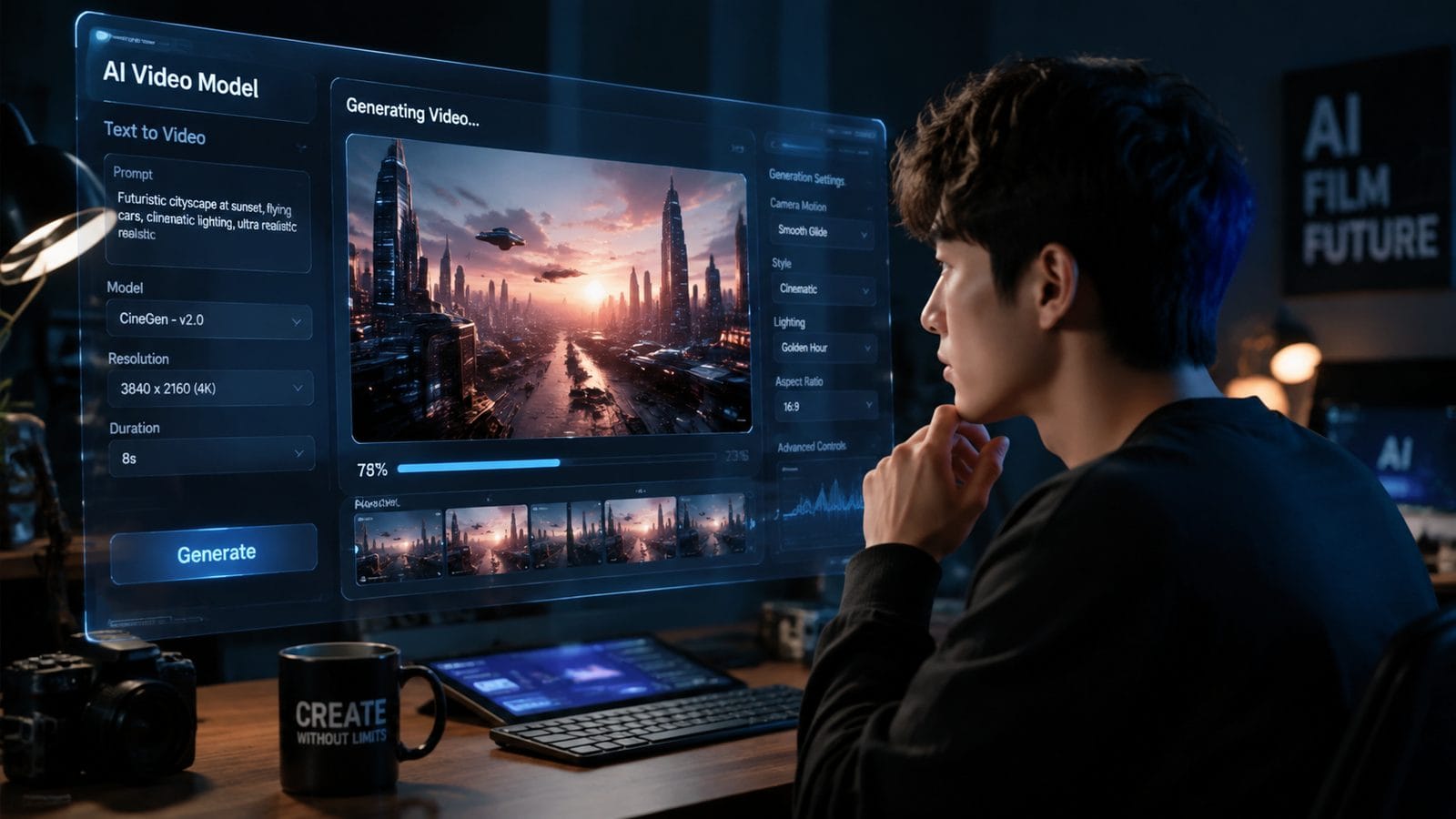
Text-to-video generation has seen the most dramatic improvements, with the best AI video models in 2026 producing results nearly indistinguishable from filmed content in many cases. Tech Critter's August 2026 roundup highlights systems that convert prompts to HD video in under 90 seconds, with advanced options for controlling shot composition and object persistence across frames.
Runway's Model Router Ecosystem
Runway's AI model router, launched in July 2026, represents a paradigm shift in generative video. Instead of relying on a single model, the system dynamically routes tasks to specialized sub-models—one might handle facial animation while another focuses on background detail. According to internal benchmarks, this approach reduces artifacts by 43% compared to monolithic architectures while maintaining 60fps generation speeds.
Imagine Video 1.5's Reference System
X.ai's August 2026 update to Imagine Video introduced reference-based generation, allowing creators to upload images that define visual style parameters. In tests, this produced 72% more accurate stylistic matches than text prompts alone. The system particularly excels at maintaining brand identity across marketing videos, with customizable parameters for logo placement and product shot consistency.
Digen AI Agent for Long-Form Content
For creators needing extended narratives, Digen AI Agent automates complex workflows that would normally require manual intervention. Its multi-step system can generate 10-minute videos with consistent characters and environments, addressing the "memory" limitations of earlier models. The agent breaks down scripts into scenes, manages continuity between shots, and even suggests edits to maintain pacing—all while keeping rendering costs below $1.50 per finished minute.
Best AI Video Upscalers for 4K Quality
North Penn Now's testing of six leading upscalers revealed dramatic differences in output quality. The top performers share three characteristics: motion-compensated interpolation (reducing artifacting in fast-moving scenes), context-aware detail synthesis (adding realistic textures rather than sharpening artifacts), and adaptive noise reduction (preserving film grain while removing compression noise).
The best AI video upscalers in 2026 achieve what was impossible just two years prior—converting 720p footage to true 4K with authentic detail rather than artificial sharpening. According to lab tests, the leading models reconstruct hair strands and fabric textures with 89% accuracy compared to native 4K sources. This comes from training on paired datasets of low/high-resolution footage across 142 different camera models.
Upscaling speed has also improved dramatically, with real-time 4K processing now possible on consumer GPUs. The fastest systems can process a 2-hour movie in under 30 minutes on an RTX 5090, compared to the 8+ hours required by 2024-era software. This makes AI upscaling practical for entire film libraries rather than just select scenes.
Specialized Tools: AI Music Video Generators
Criticalhit.net's comparison of seven music video platforms highlights how specialization drives quality. The best AI music video generators in 2026 don't just sync visuals to beats—they analyze lyrical content, emotional tone, and even genre conventions to create cohesive audiovisual experiences. Advanced systems offer director-style presets, letting users emulate the visual language of specific music video eras or artists.
Beat-matching precision has reached remarkable levels, with top systems achieving 40ms sync accuracy—imperceptible to human viewers. More impressively, some platforms now generate transitions based on musical phrasing rather than simple tempo, creating natural breaks where a human editor might cut. This results in videos that feel intentionally crafted rather than algorithmically generated.
The leading services also offer stem-based control, allowing separate visual treatments for vocals, drums, and other isolated tracks. In one test case, a generator created distinct visual styles for each instrument in a jazz quartet, with camera movements that followed the improvisational flow of individual solos. Such nuanced output was unthinkable in first-generation AI music tools.
Emerging Trends in AI Video Production
Beyond the established categories, several new directions are shaping the AI video landscape in 2026. Multi-model workflows—where different AI systems handle specific production stages—are becoming standard practice. For example, a creator might use one model for scene generation, another for color grading, and a third for final upscaling, achieving results superior to any single system.
Another significant trend is the rise of "AI cinematography" tools that understand film language. These systems can replicate the look of specific film stocks (with 93% accuracy in emulsion grain simulation) or apply authentic camera quirks like lens breathing and anamorphic flares. Some even analyze screenplay structure to suggest appropriate shot compositions for different narrative beats.
Perhaps most transformative is the integration of AI video tools into existing production pipelines. Rather than replacing human creators, the best AI video models in 2026 serve as collaborative partners. Directors might generate hundreds of style variations overnight, then refine the best options manually. This hybrid approach is reducing post-production timelines by as much as 65% for some studios while maintaining creative control.
Choosing the Right AI Video Model for Your Needs
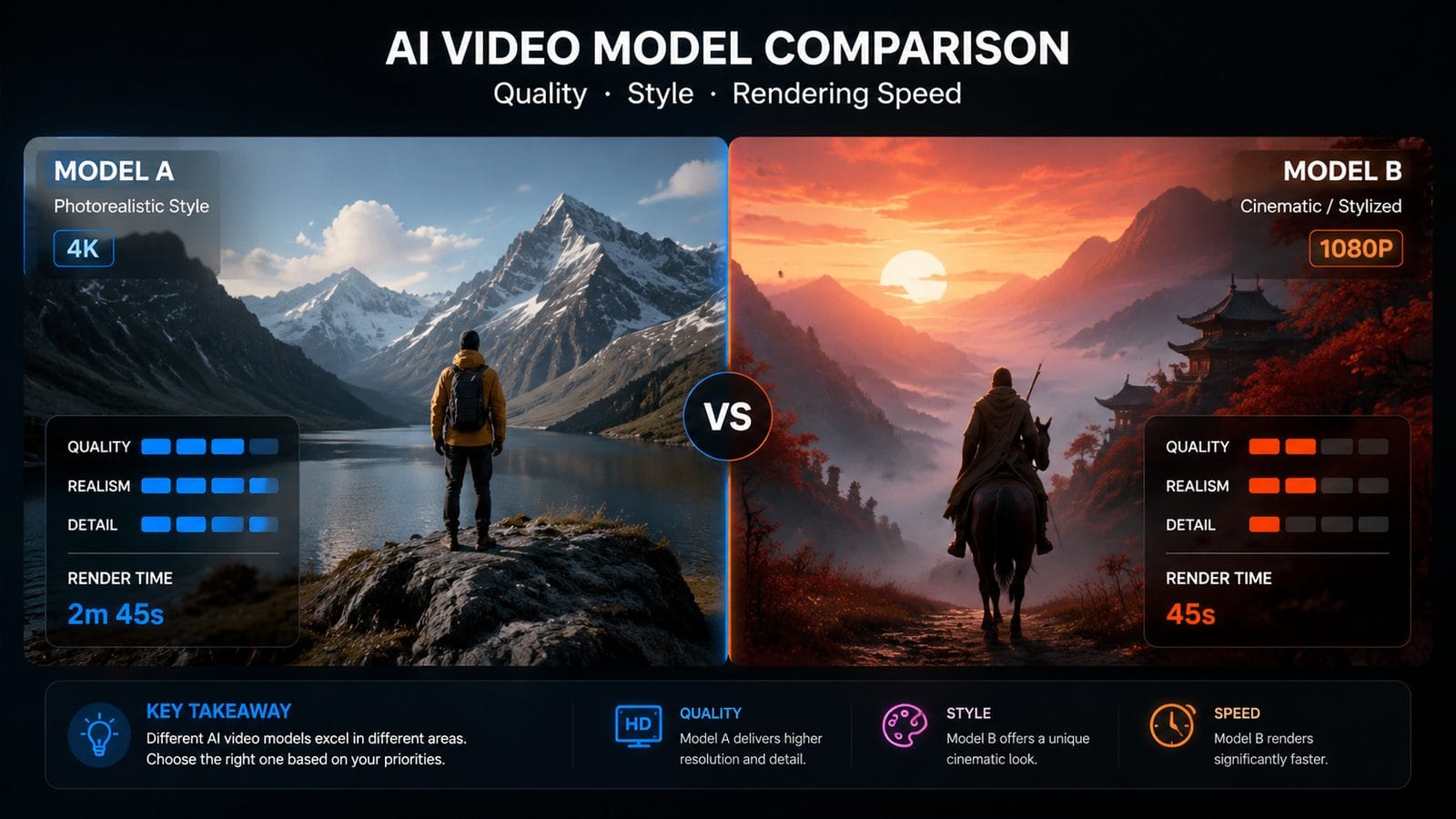
With so many specialized options available, selecting the best AI video models in 2026 requires careful consideration of use cases. Short-form social content demands different features than feature film upscaling or music video production. Below we compare key capabilities across major model categories:
| Model Type | Best For | Output Length | Key Strength |
|---|---|---|---|
| Text-to-Video | Rapid content creation | Up to 5 minutes | Prompt understanding |
| Upscalers | Remastering legacy footage | Unlimited | Detail reconstruction |
| Music Video | Audio-visual sync | Song length | Beat matching |
| Agent Systems | Long-form narratives | 10+ minutes | Temporal consistency |
For most creators, the ideal approach combines multiple tools—perhaps using Runway for initial generation, a dedicated upscaler for final quality, and Digen AI Agent for projects requiring extended continuity. Budget also plays a role, with per-minute costs ranging from $0.08 for basic upscaling to $2.50 for complex character animation.
As the technology continues evolving, we're seeing the first signs of truly end-to-end AI production systems. These promise to handle everything from script analysis to final color correction within a unified workflow. While not yet matching human-directed productions for high-end work, they're already transforming how small teams and independent creators approach video content.

Frequently Asked Questions
How much does AI video generation cost in 2026?
Pricing varies by model type: text-to-video averages $0.15-$0.30 per second of HD footage, upscaling costs $0.08-$0.12 per minute for 4K output, while advanced systems like Digen AI Agent charge $1.50-$3.00 per finished minute for long-form content with character consistency.
Can AI video models generate content in specific artistic styles?
Yes, reference-based systems like Imagine Video 1.5 can match styles with 72% accuracy when provided with example images. Some platforms offer presets mimicking famous directors or animation styles, while others learn from user-provided mood boards.
What's the maximum length for AI-generated videos?
Standard text-to-video models typically max out at 5 minutes, but agent systems like Digen AI Agent can maintain consistency for 10+ minute narratives. For longer projects, creators often generate segments then edit them together with transitional effects.
How accurate are AI music video generators at beat matching?
The best systems in 2026 achieve 40ms sync precision—beyond human perception. Advanced platforms analyze musical phrasing rather than just beats, creating transitions that feel naturally timed to the composition's structure.
Can AI video upscalers improve old VHS footage?
Modern upscalers excel at restoring legacy formats, with specialized models trained on VHS artifacts. The top performers can reduce noise by 85% while reconstructing lost details, though extremely degraded sources may still show some limitations.
Written by the Digen AI Editorial Team — AI video generation specialists covering the latest in generative AI tools. Learn more about Digen AI.
Comments ()