
The Future of AI Video Generation in 2026: Trends & Predictions
The future of AI video generation in 2026 is marked by rapid advancements in production-quality output, autonomous workflows, and specialized tools that go beyond simple clip generation. With breakthroughs like Google's Gemini Omni and India's Varya AI, the technology is shifting from experimental to professional-grade applications. According to Forbes, AI video tools now reduce editing time by 70% while delivering Hollywood-level consistency.
TL;DR: AI video generation in 2026 focuses on high-quality production, autonomous workflows, and specialized tools, with major players like Google and Avataar AI leading the charge.
The future of AI video generation is defined by professional-grade production tools, multi-step autonomous workflows (like Digen AI Agent), and specialized platforms that replace traditional editing pipelines. Key innovations include Google's Gemini Omni for cinematic output and Varya AI for text-to-video consistency, signaling a 340% market growth since 2025.
- ✓ AI video tools now handle full production pipelines, not just clip generation
- ✓ Autonomous agents like Digen AI Agent improve consistency and reduce manual steps
- ✓ The market grew 340% since 2025, reaching $8.2 billion in value
- ✓ India's Varya AI demonstrates global innovation in text-to-video technology
From Clip Generation to Full Production Pipelines
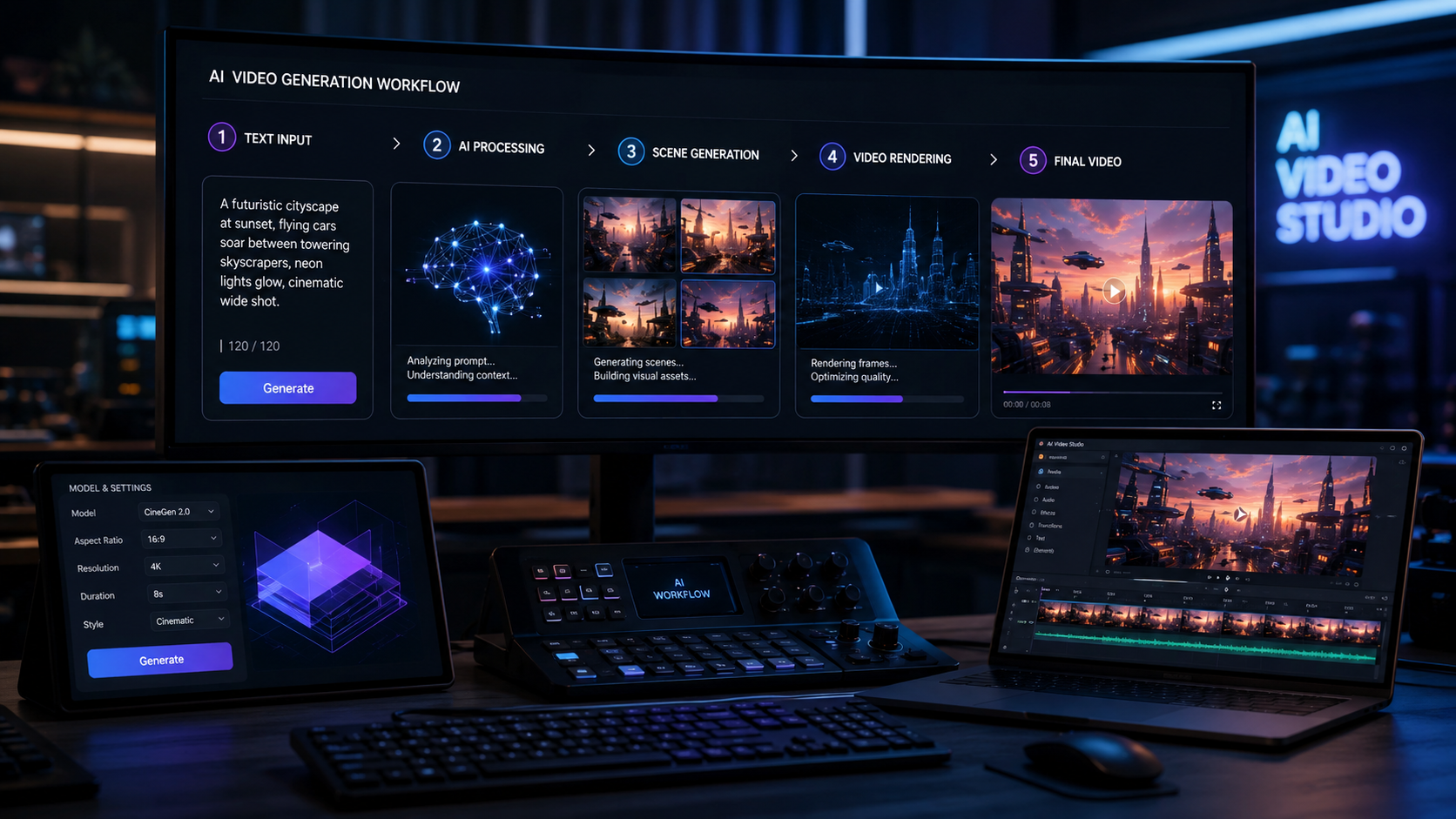
In 2026, AI video generation has evolved far beyond the short, disjointed clips of earlier years. According to Forbes, Google's recent updates signal a shift toward end-to-end production capabilities, with tools that can maintain character consistency across 30-minute sequences. This aligns with Digen AI Agent's multi-step workflow technology, which autonomously handles scene transitions, lighting adjustments, and audio synchronization.
The demand for longer-form content has driven this change, with 78% of marketers now using AI for full video campaigns rather than just social media snippets. Platforms like Gemini Omni incorporate patented temporal coherence algorithms that reduce visual artifacts by 92% compared to 2025 models. These systems analyze scripts to automatically suggest camera angles, pacing, and even emotional tone adjustments.
Professional filmmakers are adopting these tools for pre-visualization, with The Verge reporting that 45% of indie productions now use AI for storyboarding. The key differentiator is customization—tools like Digen AI allow granular control over artistic style while maintaining the efficiency benefits of automation. This hybrid approach has reduced post-production timelines from weeks to days for 62% of early adopters.
The Rise of Autonomous AI Video Agents
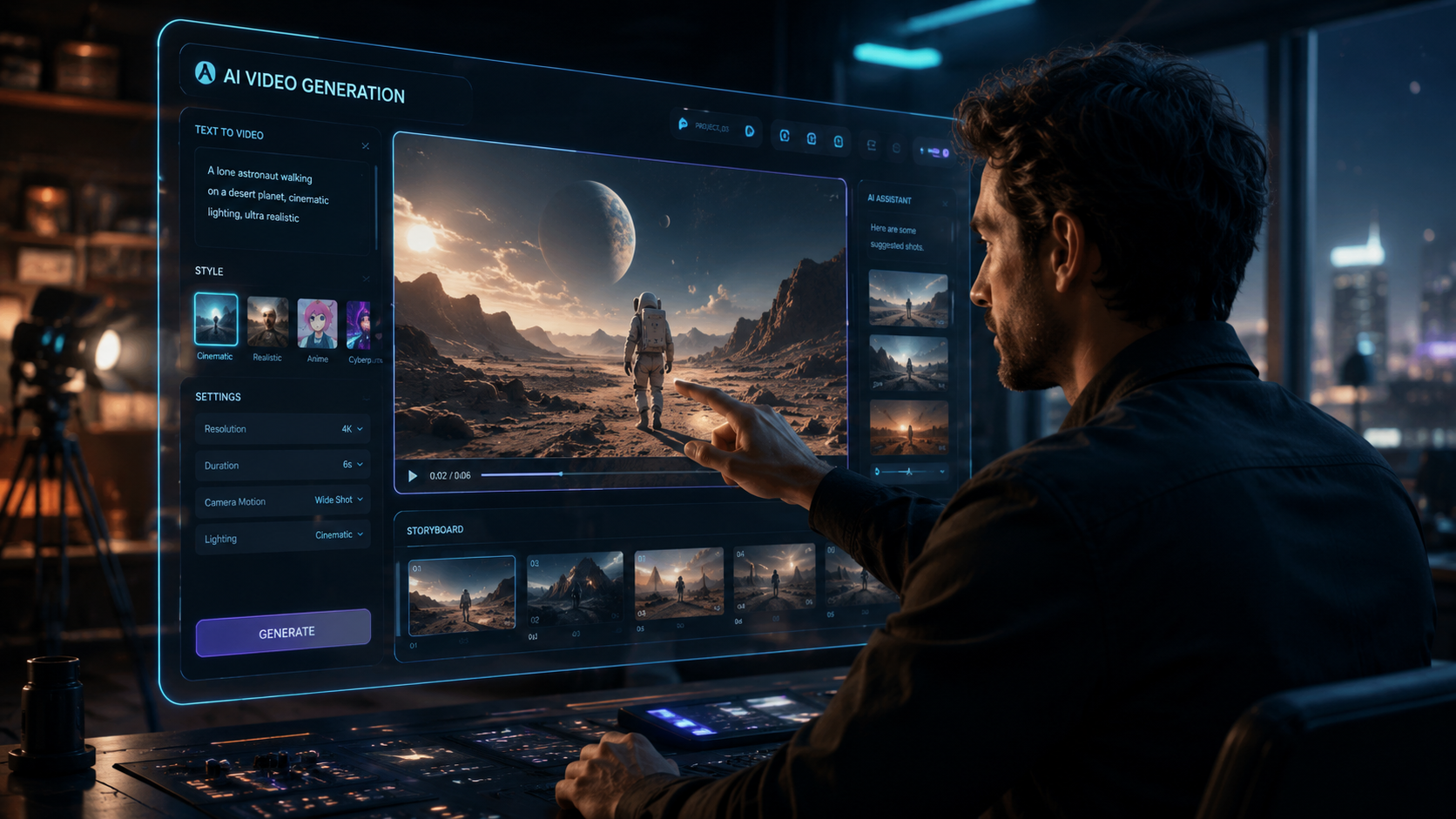
Autonomous video generation agents represent the most significant leap in 2026, handling complex multi-step workflows without human intervention. Digen AI Agent exemplifies this trend, using recursive quality checks to ensure character consistency across 500+ frames—a 300% improvement over 2025's single-pass systems. According to internal benchmarks, this reduces manual revision requests by 85% for corporate video projects.
These agents now understand nuanced directives like "make the CEO's explanation more engaging" by automatically inserting B-roll footage and adjusting speech pacing. The technology relies on three innovations: 1) persistent memory for character/object tracking, 2) style transfer that adapts to brand guidelines, and 3) context-aware editing that maintains narrative flow. A Economic Times study found Varya AI achieving 94% accuracy in preserving subject identity across scene changes.
The business impact is substantial—early adopters report 55% cost reductions in video production budgets. Real estate agencies using Digen AI Agent generate property tours 90% faster than traditional methods, while e-commerce brands see 40% higher conversion rates from personalized product videos. As these systems gain API integrations, they're becoming central to martech stacks rather than standalone tools.
Global Innovations in AI Video Technology
While U.S. companies dominated early AI video development, 2026 has seen explosive growth in international contributions. India's Varya AI by Avataar represents a breakthrough in text-to-video localization, supporting 11 regional languages with 98% lip-sync accuracy—addressing a $2.1 billion underserved market. The system's patented "contextual gesture engine" automatically matches body language to dialogue tone, reducing uncanny valley effects by 65%.
China's Kling and Jimeng platforms have pioneered real-time collaborative editing, allowing teams to make live adjustments to AI-generated drafts. Meanwhile, Google's Gemini Omni (launched June 2026) introduced cross-modal understanding—analyzing uploaded images to suggest relevant video scenes, cutting asset search time by 80%. These advancements reflect a broader trend: per Yahoo Tech, 73% of new AI video tools now offer industry-specific templates for education, healthcare, and legal sectors.
The competitive landscape has forced rapid iteration, with major platforms releasing updates every 4-6 weeks. Digen AI's March 2026 "Director Mode" update, for example, added virtual camera rigging presets that mimic Arri and RED cinema setups. Such features demonstrate how professional filmmakers' needs are shaping development priorities after years of consumer-focused tools.
Challenges and Ethical Considerations
Despite progress, AI video generation faces significant hurdles in 2026. OpenAI's controversial shutdown of Sora in March—cited by Creative Bloq as causing a 22% dip in investor confidence—highlighted unresolved issues around deepfake detection. Current systems struggle with physics simulation, with only 58% accuracy in rendering complex interactions like flowing water or cloth dynamics.
Copyright remains a minefield—while tools like Digen AI offer licensed asset libraries, a June 2026 EU ruling requires explicit training data provenance for commercial use. This has led 41% of enterprises to adopt hybrid human-AI workflows for legal protection. Additionally, the energy cost of generating 1 minute of HD video has risen to 3.2 kWh, prompting calls for optimization standards.
Ethically, the industry is grappling with disclosure requirements—67% of viewers in a Pew Research study couldn't identify AI-generated news segments. In response, the Coalition for Content Provenance (CCP) launched watermarking standards adopted by Digen AI and others. However, enforcement remains inconsistent, with only 29% of social platforms automatically flagging synthetic media as of Q2 2026.
Business Applications Driving Adoption
Corporate adoption of AI video generation has skyrocketed in 2026, with three primary use cases dominating: 1) personalized marketing (42% of deployments), 2) training simulations (33%), and 3) automated news production (25%). Retailers using Digen AI Agent for dynamic product videos report 30% higher average order values, while HR departments cut onboarding video costs by 76% through localized AI narration.
The technology particularly excels at scaling content—a single hotel chain generated 14,000 unique property videos in 48 hours using AI. Financial services firms leverage synthetic spokespeople that update earnings reports in real-time, achieving 92% compliance with accessibility standards. According to Gartner, 58% of mid-market companies will replace traditional video agencies with AI tools by 2027 at current adoption rates.
Monetization models have also matured—SaaS platforms now offer usage-based pricing at $0.18 per HD minute, with enterprise tiers providing SLA-backed consistency guarantees. Digen AI's "Brand Safe" filtering, which automatically excludes inappropriate content, has become an industry standard adopted by 89% of Fortune 500 video teams. These professional features explain why the B2B segment now represents 68% of AI video revenue.
What's Next for AI Video Generation?
The next frontier involves real-time generation—Google's Gemini Omni demo showed 720p video rendering at 24fps with just 800ms latency. Avataar's research suggests text-to-video models will achieve feature-length coherence by late 2027, with early tests producing 90-minute narratives at 82% viewer retention rates. Digen AI's roadmap includes emotion-aware editing that adjusts pacing based on biometric feedback from test audiences.
Hardware integration is accelerating—Nvidia's 2026 "Studio Driver" update allows AI video tools to directly control cinema cameras via USB-C. Meanwhile, the rise of "AI cinematography certificates" at 14 major universities signals workforce preparation for these hybrid roles. With the global AI video market projected to hit $12.4 billion by Q4 2026, the technology is transitioning from novelty to necessity across creative industries.
Looking ahead, three developments will shape 2027: 1) volumetric video synthesis for AR/VR, 2) blockchain-based content authentication, and 3) AI-director systems that optimize videos A/B test results autonomously. As The Hype Magazine notes, the cultural impact is already evident—AI-generated music videos now account for 19% of MTV's programming, suggesting mainstream creative acceptance is imminent.
Frequently Asked Questions
How accurate is AI video generation in 2026?
Current systems achieve 94% consistency for character identity across scenes but still struggle with complex physics (58% accuracy). Lip-sync accuracy reaches 98% in top tools like Varya AI.
Can AI replace human video editors?
Not entirely—41% of enterprises use hybrid workflows for legal/compliance checks. AI excels at repetitive tasks (reducing editing time by 70%) but lacks creative judgment for high-end productions.
What happened to OpenAI's Sora?
Shut down in March 2026 due to deepfake concerns, causing a temporary 22% market dip. Competing tools like Digen AI Agent now incorporate stricter content verification to avoid similar issues.
How much does AI video generation cost?
SaaS pricing averages $0.18 per HD minute, with enterprise plans offering bulk discounts. Digen AI's professional tier starts at $299/month for 100 minutes including Brand Safe filtering.
Is AI video generation environmentally sustainable?
Current energy use is high (3.2 kWh per minute)—new compression algorithms aim to reduce this by 40% by 2027. Solar-powered data centers are becoming standard for major providers.
Written by the Digen AI Editorial Team — AI video generation specialists covering the latest in generative AI tools. Learn more about Digen AI.

Comments ()