
10 Creative Uses for Text to Video in 2026: AI Guide
The most creative uses for text to video in 2026 involve transforming static scripts, data, or concepts into immersive cinematic experiences using advanced generative models like Runway Gen-4.5. By leveraging natural language processing, creators can now generate high-fidelity visual narratives that were previously restricted by massive production budgets. These applications range from personalized educational modules to dynamic brand storytelling that adapts to viewer preferences in real-time.
Text to video is a generative AI technology that converts written prompts into high-definition video content. In 2026, it is primarily used for rapid prototyping, personalized marketing, and kinetic typography, allowing creators to bypass traditional filming constraints and generate hyper-realistic or stylized visuals through tools like TechRadar’s top-rated 2026 AI suites.
- ✓ Text to video tools now support multi-modal inputs, including physics-based motion control and kinetic typography.
- ✓ Legal frameworks, as noted by Built In (April 2026), are evolving to clarify copyright ownership for AI-generated cinematography.
- ✓ Real-time rendering allows for "Living Data" visualizations that update as new information is processed.
- ✓ Hybrid workflows combining human direction with AI generation are outperforming purely automated content.
How to Implement Creative Uses for Text to Video
Adopting text-to-video technology requires a shift from traditional linear editing to a prompt-based iterative workflow. As the industry moves past the limitations seen in earlier models like Sora, the focus in 2026 has shifted toward "Creative Utility"—the ability for AI to follow precise artistic direction rather than just generating random aesthetic shots. This involves a deep understanding of cinematography terminology and the specific capabilities of the latest software versions.
- Script Refinement: Start with a descriptive script that includes camera angles, lighting conditions (e.g., "golden hour," "volumetric lighting"), and specific character actions.
- Model Selection: Choose a tool based on your needs; for example, use Runway Gen-4.5 for hyper-realistic textures or specialized kinetic typography engines for text-heavy motion graphics.
- Parameter Tuning: Adjust "Motion Sliders" or "Seed Values" to control the intensity of the movement and maintain visual consistency across clips.
- Iterative Upscaling: Generate low-resolution previews first, then use AI upscalers to reach 8K resolution with temporal stability.
- Post-Generation Refinement: Use traditional NLE (Non-Linear Editing) software to composite AI clips with human-captured footage for maximum authenticity.
1. Kinetic Typography and Motion Branding
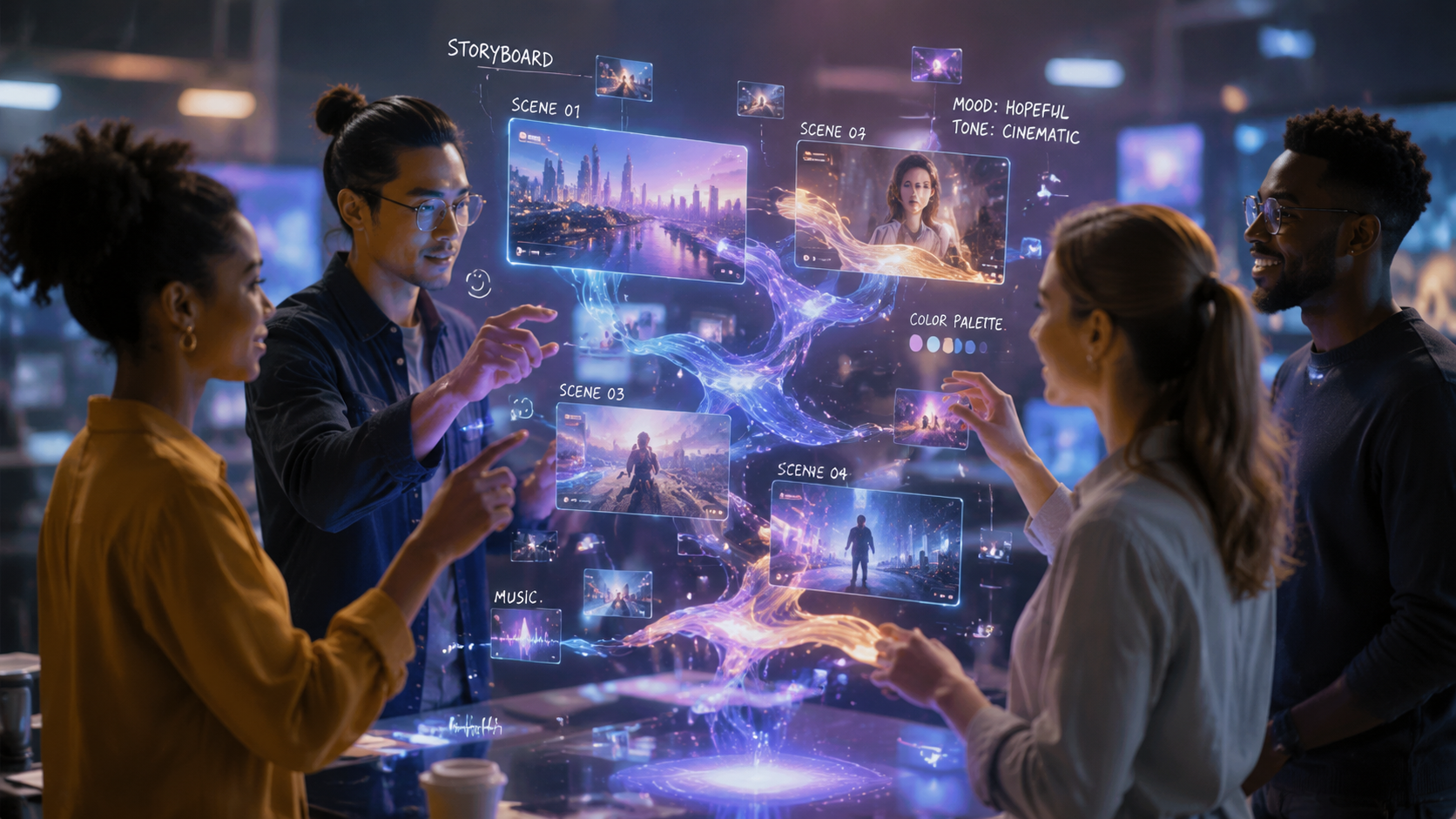
One of the most impactful creative uses for text to video is the evolution of kinetic typography. According to Creative Bloq (March 2026), the integration of AI allows text to not just move across the screen, but to interact with its environment. Imagine a brand name that forms out of liquid smoke or letters that react to the gravity of a digital landscape. This level of detail used to take weeks of manual keyframing in After Effects but can now be prompted in seconds.
In 2026, motion branding has become essential for social media engagement. Brands are using text-to-video to create "living logos" that change based on the platform they are viewed on. For instance, a logo might appear sleek and metallic for a LinkedIn professional audience but transform into a vibrant, neon-pulsing version for a TikTok campaign, all generated from the same core text prompt.
Advanced Typography Features in 2026
Modern tools now feature "Semantic Motion," where the animation style reflects the meaning of the word. If the word "heavy" is typed, the AI generates a visual weight that affects the surrounding elements in the video frame. This creates a psychological resonance with the viewer that static text simply cannot achieve.
2. Hyper-Personalized Educational Content
Education has been revolutionized by the ability to turn complex textbook chapters into custom video lessons. Instead of a one-size-fits-all lecture, students can input their specific areas of confusion into an AI tutor, which then generates a bespoke video explanation. This application is cited by AIMultiple as one of the top 125 generative AI applications currently reshaping the enterprise and education sectors.
For example, a medical student studying the cardiovascular system can request a video showing "the path of blood through a heart with a specific mitral valve prolapse." The AI synthesizes medical data into a 3D-rendered animation that illustrates the concept more clearly than any static diagram could. This democratization of high-end visual aids is closing the gap in specialized training across the globe.
| Feature | Runway Gen-4.5 | Open-Source Models | Enterprise AI Suites |
|---|---|---|---|
| Max Resolution | 8K Ultra HD | 4K Stable | 16K (Cloud Rendered) |
| Motion Control | Physics-Based Sliders | Prompt-Only | Haptic/Gaze Tracking |
| Copyright Protection | Built-in Watermarking | None | Legal Indemnification |
| Primary Use Case | Cinematic Production | Research & Dev | Corporate Training |
3. Rapid Prototyping for Filmmakers and Ad Agencies
Before the "downfall" of early unguided models, filmmakers struggled with the unpredictability of AI. However, as noted by The Conversation (April 2026), the industry has moved toward tools that prioritize "creative utility." Filmmakers now use text-to-video for "AI-Previs" (Pre-visualization). Instead of sketching storyboards, directors generate entire sequences to test lighting, pacing, and color palettes before a single camera is rented.
This saves millions in production costs. An advertising agency can present five different "looks" for a commercial to a client in a single afternoon. If the client wants to see the product in a "Cyberpunk Tokyo" setting instead of a "Mediterranean Beach," the creative team simply updates the prompt. This agility has fundamentally changed how creative pitches are won and lost in 2026.
The Role of "Director Mode"
New "Director Mode" features in 2026 tools allow for specific blocking instructions. You can now prompt: "Follow the protagonist with a low-angle tracking shot as they enter the room, maintaining a shallow depth of field." This level of granular control ensures that the output is a professional tool rather than a mere novelty.
4. Dynamic Data Visualization (Living Data)
The creative uses for text to video extend deep into the world of Big Data. Static charts are being replaced by "Living Data" videos. Financial analysts, for instance, can feed real-time market feeds into an AI that generates a 3D visual landscape representing market volatility. A "bull market" might be visualized as a rising green forest, while "bearish" trends appear as a receding tide.
According to TechRadar’s 2026 review of over 70 AI tools, the most advanced platforms now allow for API integration. This means a video can change while it is being watched. If a news broadcast is using an AI-generated background to show climate change statistics, the visuals can update in real-time as new temperature readings are reported from weather stations around the world.
5. Virtual Real Estate and Architecture Tours
Architects are no longer limited to static 3D renders. By using text-to-video, they can create "emotional walkthroughs." A prompt such as "A sun-drenched minimalist living room at 4 PM in autumn, with shadows of swaying trees on the wall" creates a mood that traditional CAD software often lacks. This helps clients "feel" the space before construction begins.
In the real estate market, this technology allows for the staging of empty homes with any decor style imaginable. A buyer can view a video of a house staged in "Mid-Century Modern" and then instantly switch to "Industrial Loft" style. This immersive experience has become the standard for luxury property listings in 2026, providing a competitive edge in a crowded market.
6. AI-Generated Social Media Influencers and Avatars
The rise of synthetic media has led to the creation of entirely AI-generated influencers. While this was a niche trend in the early 2020s, by 2026, these avatars are indistinguishable from humans. They are used by brands to maintain 24/7 engagement without the logistical challenges of human creators. These avatars can speak any language fluently, making global marketing campaigns seamless.
However, this use case comes with significant ethical considerations. Built In (April 2026) highlights that new copyright and "Right of Publicity" laws require these AI influencers to be clearly labeled. Despite the regulations, the creative potential is vast, allowing for "impossible" collaborations between digital avatars and real-world celebrities in hyper-stylized music videos or fashion shows.
7. Interactive Narrative Experiences
Gaming and storytelling have merged through text-to-video technology. "Prompt-to-Play" modules allow users to dictate the direction of a story. As the user types their choice, the AI generates the next scene in the video narrative in real-time. This isn't just a "choose your own adventure" with pre-recorded clips; it is a fluid, infinitely branching story where no two viewers see the same ending.
This has massive implications for the "Metaverse" and VR environments. Users can literally build the world around them by describing it. "Make the sky purple and the ground feel like glass," and the environment transforms instantly. This real-time generation is powered by the massive leaps in GPU efficiency and model optimization seen in late 2025 and early 2026.
8. Historical Re-creations for Museums and Documentaries
Historians are using text-to-video to breathe life into the past. By feeding historical accounts and period-accurate descriptions into AI, museums can create immersive exhibits that show what life was like in ancient civilizations. A museum-goer can prompt a screen to "show a bustling market in Rome during the reign of Augustus," and the AI generates a historically plausible, high-definition video of that scene.
Studies show that visual storytelling increases information retention by over 60% compared to reading text alone. By providing these vivid recreations, educational institutions are making history more accessible and engaging for younger generations who are accustomed to high-production-value digital media.
9. Personalized Music Videos and Visualizers
The music industry has embraced AI as a tool for visual expression. Independent artists who may not have the budget for a full film crew can now generate professional-grade music videos that sync perfectly with their tracks. The AI analyzes the rhythm, tempo, and mood of the music to generate visuals that pulse and shift in time with the beat.
In 2026, streaming platforms are experimenting with "Active Visualizers." As you listen to a song, the app generates a unique video based on your personal listening history and current environment. If you are listening to a lo-fi track while it's raining outside, the AI might generate a cozy, rainy-day animation to match your mood, creating a deeply personal sensory experience.
10. Automated Corporate Communication
Internal corporate communication is often ignored, but text-to-video is making it more effective. Instead of long, dry emails, CEOs can send "Video Briefs" where their written message is converted into a short, engaging video featuring an AI avatar of themselves. This ensures that the tone and nuance of the message are conveyed correctly to employees worldwide.
Furthermore, training manuals are being converted into "How-To" videos on demand. If an employee needs to learn how to operate a specific piece of machinery, they can type the model number and the issue they are facing, and the AI generates a custom instructional video showing the exact steps for repair. This reduces downtime and improves safety in industrial environments.
Frequently Asked Questions
Is AI-generated video legal to use for commercial purposes in 2026?
Yes, but it depends on the platform and the training data used. According to Built In (2026), most enterprise-grade tools now offer legal indemnification and use licensed datasets to ensure that the content generated is safe for commercial use without infringing on existing copyrights.
Can text-to-video replace human videographers?
While AI can handle many repetitive and high-concept tasks, it serves more as a "force multiplier" than a total replacement. Human creative direction, emotional nuance, and on-site problem solving remain essential for high-end productions, though the role of the videographer is shifting toward that of an "AI Director."
How long does it take to generate a video from text?
In 2026, a standard 10-second high-definition clip can be generated in approximately 30 to 60 seconds on high-end platforms like Runway Gen-4.5. Real-time generation is possible at lower resolutions or through specialized cloud-computing environments.
What is the most common creative use for text to video?
Currently, the most common use is in social media marketing and rapid prototyping. Brands use it to create high-volume, personalized content that would be too expensive and time-consuming to produce using traditional filming methods.
Do I need a powerful computer to run these AI tools?
Most leading text-to-video tools in 2026 are cloud-based, meaning the heavy processing is done on remote servers. You only need a stable internet connection and a standard web browser to access the most powerful generative models available today.



Comments ()