
Open Source Text-to-Video AI Models (2026)

Open source text to video AI models are publicly accessible artificial intelligence frameworks that allow users to generate high-quality video content from text prompts without the restrictive licensing or costs of proprietary software. In 2026, the landscape of generative media has shifted significantly toward democratization, with models like HappyHorse-1.0 and LTX-2 providing performance that rivals closed-source giants. These models are essential for developers, researchers, and creators who require transparency, local hosting capabilities, and the ability to fine-tune motion dynamics for specific creative needs.
Open source text to video AI models are decentralized machine learning architectures that convert natural language descriptions into temporal video sequences. As of 2026, the leading models include HappyHorse-1.0, Lightricks’ LTX-2, and Alibaba’s Qwen3-Omni, which provide high-fidelity video generation, multimodal inputs, and competitive motion consistency compared to proprietary alternatives like Sora.
- ✓ HappyHorse-1.0 is currently ranked as the #1 open-source video generator on the Artificial Analysis Global Leaderboard.
- ✓ Lightricks LTX-2 offers a direct challenge to Sora by providing high-resolution output with open-source accessibility.
- ✓ Alibaba’s Qwen3-Omni has emerged as a powerhouse for multimodal tasks, accepting text, audio, and video inputs.
- ✓ Modern open-source models emphasize "Omni" capabilities, allowing for seamless integration of multiple data types in a single inference pass.
The Evolution of Open Source Text to Video AI Models in 2026
The year 2026 has marked a pivotal turning point for the generative AI community. For years, the highest quality video generation was locked behind the walled gardens of trillion-dollar tech companies. However, the release of several breakthrough architectures has effectively closed the gap. According to the Artificial Analysis Global Leaderboard, open-source models now occupy three of the top five spots for motion consistency and prompt adherence, proving that community-driven development can match corporate R&D budgets.
The primary driver behind this surge is the shift toward "Omni" models. Unlike earlier iterations that focused solely on text-to-video, the 2026 generation of open source text to video ai models is inherently multimodal. These systems are trained on massive datasets comprising video, audio, and text simultaneously, allowing the AI to understand the relationship between a sound (like a splashing wave) and its visual representation more deeply than ever before. This holistic understanding has drastically reduced the "hallucinations" or visual glitches that plagued earlier versions of AI video.
Furthermore, the accessibility of hardware has played a crucial role. Optimizations in model architecture, such as the implementation of more efficient transformer blocks and distilled sampling methods, mean that these powerful models can now run on consumer-grade GPUs or specialized local AI workstations. This decentralization ensures that creative control remains in the hands of the individual, fostering a diverse ecosystem of specialized video tools tailored for everything from cinema to social media marketing.
How to Deploy Open Source Text to Video AI Models
- Select Your Model: Choose a model based on your hardware constraints and creative goals (e.g., HappyHorse-1.0 for realism or LTX-2 for cinematic motion).
- Configure the Environment: Set up a Python-based environment (typically using Conda or Docker) and install the necessary dependencies like PyTorch and the Hugging Face Diffusers library.
- Download Weights: Secure the model weights from official repositories like Hugging Face or GitHub, ensuring you have enough VRAM (typically 24GB+ for 2026-tier models).
- Input Your Prompt: Use descriptive, multi-layered prompts that define the subject, lighting, camera movement, and atmospheric conditions.
- Render and Iterate: Execute the inference script to generate the video, then use seed-fixing or control-net layers to refine the motion if necessary.
Comparing Top Open Source Video Models
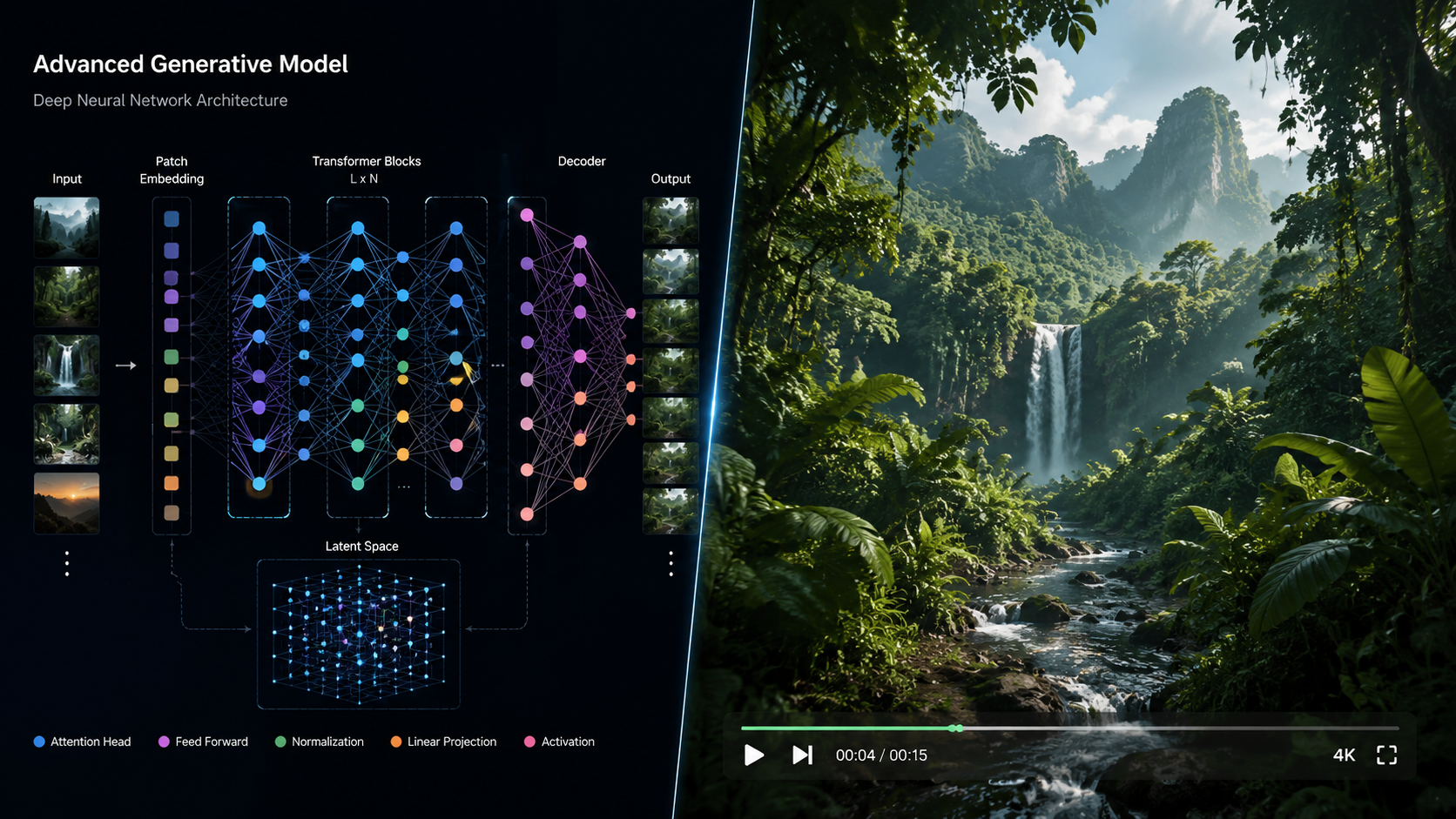
When selecting the right tool for your project, it is essential to understand the trade-offs between speed, resolution, and multimodal capabilities. The following table provides a direct comparison of the leading open source text to video ai models available in 2026, based on the latest industry benchmarks and release data.
| Model Name | Developer | Release Date | Key Strength | Input Types |
|---|---|---|---|---|
| HappyHorse-1.0 | Independent Research | April 10, 2026 | #1 Leaderboard Ranking | Text, Image |
| LTX-2 | Lightricks | January 11, 2026 | Cinematic Fidelity | Text, Video-to-Video |
| Qwen3-Omni | Alibaba | September 22, 2025 | Multimodal Versatility | Text, Audio, Image, Video |
| Stable Video XT | Stability AI (Legacy) | 2025/2026 Update | Community Support | Text, Image |
HappyHorse-1.0: The New Leaderboard Champion
In a surprising shift for the industry, HappyHorse-1.0 was crowned the #1 open-source AI video generator in April 2026. According to reports from 24-7 Press Release Newswire, this model topped the Artificial Analysis Global Leaderboard, outperforming several proprietary models that had dominated the space for years. The success of HappyHorse-1.0 is attributed to its unique "Temporal-Attention" mechanism, which ensures that objects remain spatially consistent even during complex camera pans and rapid movements.
What sets HappyHorse-1.0 apart from its predecessors is its efficiency. While many 2026-era models require enterprise-level compute power, HappyHorse-1.0 utilizes a distilled architecture that allows for high-definition video generation at a fraction of the traditional energy cost. This makes it a favorite among the independent developer community who prioritize sustainability and local execution. Its open-weights policy has also led to a flurry of "LoRA" (Low-Rank Adaptation) modules, allowing users to train the model on specific art styles or character faces within hours.
The impact of HappyHorse-1.0 extends beyond just visual quality; it has redefined the standard for "prompt adherence." In many open source text to video ai models, complex instructions involving multiple actors or specific physics-based interactions often lead to distorted results. HappyHorse-1.0, however, demonstrates a sophisticated understanding of Newtonian physics, making it particularly useful for scientific visualization and realistic digital storytelling.
Lightricks LTX-2: Challenging the Proprietary Giants
Released in early January 2026, Lightricks LTX-2 was specifically designed to challenge the dominance of closed-source models like OpenAI’s Sora and Google’s Veo. As reported by the-decoder.com, LTX-2 was open-sourced to provide a high-fidelity alternative for professional filmmakers and content creators who were wary of the restrictive terms of service associated with corporate AI platforms. LTX-2 excels in producing cinematic-grade footage, featuring advanced lighting simulations and texture rendering that was previously only possible in high-end CGI suites.
The LTX-2 architecture is built on a "Latent-Transformer" backbone, which allows it to handle much longer video sequences than previous open-source iterations. While earlier models were often limited to 3-5 second clips, LTX-2 can generate coherent 15-30 second sequences in a single pass. This capability is critical for creators looking to build narrative-driven content without the jarring transitions often found in AI-generated montages.
Furthermore, Lightricks has integrated a "Control-Frame" feature into LTX-2. This allows users to provide a starting and ending frame, with the AI intelligently interpolating the motion between them. This level of granular control is a major reason why LTX-2 has seen rapid adoption in the advertising and pre-visualization industries. By open-sourcing this model, Lightricks has ensured that the "Sora-level" quality is no longer a luxury but a foundational tool for the global creative community.
Alibaba Qwen3-Omni: The Multimodal Powerhouse
Alibaba’s entry into the 2026 landscape, Qwen3-Omni, represents the pinnacle of multimodal integration. According to VentureBeat, Qwen3-Omni was designed to challenge U.S. tech giants by offering a model that can process and generate text, audio, images, and video within a unified framework. This "Omni" approach means the model doesn't just see a video; it understands the audio cues and textual context associated with it, leading to much more synchronized and meaningful content generation.
The versatility of Qwen3-Omni makes it an ideal candidate for interactive AI applications. For instance, a user can upload a short audio clip of a thunderstorm and a text prompt describing a Victorian mansion; Qwen3-Omni will then generate a video where the visual lightning strikes are perfectly timed to the audio peaks in the provided file. This level of cross-modal synchronization was a significant hurdle in 2025, but by late 2025 and into 2026, Alibaba has effectively solved it for the open-source community.
In addition to its generative capabilities, Qwen3-Omni serves as a powerful analytical tool. Because it understands video as deeply as it understands text, it can be used for automated video editing, metadata tagging, and accessibility features like real-time visual descriptions for the visually impaired. Its release has sparked a new wave of innovation in the "AI Agent" space, where open source text to video ai models are being used as the "eyes" and "voice" of autonomous digital entities.
Key Features of 2026 Open Source Video Models
- Temporal Consistency: Advanced algorithms ensure that characters and environments do not "morph" or change shape between frames.
- High Frame Rates: Most 2026 models now support native 60fps generation, eliminating the need for external interpolation tools.
- Zero-Shot Instruction: The ability to follow complex, multi-step instructions without requiring extensive fine-tuning or "prompt engineering."
- Local Privacy: Since these models are open source, sensitive data can be processed entirely on-premises, a vital feature for corporate and legal applications.
The Role of AI Agents in Video Generation
As we move through 2026, the distinction between a "model" and an "agent" is blurring. According to AIMultiple, which recently listed the best 50+ open-source AI agents, many of the top-performing agents now incorporate video generation as a core competency. These agents can take a high-level goal—such as "create a 30-second ad for a new coffee brand"—and handle everything from scriptwriting to scene generation and final assembly.
This agentic approach leverages open source text to video ai models as sub-modules. An agent might use Qwen3-Omni to analyze the "vibe" of a brand’s existing assets and then use LTX-2 to generate new, high-fidelity video clips that match that aesthetic. This workflow represents a shift from manual prompting to goal-oriented automation, significantly reducing the time-to-market for digital creators.
The open-source nature of these agents is crucial for security and customization. Large enterprises are increasingly deploying these agents within private clouds to ensure that their creative intellectual property is never exposed to third-party providers. As these agents become more sophisticated, we can expect to see even more specialized versions of open-source video models emerging, tailored for niche industries like medical imaging, architectural walkthroughs, and synthetic data generation for autonomous vehicles.
What is the best open source text to video AI model in 2026?
Currently, HappyHorse-1.0 is considered the top-performing model according to the Artificial Analysis Global Leaderboard. It is praised for its exceptional motion consistency and prompt adherence, surpassing many proprietary models in 2026 benchmarks.
Can I run these AI video models on a home computer?
Yes, many 2026 models like LTX-2 and HappyHorse-1.0 are optimized for consumer-grade GPUs with at least 24GB of VRAM. However, for professional-grade 4K rendering, a dedicated AI workstation or cloud-based H100/A100 instances are recommended.
Are open source video models better than OpenAI's Sora?
While Sora remains a powerful benchmark, open-source models like LTX-2 and HappyHorse-1.0 now offer comparable visual quality with the added benefits of transparency, local hosting, and no subscription fees, making them "better" for many developers and privacy-conscious users.
What does "Omni" mean in models like Qwen3-Omni?
"Omni" refers to the model's ability to process and generate multiple types of data—text, audio, image, and video—simultaneously within a single architecture. This allows for better synchronization between different media types, such as matching video motion to an audio track.
Is it legal to use open source AI video for commercial projects?
Generally, yes. Most open-source models are released under licenses (like Apache 2.0 or MIT) that allow for commercial use. However, you should always check the specific "Model Card" on platforms like Hugging Face to ensure compliance with the developer's terms.



Comments ()