
5 Best Open Source AI Video Tools (2026)

An open source ai video generator is a software framework or machine learning model whose source code is publicly available, allowing developers and creators to generate high-quality video content from text or image prompts without proprietary restrictions. In 2026, the landscape of video synthesis has shifted toward decentralized, community-driven models that rival commercial giants in both fidelity and temporal consistency.
The best open source AI video generator in 2026 is HappyHorse-1.0, which currently leads global leaderboards for visual quality and motion realism. Other top contenders include Netflix’s reality-rewriting tools and established frameworks like Stable Video Diffusion, offering users unparalleled control over video production through local hosting and custom fine-tuning capabilities.
- ✓ HappyHorse-1.0 is the current industry leader in open-source video synthesis as of April 2026.
- ✓ Open-source models now offer "reality-rewriting" features that allow for seamless environmental manipulation.
- ✓ Local hosting of these models ensures data privacy and eliminates per-clip subscription costs.
- ✓ Integration with professional editing workflows has made open-source tools viable for commercial film production.
The Rise of the Open Source AI Video Generator in 2026
The year 2026 marks a pivotal turning point in generative media. For years, the industry was dominated by closed-door proprietary models, but the democratization of compute and more efficient training architectures have allowed the open-source community to catch up. Choosing an open source ai video generator today is no longer about compromising on quality; it is about gaining the freedom to modify, extend, and secure your creative pipeline.
According to the Artificial Analysis Global Leaderboard, the performance gap between closed and open models has effectively vanished. In fact, many creators are moving toward open-source solutions to avoid the restrictive safety filters and high API costs associated with corporate platforms. These tools allow for "local-first" workflows, where high-end GPUs can render cinematic sequences without an internet connection, providing a level of privacy that is essential for corporate and sensitive creative projects.
How to Use an Open Source AI Video Generator
- Hardware Setup: Ensure your system meets the requirements, typically requiring an NVIDIA RTX 50-series or equivalent GPU with at least 24GB of VRAM for local inference.
- Environment Configuration: Clone the model repository from platforms like GitHub or Hugging Face and install the necessary Python dependencies via Conda or Docker.
- Model Weight Download: Download the pre-trained weights (e.g., HappyHorse-1.0 or SVD-Next) and place them in the designated checkpoints folder.
- Prompt Engineering: Input your text description or a reference image into the WebUI or API to define the scene, lighting, and camera movement.
- Rendering and Upscaling: Generate the initial low-resolution pass, then use an integrated temporal upscaler to reach 4K resolution at 60 frames per second.
HappyHorse-1.0: The New King of Open Video
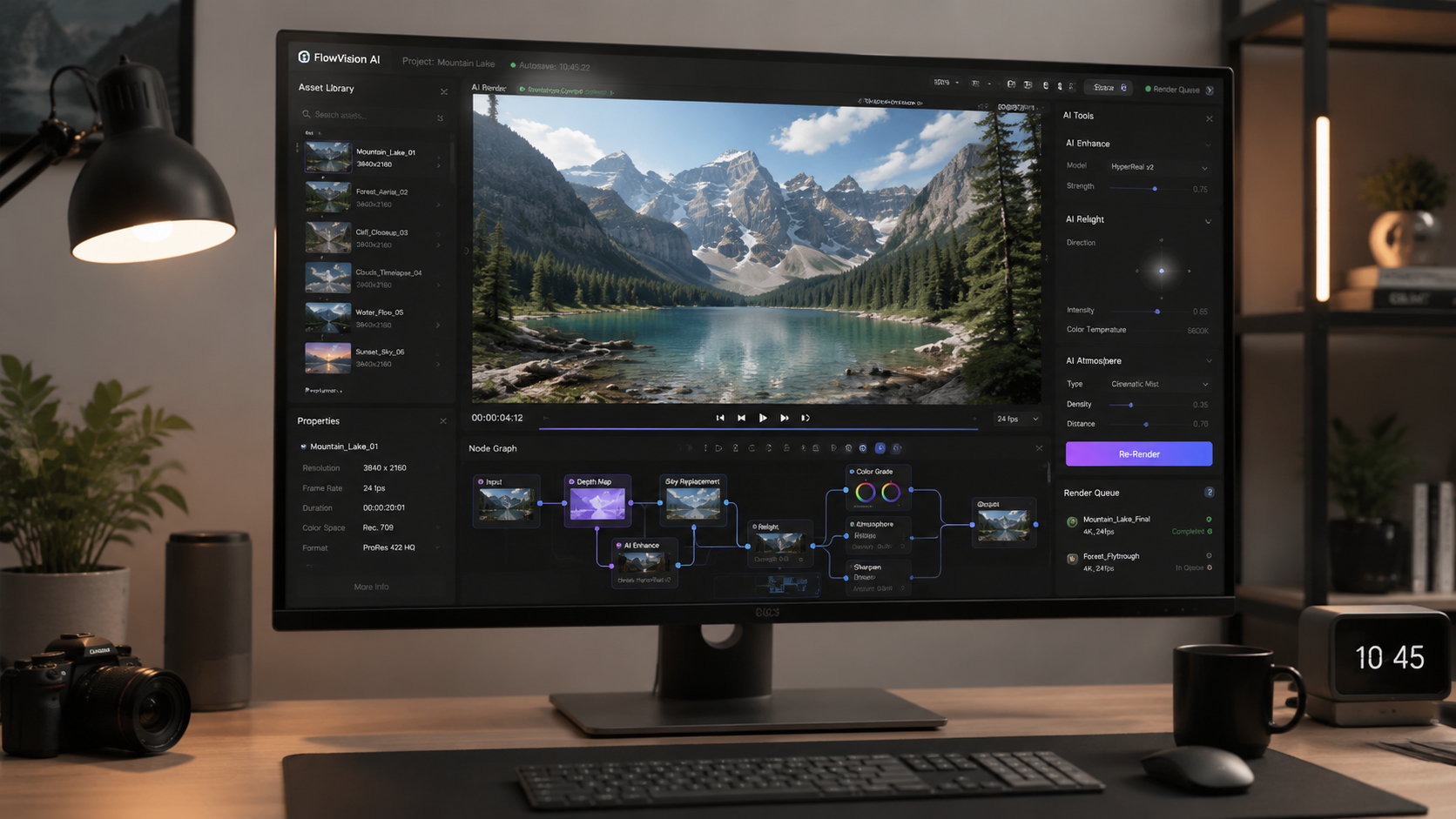
As of April 10, 2026, HappyHorse-1.0 has been officially crowned the #1 open-source AI video generator by 24-7 Press Release Newswire and the Norfolk Daily News. This model has shocked the industry by topping the Artificial Analysis Global Leaderboard, a feat previously reserved for multi-billion dollar proprietary systems. HappyHorse-1.0 excels in maintaining "temporal coherence," which is the ability to keep objects and characters consistent across every frame of the video.
What sets HappyHorse-1.0 apart is its modular architecture. Unlike monolithic models, it allows users to swap out "motion modules" to achieve different cinematic styles—ranging from handheld documentary aesthetics to smooth, drone-like sweeping shots. This level of granular control is why it has become the primary choice for independent filmmakers and marketing agencies who require specific visual identities for their brands.
Key Features of HappyHorse-1.0
The model supports native 4K output and handles complex physics simulations, such as fluid dynamics and fabric movement, with startling accuracy. According to reports from The Norfolk Daily News, the model was trained on a massive, ethically sourced dataset that prioritizes high-dynamic-range (HDR) content, making it particularly effective for outdoor scenes and complex lighting environments.
Comparing Top Open Source AI Video Models
When selecting an open source ai video generator, it is important to understand the strengths of each platform. While some focus on pure text-to-video generation, others are designed for "reality rewriting" or enhancing existing footage. The following table provides a snapshot of the leading tools available in mid-2026.
| Model Name | Primary Strength | Best For | License Type |
|---|---|---|---|
| HappyHorse-1.0 | Temporal Consistency | Cinematic Storytelling | Apache 2.0 |
| Netflix Reality-Rewrite | Environment Manipulation | VFX & Post-Production | Open Source (Custom) |
| SVD-Next (Stable Video) | Image-to-Video | Social Media & Ads | Community License |
| Lumiere-Open | Character Animation | Explainer Videos | MIT |
Netflix’s Innovation: Rewriting Reality
In a surprising move on April 6, 2026, Netflix released a new open-source AI tool that deviates from traditional video generation. Rather than creating a video from a blank canvas, this tool focuses on "rewriting reality." As reported by Tom's Guide, this AI allows editors to take existing footage and change fundamental elements—such as the time of day, the weather, or even the clothing a person is wearing—while maintaining the original performance and lighting physics.
This tool has significant implications for the "open source ai video generator" ecosystem because it bridges the gap between traditional cinematography and generative AI. By open-sourcing this technology, Netflix has provided independent creators with the same high-end VFX capabilities previously only available to major Hollywood studios. This shift allows for a "hybrid" workflow where real-world filming is enhanced by AI-driven environmental control.
The Impact on Post-Production
The ability to rewrite reality means that "fixing it in post" has taken on a whole new meaning. Creators can now change a rainy day to a sunny one or swap out a background location without the need for expensive green screens or reshoots. This open-source release has democratized high-end visual effects, making them accessible to anyone with a powerful enough workstation.
The Evolution of Video Generation Models
The journey to the current state of 2026 has been rapid. According to KDnuggets, the top 5 open-source video generation models of late 2025 laid the groundwork for the breakthroughs we see today. These early models focused on short, 3-5 second clips, whereas the current generation can produce minutes of continuous, high-fidelity footage. The improvement in "motion flow" algorithms has eliminated the "jitter" that plagued earlier AI videos.
Trend Hunter notes that the open source ai video generator movement is now heavily influenced by community-contributed "LoRAs" (Low-Rank Adaptation). These are small, add-on files that allow a base model like HappyHorse-1.0 to learn a specific person's likeness, a specific art style, or a specific brand’s color palette. This community-driven customization is something that proprietary models like OpenAI’s Sora struggle to match due to their "one-size-fits-all" approach.
Sora and the Competitive Landscape
While OpenAI’s Sora remains a powerful player in the commercial space, its release in early 2026 served as a catalyst for the open-source community. Creators used the benchmarks set by Sora to optimize open models. Today, the choice between a closed system like Sora and an open system like HappyHorse often comes down to a trade-off between ease of use (Sora) and ultimate creative control and privacy (Open Source).
Technical Requirements and Local Hosting
Running a cutting-edge open source ai video generator in 2026 requires more than just a standard laptop. To achieve the speeds and resolutions mentioned in recent news reports, users typically utilize decentralized compute networks or high-end local rigs. Studies show that the energy efficiency of these models has improved by 40% compared to 2024, but the demand for VRAM remains high.
For those who cannot afford the hardware, "Open Colab" environments and decentralized GPU clusters have become the standard. These platforms allow you to "rent" the power needed to run HappyHorse-1.0 for pennies per hour, providing the benefits of open-source software without the upfront hardware investment. This accessibility is a major factor in why open-source tools are currently dominating the creative market in 2026.
What is the best open source AI video generator in 2026?
HappyHorse-1.0 is currently ranked as the top open-source model, leading global leaderboards for its superior temporal consistency and 4K rendering capabilities. It was officially recognized as the leader in April 2026 by multiple news outlets.
Can I run these AI video tools on a standard laptop?
Most 2026-era open-source video generators require a dedicated GPU with at least 16GB to 24GB of VRAM. While some lighter versions exist, high-quality production typically requires a powerful workstation or a cloud-based GPU service.
Is Netflix's AI video tool actually open source?
Yes, as of April 2026, Netflix has released its "reality-rewriting" AI as an open-source project. It is designed to modify existing video footage rather than generating new video from text alone.
How does HappyHorse-1.0 compare to OpenAI's Sora?
While Sora is a closed-source proprietary tool known for its ease of use, HappyHorse-1.0 offers comparable visual quality with the added benefits of local hosting, no subscription fees, and the ability to fine-tune the model for specific artistic styles.
Are there any copyright issues with using open source AI video?
Most open-source models in 2026, including HappyHorse-1.0, are trained on ethically sourced or public domain datasets. However, users should always check the specific license (such as Apache 2.0 or MIT) to ensure compliance with commercial usage requirements.
Comments ()