
8 Best AI Video Generators for Music Videos in 2026
The best ai video generator for music videos in 2026 is a tool that seamlessly synchronizes high-fidelity visual generation with rhythmic audio analysis and precise lip-syncing capabilities. Modern creators are increasingly turning to platforms like Sora 2.0, Runway Gen-4, and specialized tools like Kaiber and Luma Dream Machine to produce cinematic visuals that were once only possible with multi-million dollar budgets.
The best ai video generator for music videos is a platform that offers advanced audio-reactive features and temporal consistency. In 2026, leading tools like Runway, Sora, and Kling AI allow musicians to transform lyrics and beats into high-definition 4K visuals, utilizing sophisticated lip-sync workflows and neural rendering to maintain character stability throughout an entire track.
- ✓ AI video generators now support full-track duration rendering with consistent character modeling.
- ✓ Lip-sync technology has reached "uncanny valley" perfection, allowing for realistic vocal performances.
- ✓ Integration with Digital Audio Workstations (DAWs) allows for real-time visual reactivity to MIDI and frequency data.
- ✓ Subscription-based models have become the industry standard for indie musicians looking for professional-grade output.
How to Create a Music Video Using AI: A Step-by-Step Guide
Creating a professional-grade music video in 2026 no longer requires a film crew or a massive studio. By leveraging the latest generative models, you can move from a concept to a finished 4K render in a fraction of the time. According to a 2026 report by Cybernews, over 65% of indie musicians now use at least one AI tool in their visual production pipeline to stay competitive in the digital landscape.
- Prepare Your Audio Track: Ensure your song is mastered and exported in a high-quality format (WAV or FLAC). Some AI tools now allow you to upload stems (vocals, drums, bass) separately to trigger specific visual effects based on different instruments.
- Develop a Visual Prompt Architecture: Define your aesthetic. Use descriptive language to establish lighting, camera angles (e.g., "anamorphic lens," "low-angle tracking shot"), and the specific art style, whether it’s hyper-realistic or stylized 3D animation.
- Select Your Best AI Video Generator for Music Videos: Choose a platform based on your needs. For narrative-driven videos, use Sora or Runway; for rhythmic, abstract visuals, Kaiber remains the top choice.
- Configure Lip-Sync and Movement: If your video features a protagonist, use a lip-sync module (like those reviewed by Tycoonstory Media) to map your vocal track onto the generated character’s mouth movements.
- Iterate and Upscale: Generate short clips first to test consistency. Once satisfied, use an AI upscaler to bring the resolution to 4K or 8K for distribution on platforms like YouTube or Vevo.
- Post-Production Refinement: Import your AI-generated clips into a traditional editor (like Premiere Pro or DaVinci Resolve) for final color grading and rhythmic cutting.
Comparison of the Best AI Video Generator for Music Videos in 2026
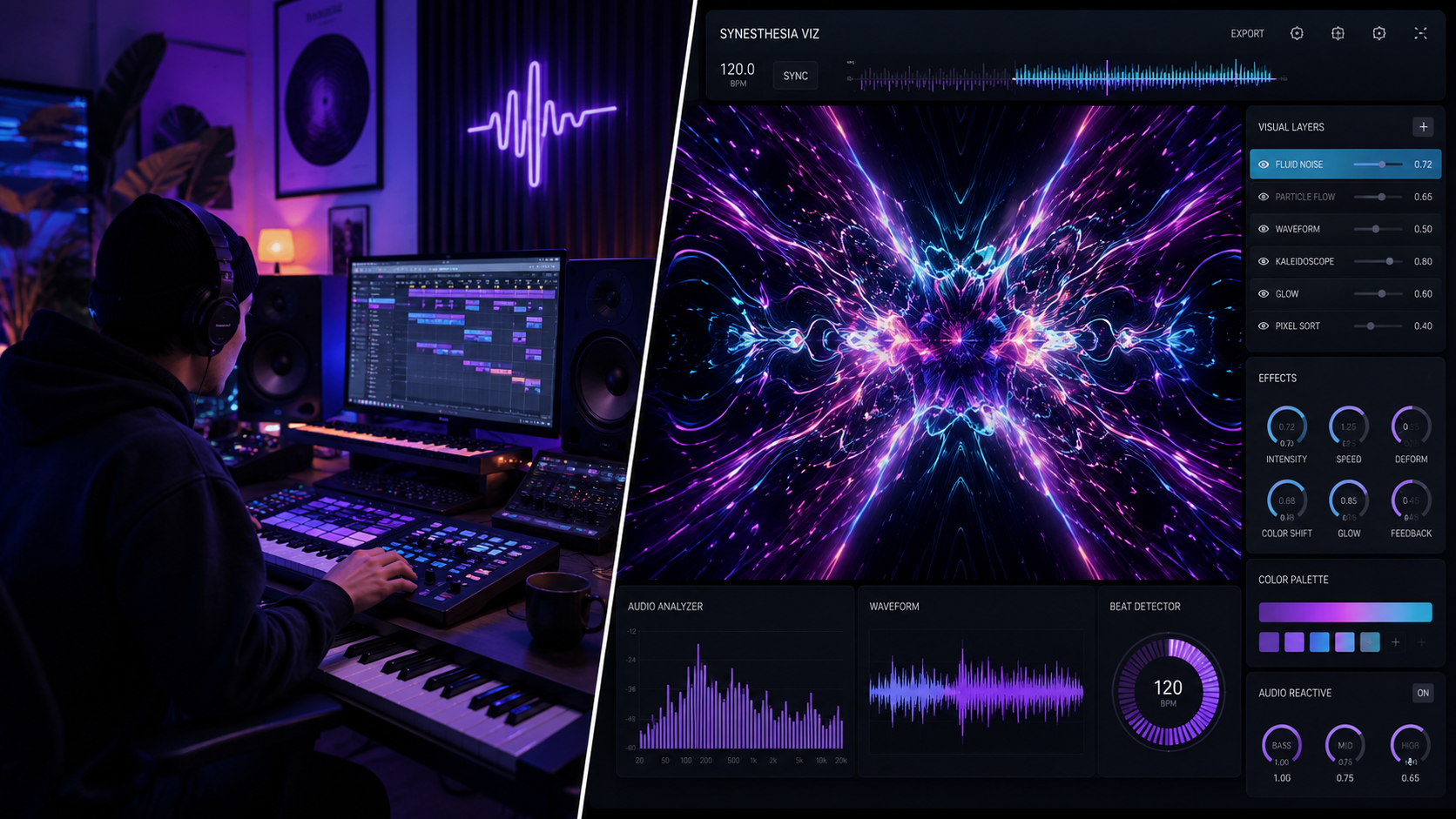
To help you choose the right tool for your project, we have compared the leading platforms based on their feature sets, rendering speed, and output quality. According to testing conducted by NoHo Arts District, the choice often depends on whether the musician prioritizes narrative realism or experimental abstraction.
| Platform | Key Strength | Max Resolution | Audio Reactivity | Pricing Tier |
|---|---|---|---|---|
| Runway Gen-4 | Professional Control | 8K Ultra HD | High (Multi-track) | Professional / Enterprise |
| OpenAI Sora 2.0 | Narrative Consistency | 4K Cinematic | Medium (Prompt-based) | Subscription |
| Kaiber.ai | Stylized Animation | 4K | Very High (Beat-sync) | Artist Friendly |
| Kling AI | Realistic Physics | 4K | Medium | Freemium |
| Luma Dream Machine | Speed & Fluidity | 4K | Low | Pay-per-generation |
1. Runway Gen-4: The Professional Standard
Runway continues to dominate the creative industry in 2026 with the release of Gen-4. This version introduces "Director Mode 2.0," which gives musicians granular control over camera movement, lighting shifts, and character blocking. For artists seeking the best ai video generator for music videos that offers professional-grade post-production integration, Runway is the clear winner. Its ability to interpret "Motion Brush" commands allows creators to animate specific parts of a frame while keeping the rest of the scene static.
A significant update in 2026 is the "Audio-to-Motion" engine. According to PCMag Middle East, this feature allows the AI to analyze the BPM and frequency spectrum of a song to automatically adjust the intensity of the visual motion. This ensures that the energy of the video perfectly matches the energy of the music without manual keyframing.
Advanced Lip-Sync Workflows
Runway's integrated lip-sync tool has been lauded by Tycoonstory Media for its startup-friendly workflow. It can take a static image or a generated character and map complex lyrical performances with nearly 100% accuracy in phoneme matching. This is particularly useful for virtual artists or musicians who wish to remain anonymous while still appearing in their videos.
2. OpenAI Sora 2.0: Cinematic Storytelling
Sora 2.0 remains the gold standard for photorealism and long-form consistency. While the original version was limited to short clips, the 2026 iteration allows for continuous "infinite" generation, making it possible to create a four-minute music video in a single, cohesive style. The model understands complex physics, meaning reflections, fluid dynamics, and hair movement look indistinguishable from real-world footage.
For musicians, Sora’s primary advantage is its deep understanding of narrative prompts. You can describe a complex storyline—such as a journey through a neon-lit cyberpunk city that evolves into a lush forest—and Sora will maintain the identity of the lead character throughout the entire transition. This level of temporal consistency is why many high-end music labels have adopted Sora for their 2026 release schedules.
Prompting for Music Videos
Sora’s prompt window now supports "Temporal Markers," allowing users to sync specific visual cues to timestamps in their audio. This bridges the gap between text-to-video and traditional music video directing, providing a level of synchronization that was previously impossible in generative AI.
3. Kaiber: The Indie Musician's Favorite
Kaiber has solidified its reputation as the most artist-centric tool on the market. Unlike Sora or Runway, which lean toward realism, Kaiber excels in "Flipbook" and "Motion" styles that feel like living paintings or high-concept animations. It is widely considered the best ai video generator for music videos among indie artists because of its affordable pricing and intuitive "Audio Reactivity" dashboard.
In 2026, Kaiber introduced "Stem-Based Animation." This allows a musician to upload their drum track and bassline separately; the AI then uses the drum transients to trigger camera shakes and the bass frequencies to shift color palettes. This deep level of audio integration creates a visceral connection between the sound and the visuals that feels organic rather than robotic.
4. Kling AI: The New Frontier of Realism
Emerging as a powerful competitor in early 2026, Kling AI has gained traction for its ability to generate high-quality human movements. Many AI generators struggle with "liminal motion"—the small, subtle movements of a person playing an instrument—but Kling handles these with ease. If your music video requires shots of a guitarist or a pianist, Kling AI provides the most realistic finger-to-string interaction currently available.
According to a review by GameTyrant, Kling AI is also being utilized by gaming creators to produce cinematic music trailers. Its "Creative Extension" feature allows users to take a 5-second clip and extend it indefinitely, with the AI predicting the next logical movement based on the rhythm of the provided soundtrack.
5. Luma Dream Machine: Speed and Accessibility
Luma Dream Machine is the go-to choice for creators who need high-quality visuals quickly. Its rendering engine is optimized for speed, often delivering 4K clips in under 120 seconds. While it may lack some of the deep customization of Runway, its "Dream Loops" feature is perfect for creating mesmerizing, repetitive visuals often found in Lo-Fi or Electronic music videos.
In 2026, Luma expanded its API, allowing other creative software to plug directly into its generation engine. This has led to a surge of mobile apps that allow musicians to generate social media "visualizers" for TikTok and Instagram Reels on the fly, directly from their smartphones.
6. Pika Labs (Pika 2.5): Animation Mastery
Pika 2.5 has carved out a niche in the "Anime" and "3D Render" aesthetics. For musicians whose brand aligns with vibrant, stylized visuals, Pika offers the best control over "Physics Effects." You can make objects melt, explode, or transform in sync with a beat drop. This "Sound-to-FX" capability makes it a staple for EDM and Dubstep producers who want high-impact visuals that mirror the aggression of their music.
7. HeyGen: The King of Lip-Sync
While HeyGen is often associated with corporate presentations, its 2026 "Artist Studio" update has made it a contender for the best ai video generator for music videos involving heavy dialogue or vocal performance. HeyGen’s translation and lip-syncing capabilities are so advanced that they can take a video of a singer performing in English and perfectly sync their mouth to a Spanish or Japanese version of the same song, maintaining the original's emotional nuance.
8. Wondershare Filmora (AI Suite 2026)
Filmora has evolved from a simple video editor into a comprehensive AI production hub. Its built-in "AI Music Video Maker" is designed for beginners. You simply upload a song, and the AI suggests a series of clips, transitions, and effects based on the genre and tempo. It is an excellent "all-in-one" solution for artists who want to handle generation and editing within a single interface.
What is the best ai video generator for music videos for beginners?
Kaiber and Wondershare Filmora are the most beginner-friendly options in 2026. They offer intuitive interfaces and automated audio-sync features that require very little technical knowledge to produce professional results.
Can AI generate a full 4-minute music video?
Yes, tools like Sora 2.0 and Runway Gen-4 now support extended generation lengths. However, most professional creators prefer to generate shorter, high-quality scenes and stitch them together in an editor for better creative control.
Is AI-generated music video content copyrightable?
As of 2026, copyright laws vary by region, but generally, the human-authored elements (the music, the specific prompts, and the final edit) are protectable. However, the raw AI-generated output itself often remains in a legal gray area regarding "authorship."
How much does it cost to make an AI music video?
Costs range from $20 to $100 per month for professional subscriptions. While significantly cheaper than a traditional film shoot, high-resolution rendering and advanced features like 8K upscaling often require "credits" or higher-tier plans.
Do I need a powerful computer to run these AI tools?
No, most of the best ai video generators for music videos in 2026 are cloud-based. All the heavy processing is done on the provider's servers, meaning you can create 4K videos on a standard laptop or even a tablet.
The landscape of music video production has been forever altered by these generative tools. Whether you are an indie artist with a limited budget or a major label looking to push the boundaries of visual storytelling, the tools available in 2026 provide unprecedented creative freedom. By choosing the best ai video generator for music videos that fits your specific style—be it the realism of Sora or the rhythmic reactivity of Kaiber—you can create immersive visual experiences that resonate with your audience on a global scale.



Comments ()