
Create Social Media Ads with AI Video: 2026 Strategy Guide
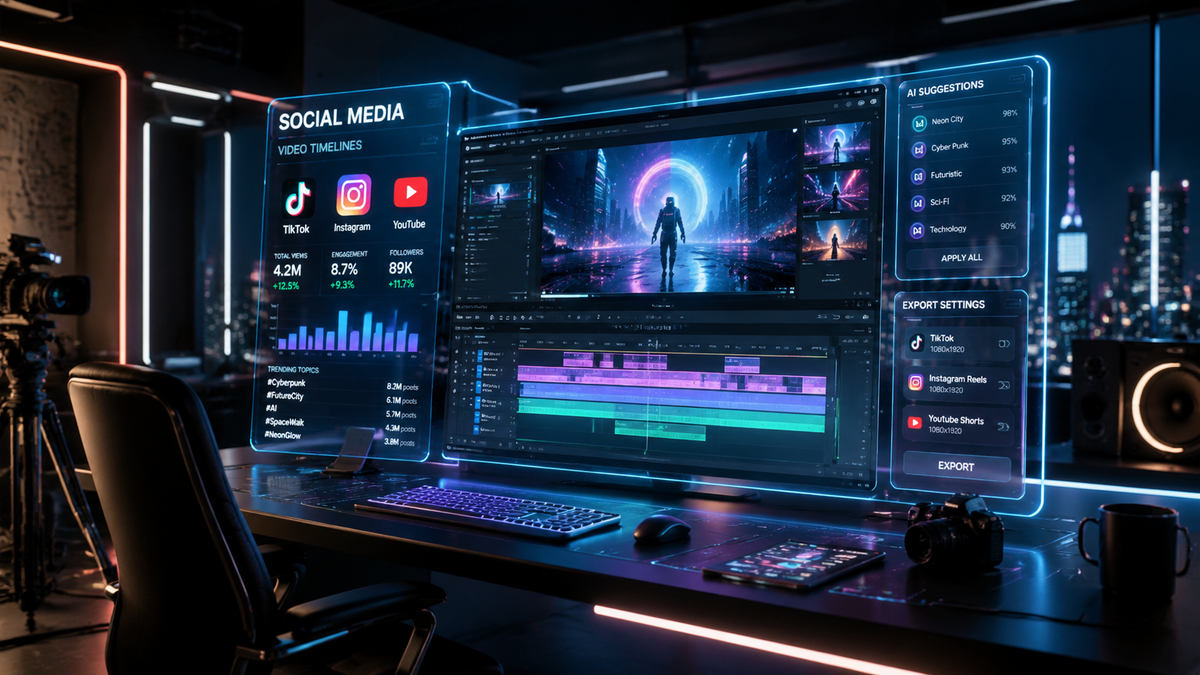
To create social media ads with AI video in 2026, brands must leverage generative tools to produce high-quality, personalized content that resonates with specific audience segments in real-time. This process involves using AI-driven platforms like TikTok’s Symphony or Google’s creative suite to automate scripting, visual generation, and multi-language dubbing, reducing production timelines from weeks to minutes. By integrating AI into your workflow, you can scale ad creative across platforms like Instagram, YouTube, and TikTok without the overhead of traditional video shoots.
To create social media ads with AI video is to use generative artificial intelligence to automate the production of video assets, including scripts, visuals, and voiceovers. In 2026, this process is defined by high-fidelity realism and deep integration into platform-native tools like TikTok Symphony, allowing for instant creative iteration and hyper-personalized targeting at scale.
- ✓ AI has reduced video production timelines from several weeks to less than twenty-four hours.
- ✓ TikTok’s Symphony ad toolkit now offers native AI video generation for seamless content creation.
- ✓ Authenticity and transparency are critical as consumers become more wary of AI-generated content.
- ✓ Google’s 2026 case studies show that AI-optimized creative significantly boosts conversion rates.
- ✓ The "AI Ad Gap" identified by the IAB highlights the competitive advantage for early adopters.
How to Create Social Media Ads with AI Video: A Step-by-Step Guide
The landscape of digital marketing has shifted dramatically as we move through 2026. The ability to create social media ads with AI video is no longer a luxury for enterprise brands; it is a necessity for any business looking to maintain a presence on fast-moving social feeds. According to NoHo Arts District, social media ads used to take weeks to produce, but AI has fundamentally changed that paradigm, allowing for near-instantaneous creative output.
Following this structured approach will help you master the new workflow of generative advertising:
- Define Your Campaign Objective and Persona: Start by inputting your target audience data and campaign goals into your AI creative suite. The AI needs to know if you are looking for brand awareness on Instagram or direct conversions on TikTok.
- Generate the Script and Storyboard: Use LLM-based tools to generate multiple script variations. In 2026, these tools can analyze current trending sounds and visual styles to ensure your script feels native to the platform.
- Select or Generate Visual Assets: Use generative video models to create background footage or digital avatars. Platforms like TikTok have integrated these features directly into their Symphony toolkit as of April 2026.
- Apply AI Voiceovers and Dubbing: Choose a synthetic voice that matches your brand persona. For global campaigns, use AI dubbing to localize the content into multiple languages while maintaining the original speaker's tone.
- Iterate and Optimize: Deploy multiple versions of the AI video to test which hooks and calls-to-action perform best. Use the data to prompt the AI for a second round of optimized "v2" creative.
The Evolution of AI Video in 2026 Advertising
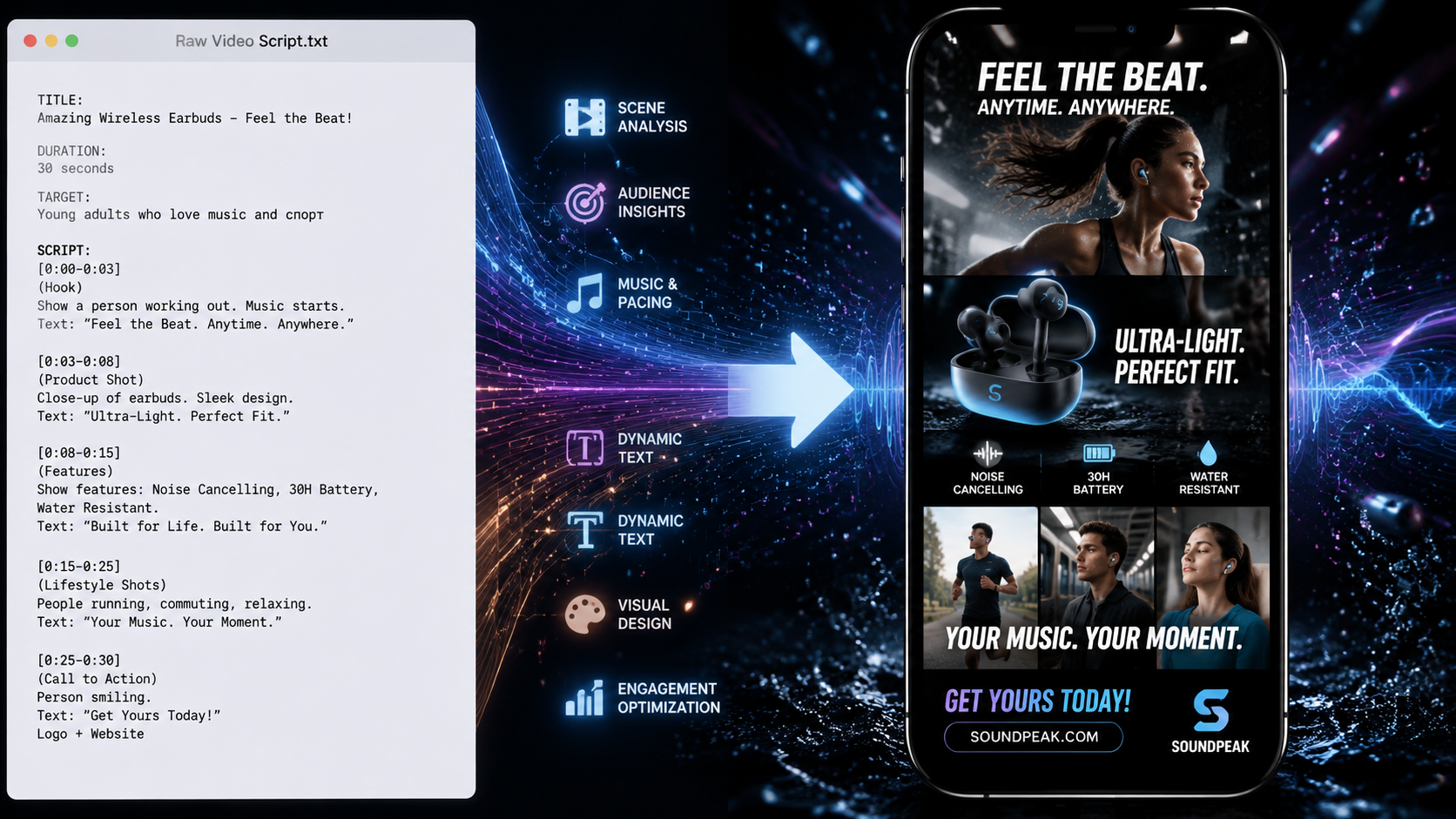
As of early 2026, the gap between brands using AI and those sticking to traditional methods is widening. A report by the IAB (Interactive Advertising Bureau) released on January 15, 2026, titled "The AI Ad Gap Widens," notes that companies failing to integrate generative AI into their creative workflows are seeing a significant rise in customer acquisition costs. This is largely because AI allows for a level of testing and personalization that manual production simply cannot match.
The Rise of Native Platform Tools
One of the most significant developments this year is the integration of AI directly into the ad managers of major social networks. For instance, Social Media Today reported on April 13, 2026, that TikTok added new AI video generation features to its Symphony ad toolkit. This allows advertisers to create content that looks and feels like organic TikToks without ever leaving the platform's ecosystem. These tools use "Symphony Digital Avatars" to act as spokespeople, further blurring the line between human-led and AI-generated content.
Google’s AI Creative Case Study
Google has also emerged as a leader in this space. An Ad Age case study from December 2025 detailed how Google embraced AI-generated ads to help brands scale their Performance Max campaigns. By using AI to automatically resize, re-edit, and re-voice video assets, brands saw a marked improvement in engagement rates. The study emphasized that the key to success was not just the technology itself, but the human-in-the-loop oversight that ensured brand safety and creative alignment.
Comparing AI Video Tools for Social Media Ads
When you decide to create social media ads with AI video, choosing the right platform is essential. The following table compares the leading approaches available in 2026 based on recent industry updates from Social Media Examiner and other research sources.
| Feature | Platform-Native AI (e.g., TikTok Symphony) | Third-Party Generative Suites | Traditional Agency Production |
|---|---|---|---|
| Production Speed | Minutes to Hours | Hours to Days | Weeks to Months |
| Cost Per Asset | Low (Included in platform) | Moderate (Subscription based) | High (Project based) |
| Customization | High (Platform specific) | Very High (Cross-platform) | Infinite (But slow) |
| Ease of Use | High (Integrated) | Moderate (Requires prompting skill) | Low (Requires coordination) |
Maintaining Authenticity and Consumer Trust
While the efficiency of AI is undeniable, it brings new challenges regarding consumer trust. A report from WMAR 2 News Baltimore in November 2025 highlighted a growing concern: as AI makes it harder to tell what is real, consumers are becoming more skeptical of social media ads. This "uncanny valley" effect can backfire if a brand uses AI to create misleading representations of products.
To create social media ads with AI video successfully, transparency is key. Many platforms now require an "AI-generated" label for photorealistic content. Experts at Social Media Examiner suggest that in 2026, the most effective ads are those that use AI to enhance creativity—such as through stylized animations or rapid editing—rather than those that try to trick the viewer into thinking a completely synthetic person is a real customer. Using AI for "B-roll" or background elements while keeping the core product message grounded in reality is a winning strategy.
The Importance of Disclosure
Ethical AI usage is no longer just a suggestion; it is a brand safety requirement. In 2026, major ad exchanges have implemented automated detection tools. If your AI-generated video is flagged for not having the proper metadata or disclosure, your reach could be throttled. Therefore, the strategy for 2026 must include a rigorous check for "AI-transparency" compliance before any campaign goes live.
Advanced Strategies to Create Social Media Ads with AI Video
Moving beyond basic generation, advanced marketers are using AI to perform "creative sentiment analysis." This involves using one AI to analyze the top-performing organic videos in a niche and another AI to generate ad creative that mimics those successful patterns. This creates a feedback loop where the AI is constantly learning what visual hooks are currently stopping the scroll on platforms like Instagram Reels or YouTube Shorts.
Dynamic Creative Optimization (DCO) 2.0
In 2026, Dynamic Creative Optimization has evolved into DCO 2.0. In the past, this meant swapping out a headline or a static image. Today, it means the AI can generate entirely different video scenes based on the viewer's profile. If a viewer is a fitness enthusiast, the AI video might show the product in a gym setting; if the viewer is a busy parent, the same product is shown in a home environment. This level of hyper-personalization is the primary driver behind the "AI Ad Gap" mentioned by the IAB.
Integrating AI with Influencer Marketing
Another emerging trend is the "AI-Twin" strategy. Influencers are now licensing their digital likenesses to brands. This allows a brand to create social media ads with AI video featuring a popular creator without the creator needing to be present for every shoot. This scale allows for thousands of personalized video messages to be sent to different micro-segments of the influencer's audience, significantly increasing the ROI of influencer partnerships.
Conclusion: The Future of AI in Social Advertising
The year 2026 marks the point where AI video has become the standard for social media advertising. As we have seen from the latest updates from TikTok, Google, and the IAB, the speed of production and the ability to personalize content at scale are the new benchmarks for success. However, as WMAR 2 News reminds us, the human element—transparency, ethics, and genuine storytelling—remains the most important factor in converting a viewer into a customer.
By following the strategies outlined in this guide, brands can navigate the complexities of generative AI and build a sustainable, high-performing ad engine that thrives in the 2026 digital landscape. The key is to start experimenting now, stay compliant with platform transparency rules, and always prioritize the user experience over sheer volume.
Is it expensive to create social media ads with AI video in 2026?
No, it is generally much cheaper than traditional production. Many tools are now integrated directly into social media ad managers like TikTok's Symphony, reducing the need for expensive equipment or large production crews.
Do I need to disclose if my ad is AI-generated?
Yes, most platforms in 2026 require an "AI-generated" label for content that features photorealistic people or events. Failure to disclose can lead to reduced ad reach or account suspension.
Can AI video ads look real?
Yes, AI video technology in 2026 has reached a level of high fidelity where it is often indistinguishable from filmed content. However, brands are encouraged to use AI for creative enhancement rather than deception to maintain consumer trust.
How long does it take to generate an AI video ad?
Depending on the complexity, a full video ad can be generated in anywhere from a few minutes to an hour. This is a massive improvement over the weeks-long timelines common before 2025.
What is TikTok's Symphony tool?
Symphony is TikTok's AI-powered creative suite launched to help advertisers generate scripts, videos, and digital avatars directly within the TikTok ad ecosystem to ensure content feels native to the platform.



Comments ()