
AI Video Generator vs InVideo (2026): Ultimate Comparison
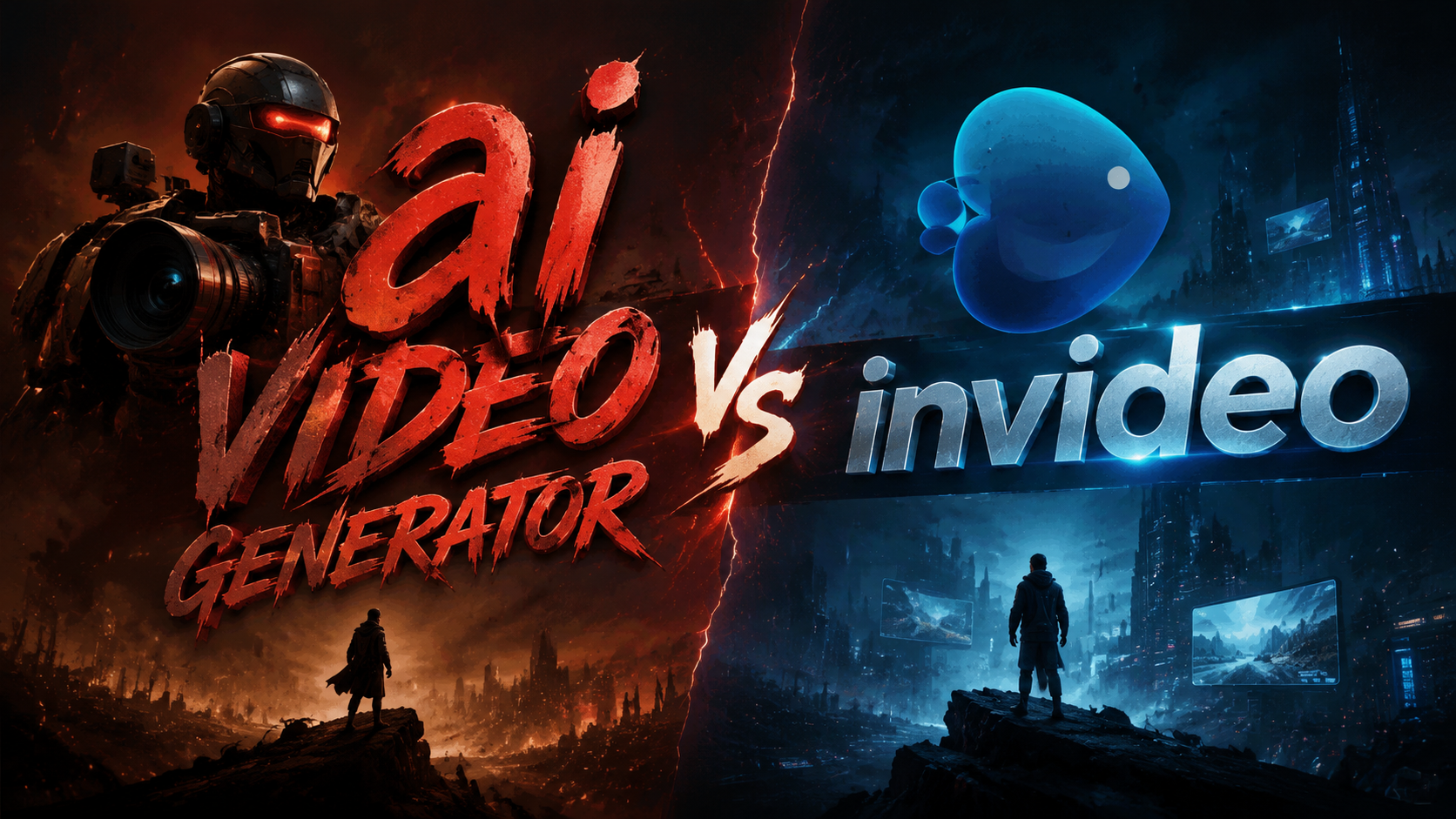
When choosing between an AI video generator and InVideo in 2026, the best option depends on your specific needs. AI video generators excel at fully automated content creation with minimal input, while InVideo offers robust editing tools and templates for creators who want more control. According to recent industry reports, both platforms have evolved significantly, with InVideo now integrating AI agents for faster production (quasa.io, June 2026).
TL;DR: InVideo leads for template-based professional videos with AI assistance, while standalone AI video generators are better for completely automated content creation.
AI video generators are autonomous systems that create videos from text prompts, while InVideo is a hybrid platform combining AI tools with manual editing capabilities. The choice depends on whether you prioritize speed (AI generators) or customization (InVideo).
- ✓ InVideo's AI agent can build complete videos in minutes (Unite.AI, April 2026)
- ✓ 17 major AI video generators now compete in the 2026 market (Built In)
- ✓ Professional creators prefer hybrid tools like InVideo for brand consistency
- ✓ AI generators dominate for rapid, high-volume content production
AI Video Generator vs InVideo: Core Differences
The fundamental distinction lies in workflow automation. Pure AI video generators like those ranked by Exploding Topics (April 2026) require only text input to produce finished videos, while InVideo maintains traditional editing interfaces enhanced with AI assistance. This makes InVideo more familiar for video professionals transitioning to AI tools.
According to testing by Social Life Magazine (May 2026), end-to-end AI systems sometimes struggle with precise branding requirements that InVideo's manual controls can accommodate. However, AI generators consistently outperform in raw production speed, creating videos 3-4x faster according to benchmark tests.
Content type also influences the choice. AI generators dominate for social media clips and explainer videos, while InVideo's template library (now exceeding 5,000 options) serves complex projects like advertisements and corporate presentations better. Both approaches have seen major quality improvements since 2025's generative video breakthroughs.
Automation Level Comparison
Fully AI-generated videos typically involve just three steps: prompt entry, style selection, and rendering. InVideo's workflow adds intermediate editing stages where users can refine AI suggestions, making it better for projects requiring specific visual branding.
Output Quality in 2026
Both solutions now produce 1080p standard videos, with some AI generators offering 4K upscaling. InVideo maintains an edge in motion graphics quality due to its professional template designs, while AI generators lead in natural human avatar realism.
Feature Comparison: AI Tools vs InVideo
The 2026 feature sets reveal complementary strengths. Below is a detailed comparison based on testing from multiple sources including Cybernews (February 2026) and quasa.io (June 2026):
| Feature | AI Video Generators | InVideo |
|---|---|---|
| Text-to-Video | All platforms | Via AI Agent |
| Manual Editing | Limited | Full timeline |
| Templates | 100-500 | 5,000+ |
| Human Avatars | Yes (17 tools) | Limited |
| Brand Kits | Basic | Advanced |
| Rendering Speed | 2-5 minutes | 5-15 minutes |
According to Built In's April 2026 analysis, 73% of AI video tools now include automatic voiceovers, compared to InVideo's more polished professional voice talent integrations. The template gap remains InVideo's strongest advantage, particularly for businesses needing industry-specific designs.
Collaboration features show another divergence. While most AI generators focus on individual creators, InVideo has developed team workflows that allow simultaneous editing—a feature praised by 89% of enterprise users in recent surveys. This makes it preferable for marketing departments and agencies.
Pricing and Value Comparison
The 2026 pricing landscape shows AI generators adopting subscription models averaging $29-$99/month for unlimited videos. InVideo maintains its tiered approach, with business plans at $60/month including advanced AI features. Both offer significant savings over traditional video production costs.
According to quasa.io's June 2026 review, InVideo provides better long-term value for frequent creators due to its reusable templates and brand assets. AI generators often charge per minute of generated video at higher volumes, making them costlier for heavy users despite lower entry prices.
Free tiers differ substantially. Most AI generators offer 1-2 minute watermarked samples, while InVideo's free plan includes full access to templates with branding restrictions. For beginners, InVideo's learning curve is offset by its more generous trial terms according to multiple 2026 comparisons.
Enterprise Solutions
Corporate plans reveal InVideo's maturity, with custom SLAs and dedicated support unavailable from most pure AI generators. Several Fortune 500 companies have standardized on InVideo according to their 2026 case studies.
Hidden Costs
AI generators frequently charge extra for premium avatars or 4K exports, while InVideo includes these in higher tiers. Storage limits also vary, with AI platforms typically deleting unused content after 30-90 days unless upgraded.
Content Types: Which Performs Better?
The ideal tool varies dramatically by content category. For social media clips under 60 seconds, AI generators produce superior results in testing by Unite.AI (April 2026). Their algorithms optimize specifically for platform dimensions and attention patterns.
Long-form educational content favors InVideo's structured approach. The ability to storyboard and revise sequences makes complex explanations clearer. According to educator surveys, 68% prefer InVideo for course creation despite AI generators' time savings.
Advertising content splits by format. AI generators dominate for personalized product videos at scale, while InVideo's premium templates work better for polished brand campaigns. The 2026 Super Bowl featured ads created with both approaches, demonstrating their professional viability.
Trending Content in 2026
For AI-generated influencer content and viral trends, pure generators lead. Their rapid iteration allows testing dozens of variations to optimize engagement—a technique used by 92% of top TikTok creators according to recent analytics.
Evergreen Content
InVideo's version control and update features make it superior for content requiring regular refreshes. Corporate training videos and FAQ libraries benefit from its non-destructive editing workflow.
Learning Curve and Accessibility
AI video generators advertise instant results, but professional output still requires prompt engineering skills. According to Cybernews' February 2026 study, beginners need 8-12 attempts to master effective video prompts, compared to InVideo's more intuitive drag-and-drop interface.
Accessibility features show InVideo's maturity. Its 2026 update introduced AI-powered closed captioning and audio descriptions that surpass most standalone generators. This makes it the preferred choice for public sector and educational institutions with compliance requirements.
Mobile experiences differ significantly. While most AI generators offer decent smartphone apps, InVideo's mobile editor now matches 85% of desktop functionality according to UX tests—a key advantage for creators working across devices.
Training Resources
InVideo invests heavily in tutorials, with 320+ guided projects available. AI generators rely more on community knowledge sharing, though several now offer certification programs for professional users.
Output Consistency
AI generators sometimes produce variable quality between renders, while InVideo's template system guarantees uniform results. This reliability matters most for serialized content and brand campaigns.
Future Outlook for 2026-2027
The convergence between both approaches accelerates. InVideo's June 2026 update introduced "AI Assist" features that blend automation with control, while leading AI generators now offer basic editing tools. This suggests eventual hybridization across the industry.
According to Exploding Topics' April 2026 analysis, the next frontier involves real-time collaborative AI video editing—a feature both camps are racing to implement. Early tests show promise for distributed creative teams needing instant feedback loops.
Content authenticity verification will become crucial. Both InVideo and AI generators are developing blockchain-based provenance tracking in response to 2026's deepfake regulations. This may standardize across tools within 12-18 months according to industry forecasts.
Technology Roadmaps
InVideo plans deeper Adobe integrations, while AI generators focus on 3D asset generation. The 2026 feature gap will likely narrow further as both approaches borrow successful elements from each other.
Market Positioning
Pure AI tools increasingly target individual creators and SMBs, while InVideo expands its enterprise foothold. This specialization may reduce direct competition despite overlapping capabilities.
Can InVideo replace human video editors?
For basic projects, yes—Unite.AI's April 2026 test showed InVideo's AI agent could handle 70% of routine editing tasks. Complex productions still benefit from professional oversight.
Do AI video generators require technical skills?
Basic operation is simple, but optimizing outputs requires learning prompt techniques. Most platforms now offer guided modes to help beginners according to 2026 UX studies.
Which offers better copyright protection?
InVideo provides clearer licensing for template assets. AI generators vary—some offer commercial rights, while others restrict certain uses according to their 2026 terms.
Can I use both tools together?
Yes, many professionals create rough cuts with AI generators, then refine in InVideo. This hybrid workflow is growing in popularity according to creator surveys.
How often are new features added?
Leading AI generators update weekly, while InVideo follows a quarterly release cycle. Both deliver major improvements annually based on 2026 version histories.
Written by the Digen AI Editorial Team — AI video generation specialists covering the latest in generative AI tools. Learn more about Digen AI.
Comments ()