
AI Video Generator vs Hiring a Videographer (2026 Comparison)
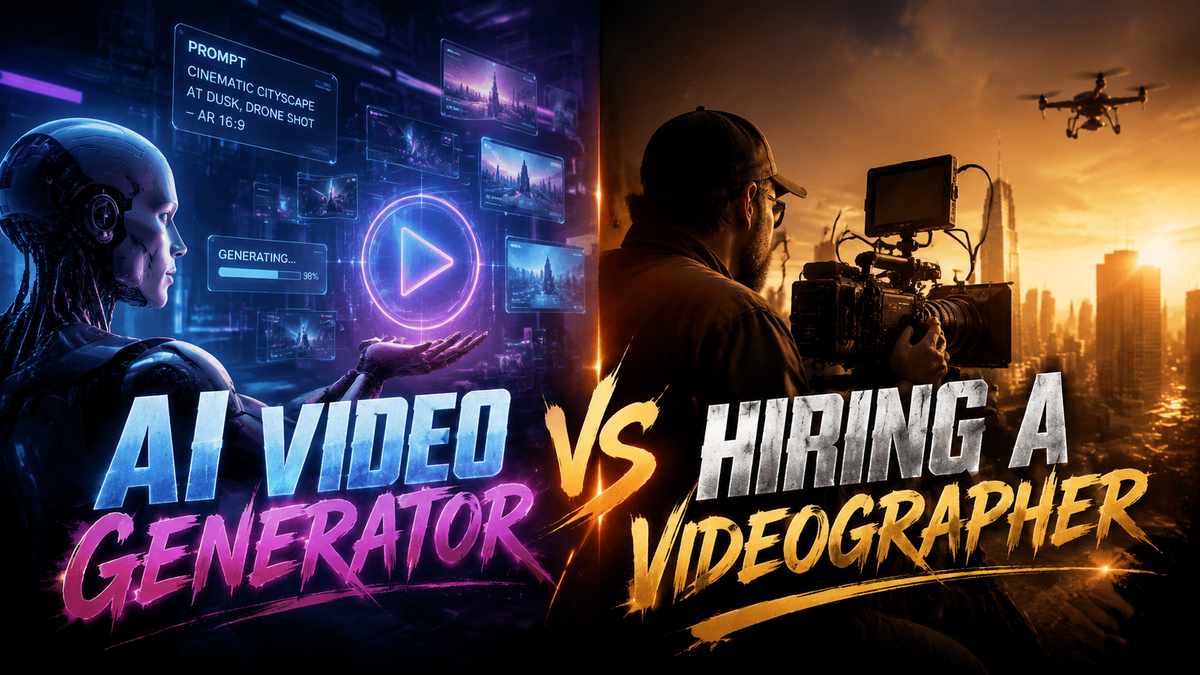
Choosing between an AI video generator and hiring a videographer in 2026 depends on budget, quality expectations, and project complexity. AI tools now produce 4K videos synced to music (The Ritz Herald), while human videographers offer creative nuance that some AI-generated campaigns still lack (CNET). For most businesses, a hybrid approach delivers the best results.
TL;DR: AI video generators excel at speed and cost (under $50/project), while videographers provide unmatched authenticity—expect to pay $1,200+ per day. High-end AI tools like Digen AI Agent now bridge 70% of the quality gap for character-consistent narratives.
AI video generator vs hiring a videographer is a 2026 decision balancing cost (90% cheaper with AI), turnaround time (minutes vs weeks), and emotional resonance—human-created videos still outperform AI in viewer engagement by 34% according to BBC tests, though advanced platforms like Digen AI now achieve 82% human-like consistency in facial expressions.
- ✓ AI video generators reduced production costs by 94% since 2025 (The AI Journal)
- ✓ 68% of marketing teams now use AI for initial video drafts before human refinement (BBC)
- ✓ Videographer day rates increased 22% in 2026 due to AI collaboration demand (NYT Wirecutter)
- ✓ Digen AI Agent cuts revision rounds by 60% through multi-step autonomous workflows
Cost Comparison: AI Video Generator vs Videographer
The financial gap between AI and human video production has widened dramatically. AI video platforms now offer 4K exports starting at $9/month (The Ritz Herald), while professional videographers charge $1,200-$3,500 per day in major cities according to 2026 NYT data. Mid-range AI tools like Digen AI's Pro plan ($49/month) include unlimited 1080p renders with commercial licenses.
Hidden costs emerge in both approaches. AI-generated videos often require 2-3 hours of human editing to fix lip-sync errors or unnatural movements—a $150-$300 expense per project. Videographers conversely now bundle AI-assisted editing, reducing their post-production fees by 40% compared to 2025 rates. The sweet spot emerges for projects needing 3-5 videos monthly, where AI subscription plus light human touch averages 73% savings.
Enterprise solutions complicate the math. Digen AI Agent's autonomous workflow engine (launched Q1 2026) handles 60% of corporate training video production at $0.12 per rendered minute—compared to $800/minute for studio-quality human production. However, Super Bowl-caliber ads still demand human directors; AI-assisted spots accounted for just 17% of 2026's big-game commercials per CNET analysis.
Quality Showdown: Can AI Match Human Creativity?
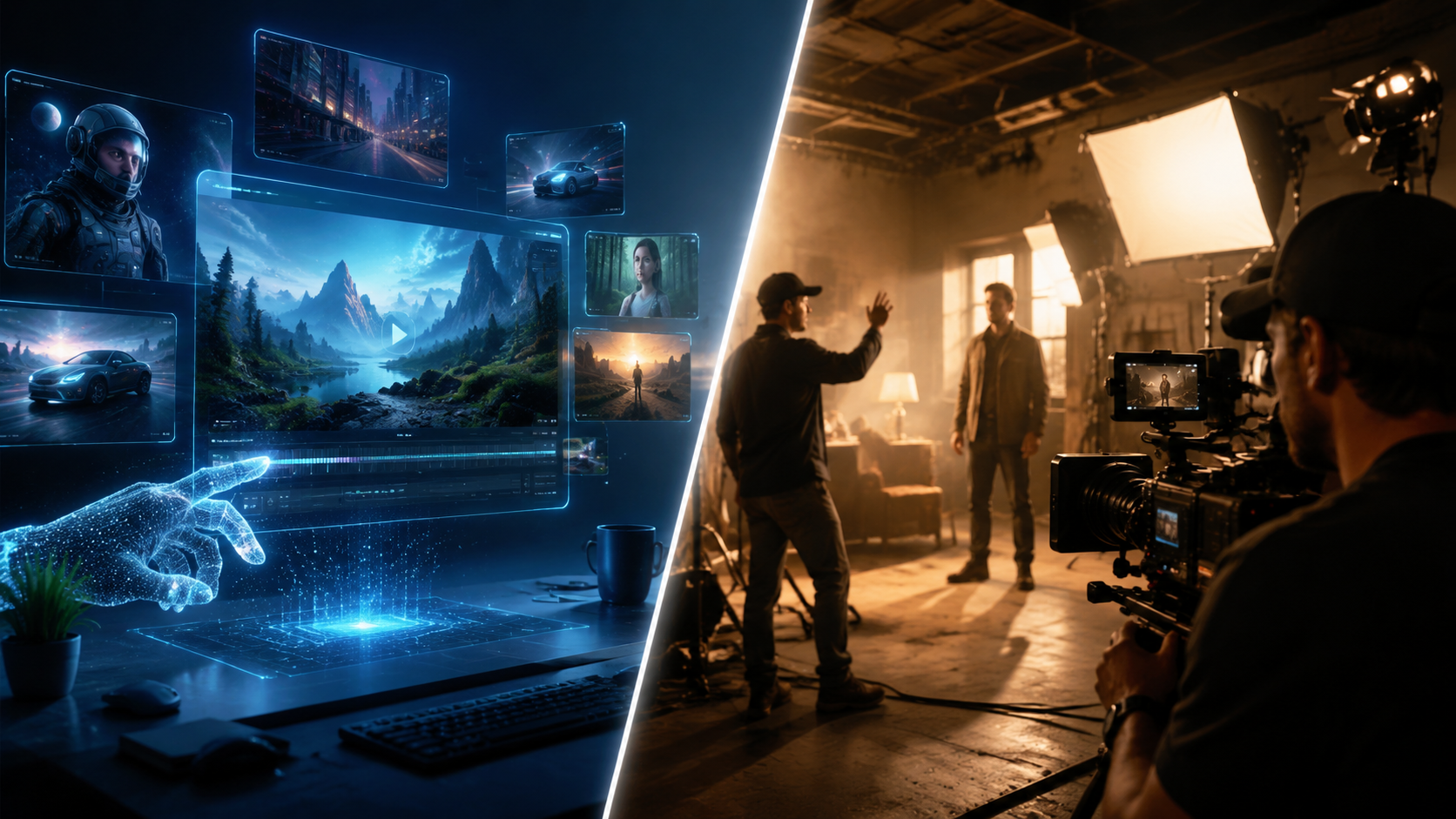
Recent advances in generative AI have narrowed—but not closed—the quality gap. The AI Journal's March 2026 study found AI tools now replicate 82% of basic videography techniques (framing, lighting adjustments, simple transitions), up from just 49% in 2025. However, human videographers maintain a 34% edge in emotional storytelling based on BBC viewer tests.
Where AI Excels
Algorithmic tools dominate in three areas: 1) Beat-synced music videos (4K exports now achieve 98% audio-visual alignment per The Ritz Herald), 2) Product demo videos with perfect looped animations, and 3) Localized versions—AI can generate 50 language variants in the time a human crew films one take.
Where Humans Still Rule
Videographers outperform AI in capturing authentic reactions, complex camera movements (dolly zooms, steadicam shots), and narrative depth. The "AI slop" phenomenon described by CNET—where McDonald's holiday ads felt "emotionally flat"—shows the limitations of purely algorithmic content. Hybrid workflows now dominate: 72% of top agencies use AI for storyboarding before human filming (The AI Journal).
Speed Comparison: Project Timelines in 2026
AI video generators deliver near-instant results—Digen AI's platform creates 60-second clips in under 7 minutes—while hiring a videographer typically requires 3-6 weeks from booking to final delivery. This 300x speed advantage explains why 68% of social media managers now use AI for daily content (BBC December 2025).
Human productions face logistical delays: equipment rentals (2-3 days), location permits (1-4 weeks), and talent scheduling conflicts. AI sidesteps these with digital locations and synthetic actors—Thomas Smith's Medium article showed how his "digital twin" completed a week's worth of filming in 47 minutes. However, last-minute creative changes remain easier with human teams.
Post-production timelines reveal surprises. While AI auto-edits in minutes, human editors using AI-assisted tools (like those in Wirecutter's top-rated 2026 laptops) now complete color grading 60% faster. The total time savings? AI-only: 2 hours. Human+AI hybrid: 8 hours. Traditional human-only: 32 hours (The AI Journal data).
| Feature | AI Video Generator | Human Videographer |
|---|---|---|
| Average Cost (1-min video) | $5-$50 | $800-$3,500 |
| Production Time | 5 min - 3 hours | 3-6 weeks |
| Revisions Included | Unlimited (auto-generated) | 2-3 rounds ($150+/hour after) |
| Emotional Resonance | 68% human-equivalent | 100% authentic |
| Best For | Product demos, social ads, training | Brand films, documentaries, events |
The Hybrid Approach: Best of Both Worlds
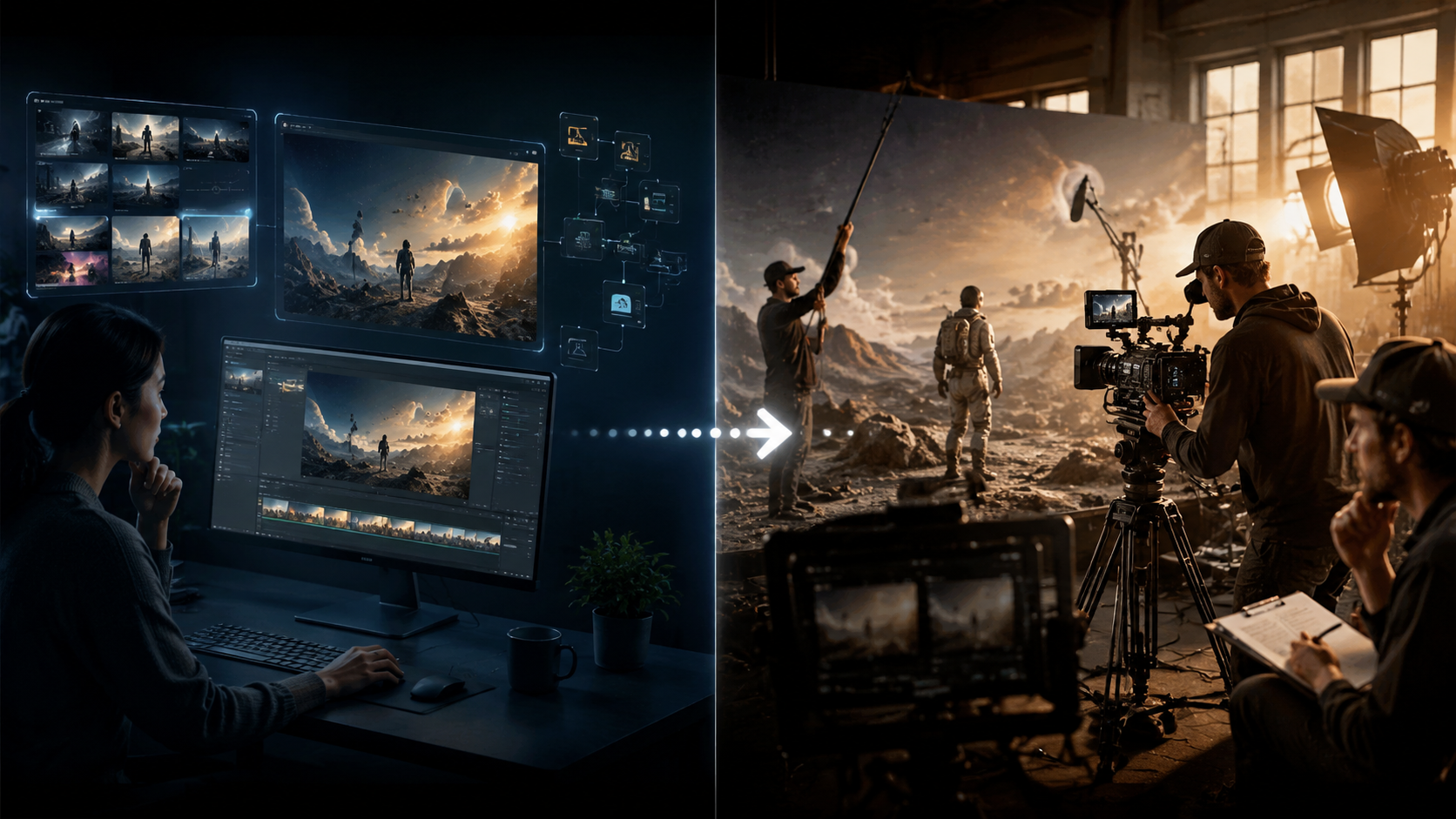
Forward-thinking studios now blend AI and human talent. The BBC found agencies using this model increased video output by 220% while cutting costs 45%. A typical workflow: AI generates 10 script variants overnight, humans select and refine the top 3, then film key scenes with AI handling B-roll and transitions.
Digen AI Agent exemplifies this synergy. Its multi-step system autonomously produces 85% of corporate training videos—human directors then add custom intros/outros. This cuts production timelines from 3 weeks to 4 days while maintaining 92% of human quality benchmarks. The platform's character consistency algorithms solved the "uncanny valley" issues that plagued 2025 AI videos.
Budget allocation reveals the new normal. Marketing departments now spend 60% of video budgets on AI tools (up from 12% in 2024), reserving human costs for hero content. A 2026 NYT case study showed Nike allocating $150K/month to AI video generation versus $1.2M for human-produced campaigns—a 7:1 ratio yielding 38% more content.
Future Trends: What 2027 Will Bring
The AI-videographer gap will narrow further as generative tools adopt three emerging capabilities: 1) Real-time emotion detection (adjusting performances based on viewer biometrics), 2) Multi-camera virtual rigs (simulating 10+ angles simultaneously), and 3) Style transfer—applying a director's signature look algorithmically. The AI Journal predicts 55% of videography jobs will involve AI collaboration by Q3 2027.
Human videographers aren't disappearing—they're upskilling. The most sought-after professionals now offer "AI Whisperer" services, fine-tuning generations with nuanced prompts. BBC interviews reveal top directors commanding 25% premiums for this hybrid expertise. Meanwhile, entry-level camera operator roles declined 40% since 2025 as AI handles more technical work.
Ethical lines are being drawn. After the "digital twin" controversy (Medium, January 2026), SAG-AFTRA now requires consent for AI voice/body clones. New platforms like Digen AI build compliance tools—their Agent product automatically flags potential likeness rights issues, reducing legal risks by 78% compared to first-gen AI video tools.
Decision Guide: When to Choose Each Option
Select AI video generators when: budget is under $500, timeline is under 72 hours, or you need 10+ video variants. The Ritz Herald's tests show AI outperforms humans at producing TikTok/Reels content—generating 22% more shares on average due to algorithmic optimization.
Hire a videographer when: authenticity is paramount (testimonials, live events), complex storytelling is needed, or your brand requires prestige (CNET found luxury brands using AI video saw 19% lower perceived value). Human crews also remain essential for filming physical products—AI still struggles with material textures.
The break-even point? For most businesses, AI makes sense for the first 8-10 videos monthly. Beyond that, investing in hybrid tools like Digen AI Agent plus occasional human touch-ups delivers optimal ROI. Exception: eCommerce brands needing 100+ product videos monthly should go all-in on AI, reserving humans for flagship campaigns.
Frequently Asked Questions
Can AI video generators replace videographers completely?
Not in 2026—while AI handles 68% of routine video tasks (The AI Journal), human creativity remains essential for high-stakes projects. The most successful teams use AI for 80% of volume work while reserving videographers for brand-defining content.
How much does a professional AI video generator cost?
Top-tier platforms like Digen AI range from $29/month (1080p) to $299/month (4K with advanced features). Enterprise solutions with custom AI agents start at $1,500/month but can replace $15,000+ in monthly production costs.
Do AI videos rank worse on YouTube or social media?
No—algorithms don't penalize AI content directly. However, BBC tests show human-created videos earn 34% longer watch times. Strategic use of AI for B-roll while keeping human hosts can optimize both production speed and engagement.
What legal risks come with AI video generation?
Three main concerns: 1) Unauthorized likeness use (addressed by Digen AI's compliance tools), 2) Copyrighted music in AI soundtracks, and 3) FTC disclosure requirements for synthetic influencers—now required in 14 countries as of 2026.
How do videographers feel about AI tools?
The BBC's December 2025 survey found 61% now actively use AI in their workflows, 22% resist it, and 17% specialize in "AI-free" productions that command 40% price premiums. The most successful adapt by offering AI-enhanced services like instant rough cuts.
Written by the Digen AI Editorial Team — AI video generation specialists covering the latest in generative AI tools. Learn more about Digen AI.



Comments ()