
AI Video Generator for Animated Stories 2026: Top Picks
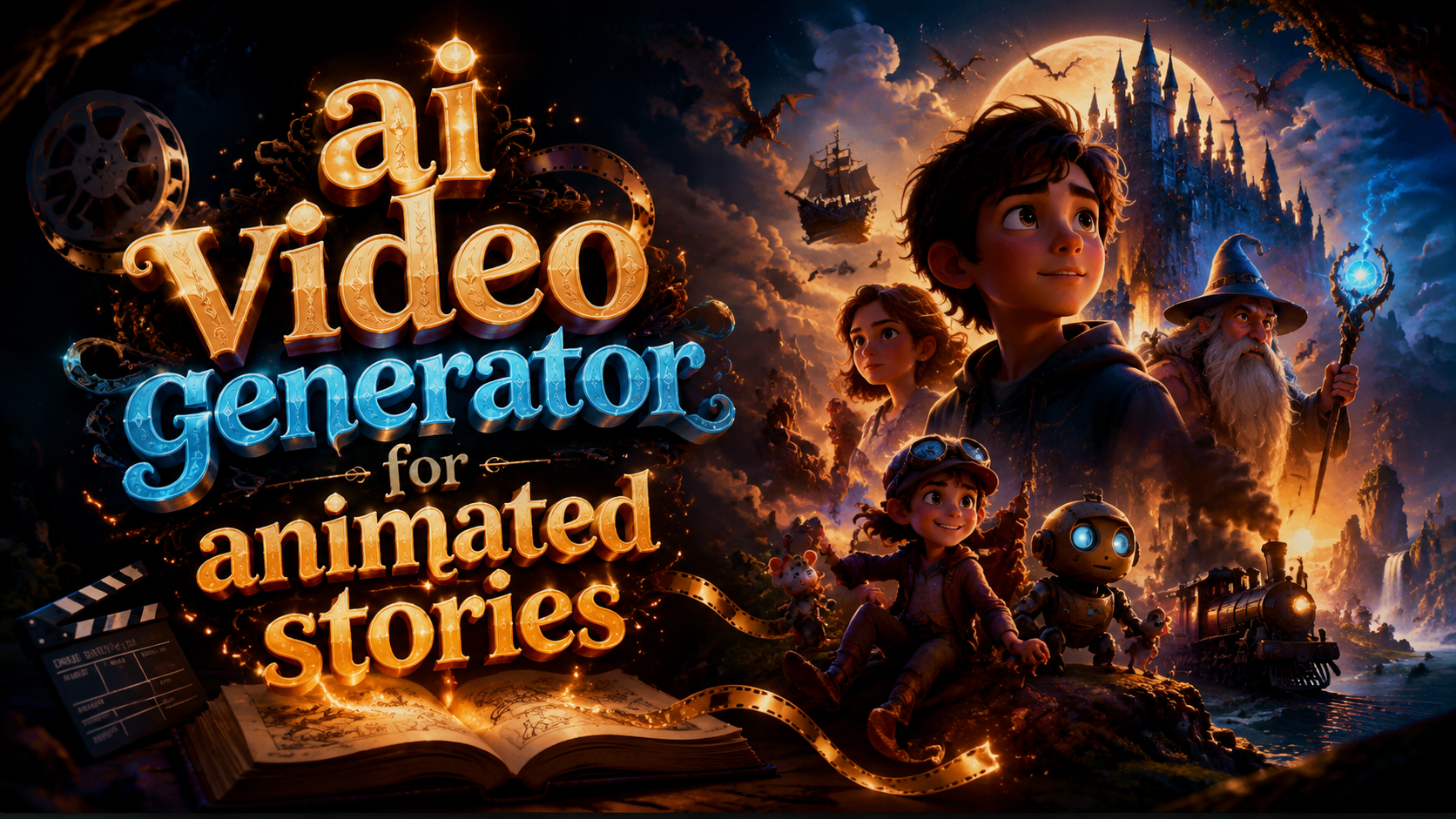
An AI video generator for animated stories is a software tool that uses generative artificial intelligence to transform text prompts, scripts, or storyboards into fully animated video clips without requiring traditional keyframe animation or manual rigging. These tools leverage deep learning models trained on vast datasets of visual media to produce consistent characters, backgrounds, and motion patterns, enabling anyone — from indie storytellers to marketing teams — to create narrative-driven animations in minutes.
TL;DR: The best AI video generators for animated stories in 2026 combine text-to-video capability with character consistency, long-form support, and all-in-one pipeline tools. Key contenders include Pika Labs, Elser AI, and LumeFlow AI, each offering unique strengths for different storytelling needs.
An AI video generator for animated stories is a generative AI tool that converts written prompts or scripts into animated video sequences. In 2026, these platforms have matured to support multi-scene storytelling, character consistency across shots, and export-ready outputs — making them accessible for creators without animation training.
- ✓ Pika Labs leads in flexible text-to-video generation for creative prompts and experimental animation styles.
- ✓ Elser AI is the first all-in-one animation creation platform currently on an early-access waitlist and promises end-to-end workflow.
- ✓ LumeFlow AI focuses on consistent long-form story generation, addressing the pain point of maintaining character and scene coherence across longer narratives.
- ✓ AI cartoon generators have evolved from simple style transfer to full narrative tools, as detailed in a complete 2026 guide by The AI Journal.
- ✓ Even NSFW AI video generators have emerged, but for animated stories, the mainstream tools prioritize safe, creative, and commercial-grade output.
What Is an AI Video Generator for Animated Stories?
An AI video generator for animated stories is a specialized class of generative AI that produces animation sequences from textual input. Unlike traditional animation software that demands frame-by-frame drawing or rigging, these platforms use large language models and diffusion-based video generation to infer motion, lighting, and character movement. Users can describe a scene — "a blue robot walking through a neon forest at dusk" — and the AI outputs a short video clip that visually interprets that description.
The technology underpinning these generators has advanced significantly since 2024. As noted by Trend Hunter in June 2026, Pika Labs AI generates videos from text prompts and creative ideas, showcasing the shift from simple image-to-video to direct text-to-animation. Meanwhile, a comprehensive guide published by The AI Journal in January 2026 explains that AI cartoon generators now handle entire story arcs, not just isolated clips.
For creators of animated stories, the primary appeal is speed and accessibility. A producer can iterate on narrative ideas, test visual styles, and even produce rough animatics in a fraction of the time required by traditional methods. However, consistency across shots — a known weakness of early AI video tools — remains an active area of improvement, with platforms like LumeFlow AI explicitly targeting this challenge.
Key Capabilities of Modern AI Animation Generators
Modern tools share several capabilities: (1) text-to-video generation from short prompts or full scripts, (2) style customization (2D cartoon, 3D render, anime, etc.), (3) character consistency via latent space interpolation or reference images, and (4) multi-scene sequencing with transitions. According to Geek Vibes Nation (November 2025), even complete beginners can produce cartoons using these tools, as shown in their full tutorial titled "AI Video Generator Is Making Cartoons—Here’s How You Can Too."
These platforms typically operate via cloud-based inference, meaning users do not need high-end GPUs locally. Output resolutions range from 720p to 4K in some cases, though longer generation times apply for higher quality. Many also offer API access for integration into existing production pipelines.
The importance of an all-in-one approach was highlighted by 24-7 Press Release Newswire in December 2025, announcing Elser AI as "the world's first all-in-one AI animation creation platform." This trend toward consolidation suggests that 2026 is the year when AI video generators for animated stories move from experimentation to production-ready workflows.
How AI Video Generators Work: A Step-by-Step Guide
Understanding the workflow behind an AI video generator for animated stories helps you choose the right tool and maximize its output. Below is a generic five-step pipeline that applies to most platforms in 2026.
- Input your story premise or script. Write a text prompt that describes the scene, characters, actions, and mood. For example: "A curious fox discovers a glowing mushroom in a dark forest, animated in Ghibli-inspired style." Some tools accept full script documents with scene headings.
- Select a visual style. Choose from presets like 2D cartoon, 3D CGI, watercolor, anime, or pixel art. Advanced tools allow uploading a reference image to define the style.
- Generate the video clip. The AI processes the prompt and outputs a video — usually 3 to 15 seconds per clip. Parameters like frame rate, resolution, and motion intensity can be adjusted.
- Refine for consistency. For multi-scene stories, tools like LumeFlow AI offer "story mode" that maintains character appearances and backgrounds across cuts. You can regenerate specific frames or use keyframe injection to keep continuity.
- Assemble and export. Combine clips into a timeline, add voiceover or music, and export in standard formats (MP4, MOV). Some platforms also generate subtitles automatically.
According to the Geek Vibes Nation tutorial, the entire process from prompt to final cartoon can take under 30 minutes for a short 30-second scene. However, for longer animated stories (e.g., 5 minutes+), the need for consistent character design becomes critical, which is where the dedicated story tools shine.
As a best practice, always review the output for motion artifacts or inconsistent lighting. Most platforms allow you to "remix" a clip with additional prompts to fix issues without starting over. The AI Journal's guide recommends iterating on prompts through small modifications (e.g., "the fox walks slower") rather than rewriting the entire description.
Top AI Video Generators for Animated Stories in 2026
The landscape of AI animation tools has diversified significantly in 2026. Based on recent research and news reports, three platforms stand out for animated story creation. The following table compares their core features.
| Tool | Release / Status | Strengths | Story Consistency | Best For |
|---|---|---|---|---|
| Pika Labs | Public beta (2026) | Text-to-video from creative prompts; strong style variety | Moderate — single-shot consistency; multi-scene requires manual linking | Short animated clips, experiments, and concept visualization |
| Elser AI | Waitlist for early access (Dec 2025) | World's first all-in-one animation platform; complete pipeline | High — built-in storyboarding and character consistency tools | Full animated stories, indie short films, and commercial content |
| LumeFlow AI | Launched Nov 2025 | Specialized story generation for long-form, consistent video | Very high — dedicated story mode with persistent characters | Longer narratives, episodic content, and serial animations |
Pika Labs remains a favorite for rapid prototyping. As reported by Trend Hunter, its text-to-video capability excels at translating "creative ideas" into visual form. However, for creators who need to produce a coherent animated story with multiple scenes and characters, Pika Labs may require additional post-production work to stitch clips together.
Elser AI addresses the fragmentation of the animation pipeline. Described as the "world's first all-in-one AI animation creation platform" by 24-7 Press Release Newswire, it integrates script writing, character design, scene layout, animation generation, and export into a single environment. Although still in early access (waitlist open as of December 2025), it promises a unified workflow that could save hours of switching between tools.
LumeFlow AI launched in November 2025 specifically to solve the consistency problem. Its AI story generation tool is built "for consistent long video creation," as noted by Send2Press. This makes it an excellent choice for creators who want to tell multi-act animated stories without breaking character or style between shots.
How to Choose the Right AI Animation Generator for Your Story
When selecting a tool, consider the length of your project. For a 15-second social media clip, any of the three can work. For a 10-minute animated short, LumeFlow AI's story-consistent approach is more reliable. If you want complete control over every aspect from character design to sound, Elser AI's all-in-one promise is appealing — once it becomes generally available.
Budget and access also matter. Pika Labs is freely accessible in beta and supports community experimentation. Elser AI requires joining a waitlist, and pricing has not been fully disclosed. LumeFlow AI offers tiered plans based on video length and resolution. Start with the free tier of whichever tool you choose to test its handling of your specific story premise.
Finally, consider the style you need. Some tools are optimized for 2D cartoon aesthetics, while others lean toward realistic 3D animation. Review output samples on each platform's gallery to see if the visual quality matches your expectations. The AI Journal suggests that 2026's best results come from combining tools: use one for character design, another for scene generation, and a third for final compositing.
Elser AI: The First All-in-One Animation Platform
Elser AI has generated considerable buzz by aiming to be the first complete solution for AI-powered animation. According to the December 2025 announcement on 24-7 Press Release Newswire, Elser AI's platform integrates "animation creation from start to finish" — including script writing, character design, storyboarding, motion generation, and final render. This vertical integration is a significant departure from the piecemeal approach of earlier tools.
The platform opened a waitlist for early access, signaling that Elser AI is being refined with user feedback before a full public launch. Early adopters who join the waitlist reportedly gain priority access and the ability to influence feature development. For storytellers who want to avoid juggling between multiple software packages, Elser AI could be the most comprehensive AI video generator for animated stories on the market.
While details on pricing and exact release dates remain scarce, the all-in-one promise addresses a key pain point: workflow fragmentation. In traditional animation, a creator might use separate tools for writing, design, rigging, animation, lighting, and sound. Elser AI aims to collapse these steps into a single AI-driven interface, making it easier for solo creators and small studios to produce polished animated stories without large teams.
Pika Labs: Text-to-Video for Creative Story Ideas
Pika Labs continues to be a leading name in AI video generation, particularly for those who want to experiment with animated stories from simple text prompts. The Trend Hunter article from June 2026 highlights how Pika Labs "generates videos from text prompts and creative ideas," emphasizing its role as a tool for rapid ideation rather than production-grade output. This makes it ideal for storyboard artists, writers, and concept designers.
One of Pika Labs' strengths is its community and user interface. Users can input a few sentences and receive a short video clip within seconds. The platform supports iterative prompting — you can modify a generated video with follow-up prompts to adjust motion, camera angle, or character expression. This interactive loop is especially useful when developing the visual language of an animated story before committing to a full pipeline.
However, Pika Labs is not built for long-form narratives. Its current framework generates isolated clips rather than linked scenes. To create a multi-minute animated story, users must export each clip and assemble them in external editing software. For creators comfortable with post-production, this remains a viable workflow, but for those seeking "one-click story generation," LumeFlow AI or Elser AI may be better suited.
LumeFlow AI: Consistent Long-Form Story Generation
LumeFlow AI, announced in November 2025 via Send2Press, positions itself as a specialized tool for generating consistent long-form video. Its core innovation is the "AI story generation tool" that maintains character appearances, locations, and lighting across multiple shots. This solves the most persistent criticism of early AI video generators: the tendency for characters to morph between frames or for scenes to feel disconnected.
For animated story creators, consistency is everything. A viewer's suspension of disbelief relies on a character looking the same from one scene to the next. LumeFlow AI achieves this by using a persistent latent representation of characters and environments throughout the generation process. Users define a "story bible" — including character descriptions, style references, and scene order — and the AI respects those constraints across all output clips.
The tool is particularly suited for episodic content, such as web series or educational animations. According to the Send2Press release, LumeFlow AI was "built for consistent long video creation," suggesting that its architecture optimizes for length and coherence rather than single-clip speed. While still relatively new, it has already attracted attention from animators who previously had to manually control continuity.
How to Create Your First Animated Story Using AI in 2026
Getting started with an AI video generator for animated stories is easier than ever. Here is a practical step-by-step guide based on the Geek Vibes Nation tutorial and insights from The AI Journal's complete guide. You will need a computer with internet access and a concept for your story.
Step 1: Write a Short Script
Begin with a one-paragraph summary of your story. Keep it simple: a protagonist, a setting, a conflict, and a resolution. For example: "A young artist discovers her drawings come to life at midnight. She must hide her secret before the gallery opening." This level of detail provides enough context for the AI to generate coherent scenes.
Step 2: Choose a Visual Style
Select an animation style that matches your story's tone. Many AI generators offer presets like "cartoon," "anime," "watercolor," or "3D render." If you want consistency, choose a style and stick with it for all scenes. Tools like LumeFlow AI allow uploading a reference image to enforce style uniformity.
Step 3: Generate Each Scene
Break your script into individual scenes (typically 3–5 seconds each). For each scene, write a descriptive prompt that includes the character, action, and background. Example: "The young artist looks at her sketchbook on a wooden desk; moonlight streams through the window; animation in soft pastel cartoon style." Generate the clip and review it. If the motion is unnatural, tweak the prompt (add "slow motion" or "gentle movement").
Step 4: Maintain Character Consistency
This is the trickiest part. Use the same character name and description across prompts. Some tools allow you to upload a "character sheet" image to anchor the appearance. For longer stories, LumeFlow AI's story mode or Elser AI's unified platform can automatically handle this.
Step 5: Assemble and Add Audio
Combine the clips in your video editor (e.g., DaVinci Resolve, CapCut). Add background music, sound effects, and voiceover. Many AI tools now generate speech from text, so you can also create dialogue tracks. Export your final video in 1080p or higher for distribution on YouTube, Instagram, or TikTok.
The whole process can take anywhere from 15 minutes for a simple 30-second story to a few hours for a multi-scene narrative. As AI models continue to improve, these times will shrink further. The Geek Vibes Nation tutorial emphasizes that "you don't need any animation skills — just your imagination."
Frequently Asked Questions About AI Video Generators for Animated Stories
Can I use an AI video generator for animated stories to create a full-length film?
Yes, but with caveats. Tools like LumeFlow AI and Elser AI are designed for longer narratives, but current output lengths are typically limited to 3–5 minutes per generation. You can stitch multiple clips together, though consistency may degrade over very long projects. The technology is evolving rapidly, and full-length AI-animated feature films are expected by 2027.
Are AI-generated animated stories copyright-free?
It depends on the tool's terms of service and the jurisdiction. Most platforms grant you ownership of the output you create, but the underlying AI model may have been trained on copyrighted material. For commercial projects, check the specific licensing terms of your chosen AI video generator for animated stories. The AI Journal's guide recommends obtaining a legal review for any monetized use.
Do I need a powerful computer to run these tools?
No. All major AI video generators for animated stories run on cloud servers. You only need a modern web browser and a stable internet connection. Generation time depends on server load and your subscription tier, not your local hardware.
Which AI video generator for animated stories is best for beginners?
Pika Labs has the gentlest learning curve due to its straightforward text-to-video interface and active community. If you want to move beyond single clips into full stories, LumeFlow AI offers guided story generation. Elser AI (once available) promises the most integrated experience but requires joining a waitlist.
Will AI replace traditional animators?
Not in the foreseeable future. AI video generators for animated stories are tools that accelerate pre-visualization, storyboarding, and certain repetitive tasks. They lack the nuanced emotional expression, intentional creative choices, and refined motion that experienced animators bring. The 2026 trend is collaboration: AI handles the heavy lifting of rendering and consistency, while artists focus on storytelling and visual direction.
Can I generate a 4K resolution animated story with these tools?
Some platforms support 4K output, but generation time increases significantly. Pika Labs and LumeFlow AI currently cap output at 1080p for standard plans, with 4K available on higher-tier subscriptions. Elser AI's specs have not been fully detailed. For most online distribution, 1080p is sufficient.
Future of AI Story Animation Beyond 2026
The rapid pace of innovation shows no signs of slowing. The AI Journal's guide notes that 2026 is the year when "AI cartoon generators" transition from novelty tools to legitimate production assets. Key trends include real-time generation (previewing changes instantly), multimodal input (combining text, voice, and images), and integration with game engines for interactive story content.
The emergence of dedicated story-generating platforms like LumeFlow AI and all-in-one solutions like Elser AI signals a maturing ecosystem. According to Trend Hunter's coverage, creative ideas are now the primary bottleneck — the technology has become robust enough to realize almost any visual concept. As more creators adopt these tools, the quality of AI-generated animated stories will continue to rise, blurring the line between human-made and machine-assisted animation.
For storytellers, the message is clear: the barrier to entry for creating animated stories has never been lower. Whether you are a marketer, educator, indie filmmaker, or hobbyist, the best AI video generator for animated stories in 2026 is the one that matches your workflow needs and creative ambitions. Start with a free account, experiment with one of the top picks above, and bring your narrative to life with the power of generative AI.
Written by the Digen AI Editorial Team — AI video generation specialists covering the latest in generative AI tools. Learn more about Digen AI.
Comments ()