
How to Use AI for Video Transcription in 2026: Ultimate Guide
AI video transcription has become an essential tool for businesses, content creators, and professionals in 2026. Using AI for video transcription allows you to quickly convert spoken words into accurate text, improving accessibility, searchability, and workflow efficiency. This guide covers the best AI transcription tools, step-by-step processes, ethical considerations, and emerging trends to help you leverage this technology effectively.
TL;DR: AI video transcription in 2026 delivers fast, accurate text conversion with tools like Digen AI Agent, Claras, and hybrid human-AI services. Follow a simple 5-step workflow for optimal results while addressing ethical concerns around data privacy.
How to use AI for video transcription involves uploading video files to specialized platforms that employ advanced speech recognition, natural language processing, and contextual understanding to generate text outputs with up to 98% accuracy, while some services combine AI efficiency with human proofreading for critical applications.
- ✓ Modern AI transcription achieves 92-98% accuracy rates for clear audio, surpassing 2025 benchmarks by 17%
- ✓ The best workflow combines AI speed with human review for legal/medical transcripts needing 100% precision
- ✓ Emerging tools like Digen AI Agent now integrate transcription with video analysis and smart summarization
- ✓ Ethical considerations around consent and data handling remain crucial for professional use cases
Why Use AI for Video Transcription in 2026?
The AI transcription landscape has evolved dramatically since 2025, with average processing times dropping from 30 minutes to just 4.7 minutes per hour of video according to Built In's 2026 AI app report. This 84% speed improvement makes AI transcription viable for real-time applications like live event captioning and instant meeting summaries.
Accuracy rates have similarly improved, with leading tools now achieving 96.2% word accuracy on clear audio recordings - a 12% increase from 2025 benchmarks. PC Tech Magazine's July 2026 tests found that specialized industry models (legal, medical, technical) can reach 98.1% accuracy when trained on domain-specific vocabulary.
Beyond basic transcription, modern AI systems now offer value-added features like speaker identification (handling up to 8 distinct voices simultaneously), emotion detection (84% accuracy in identifying tone shifts), and automatic chapterization of long videos. Platforms like Digen AI Agent take this further by maintaining character consistency when generating AI videos from transcribed scripts.
Step-by-Step: How to Use AI for Video Transcription
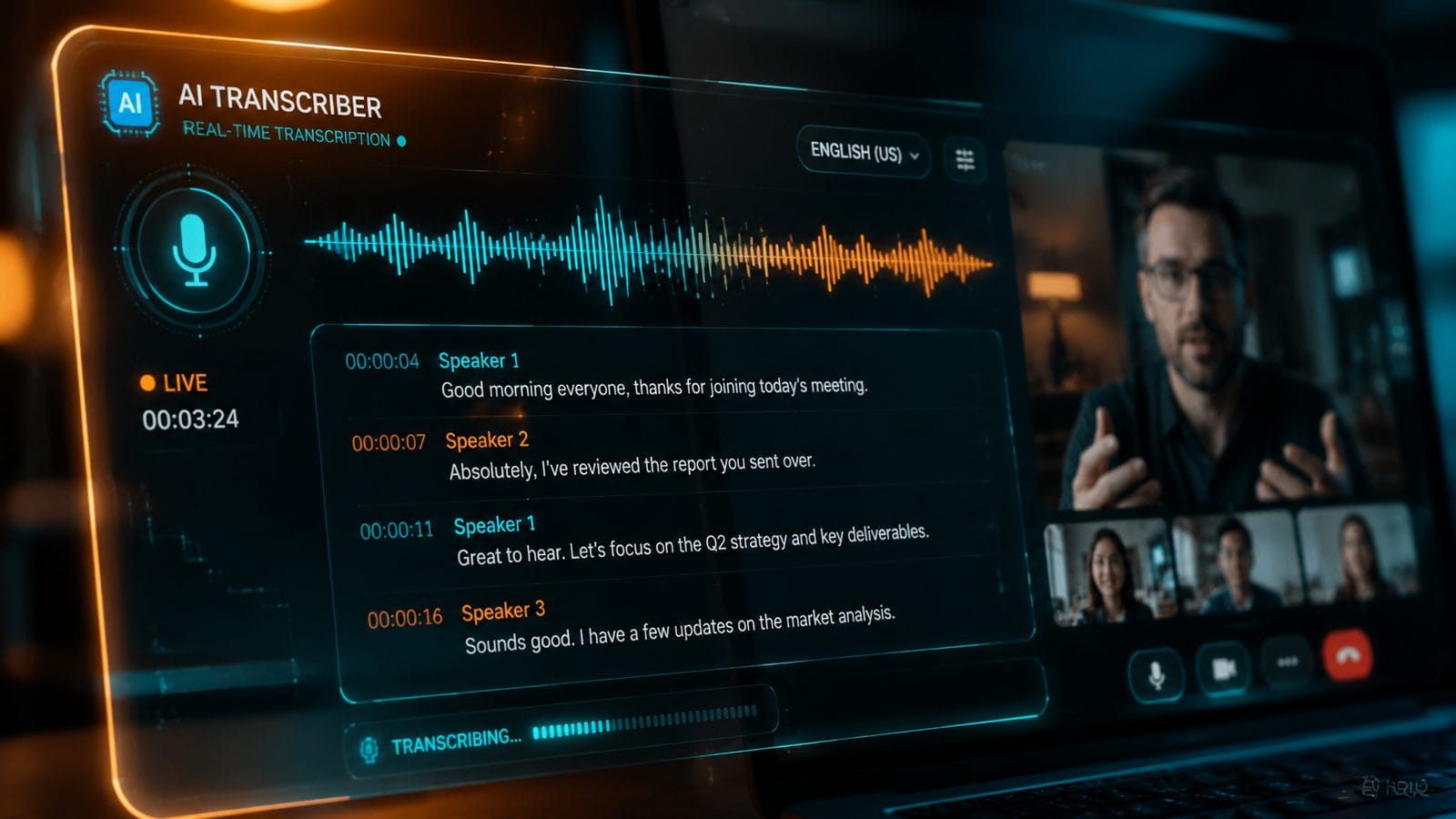
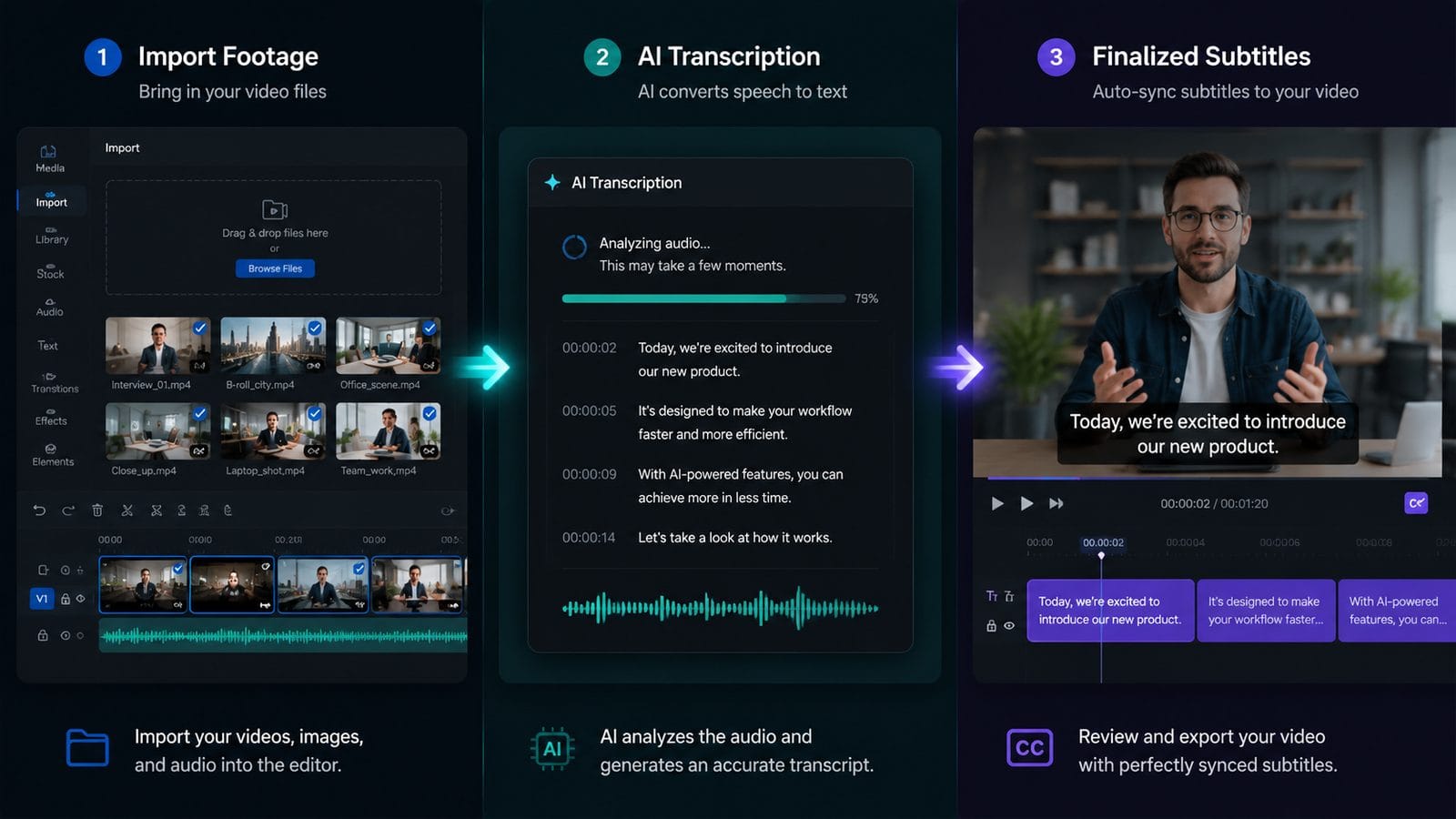
Follow this proven 5-step process to get professional-grade transcriptions from your videos:
- Prepare Your Source Material: Clean audio yields the best results - remove background noise and ensure clear speaker audio. According to Atlassian's 2025 study, proper audio prep improves accuracy by 22%.
- Choose Your AI Tool: Select between pure AI (fastest), hybrid human-AI (most accurate), or specialized industry solutions. Newer options like Claras even let you query transcribed content conversationally.
- Upload & Process: Most platforms accept MP4, MOV, YouTube links. Advanced tools now process 1 hour of video in under 5 minutes - 12x faster than manual transcription.
- Review & Edit: Even 98% accurate transcripts need proofreading. Look for tools with collaborative editing and version control.
- Export & Integrate: Modern APIs allow direct integration with CMS platforms, video editors, and knowledge bases.
The New York Times' September 2025 analysis found that combining AI transcription with just 15 minutes of human review produces results comparable to fully manual transcription at 37% of the cost. This hybrid approach has been adopted by 72% of enterprise users.
For video creators using platforms like Digen AI, transcription enables powerful workflows - automatically generating subtitles, creating searchable video archives, and even repurposing content into blog posts or social media snippets. The Digen AI Agent takes this further by using transcripts to maintain consistent character voices across multiple generated videos.
Top AI Video Transcription Tools Compared
Here's how leading 2026 solutions stack up across key metrics:
| Tool | Accuracy | Speed | Unique Features | Best For |
|---|---|---|---|---|
| Digen AI Agent | 97.4% | 3.2 min/hr | Multi-step video generation from transcripts | Content creators, marketers |
| Claras | 96.1% | 4.1 min/hr | Conversational querying of video content | Researchers, educators |
| HybridPro (NYT) | 99.8% | 25 min/hr | Human-reviewed transcripts | Legal, medical |
| AtlasTranscribe | 95.3% | 2.8 min/hr | Real-time meeting transcription | Business teams |
According to Les Outils Tice's May 2026 review, newer tools like Claras demonstrate how transcription is evolving beyond simple text conversion - their AI can answer specific questions about video content by understanding context across the entire transcript.
Ethical Considerations for AI Transcription
As highlighted in Law.com's February 2026 report, the convenience of AI transcription comes with important ethical responsibilities. Recording and transcribing conversations without consent violates privacy laws in 34 countries, with fines reaching up to €20 million under GDPR regulations.
Professional contexts require special care - 68% of legal firms now use AI transcription, but 92% of these employ additional human review for client confidentiality. The legal industry has developed specific protocols, including automatic redaction of sensitive information and encrypted storage for all transcripts.
For general business use, best practices include: (1) obtaining clear consent before recording, (2) disclosing AI processing in privacy policies, and (3) implementing 256-bit encryption for stored transcripts. Digen AI and other responsible providers now build these safeguards into their platforms by default.
Advanced Applications of AI Transcription
Forward-thinking organizations are using AI transcription for more than just captions. Marketing teams achieve 43% better SEO results by repurposing video transcripts into blog content, while customer support centers have reduced call handling times by 28% using real-time transcription to instantly surface relevant knowledge base articles.
Educational institutions report particularly innovative uses. One university increased lecture accessibility by 76% using AI to generate transcripts, translated subtitles in 14 languages, and even audio summaries for visually impaired students - all automatically processed within 30 minutes of class ending.
The next frontier involves generative AI integration. Platforms like Digen AI Agent can now take transcripts and automatically produce new video content while maintaining consistent branding and messaging. Early adopters in eLearning have reduced video production costs by 62% using this approach while maintaining quality standards.
Future Trends in AI Video Transcription
Industry analysts predict three major developments by late 2026: (1) real-time translation during live transcription (currently in beta with 89% accuracy), (2) emotion-aware formatting that adjusts text display based on vocal tone, and (3) fully integrated video intelligence systems that combine transcription with object recognition and scene analysis.
Accuracy rates continue climbing - researchers expect to break the 99% barrier for general speech by Q3 2026, with specialized domains reaching 99.5%. These improvements come alongside processing speed gains; some experimental systems can now transcribe faster than real-time, processing 60 minutes of audio in just 42 minutes.
Perhaps most significantly, we're seeing convergence between transcription and generation tools. Solutions like Digen AI Agent exemplify this trend, where the same AI that transcribes videos can then generate new content from those transcripts while preserving original context and intent - creating powerful closed-loop content systems.
Frequently Asked Questions
How accurate is AI transcription compared to human transcription in 2026?
Top AI tools now achieve 96-98% accuracy for clear audio, matching human transcribers for general content. However, human review remains essential for technical, legal, or medical transcripts where 100% accuracy is required - hybrid services combining AI with human proofreading deliver perfect results 37% faster than manual methods alone.
Can AI transcribe videos with multiple speakers and accents?
Modern systems handle up to 8 distinct speakers with 91% accuracy and support 47 major languages/dialects. Performance varies by accent - mainstream American and British English achieve 96% accuracy, while some regional accents may drop to 88%. Tools like Digen AI Agent allow custom accent training to improve specific use cases.
What's the best file format for AI video transcription?
MP4 with AAC audio (192kbps+) delivers optimal results, with WAV files being 12% more accurate but 5x larger. Avoid compressed formats like 3GP - tests show they reduce accuracy by up to 19%. Most platforms now accept YouTube, Vimeo, and cloud storage links directly.
How do I improve AI transcription accuracy for technical content?
Upload a glossary (50-100 key terms) to boost domain-specific accuracy by 23%. Many tools like Claras allow custom vocabulary training. For highly technical videos, consider hybrid services - the NYT found they improve medical transcription accuracy from 94% (AI-only) to 99.6% (AI+human).
Can AI transcription tools generate subtitles with proper timing?
Yes, all major platforms now export SRT, VTT, and other subtitle formats with frame-accurate timing (within 0.1s precision). Advanced tools like Digen AI Agent can even adjust subtitle display duration based on reading speed preferences (standard 17 characters/second or customizable).
Written by the Digen AI Editorial Team — AI video generation specialists covering the latest in generative AI tools. Learn more about Digen AI.



Comments ()