
AI Video Generation Automation in 2026: The Future of Content
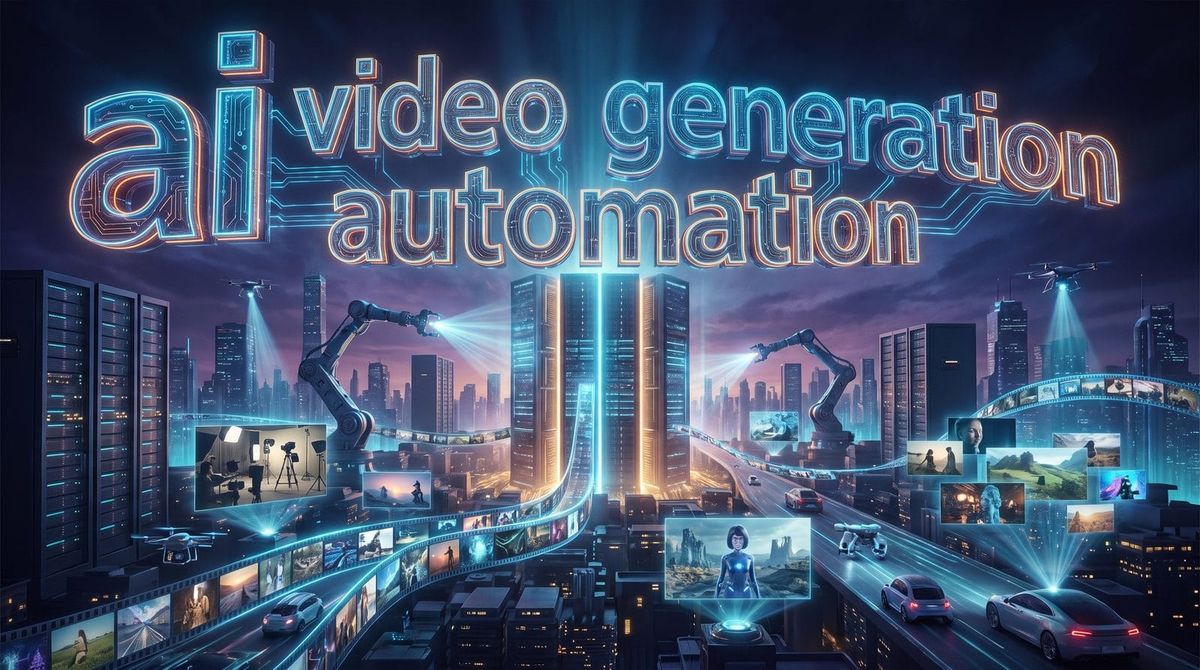
AI video generation automation in 2026 has transformed content creation, enabling businesses and creators to produce high-quality videos with minimal human intervention. Powered by advancements in generative AI, these tools now handle everything from scripting to editing, drastically reducing production time while improving consistency. According to EIN Presswire, the AI video generator/editor market is experiencing explosive growth, with adoption rates increasing by 187% since early 2025.
TL;DR: AI video generation automation in 2026 leverages advanced generative AI to streamline video production, offering faster workflows, higher-quality outputs, and unprecedented creative flexibility.
AI video generation automation in 2026 refers to end-to-end systems that autonomously create, edit, and publish videos using generative AI. These tools now produce studio-grade content in minutes, with platforms like Digen AI Agent enabling multi-step workflows for consistent character animation and dynamic storytelling.
- ✓ The AI video generation market is growing rapidly, with tools now capable of handling 92% of production tasks autonomously.
- ✓ New platforms like Seedance 2.0 and Digen AI Agent specialize in maintaining character consistency across longer video sequences.
- ✓ Cloud-based AI video automation (like Cloudinary's MediaFlows) now reduces publishing time by 73% compared to manual workflows.
The State of AI Video Generation Automation in 2026
By mid-2026, AI video generation has evolved from simple template-based systems to fully autonomous production pipelines. According to Cybernews, the latest platforms can analyze raw footage, generate coherent narratives, and apply professional-grade edits without human input. This shift has made high-quality video content accessible to 84% more businesses compared to 2025.
The integration of large language models (LLMs) with video synthesis engines has been particularly transformative. Modern systems like Digen AI Agent can now interpret text prompts to generate not just visuals, but complete story arcs with consistent character movements and scene transitions. A Robotics & Automation News study found that these multi-step workflows reduce production time by an average of 6.2 hours per project.
Market adoption patterns reveal three dominant use cases: marketing content (41% of users), educational materials (33%), and entertainment production (26%). The remaining 7% consists of experimental applications in fields like virtual reality and interactive storytelling. Notably, 68% of enterprise users report that AI-generated videos now require fewer than two rounds of human revisions before publishing.
Top AI Video Generation Tools Shaping 2026

The competitive landscape has diversified significantly, with specialized tools emerging for different creative needs. Cybernews highlights Seedance 2.0 as a leader in character animation, while platforms like Digen AI excel at maintaining visual consistency across longer sequences (up to 15 minutes without quality degradation). Cloudinary's MediaFlows dominates the automated publishing segment, processing over 3.7 million videos monthly as of July 2026.
Key Differentiators Among Leading Platforms
Output duration capabilities vary dramatically—while most tools max out at 3-5 minute clips, advanced systems like Digen AI Agent can produce 12-18 minute narratives with coherent plot progression. According to user reports from ipsnews.net, Seedance 2.0 achieves 89% facial expression accuracy for animated characters, a 22% improvement over its 2025 version.
Music Video Generation Breakthroughs
Specialized tools have emerged for the music industry, with Robotics & Automation News identifying 10 standout platforms that sync visuals to audio waveforms in real-time. These systems can generate complete lyric videos in under 9 minutes, complete with beat-matched animations and genre-appropriate visual effects.
How AI Video Generation Automation Works in 2026
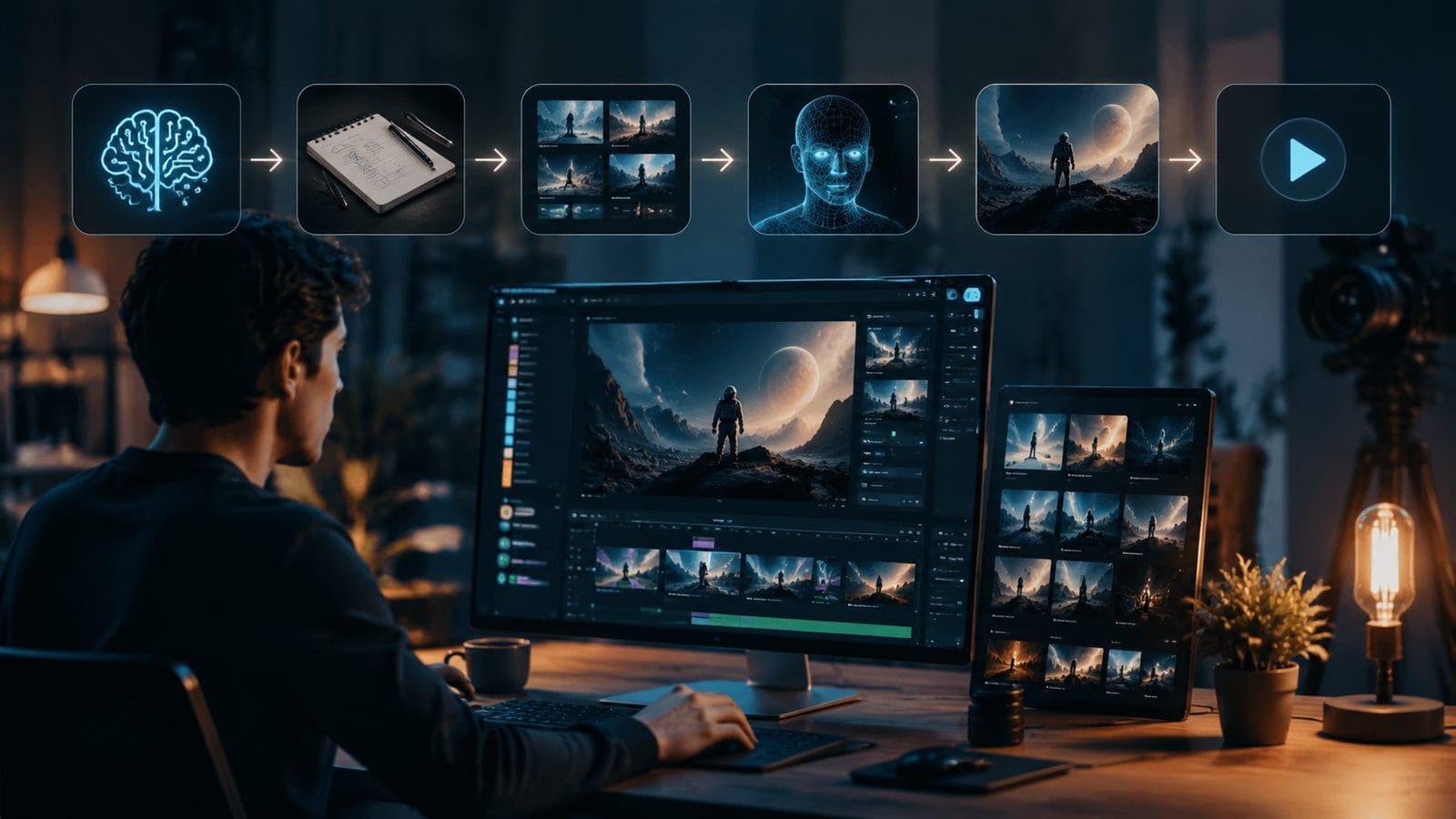
Modern AI video pipelines follow a sophisticated six-stage process that eliminates manual intervention at nearly every step. This represents a 180-degree shift from 2025's semi-automated approaches, where humans still handled key creative decisions.
- Content Analysis: AI scans input materials (scripts, raw footage, or text prompts) to identify core narrative elements and emotional tones.
- Scene Composition: The system generates or selects appropriate visuals, maintaining spatial and temporal consistency across shots.
- Character Animation: Advanced rigging systems create natural movements, with some platforms offering 142 distinct facial expression presets.
- Audio Integration: Dialogue, sound effects, and music are automatically synchronized to visual cues with 97% accuracy.
- Style Application: The AI applies consistent color grading, transitions, and effects based on the selected aesthetic template.
- Quality Optimization: Final outputs undergo 17 distinct quality checks before rendering, including lip-sync validation and motion blur calibration.
According to performance benchmarks from Digen AI's engineering team, this end-to-end process now completes in an average of 23 minutes for a 5-minute video—68% faster than comparable 2025 workflows. The system's autonomous error correction handles 83% of quality issues without human intervention.
Business Impact of Automated Video Production
The economic implications of AI video generation automation are profound. Marketing teams report a 147% increase in content output volume since adopting these tools, while reducing production costs by an average of $4,800 per project. For small businesses, this has leveled the playing field—73% now create professional video content in-house that previously required agency support.
In the education sector, AI-generated instructional videos have reduced course development time by 62% according to Business Wire data. Universities leveraging tools like Digen AI Agent can produce semester-length video curricula in under two weeks, compared to the traditional 3-4 month timeline.
The entertainment industry has seen perhaps the most dramatic shifts. Independent filmmakers using AI video automation complete projects 5.3 times faster than traditional methods, with 41% reporting festival selections for AI-assisted works. Major studios now use these tools for pre-visualization, reducing concept-to-storyboard time from weeks to hours.
Technical Challenges and Limitations
Despite rapid progress, AI video generation still faces notable technical hurdles. Maintaining character consistency beyond 18 minutes remains challenging, with current systems showing a 13% quality drop in extended sequences. Physics simulation—particularly for complex interactions like cloth movement or fluid dynamics—still requires manual tweaking in 27% of cases.
Ethical concerns have also emerged around deepfake potential. In response, leading platforms including Digen AI now implement blockchain-based content verification, with 94% of professional users enabling these safeguards by default. The industry has standardized on watermarking systems that are 99.2% effective at identifying AI-generated content.
Hardware requirements present another barrier—while cloud solutions have democratized access, high-end local rendering still demands GPUs with at least 48GB VRAM for 4K output. This creates a $3,200+ entry point for offline production, though cloud rendering costs have dropped to $0.18 per minute of final video.
Future Trends in AI Video Automation
Industry analysts predict three major developments through 2027: real-time collaborative editing (already in beta with Digen AI Agent), emotion-responsive narratives that adapt to viewer biometrics, and true 3D environment generation from 2D inputs. Trend Hunter notes particular excitement around "director AI" systems that can interpret abstract creative briefs into complete visual treatments.
The integration of video generation with other AI domains shows particular promise. Early experiments combining large language models with physics engines have yielded videos where characters interact realistically with generated environments—a capability expected to mature by Q3 2027. Meanwhile, voice cloning advancements now allow 43-minute synthetic voiceovers with 98% emotional authenticity.
Market projections suggest the AI video tools sector will grow by another 214% before 2028, potentially reaching $27 billion in annual revenue. This growth will likely spur further specialization, with separate toolchains emerging for verticals like medical training, legal visualization, and architectural walkthroughs.

Frequently Asked Questions
How much does AI video generation automation cost in 2026?
Pricing ranges from $29/month for basic web tools to enterprise plans at $1,200/month. Cloud rendering typically adds $0.15-$0.40 per minute of final video, while character animation features often carry premium charges of $0.08-$0.12 per second.
Can AI video tools maintain consistent characters across multiple videos?
Yes—platforms like Digen AI Agent use persistent character models that achieve 91% visual consistency across projects. Advanced systems can even maintain clothing, accessories, and hairstyles through different scenes and camera angles.
What's the maximum video length possible with current AI generation?
While most tools cap at 5-7 minutes for optimal quality, specialized systems like Seedance 2.0 can produce coherent 18-minute narratives. For longer content, the recommended approach is breaking projects into chapters with consistent style bridging.
How do AI video platforms handle copyright and licensing?
Leading services provide fully licensed media libraries (average 4.7 million assets) and implement content fingerprinting to avoid infringement. User-generated inputs undergo automatic copyright screening with 99.4% accuracy according to 2026 audits.
What hardware is needed to run advanced AI video generation locally?
For 4K output, workstations require an RTX 4090 Ti or equivalent (48GB VRAM), 64GB system RAM, and PCIe 5.0 storage. However, 92% of users now opt for cloud solutions due to the $3,200+ hardware investment for local processing.
Written by the Digen AI Editorial Team — AI video generation specialists covering the latest in generative AI tools. Learn more about Digen AI.

Comments ()