
AI Video Editing vs Traditional Editing: 2026 Comparison
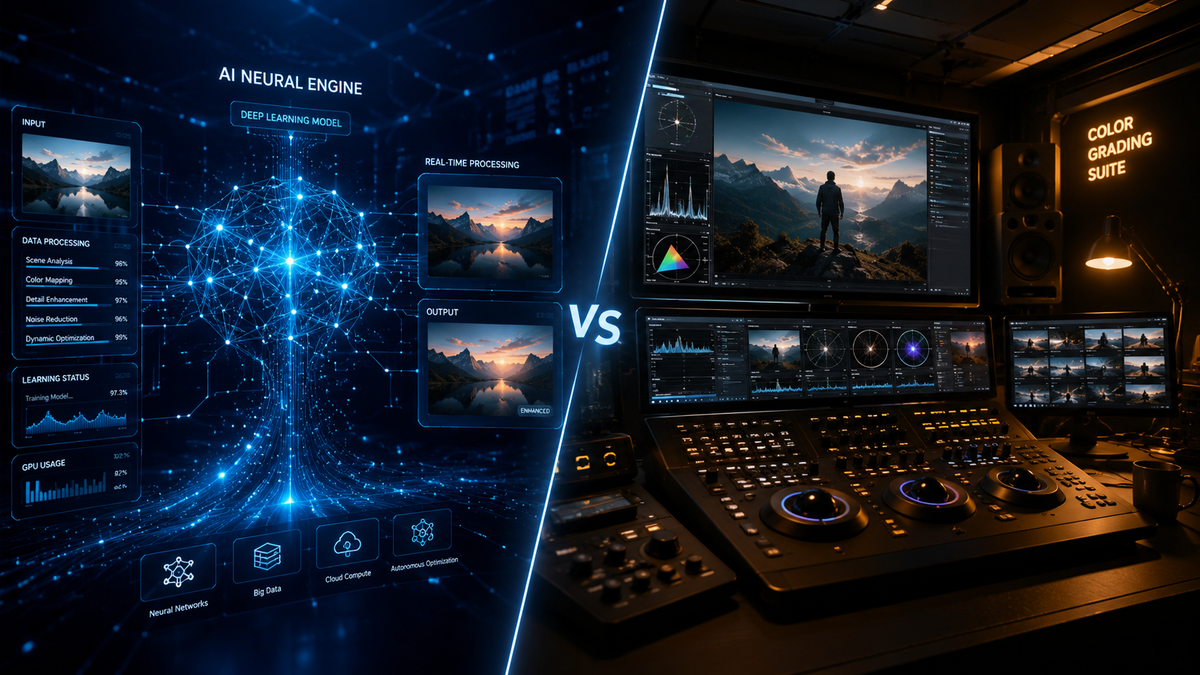
When comparing ai video editing vs traditional editing in 2026, the primary difference lies in the balance between automated efficiency and manual creative control. AI video editing utilizes generative algorithms to automate tasks like cutting, color grading, and asset generation, whereas traditional editing relies on human precision and frame-by-frame decision-making within a non-linear editor (NLE). While traditional methods offer unmatched nuance for high-end cinema, AI has become the standard for rapid content scaling and business communication.
AI video editing is a software-driven approach that uses machine learning to automate the post-production process, while traditional editing is a manual craft performed by human editors. In 2026, the choice depends on volume and intent: AI excels at speed and high-volume social content, whereas traditional editing remains essential for bespoke, high-stakes storytelling.
- ✓ AI tools like Buzzy and AI Video Cut have reduced editing time by up to 80% for standard workflows.
- ✓ Traditional editing still provides the granular control required for complex narrative pacing and emotional resonance.
- ✓ Hybrid workflows, such as using Claude to automate metadata and rough cuts, are becoming the industry gold standard.
- ✓ According to DesignRush, 91% of businesses now use video, making AI tools a necessity for meeting market demand.
The landscape of media creation has shifted dramatically this year. With the recent $20 million funding of platforms like Buzzy, led by Redpoint Ventures, the industry has signaled a permanent move toward intelligent automation. Video is no longer just a marketing tool; it is the primary language of global business. As we navigate 2026, understanding the technical and creative trade-offs between these two methodologies is crucial for any creator or enterprise.
The Evolution of AI Video Editing vs Traditional Editing
In the early 2020s, AI in video was limited to basic noise reduction or simple "smart" crops. However, as of May 2026, tools like AI Video Cut have revolutionized the entry point for creators. These platforms allow users to generate professional-grade sequences directly from images or text prompts, effectively bypassing the steep learning curve associated with traditional software. This democratization has allowed small businesses to compete with larger agencies in terms of output volume.
Traditional editing, however, has not remained stagnant. It has evolved into a "human-in-the-loop" system. Professional editors now use AI as a sophisticated assistant rather than a replacement. For example, Geeky Gadgets recently highlighted how Claude is being used to automate complex video editing workflows, such as organizing thousands of hours of raw footage or generating script-based rough cuts. This synergy ensures that the editor's time is spent on the "soul" of the story rather than the repetitive labor of file management.
How to Transition from Traditional to AI-Enhanced Workflows
- Audit Your Current Pipeline: Identify repetitive tasks such as subtitling, color matching, or basic assembly cuts that consume the most time.
- Select a Generative Platform: Integrate tools like Buzzy or AI Video Cut for rapid social media iterations and localized content.
- Implement LLM Automation: Use advanced models like Claude to handle metadata tagging and narrative outlining to speed up the pre-edit phase.
- Maintain a Human Quality Check: Always perform a final pass to ensure the AI-generated transitions and pacing align with your brand's unique voice.
Technical Comparison: Speed, Quality, and Control
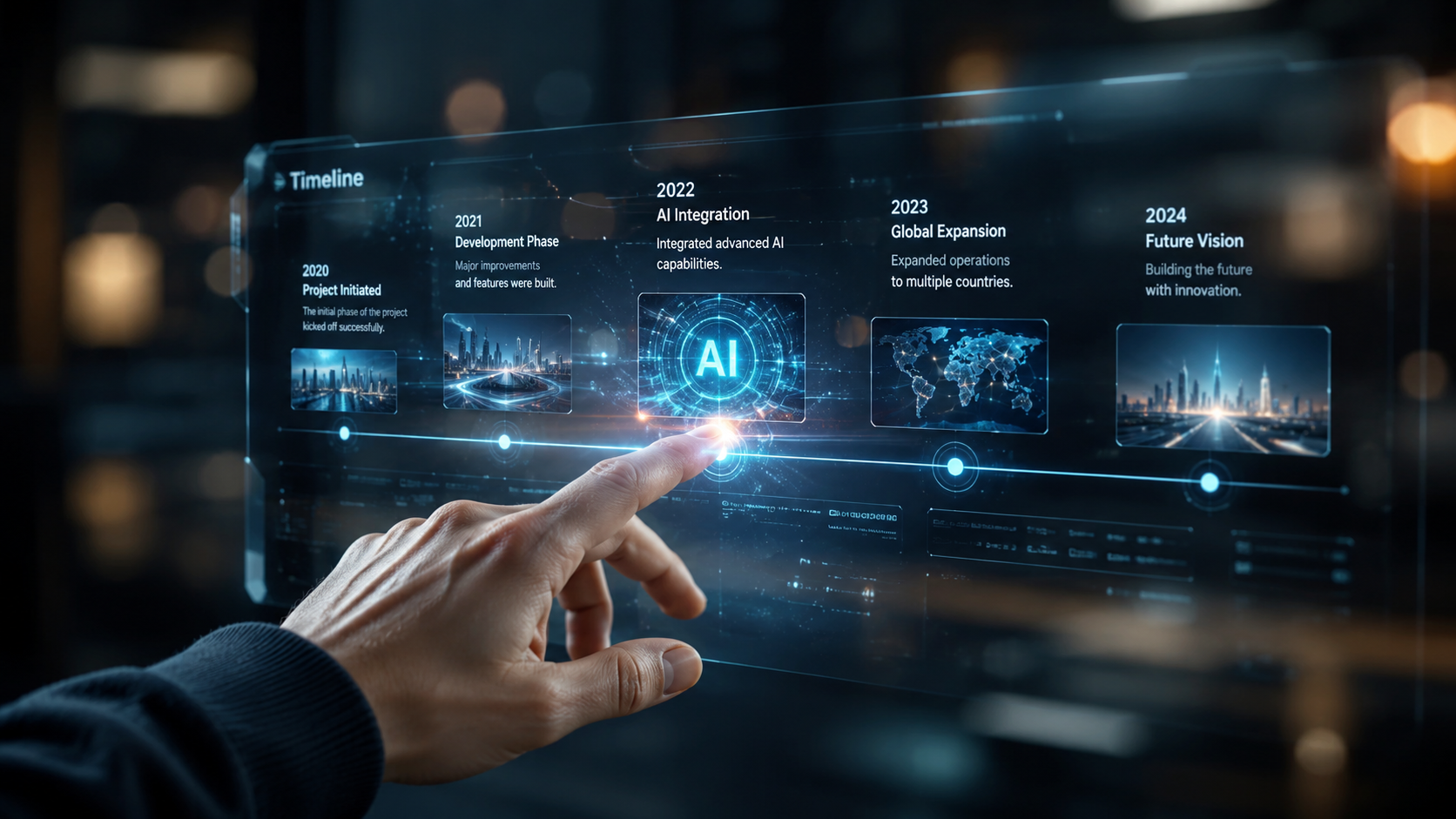
The core tension in the ai video editing vs traditional editing debate centers on the trade-off between speed and granular control. AI platforms are built for the "now" economy. According to Trend Hunter, the latest AI video tools in 2026 focus on real-time rendering and instant multi-format exports. This allows a single piece of content to be optimized for VR headsets, vertical mobile screens, and cinematic displays simultaneously without manual resizing.
Traditional editing remains the sanctuary of "pixel-perfect" precision. When a director needs a specific rhythmic cut to match an orchestral swell, or when a colorist needs to evoke a specific era through custom LUTs (Look-Up Tables), manual intervention is irreplaceable. Traditional NLEs provide a depth of layers and effects processing that AI, while improving, still struggles to replicate with 100% consistency across long-form projects.
| Feature | AI Video Editing (2026) | Traditional Editing |
|---|---|---|
| Turnaround Time | Minutes to Hours | Days to Weeks |
| Learning Curve | Low (Prompt-based) | High (Technical Mastery) |
| Creative Control | Algorithmic / Suggested | Total / Manual |
| Scalability | Infinite (Automated batches) | Limited by Man-hours |
| Best For | Social Media, Ads, Internal Comms | Feature Films, Documentaries |
The Rise of Generative Video from Images
One of the most significant breakthroughs in 2026 is the ability to create high-fidelity video from static images. As reported by Programming Insider, AI is fundamentally changing how we bridge the gap between photography and cinematography. Traditional editing would require complex motion graphics and parallax layering to animate a still photo. AI now does this by predicting physical movement within the frame, creating a seamless video clip that looks as though it was captured on a high-end camera.
This capability has massive implications for historical documentaries and archival work. Traditional editors can now take a single 20th-century photograph and, using AI, generate a 10-second environmental shot that maintains the lighting and texture of the original. This isn't just a time-saver; it's a new form of creative expression that was technically impossible or prohibitively expensive just a few years ago.
The Role of Funding and Innovation in 2026
The financial landscape is also dictating the pace of this shift. The $20 million funding of Buzzy in May 2026 indicates that venture capital is betting heavily on "no-code" video creation. These platforms are not just editors; they are creative engines. When we look at ai video editing vs traditional editing, we must acknowledge that the former is backed by massive R&D budgets aimed at making video creation as easy as typing an email.
Productivity and Business Adoption
According to DesignRush, 91% of businesses are now utilizing video as their primary communication medium. For a modern marketing department, the "traditional only" approach is no longer sustainable. If a brand needs to produce 50 localized variations of a product launch video, traditional editing would require a massive team and months of work. AI video editing allows this to be done in an afternoon, with the AI automatically swapping languages, background music, and even localized cultural references.
However, this high-volume output introduces the risk of "content fatigue." Because AI-generated videos can sometimes feel formulaic, the role of the traditional editor is shifting toward that of a Creative Director. The human professional ensures that among the thousands of AI-generated clips, the brand's core message remains authentic. The most successful organizations in 2026 are those that don't choose one over the other, but rather integrate AI into their traditional creative departments.
Automation of Complex Workflows
The integration of Large Language Models (LLMs) into the editing suite is perhaps the most underrated development of the year. As noted by Geeky Gadgets, Claude is now being used to automate workflows that previously took weeks. This includes "intelligent culling," where the AI watches 100 hours of b-roll and selects only the shots where the subject is smiling or the lighting is optimal. This allows traditional editors to skip the "boring" parts of the job and jump straight into the creative assembly.
Future Outlook: Will AI Replace Traditional Editors?
The consensus in 2026 is that AI will not replace editors, but editors who use AI will replace those who do not. The ai video editing vs traditional editing debate is moving toward a synthesis. We are seeing the emergence of "Generative Editors"—professionals who are skilled in both the aesthetics of film and the technicalities of prompt engineering and algorithmic oversight.
The human element remains the gatekeeper of taste. While an AI can suggest a cut based on a beat, it cannot understand the cultural subtext of a scene or the "uncomfortable silence" that makes a dramatic moment land. As we move further into 2026, the value of a human editor will increasingly be defined by their ability to provide the emotional nuance that data-driven algorithms cannot yet perceive.
Is AI video editing better than traditional editing in 2026?
It depends on the goal. AI is superior for speed, cost-efficiency, and high-volume social media content, while traditional editing is better for high-end cinematic projects requiring deep emotional nuance and specific creative control.
Can AI create videos from just a single image?
Yes, as of 2026, tools highlighted by Programming Insider allow users to generate high-quality video clips from static images by using generative AI to predict and animate movement, lighting, and depth.
How much does AI video editing software cost in 2026?
While prices vary, the influx of venture capital into companies like Buzzy has made these tools highly accessible, often starting at affordable monthly subscriptions for small businesses, with enterprise tiers for large-scale automation.
Does AI video editing require powerful hardware?
Most 2026 AI editing platforms are cloud-based, meaning the heavy processing is done on remote servers. This allows creators to edit high-resolution video on standard laptops or even mobile devices, unlike traditional editing which often requires high-end GPUs.
What is the easiest AI video editing tool for beginners?
AI Video Cut is currently recognized as one of the easiest ways to create videos in 2026, offering a simplified interface that automates the most technical aspects of the editing process for new users.



Comments ()