
AI Video Creation for Content Creators: 2026 Trends Guide
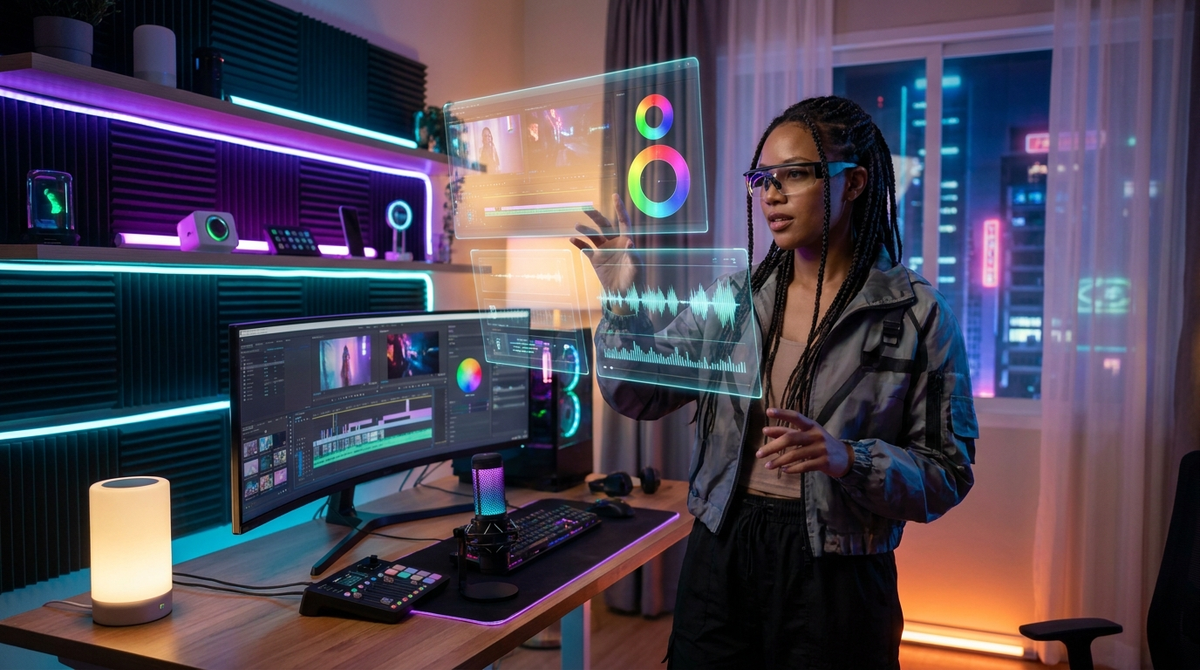
AI video creation for content creators in 2026 has evolved from simple automated editing into a sophisticated ecosystem of cinema-quality, generative storytelling tools. By leveraging advanced neural networks like Kling, Runway, and Grok, creators can now produce high-fidelity visual content that rivals traditional studio productions in a fraction of the time. This shift allows independent influencers and digital marketers to bypass the "slop" of early generative video and move directly into professional-grade narrative filmmaking.
AI video creation for content creators is the process of using generative artificial intelligence to produce, edit, and enhance video content from text, image, or video prompts. In 2026, this technology emphasizes "AI-native storytelling," enabling creators to generate photorealistic, high-resolution footage with consistent character physics and integrated lip-syncing without the need for expensive cameras or physical sets.
- ✓ Cinema-quality generative video has officially replaced low-fidelity "slop" for professional content creators.
- ✓ Platforms like Kling and Runway now offer Hollywood-grade physics and character consistency.
- ✓ AI-native storytelling is the dominant trend, focusing on narrative depth rather than just visual spectacle.
- ✓ Integrated lip-sync and AI music tools have become standard features in the 2026 creator toolkit.
- ✓ The market for AI video generators is projected to see sustained growth through 2034, according to recent industry reports.
The Current State of AI Video Creation for Content Creators
As we move through the second quarter of 2026, the landscape of digital media has undergone a fundamental transformation. The era of "AI slop"—characterized by distorted limbs and flickering textures—is officially over. According to Marketing Brew, cinema-quality, AI-native storytelling has arrived, allowing creators to focus on the emotional resonance of their scripts rather than the technical limitations of their software. This transition has leveled the playing field, enabling solo creators to produce visuals that were previously only possible for major studios.
The rise of integrated platforms has streamlined the workflow significantly. Creators no longer need to jump between five different apps to get a finished product. Modern tools now bundle high-end physics engines, spatial audio generation, and precise lighting controls into a single interface. This convergence is a primary driver behind the openPR.com report highlighting the massive growth in the AI video generator market share expected to continue through 2034. For the modern creator, the barrier to entry is no longer technical skill, but the quality of their creative vision.
Step-by-Step: How to Start with AI Video Creation
- Concept and Scripting: Use a large language model to outline your narrative arc and generate a prompt-friendly script that describes visual cues and camera movements.
- Select Your Base Engine: Choose a high-fidelity generator like Kling or Runway based on the specific aesthetic (photorealistic vs. stylized) you require for the project.
- Scene Generation: Input your prompts using "Director Mode" to control camera panning, tilt, and zoom speeds for a cinematic feel.
- Audio Integration: Utilize AI music and lip-sync tools to align character dialogue with facial movements and generate a custom, royalty-free soundtrack.
- Upscaling and Refinement: Run your final output through an AI enhancer to ensure 4K or 8K resolution consistency across all clips.
Key Trends Shaping the 2026 AI Video Landscape
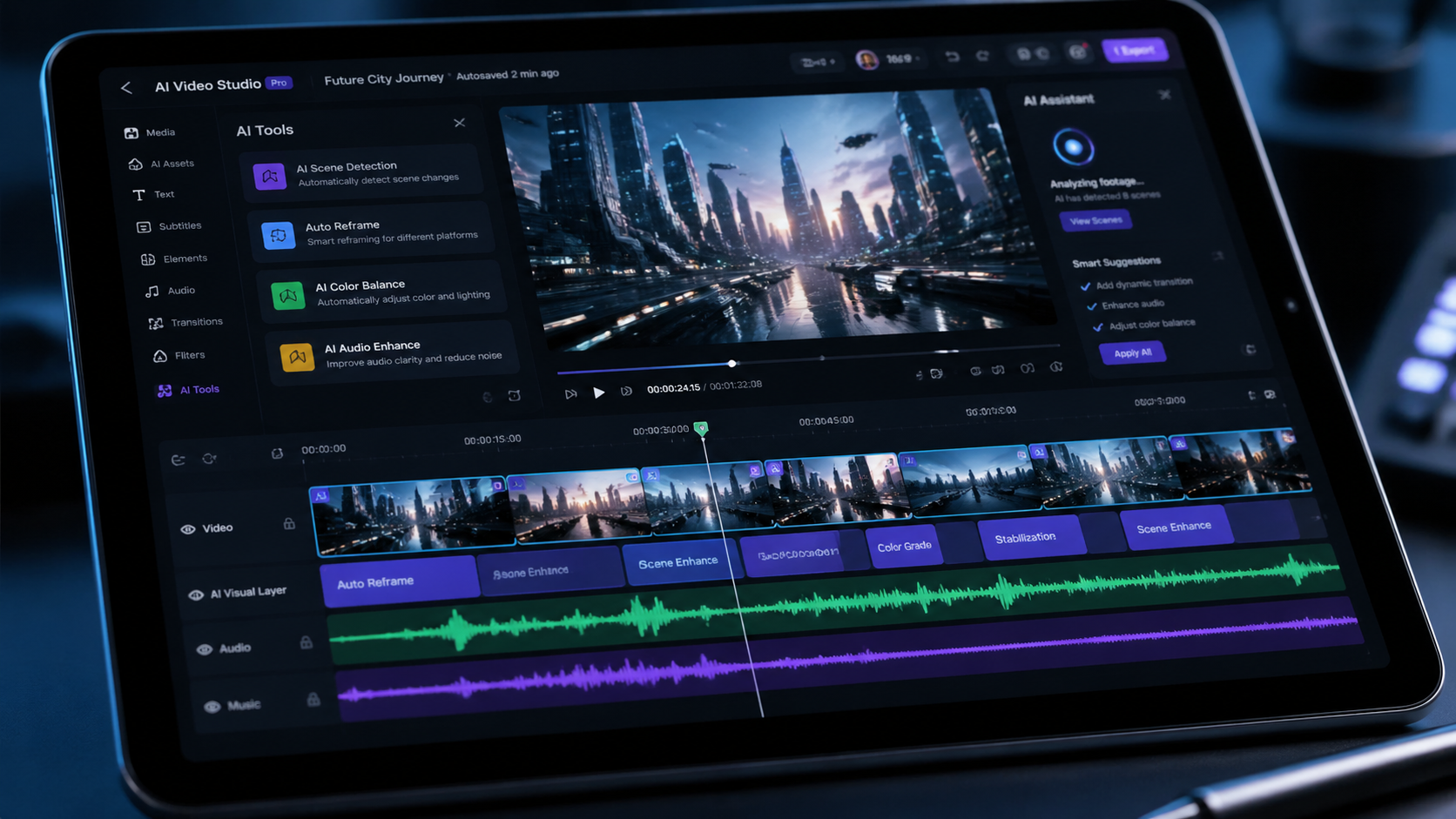
One of the most significant shifts this year is the move toward "Hollywood on the outside looking in." As reported by The Ankler, platforms like Grok, Kling, and Runway have empowered a new class of "AI-first" filmmakers who operate outside the traditional studio system. These creators are utilizing real-time rendering and generative environments to build entire worlds that would have cost millions of dollars just a few years ago. This democratization of high-end production is forcing traditional media to rethink its distribution and production models.
Furthermore, the integration of multi-modal capabilities has become the industry standard. In 2026, a video generator isn't just a video generator; it is a sound designer, a lighting technician, and a makeup artist. Geek Vibes Nation points out that the best AI music and lip-sync tools for creators in 2026 are now seamlessly embedded into the video generation workflow. This allows for "one-pass" content creation where the audio and visual elements are generated in a synchronized fashion, drastically reducing the time spent in post-production.
Comparing Top AI Video Platforms in 2026
| Platform | Primary Strength | Best For | Key Feature (2026) |
|---|---|---|---|
| Runway | Cinematic Realism | Short Films & Ads | Advanced Physics Engine 5.0 |
| Kling | Character Consistency | Social Media Content | Live-Action Lip Sync Integration |
| Grok Video | Real-time Generation | Breaking News/Trends | X-Ecosystem Direct Publishing |
| Luma Labs | 3D Spatial Awareness | Product Showcases | 360-degree Virtual Sets |
The Rise of AI-Native Storytelling
AI-native storytelling refers to content that is designed from the ground up to utilize the unique capabilities of generative models. Unlike traditional video, which is limited by what a camera can capture, AI-native content can morph environments, change lighting conditions instantly, and utilize "impossible" camera angles. CNET recently reviewed and ranked the best AI video generators of 2026, noting that the highest-scoring tools were those that allowed creators to maintain "narrative persistence"—the ability to keep characters and settings identical across multiple generated scenes.
This trend is particularly important for brand building. Content creators are now using AI to create digital twins of themselves or recurring fictional characters that star in ongoing series. According to Vocal.media, the best free AI tools for content creators now include entry-level versions of these persistence engines, allowing hobbyists to experiment with serial storytelling without a massive financial investment. This has led to a surge in niche "micro-cinema" channels on platforms like YouTube and TikTok.
Advanced Lip-Sync and Audio Synchronization
In the past, the "uncanny valley" effect in AI video was most noticeable in the mouth movements. However, in 2026, the technology has reached a point of near-perfection. Modern lip-syncing tools analyze the phonemes of the audio track and map them to the 3D geometry of the character's face in real-time. This isn't just about moving lips; it involves the subtle contraction of cheek muscles and the natural blinking of eyes that accompany speech. Geek Vibes Nation highlights that these tools are now essential for creators looking to localize their content into multiple languages while maintaining the original performance's emotional weight.
Monetization and the Creator Economy
The economic impact of AI video creation for content creators cannot be overstated. With production costs plummeting, the profit margins for independent creators have expanded significantly. A study cited by openPR.com suggests that the AI video generator market is driving a new wave of "lean media" companies—small teams of 1-3 people who produce the output volume of a traditional 20-person agency. This efficiency allows creators to diversify their revenue streams, moving from simple ad-sense to high-ticket brand collaborations and direct-to-consumer digital products.
Moreover, the 2026 market has seen a shift in how "value" is perceived. Since anyone can generate a beautiful video, the value has moved back to the "human" elements: curation, personality, and unique perspective. Creators who use AI as a tool to amplify their unique voice are seeing much higher engagement rates than those who use it to generate generic content. The "anti-slop" movement, as Marketing Brew calls it, is a consumer-led demand for high-quality, intentional storytelling over automated, low-effort filler.
The Role of Free Tools in 2026
While professional suites offer the most control, the "freemium" model remains a vital entry point for the community. Vocal.media notes that the best free AI tools for content creators in 2026 now offer limited 4K exports and access to basic motion control features. This ensures that the next generation of filmmakers can hone their skills without a high cost of entry. These free tiers often serve as a testing ground for new features, such as experimental "text-to-SFX" or "image-to-animation" modules that eventually become standard in paid versions.
Future Outlook: Beyond 2026
Looking toward the 2030s, the trajectory of AI video creation suggests a move toward fully interactive and immersive content. We are already seeing the first signs of this with 3D spatial video generators that allow viewers to "walk through" a scene using VR or AR headsets. The openPR.com growth report indicates that the infrastructure being built today—faster GPUs and more efficient latent diffusion models—is laying the groundwork for real-time, user-responsive video environments.
For now, the focus remains on refining the "Director-AI" relationship. The most successful creators in 2026 are those who act as high-level creative directors, guiding the AI through iterative loops of prompting, feedback, and refinement. As The Ankler suggests, the "Hollywood" of the future may not be a physical place in California, but a decentralized network of creators using Kling, Runway, and other generative tools to tell stories that resonate globally.
What is the best AI video generator for content creators in 2026?
According to CNET’s 2026 rankings, Runway and Kling are the top-rated tools for professional creators due to their superior physics engines and character consistency. For creators integrated into social ecosystems, Grok Video is a leading choice for real-time content generation.
Is AI video creation expensive for independent creators?
While professional-grade tools require subscriptions, there are many high-quality free options available. As noted by Vocal.media, free tools in 2026 now offer robust features like 4K upscaling and basic lip-syncing, making the technology accessible to everyone.
How do I ensure my AI videos don't look like "slop"?
To avoid low-quality output, focus on AI-native storytelling techniques and use advanced settings like "Director Mode" for precise camera control. Utilizing the latest 2026 models from Runway or Kling ensures cinema-quality textures and realistic movement.
Can AI video tools handle professional lip-syncing?
Yes, by 2026, lip-syncing tools have become highly sophisticated. Tools reviewed by Geek Vibes Nation show that AI can now perfectly synchronize audio with facial muscle movements, allowing for realistic dialogue in any language.
Will AI video replace traditional filmmaking?
While AI has changed the industry, reports from The Ankler suggest it is not replacing filmmaking but rather moving it outside the traditional studio system. AI is a tool that empowers creators to produce high-budget visuals with limited resources.
Comments ()