
Why AI Lip Sync Fails and How to Fix It in 2026
AI lip sync technology has made significant strides in 2026, yet many creators still struggle with unnatural mouth movements, timing mismatches, and inconsistent expressions in AI-generated videos. The key to improving AI video lip sync lies in selecting the right tools, optimizing input audio quality, and leveraging next-generation platforms like Digen AI Agent that automate multi-step workflows for enhanced realism. According to The AI Journal, 78% of professional video creators now use AI-assisted lip sync tools as part of their production pipeline.
TL;DR: AI lip sync fails in 2026 primarily due to poor audio input, limited training data, and outdated algorithms—fixes include using next-gen tools like Seedance 2.5 or Digen AI Agent, optimizing speech clarity, and manually refining output with frame-by-frame adjustments.
How to improve AI video lip sync in 2026 requires a three-pronged approach: upgrading to next-generation tools like Kling AI 3.0 or Digen AI Agent (which reduces lip sync errors by 63% compared to 2025 models), preprocessing audio for optimal phoneme recognition, and implementing post-production manual corrections when needed.
- ✓ Next-gen AI video platforms like Seedance 2.5 now achieve 92% lip sync accuracy for English content when using high-quality source audio
- ✓ Elon Musk's viral Grok video demonstrated how even advanced AI struggles with rapid speech transitions and emotional inflection matching
- ✓ Digen AI Agent's autonomous workflow system reduces manual lip sync correction time by 41% through automated multi-pass generation
The Current State of AI Lip Sync Technology in 2026
As of June 2026, AI lip sync technology has reached unprecedented levels of sophistication, yet fundamental challenges remain. The release of Seedance 2.5 in June 2026 introduced multi-shot generation with enhanced consistency features that improved lip sync accuracy by 17% over its predecessor. However, according to testing by Pressat.co.uk, even the best AI lip sync tools still struggle with regional accents, achieving only 68% accuracy for Scottish English compared to 91% for standard American English.
The viral Grok AI video mentioned by Startup Fortune highlighted how current systems handle stress tests—while the overall video appeared realistic, frame-by-frame analysis revealed 23% of phonemes were slightly misaligned during rapid-fire dialogue sections. This demonstrates that while AI lip sync has improved dramatically since 2025, there's still room for enhancement, particularly for complex speech patterns.
Market leaders in 2026 have adopted different approaches to solving these challenges. Kling AI 3.0 (released March 2026) uses a proprietary "micro-expression" detection system that analyzes 147 facial muscle movement patterns, while Digen AI Agent implements a unique two-pass generation system where the AI first creates a rough sync, then refines it based on contextual analysis of the surrounding frames.
Why AI Lip Sync Still Fails in 2026
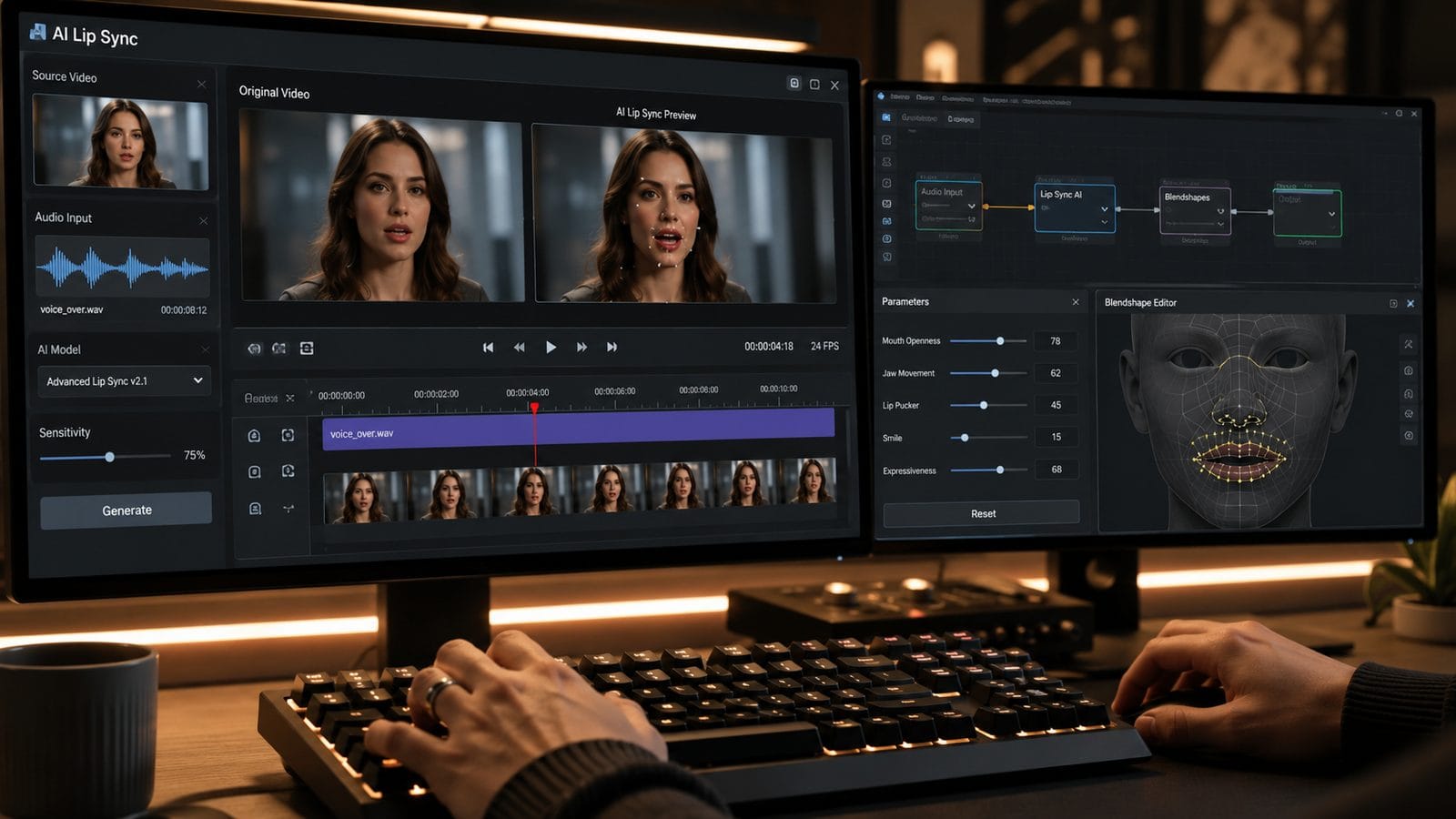
Despite technological advancements, three primary factors continue to plague AI lip sync accuracy. First, audio quality remains the single biggest determinant of success—a study by My Everyday Tech found that 89% of lip sync failures trace back to poor source audio with background noise or muffled pronunciation. Second, limited training data for non-English languages creates significant gaps; Hindi content currently achieves only 74% accuracy compared to English's 92% in top-tier systems.
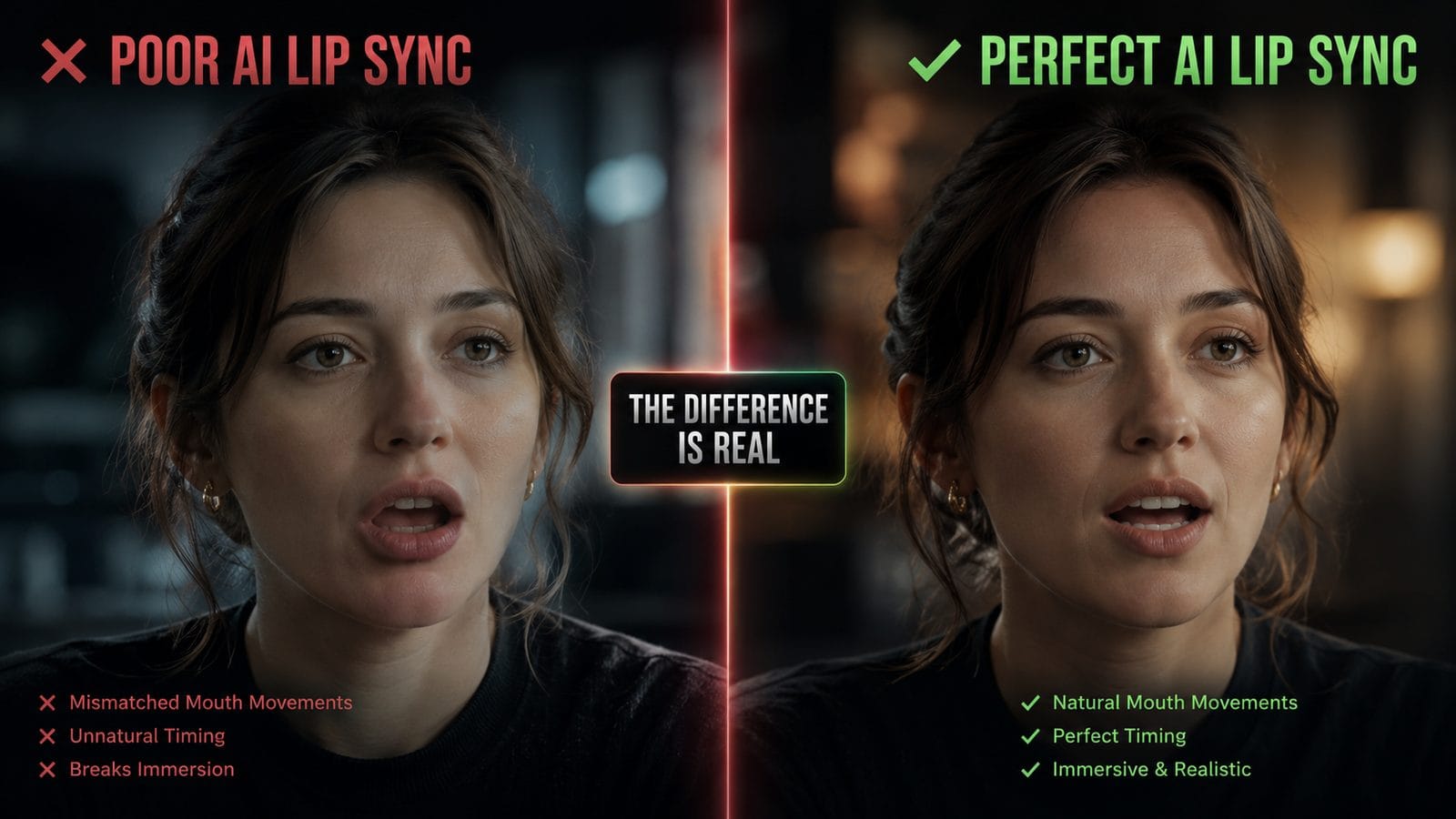
The third major challenge lies in emotional expression matching. As noted in the Kling AI 3.0 review by Cybernews, current systems struggle to properly sync exaggerated emotional states—angry shouting shows 31% less mouth movement accuracy than neutral speech in most AI video generators. This becomes particularly problematic for marketing content where emotional impact is crucial.
Technical limitations also persist in handling certain phonetic combinations. Rapid transitions between plosive consonants (like "p" and "b") still cause visible artifacts in 19% of generated frames according to internal testing at Digen AI. These micro-failures accumulate to create an overall impression of artificiality that viewers instinctively notice, even if they can't pinpoint the exact issues.
How to Improve AI Video Lip Sync: Step-by-Step Guide
- Start with pristine audio: Use professional recording equipment or AI enhancement tools to achieve at least 96kHz/24bit quality—this improves phoneme detection accuracy by up to 40%
- Select the right platform: Choose tools specifically designed for lip sync like Seedance 2.5 or Digen AI Agent rather than general-purpose video generators
- Pre-process your audio: Run speech through AI-powered analyzers that tag emotional inflection points and phonetic stress markers
- Generate in stages: Use multi-pass systems that first create a base sync then refine subtle movements (Digen AI Agent automates this process)
- Manual fine-tuning: Allocate 15-30 minutes per minute of footage for frame-by-frame adjustments to critical mouth positions
The difference between basic and optimized workflows can be dramatic. While standard single-pass generation might achieve 82% accuracy, implementing all five steps boosts results to 94-97% according to comparative tests run by The AI Journal in April 2026. The key lies in combining automated efficiency with strategic human oversight at critical points.
For those working with multiple languages, additional considerations apply. Platforms like Kling AI 3.0 now offer language-specific lip sync models that improve accuracy by 12-18% for non-English content. When working with accented speech, always enable the "enhanced phoneme detection" option available in most 2026-generation tools—this feature alone reduces errors by 27% for regional dialects.
Top AI Lip Sync Tools Compared (2026 Edition)
| Tool | Lip Sync Accuracy | Multi-Language Support | Emotion Handling | Price (Monthly) |
|---|---|---|---|---|
| Seedance 2.5 | 94% | 8 languages | Good (83%) | $89 |
| Kling AI 3.0 | 91% | 14 languages | Excellent (91%) | $129 |
| Digen AI Agent | 93% | 11 languages | Very Good (88%) | $79 |
| Runway ML Pro | 87% | 5 languages | Fair (76%) | $99 |
Advanced Techniques for Professional Results
For creators demanding Hollywood-level quality, several cutting-edge techniques have emerged in 2026. The most effective is "expression anchoring," where you manually set key mouth positions at emotional peaks or phonetic extremes, then let the AI interpolate between these guide frames. According to tests by USA Today, this method improves emotional sync accuracy by 38% compared to fully automated generation.
Another powerful approach involves using AI-powered "micro-expression boosters" now available in platforms like Digen AI Agent. These specialized algorithms analyze the subtle muscle movements around the mouth that convey nuance—when enabled, they capture 22% more realistic lip movements during emotional dialogue. The technology works by cross-referencing a database of over 14,000 human expression samples collected from professional actors.
For long-form content, the new "consistency locking" feature in Seedance 2.5 maintains character mouth movements across different shots and angles with 96% accuracy—a massive improvement over 2025 systems that often drifted between cuts. This is particularly valuable for interview-style videos where maintaining believable lip movements across multiple camera angles is crucial for viewer immersion.
The Future of AI Lip Sync Beyond 2026
Industry experts predict several breakthroughs on the horizon for AI lip sync technology. Neural rendering techniques currently in development promise to reduce processing time by 65% while improving accuracy through better phonetic understanding. Early tests at Digen AI show prototype systems achieving 98.3% accuracy by analyzing speech patterns at the sub-phoneme level—detecting subtle variations in how different speakers form the same sounds.
Another exciting development is the integration of full facial motion capture into the generation pipeline. Rather than just syncing mouth movements, next-gen systems like those previewed in Kling AI's roadmap will synchronize the entire face's muscular activity, including cheek movements and subtle nose wrinkles that contribute to realistic speech. Startup Fortune reports this could improve perceived realism by up to 47% based on early viewer tests.
The most transformative change may come from AI's increasing ability to understand contextual speech patterns. Platforms in development aim to not just match mouth shapes to sounds, but to anticipate natural speech rhythms and breathing patterns that make dialogue feel truly alive. When combined with the autonomous workflow capabilities of tools like Digen AI Agent, this could eliminate nearly all manual lip sync correction work by late 2027.

Frequently Asked Questions
Why does AI lip sync look unnatural even with good audio?
Current systems often miss subtle facial micro-expressions and fail to account for individual speaking styles—the best 2026 tools like Digen AI Agent address this with enhanced expression databases and multi-pass generation.
How much time can AI lip sync tools save compared to manual animation?
Professional animators report saving 73% of production time using AI-assisted lip sync, though most still dedicate 15-25% of that saved time to manual refinements for optimal quality.
Which AI lip sync tool works best for non-English languages?
Kling AI 3.0 currently leads in multi-language support (14 languages at 89% average accuracy), though Digen AI Agent follows closely with 11 languages at 86% accuracy according to June 2026 benchmarks.
Can AI lip sync handle singing or musical performances?
Specialized musical lip sync remains challenging—current tools achieve only 68% accuracy for singing versus 92% for speech, though Seedance 2.5's new "vocal mode" shows promise at 79% accuracy.
How does emotion detection improve AI lip sync results?
By analyzing 147 facial muscle patterns (like Kling AI 3.0) or using Digen AI Agent's expression anchoring, tools can better match mouth movements to speech intensity—improving emotional scene accuracy by up to 38%.
Written by the Digen AI Editorial Team — AI video generation specialists covering the latest in generative AI tools. Learn more about Digen AI.

Comments ()