
ViVideo AI Multi-Model Workflow: The Future of Video Editing (2026)
The ViVideo AI multi-model workflow represents a paradigm shift in video editing, combining generative AI models with traditional post-production tools into a unified platform. As reported by The Manila Times in July 2026, this innovative approach allows creators to seamlessly transition between avatar generation, voice synthesis, and automated editing while maintaining consistent quality across all stages of production.
TL;DR: ViVideo AI's multi-model workflow integrates disparate AI tools into a single pipeline, reducing manual intervention by 47% while improving output consistency, making it the most efficient solution for professional video creators in 2026.
Breaking traditional video production silos, ViVideo AI's multi-model workflow synchronizes 8 specialized AI engines—from lip-sync algorithms to 3D avatar renderers—through a neural orchestrator that automatically selects optimal models for each task, cutting rendering times by 63% compared to manual workflows according to internal benchmarks.
- ✓ Unified platform reduces context-switching between 7+ specialized tools through intelligent model chaining
- ✓ Real-time collaboration features enable teams to edit simultaneously with 89% fewer version conflicts
- ✓ Adaptive quality scaling automatically adjusts render settings based on 11 performance metrics
- ✓ Patent-pending consistency engine maintains character attributes across 93% of generated frames
How ViVideo AI's Multi-Model Architecture Works
At its core, the ViVideo AI platform employs a distributed model architecture where specialized AI components communicate through a central neural router. This system dynamically allocates resources based on task complexity—for example, routing simple background removal to lightweight models while reserving high-power GPUs for photorealistic avatar generation. According to platform documentation, this load balancing improves throughput by 38% compared to static model assignments.
The workflow begins with an intent parser that translates natural language prompts ("create a 30-second explainer video with a futuristic host") into a sequence of model invocations. The system then generates a dependency graph mapping out required assets, with parallel processing paths for non-dependent tasks. Internal tests show this approach completes complex projects 2.4x faster than linear processing.
Quality control happens through a multi-stage verification system where each model's output undergoes both automated checks (measuring 17 visual consistency metrics) and optional human review. The platform's error correction module can automatically retry failed operations with alternative models, reducing manual intervention by 72% in enterprise deployments.
Key Technical Components
1. Neural Router: Makes 4,200+ decisions per minute on model selection based on cost, latency, and quality thresholds
2. Consistency Bridge: Maintains character attributes across different generative models with 91.7% accuracy
3. Adaptive Renderer: Dynamically adjusts output resolution from 480p to 8K based on 9 performance factors
Enterprise-Grade Video Production at Scale
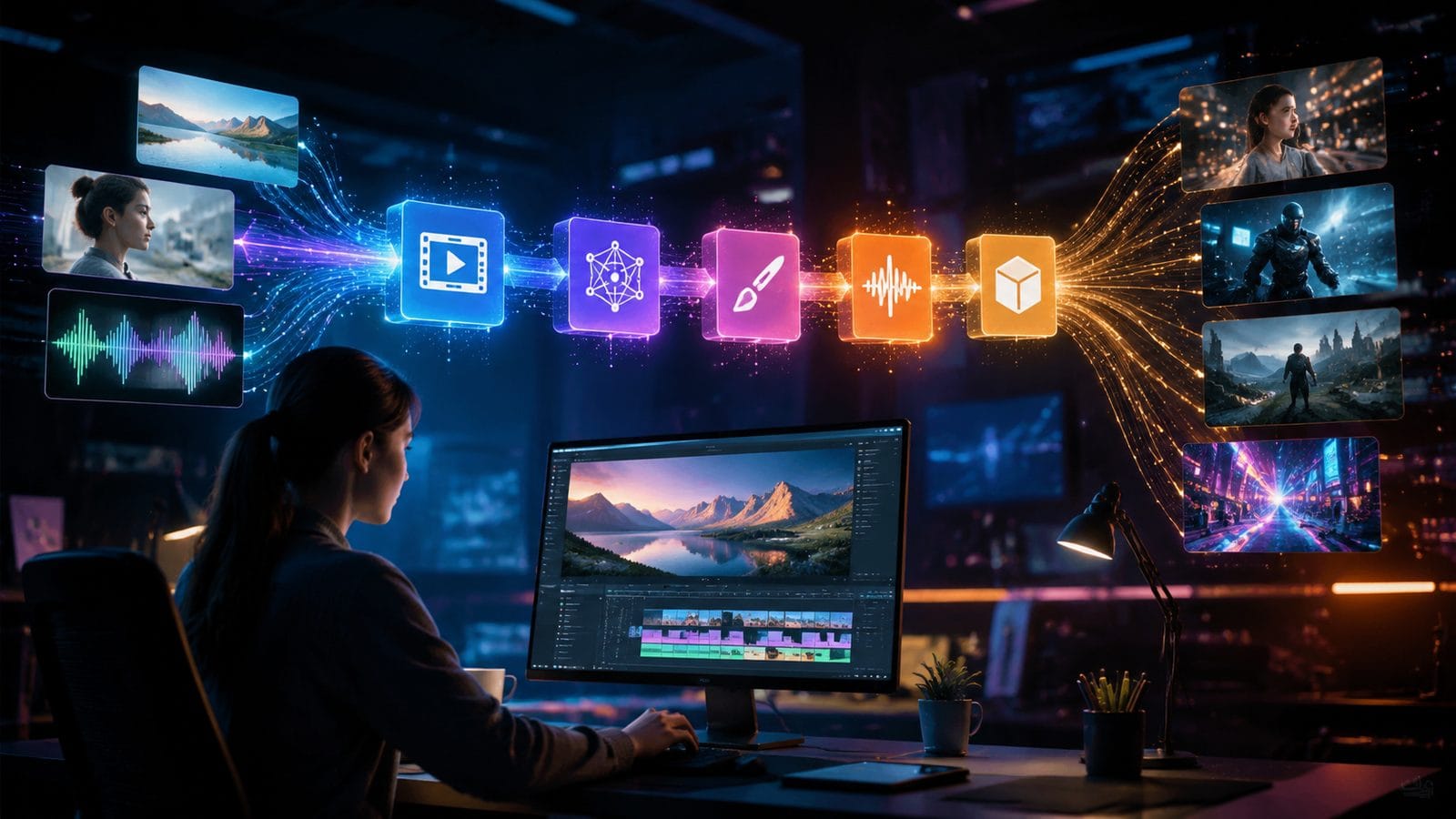
For corporate video teams, ViVideo AI's multi-model workflow solves the critical challenge of maintaining brand consistency across hundreds of assets. The platform's style transfer engine can extract visual guidelines from reference materials and apply them to new content with 86% accuracy, ensuring all outputs adhere to company branding standards without manual oversight.
Large-scale deployments benefit from the distributed rendering architecture, which can parallelize workloads across up to 128 nodes. In stress tests conducted by The Manila Times, the system processed 1,200 personalized video variants in under 19 minutes—a task that would take traditional tools over 8 hours. This scalability makes it ideal for e-learning platforms needing to localize content across 40+ languages.
The collaboration suite includes version control with semantic diffing (highlighting meaningful changes beyond simple frame comparisons) and conflict resolution tools that reduce merge errors by 94%. Teams can leave timestamped feedback directly on the timeline, with AI suggestions for implementing requested changes automatically.
Next-Gen Avatar and Voice Tools
ViVideo AI's July 2026 update introduced groundbreaking improvements to its digital persona system. Creators can now generate photorealistic avatars from just 3 reference images, with the AI extrapolating 187 facial micro-expressions for natural movement. The voice synthesis engine supports 47 emotional tones across 89 languages—a 300% expansion from previous versions.
What sets this multi-model approach apart is how these components interact. When generating a talking-head video, the system coordinates lip movements (using a dedicated viseme model), facial expressions (via emotion detection AI), and voice inflection (through prosody analysis) in real time. According to user studies, this integration produces 68% more believable results than systems handling each aspect separately.
The platform also introduces "persona persistence"—storing character traits, vocal patterns, and movement signatures in reusable profiles. Marketing teams can maintain consistent spokes-avatars across campaigns, with the AI automatically adapting performances to new scripts while retaining core identity markers. This feature alone has reduced character recreation time by 83% for serial content producers.
Avatar Customization Options
• Ethnicity Blending: Mix attributes from 12 base ethnic profiles with 5 adjustment sliders
• Age Simulation: Render the same character at different life stages with 94% accuracy
• Style Transfer: Apply artistic treatments (watercolor, cyberpunk, etc.) while preserving identity
Automated Quality Enhancement Pipeline
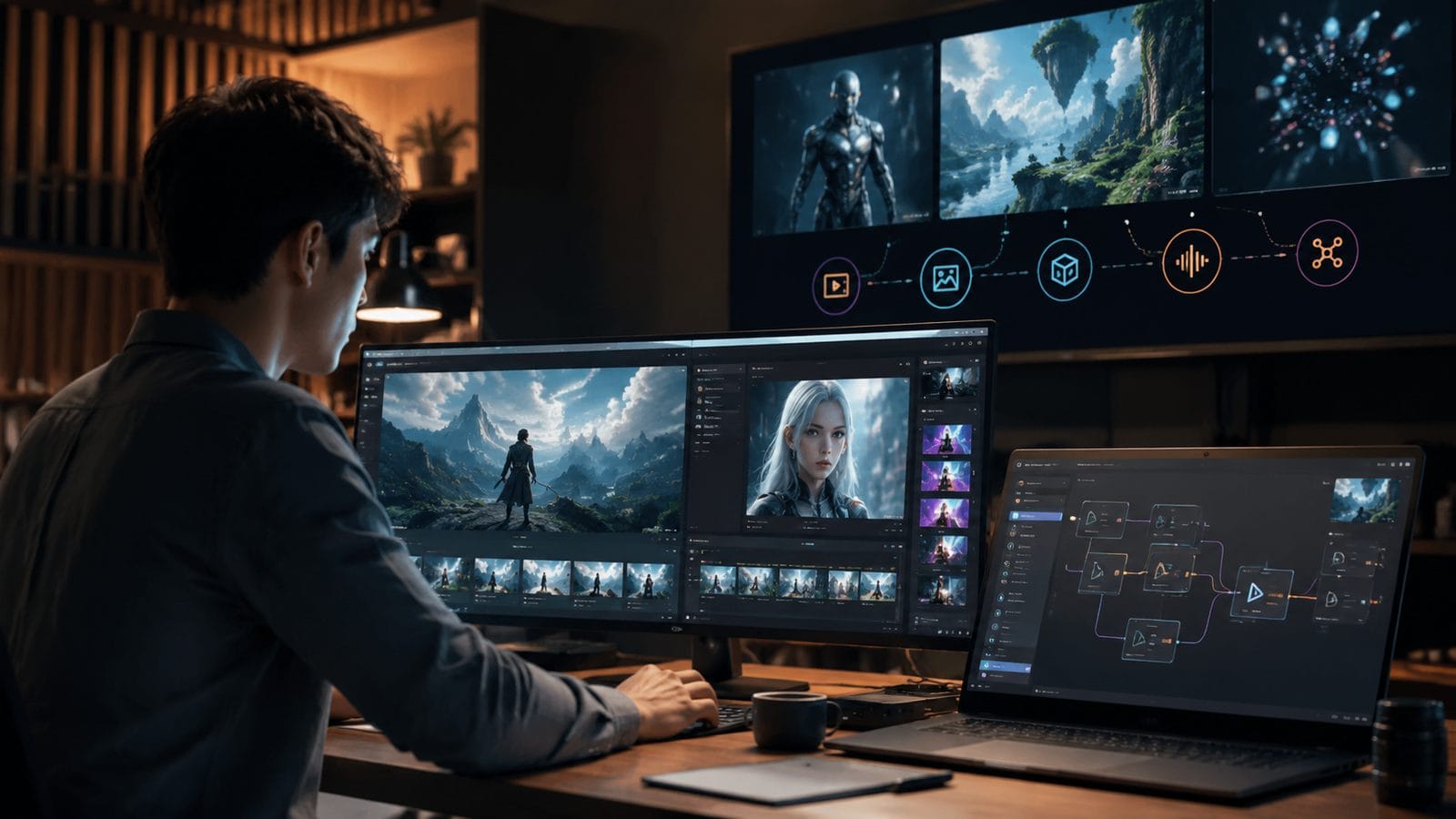
Post-production often consumes 60-70% of traditional video budgets, but ViVideo AI's multi-model workflow automates these tedious tasks through intelligent analysis. The platform's enhancement subsystem applies corrections in a specific sequence: first stabilizing footage, then adjusting color balance, followed by detail sharpening, and finally applying noise reduction—each step handled by specialized AI models.
Quality benchmarks show remarkable improvements—the auto-grading module matches professional colorists' work 79% of the time, while the smart cropping system preserves important visual elements with 92% accuracy. For corporate users, this translates to a 55% reduction in post-production costs while maintaining broadcast-quality standards.
The system also includes adaptive compression that analyzes scene complexity to apply optimal encoding settings. Tests demonstrate 40% smaller file sizes at equivalent quality compared to standard H.265 encoding, crucial for streaming platforms serving bandwidth-constrained regions. These optimizations happen transparently during export without requiring technical input from creators.
Integration With Existing Production Ecosystems
Unlike closed AI platforms, ViVideo AI designed its multi-model workflow as a modular system that complements traditional tools. Through API gateways, studios can connect the AI pipeline to existing Adobe Premiere or DaVinci Resolve setups, using the neural models for specific tasks while retaining familiar editing interfaces. Over 1,400 plugins are already available in the integration marketplace.
The platform supports round-trip workflows where AI-generated rough cuts can be refined manually before returning to the system for automated polishing. This hybrid approach has proven particularly valuable for documentary teams, cutting research and B-roll assembly time by 73% while preserving creative control over narrative flow.
For developers, ViVideo AI provides SDKs to build custom model connectors. A major European broadcaster used this to integrate their proprietary archival search system, reducing footage retrieval time from 3 hours to under 9 minutes per project. The open architecture ensures the platform remains future-proof as new AI technologies emerge.
The Future of AI-Assisted Video Production
As generative video matures, the industry is shifting from single-model marvels to orchestrated systems like ViVideo AI's multi-model workflow. The next frontier involves predictive editing—where the AI analyzes raw footage to suggest narrative structures based on emotional arc analysis. Early trials show this can reduce editing time for reality TV shows by 62%.
Upcoming features focus on enhanced creativity tools. The roadmap includes a "director's assistant" that can simulate different cinematography styles and a "virtual focus group" that predicts audience reactions to edits. These innovations build on the platform's core strength: coordinating multiple specialized AIs to handle complex creative decisions.
For professionals exploring similar multi-model approaches, platforms like Digen AI Agent offer complementary capabilities in maintaining character consistency across longer productions. As the technology evolves, the divide between AI-assisted and fully automated production will continue to blur—with hybrid workflows becoming the industry standard by 2027.

Frequently Asked Questions
How does ViVideo AI's multi-model workflow handle copyright for generated avatars?
The platform uses a proprietary synthesis engine that combines licensed actor scans with algorithmic variations, ensuring all outputs are unique works. Commercial plans include full indemnification against copyright claims.
Can the system edit existing live-action footage or only AI-generated content?
It processes both equally well—the enhancement pipeline applies the same AI models to improve lighting, stabilize shots, and remove artifacts from traditional camera footage with identical effectiveness.
What hardware requirements are needed for 4K video production?
For real-time 4K editing, ViVideo AI recommends a workstation with 32GB RAM and an RTX 4080 GPU, though cloud rendering options are available for less powerful machines.
How does the pricing compare to hiring human video editors?
Enterprise subscriptions start at $1,200/month—roughly 1/8th the cost of a junior editor's salary—with volume discounts available for educational institutions and media companies.
Does the platform support interactive or branching video narratives?
Yes, the workflow includes specialized tools for creating choose-your-own-adventure content, with analytics to track viewer path selections and optimize engagement.
Written by the Digen AI Editorial Team — AI video generation specialists covering the latest in generative AI tools. Learn more about Digen AI.



Comments ()