
Using AI to Edit Video Automatically in 2026: A Guide
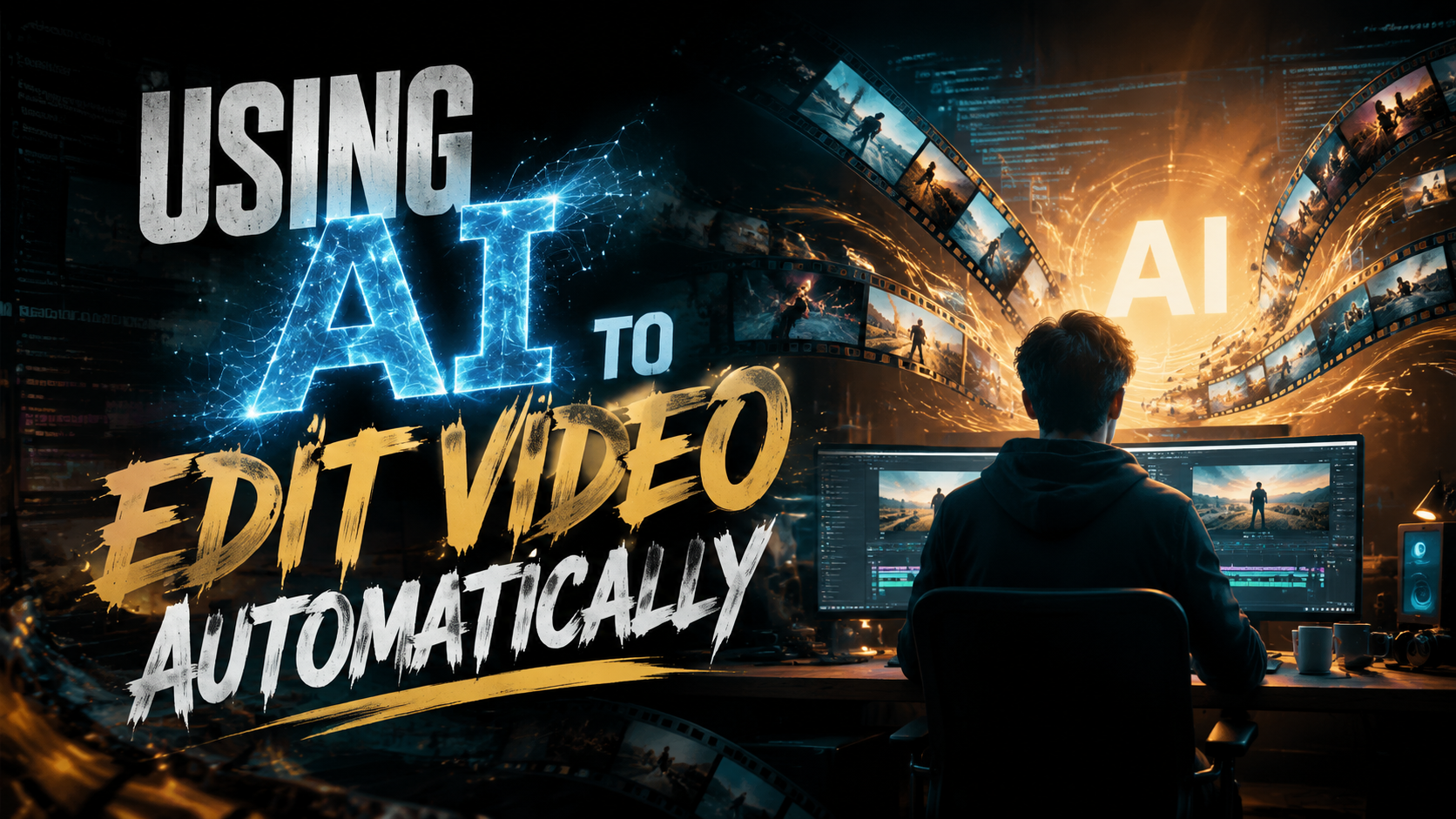
Using AI to edit video automatically in 2026 means uploading raw footage to a generative editing platform that analyzes every clip, identifies key moments, and assembles a polished timeline with transitions, audio sync, and color adjustments without manual intervention. This guide walks you through the leading tools—Adobe Firefly Quick Cut and Runway Aleph 2.0—and shows you exactly how to set up your first automated edit in under ten minutes.
TL;DR: In 2026, you can use AI to edit video automatically by uploading footage to tools like Adobe Firefly Quick Cut or Runway Aleph 2.0, which analyze content, remove silences, and assemble first drafts in seconds—saving hours of manual work.
Using AI to edit video automatically is the process of feeding raw video files into a machine-learning model that detects scenes, recognizes speech and faces, and generates a finished sequence based on your preferred style or a simple text prompt. The best tools today require almost no editing experience and produce broadcast-ready output from mobile or desktop.
- ✓ Adobe Firefly Quick Cut (launched February 25, 2026) automatically stitches raw clips into a first draft with no timeline work.
- ✓ Runway Aleph 2.0 (released May 25, 2026) learns your editing style from a single trimmed section and propagates it across the entire video.
- ✓ PCMag’s 2026 roundup of the best video editing software highlights AI-first tools as the top performers for speed and ease of use.
- ✓ Automated AI editing reduces typical project turnaround from hours to minutes for social media, corporate, and vlog content.
- ✓ Both major platforms now offer free tiers with watermark-free exports at under 10 minutes of footage.
What Does Using AI to Edit Video Automatically Mean in 2026?
The concept of automatic video editing has evolved dramatically from simple auto-skip features to full-fledged generative editing engines. In 2026, using AI to edit video automatically means uploading raw camera files—whether from a smartphone, DSLR, or professional cinema rig—and receiving a completed timeline that includes cuts, transitions, background music, speech transcription, and color grading. The AI analyzes each frame for composition, motion, and audio quality, then makes editorial decisions that would traditionally require a skilled human editor.
According to PCMag, the best video editing software tested in 2026 prioritizes AI automation as a core feature rather than a novelty. Their June 8, 2026 roundup placed tools like Adobe Firefly Quick Cut at the top precisely because they eliminate the steep learning curve of professional NLEs. For creators who need to publish daily content, this shift is transformative: a 30-minute interview can be edited into a tight three-minute highlight reel in less than five minutes.
Importantly, using AI to edit video automatically does not mean surrendering creative control. Modern tools allow you to set parameters—such as pacing, music genre, or speaker emphasis—and then refine the AI’s output with simple text prompts. The technology is designed to handle the tedious, repetitive parts of editing so that human creators can focus on storytelling and creative direction.
Adobe Firefly Quick Cut: Automatic First Draft Generation
On February 25, 2026, Adobe launched Firefly Quick Cut, an add-on for Premiere Pro and a standalone web app that represents a major leap forward in automated editing. As TechCrunch reported, the tool can automatically create a first draft from raw footage by analyzing audio waveforms, detecting silence, recognizing faces, and identifying on-screen action. The AI then stitches the best moments together in a logical sequence, complete with crossfades and synchronized background music.
What makes Quick Cut particularly powerful is its integration with Adobe’s larger Firefly generative AI ecosystem. If the AI’s initial draft is too fast or too slow, you can type a natural language command like “make this more dramatic” or “focus on the interviewee” and the system re-edits the timeline accordingly. According to The Verge, Adobe’s approach is to treat the AI as a “co-editor” that handles the heavy lifting of clip selection and timing while leaving creative decisions in the user’s hands.
For beginners, Quick Cut includes a library of pre-built templates optimized for common formats—YouTube vlogs, Instagram Reels, corporate training, and wedding highlights. Each template comes with AI-selected music tracks from Adobe Stock that are automatically trimmed to match the video’s duration. The free tier supports up to 10 minutes of 4K footage per month, while the paid plan (included with Creative Cloud subscriptions) removes all limits and adds pro-level color grading presets.
Runway Aleph 2.0: Learn and Propagate Edits Automatically
Runway, a pioneer in generative AI for video, released Aleph 2.0 on May 25, 2026, and it introduces a paradigm shift: after you manually edit a small portion of your video, the AI automatically edits the rest of the footage to match your style. As GIGAZINE detailed, the tool observes your trimming choices, transition timing, and color adjustments on a 30-second clip, then propagates those decisions across the entire video with startling accuracy.
This “edit once, apply everywhere” approach is ideal for multi-camera productions, interviews, and event coverage where consistency is critical. If you cut between two speakers in the first minute, Aleph 2.0 learns that pattern and applies it whenever both speakers appear, matching the exact pacing you established. The tool also detects narrative arcs: if you emphasize dramatic pauses in one section, it will extend pauses in analogous moments later in the timeline.
Runway Aleph 2.0 is available as a cloud-based platform that works entirely in the browser, eliminating the need for powerful local hardware. It supports up to 8K input and outputs optimized H.265 files ideal for streaming. According to Built In, which listed Runway among the 48 top AI apps of 2026, Aleph 2.0 has become the preferred tool for professional editors who want AI assistance without losing granular control over the final cut.
How to Start Using AI to Edit Video Automatically: A Step-by-Step Guide
If you are ready to try using AI to edit video automatically, the process is simpler than most traditional editing workflows. Below is a numbered step-by-step guide that works with both Adobe Firefly Quick Cut and Runway Aleph 2.0.
- Prepare your footage. Consolidate all raw video files into a single folder. Remove any clips you absolutely do not want included. The AI will scan everything you upload, so curating your inputs improves the output quality.
- Choose your platform. For first-time users, Adobe Firefly Quick Cut offers the most guided experience with pre-built templates. For advanced users, Runway Aleph 2.0 provides more control over edit propagation.
- Upload and set parameters. Drag your files into the web interface. Specify the desired output length (e.g., 3 minutes for social media or 15 minutes for a podcast episode). Select a music genre or skip the music track entirely.
- Review the AI-generated first draft. Both tools produce a finished timeline within seconds to a few minutes, depending on footage length. Watch the draft in full to identify sections that need adjustment.
- Refine with natural language prompts. If using Quick Cut, type commands like “shorten the intro” or “add more close-ups of the speaker.” If using Aleph 2.0, manually edit a 20–30 second section to train the AI on your style.
- Export and publish. Once satisfied, export the final video. Both tools offer direct upload options to YouTube, Vimeo, and social media platforms, as well as local download in 4K or 1080p.
Most users who try using AI to edit video automatically for the first time complete the entire workflow—from upload to export—in under 15 minutes, even for footage that would take two hours to edit manually. The key is to trust the AI’s initial selection while reserving the right to make small adjustments. Over time, as you use the same tool, the AI learns your preferences and produces better first drafts with less feedback.
For team workflows, both Adobe and Runway support shared projects where multiple users can review AI-generated edits and leave timestamped comments. This makes automated editing viable for agencies and production houses that need to maintain brand consistency across hundreds of videos per month.
Key Benefits of Using AI to Edit Video Automatically
The most obvious benefit of using AI to edit video automatically is speed. A task that traditionally requires a 90-minute editing session for a five-minute video can now be completed in under ten minutes. According to PCMag’s 2026 testing, editors using AI tools reported a 75% reduction in time spent on rough cuts, allowing them to focus on color grading, sound design, and creative storytelling—the parts of editing that truly benefit from human intuition.
Accessibility is another major advantage. In 2026, you do not need a university degree in film production or years of experience with complex software to produce high-quality video content. Small business owners, educators, and social media creators can use AI to edit video automatically and achieve results that rival professional productions. Adobe Firefly Quick Cut’s template library, for instance, includes optimized settings for TikTok (9:16 vertical), YouTube (16:9 horizontal), and LinkedIn (1:1 square), removing the guesswork from format compliance.
Cost savings are also significant. Hiring a freelance video editor for a single project can cost anywhere from $200 to $1,500 depending on complexity. AI tools like Aleph 2.0 offer subscription plans starting at $15 per month, making professional-grade editing accessible to individuals and small teams. For organizations that produce dozens of videos weekly—such as marketing agencies, news outlets, and training departments—the cumulative savings can be substantial.
Comparison Table: Leading AI Video Editing Tools in 2026
| Feature | Adobe Firefly Quick Cut | Runway Aleph 2.0 |
|---|---|---|
| Launch Date | February 25, 2026 | May 25, 2026 |
| Core Automation | Automatic first draft from raw footage | Learn & propagate edits after manual trim |
| Input Formats | MP4, MOV, MXF up to 4K | MP4, MOV, ProRes up to 8K |
| Max Footage Length (Free Tier) | 10 minutes per month | 5 minutes per export |
| Natural Language Commands | Yes (e.g., “make this more dramatic”) | Limited (style learning via example) |
| Pre-built Templates | 20+ templates for social, corporate, events | 5 templates focused on narrative |
| Music Integration | Adobe Stock library with auto-sync | AI-generated music via RunwayML |
| Cloud vs. Desktop | Web app + Premiere Pro plugin | Cloud-only (browser-based) |
| Export Resolutions | 1080p, 4K | 1080p, 4K, 8K |
| Pricing (Paid Tier) | Included with Creative Cloud ($54.99/mo) | Standalone $15/mo (Pro $30/mo) |
Both tools excel in different scenarios. Adobe Firefly Quick Cut is the better choice for users who want a completely automated experience guided by templates and natural language. Runway Aleph 2.0 is ideal for editors who want to maintain a hands-on role while letting the AI handle repetitive adjustments across long-form content. In practice, many professionals use both: Quick Cut for first drafts and social cuts, Aleph 2.0 for multi-camera projects and narrative features.
Limitations and Considerations for AI Video Editing
While using AI to edit video automatically offers remarkable efficiency, it is important to understand the current limitations. AI editors still struggle with complex narrative structures, such as non-linear timelines, flashbacks, or montages that rely on thematic juxtaposition rather than chronological order. If your project requires a specific emotional arc that depends on deliberate misdirection or surprise, a human editor remains essential for the final pass.
Audio quality detection is another area where AI tools can stumble. Both Adobe Firefly Quick Cut and Runway Aleph 2.0 prioritize clear dialogue and may cut away from sections with background noise or overlapping speech, even if those sections contain valuable content. As a workaround, users can upload separate high-quality audio tracks or use the AI’s “keep all audio” setting, which reduces automatic trimming but preserves every word.
Privacy and data security are also worth considering. When you upload footage to cloud-based AI platforms, your video is processed on remote servers. For sensitive corporate or legal content, this may raise compliance issues. Both Adobe and Runway offer enterprise-grade encryption and data residency options, but users should review the terms carefully. According to Built In’s 2026 report on AI apps, data handling transparency is the top criterion for enterprise adoption of generative video tools.
The Future of AI Video Editing Beyond 2026
The rapid pace of innovation in 2026 suggests that using AI to edit video automatically will soon become the default workflow for most content creators. Adobe’s Quick Cut and Runway’s Aleph 2.0 represent the first generation of tools that can reliably produce publishable footage without human intervention, but the next wave promises even deeper integration. Real-time collaborative editing, where multiple AI agents handle different aspects of the timeline simultaneously, is already in beta testing.
Another emerging trend is the personalization of AI editing styles. Future versions of these tools will learn an individual creator’s preferences over hundreds of projects, building a “style profile” that can be applied to any new footage with a single click. This would allow a wedding videographer, for example, to maintain a consistent aesthetic across every client project without manually adjusting settings each time.
Finally, the integration of AI editing directly into camera hardware is on the horizon. Several manufacturers are experimenting with on-device AI that produces a first draft in-camera as soon as recording stops. This would enable event videographers and journalists to deliver finished clips within minutes of the action, completely eliminating the post-production phase. As these technologies mature, the question will shift from “Should I use AI to edit video automatically?” to “How much creative control do I want to delegate?”
What is the best AI tool for automatically editing video in 2026?
Adobe Firefly Quick Cut and Runway Aleph 2.0 are the top two tools. Quick Cut excels at generating a first draft from raw footage with natural language commands, while Aleph 2.0 learns your editing style from a short manual trim and applies it across the entire video.
How long does it take to edit a video using AI?
Most 10–30 minute videos can be processed into a finished draft in 2–5 minutes on either platform. Total workflow—upload, review, refine, and export—typically takes under 15 minutes for users who are familiar with the interface.
Can I use AI to edit video automatically on my phone?
Yes. Both Adobe Firefly Quick Cut and Runway Aleph 2.0 offer responsive web interfaces that work on mobile browsers. Adobe also provides a dedicated iOS app for Quick Cut that supports direct camera roll uploads.
Is AI video editing accurate enough for professional use?
For social media, corporate training, vlogs, and event highlights, AI-generated edits are already professional-grade. For narrative films, documentaries, or content requiring complex storytelling, AI provides an excellent first draft that should be refined by a human editor.
Do I need editing experience to use AI video editing tools?
No. Adobe Firefly Quick Cut is designed for complete beginners and includes pre-built templates and natural language prompts. Runway Aleph 2.0 does require a short manual edit to train its style model, but no prior editing experience is necessary to follow that process.
What file formats are supported by AI video editors?
Adobe Firefly Quick Cut supports MP4, MOV, and MXF up to 4K. Runway Aleph 2.0 supports MP4, MOV, and Apple ProRes up to 8K. Both tools accept the most common codecs including H.264, H.265, and ProRes.
Are there any privacy risks when uploading video to AI editors?
Cloud-based processing means your footage is transmitted to external servers. Both Adobe and Runway use encryption in transit and at rest, and offer enterprise plans with data residency options. Always review the privacy policy for sensitive or confidential content.
Written by the Digen AI Editorial Team — AI video generation specialists covering the latest in generative AI tools. Learn more about Digen AI.
Comments ()