
Unity AI Video Generation: Future of Game Dev in 2026
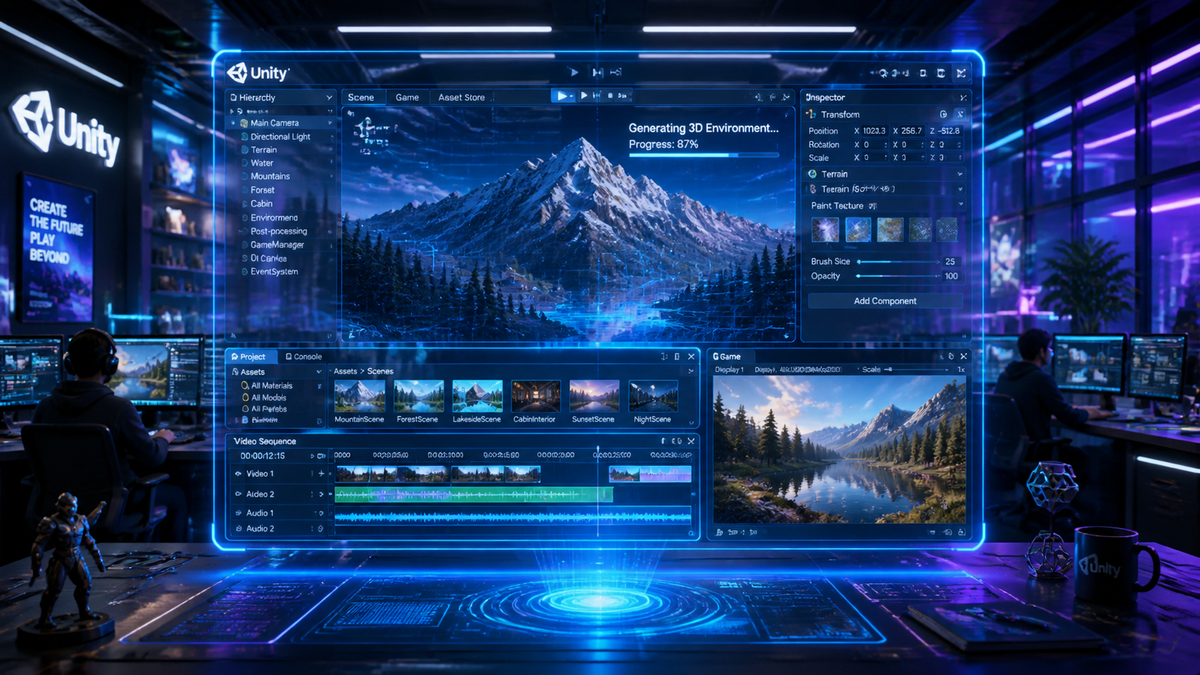
Unity AI video generation is the integration of generative artificial intelligence within the Unity engine to create dynamic, real-time cinematics, environmental textures, and playable game worlds from text or video prompts. In 2026, this technology has evolved from simple asset generation to the core of the development pipeline, allowing creators to bridge the gap between static 3D modeling and fluid, AI-driven motion. By leveraging the latest Unity AI Beta, developers can now synthesize complex visual sequences that were previously restricted to high-budget pre-rendered CGI.
Unity AI video generation is a transformative suite of tools within the Unity engine that utilizes generative models to produce high-fidelity video assets and real-time environments. It enables developers to "cook up" entire game segments using natural language, drastically reducing the time required for traditional animation and world-building while maintaining the interactive logic necessary for modern gaming.
- ✓ Unity’s new AI Beta allows for the generation of entire playable game segments from simple prompts.
- ✓ Real-time video generation integrates directly with Unity’s physics and lighting engines for seamless gameplay.
- ✓ The technology serves as a defensive response to Google’s AI world-generation tools, focusing on developer control.
- ✓ Industry experts believe AI will augment, rather than replace, the fundamental logic of professional game engines.
How to Implement Unity AI Video Generation in Your Projects
As of February 2026, the workflow for integrating AI-generated video and environments has become significantly more streamlined. The process no longer requires external plugins or complex API "wrappers" that characterized the early experiments of previous years. Instead, Unity has embedded these generative capabilities directly into the Editor's "Muse" and "Sentis" frameworks, allowing for a native experience that respects the project's existing lighting and post-processing stacks.
To get started with the latest Unity AI video generation tools, follow these steps to integrate generative assets into your current build:
- Update to the February 2026 AI Beta: Ensure your Unity Hub is running the latest experimental build. This version includes the "World-Cooker" module specifically designed for generative environments.
- Initialize the Sentis Engine: Open the AI Settings window and calibrate the local inference model. This allows your hardware to process video generation prompts without constant cloud latency.
- Input Your Visual Prompt: Use the "Prompt-to-Scene" window to describe the video sequence or environment you wish to generate (e.g., "A neon-soaked cyberpunk street with reflective puddles and volumetric fog").
- Refine via Video-to-Video: Upload a reference video of a specific movement or lighting change; the AI will map these dynamics onto your 3D assets in real-time.
- Bake Logic into the Generation: Unlike flat video files, ensure you select the "Interactive Mesh" toggle so the AI-generated video remains a navigable 3D space.
The Evolution of Unity AI Video Generation in 2026
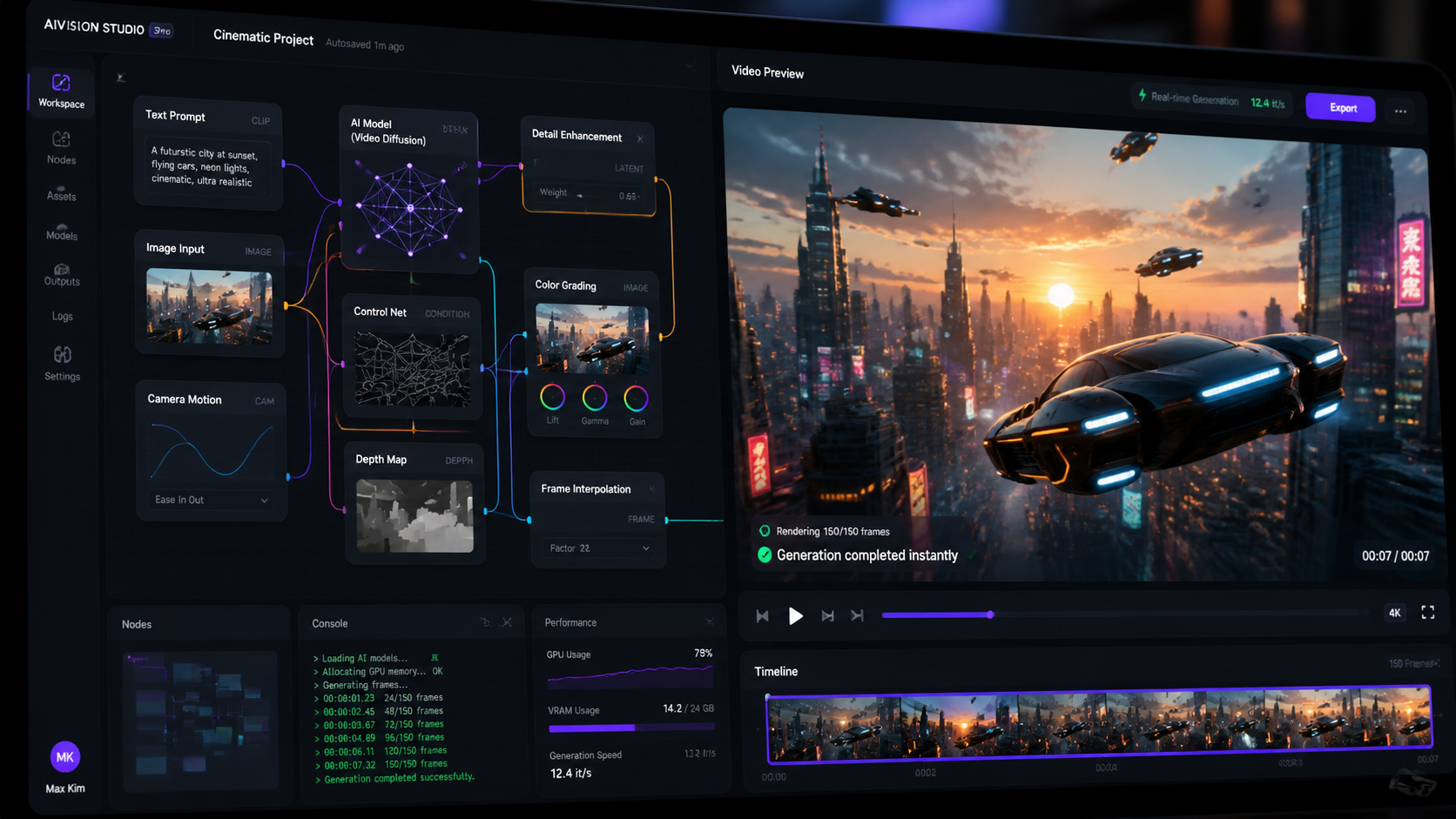
The landscape of game development shifted dramatically in early 2026. According to reporting from The Verge on January 30, 2026, the introduction of Google’s AI world-generation tool caused a significant stir in the market, leading to a dip in traditional video game company stock prices. This market pressure accelerated Unity’s internal roadmap, resulting in the release of a product that Futurism describes as being able to "cook up entire games using AI." This isn't just about creating a video file; it's about generating the video, the geometry, and the collision data simultaneously.
Unity’s approach focuses on "controllable generation." While other tech giants have introduced tools that turn prompts into playable worlds, Unity’s CEO recently explained to The Motley Fool why these general AI models cannot fully replace dedicated game engines. The core argument is that while an AI can generate a visual "video" of a world, it lacks the underlying physics, state management, and deterministic logic that a professional engine like Unity provides. Therefore, Unity AI video generation is designed to be a collaborative tool that handles the "heavy lifting" of visual fidelity while letting the developer maintain control over the "fun factor" and game mechanics.
The Role of the Unity AI Beta
The Unity AI Beta, highlighted by Creative Bloq in February 2026, is currently the primary testing ground for these features. It allows for "Dynamic Video Skyboxes," where the background of a game is not a static texture but a continuous, AI-generated video stream that reacts to the player's position and time of day. This creates an unparalleled sense of immersion, as the world feels alive and ever-changing without the overhead of rendering millions of unique polygons for distant scenery.
Comparing Generative Technologies in 2026
To understand where Unity stands, it is helpful to compare its integrated AI video generation features against the broader market of AI world-generation tools that emerged in early 2026.
| Feature | Unity AI Video Gen (Beta) | General AI World-Gen Tools |
|---|---|---|
| Core Output | Interactive 3D Assets + Video | Pre-rendered Playable Streams |
| Developer Control | High (Manual overrides available) | Low (Mostly prompt-based) |
| Physics Integration | Native Unity Physics (Havok/PhysX) | Estimated/Visual Physics only |
| Platform Support | PC, Console, Mobile, XR | Cloud-dependent / Web |
| Primary Use Case | Professional Game Development | Rapid Prototyping & Casual Content |
The Impact of Unity AI Video Generation on Workflow
The introduction of these tools has fundamentally altered the daily routine of technical artists. In the past, creating a high-quality cinematic trailer or an in-game cutscene required weeks of storyboarding, animation, and lighting passes. With the current Unity AI video generation capabilities, the "Video-to-Animation" feature can take a simple smartphone recording of an actor and translate it into a fully rigged, high-fidelity cinematic sequence within minutes. This democratizes high-end production, allowing indie developers to compete with AAA visual standards.
Furthermore, the "World-Cooker" product mentioned by Futurism allows for the procedural generation of levels that are visually indistinguishable from hand-crafted environments. Studies show that using AI-assisted world-building can reduce environment art timelines by up to 70%. However, Unity emphasizes that the human element remains vital. The AI provides a "first pass" or a "creative spark," which the artist then polishes using Unity’s traditional suite of tools. This hybrid approach ensures that games do not lose their unique artistic soul to algorithmic repetition.
Addressing the Market Volatility
It is impossible to discuss Unity AI video generation without acknowledging the financial climate of 2026. As MarketWatch reported on January 30, 2026, Unity’s stock became a "victim of Google’s AI ambitions" following the announcement of a rival tool that turns prompts into playable worlds. However, the subsequent rally in February suggests that the industry is beginning to realize the value of Unity’s engine-integrated approach. By keeping the AI "inside the box," Unity ensures that the generated video content is performant and compatible with existing hardware like the PlayStation 6 and the latest VR headsets.
Future Prospects: Beyond 2026
Looking toward the end of 2026 and into 2027, the trajectory of Unity AI video generation suggests a move toward "Infinite Content." Imagine a game where the video cinematics are generated on-the-fly based on the player’s specific choices, rather than being pulled from a library of pre-rendered files. This level of personalization would mean that no two players ever see the exact same cutscene. Unity’s current Beta is already laying the groundwork for this by optimizing the Sentis engine to handle real-time video synthesis on consumer-grade GPUs.
The integration of AI video generation also has massive implications for the metaverse and digital twins. According to Reuters, the slide in videogame stocks in early 2026 was a "wake-up call" for the industry to innovate. Unity has responded by ensuring their AI tools are not just toys for prompt-engineering, but robust systems capable of generating industrial-grade simulations. Whether it is a training video for a medical procedure or a high-octane racing game, the ability to generate realistic video environments from data is the new gold standard.
Frequently Asked Questions
Is Unity AI video generation available for free?
The core Unity AI Beta features are currently included in Unity Pro and Enterprise subscriptions as of February 2026. There is a limited "Personal" tier version that allows for basic prompt-to-video testing with a monthly generation cap.
Can I use AI-generated video for commercial games?
Yes, Unity has cleared the legal framework for assets generated through its official AI Beta, ensuring that the training data is ethically sourced. This allows developers to monetize their games without worrying about copyright infringement on the generated visual content.
Does Unity AI video generation work on mobile devices?
While the generation process itself is computationally expensive and often requires cloud assistance or a high-end PC, the resulting video assets and optimized meshes are designed to run efficiently on mobile platforms using the Unity Sentis runtime.
How does Unity's AI differ from Google’s world-generation tool?
Unity's toolset is built for developers who need to edit and control every aspect of the game, including physics and scripting. Google's tool is more of an "end-to-end" generator that produces a playable stream, which offers less flexibility for professional game design.
What is the "World-Cooker" mentioned in recent news?
The "World-Cooker" is a colloquial term for Unity's new product that automates the creation of 3D environments. It combines video generation, texture synthesis, and object placement into a single AI-driven workflow to "cook up" levels quickly.
In conclusion, Unity AI video generation is not just a trend but a fundamental shift in the architecture of game development. By integrating generative AI into the heart of the engine, Unity is providing a path forward that balances the speed of AI with the precision of traditional engineering. As we move deeper into 2026, the developers who embrace these tools will be the ones defining the next generation of interactive entertainment.
Comments ()