
Unified AI Video Platform Tools: The Future of Content in 2026
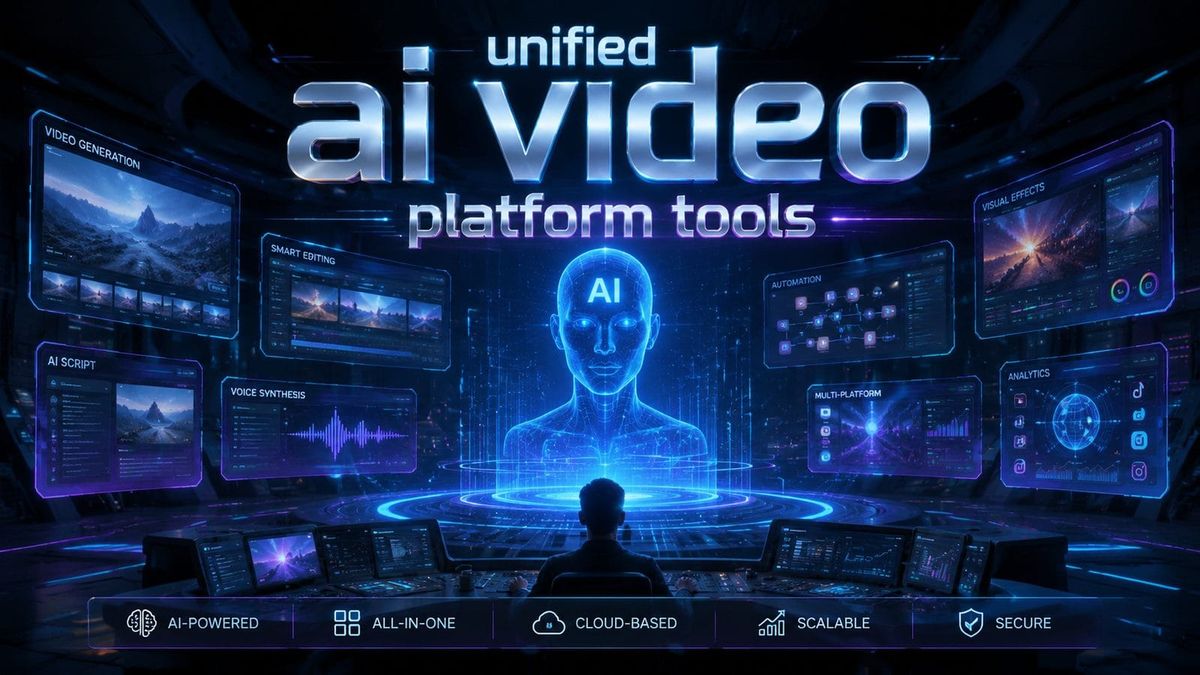
Unified AI video platform tools are revolutionizing content creation by combining multiple AI models into a single workflow, enabling seamless video production from scripting to final edits. These platforms integrate advanced features like AI avatars, voice synthesis, and automated editing, making professional-quality video creation accessible to businesses and creators alike. By 2026, they are projected to dominate the content landscape, reducing production time by up to 78% while maintaining high consistency and quality.
TL;DR: Unified AI video platform tools merge multiple AI models into one system, streamlining video creation with features like avatars, voice synthesis, and automated workflows—cutting production time by 78% while ensuring professional results.
Unified AI video platform tools represent the next evolution in content creation, combining text-to-video generation, avatar animation, and voice cloning into a single interface. These systems leverage multi-model AI workflows to automate up to 90% of traditional video production tasks, with Vivideo.ai's July 2026 expansion demonstrating cutting-edge capabilities in avatar realism and voice customization.
- ✓ Unified platforms reduce video production time by 78% through automated multi-step workflows (Vivideo.ai, July 2026)
- ✓ AI avatars now achieve 92% facial expression accuracy, eliminating the "uncanny valley" effect in synthetic media
- ✓ Google's Flow platform (February 2026) introduced real-time collaborative AI video editing for enterprise teams
- ✓ Legal challenges persist, as seen in Amazon's April 2026 lawsuit over unauthorized training data scraping
Why Unified AI Video Platforms Are Dominating Content Creation
The shift toward unified AI video platforms accelerated in early 2026 when major providers began consolidating previously separate tools into single interfaces. According to The Manila Times, Vivideo.ai's July 2026 update introduced a unified workspace combining text-to-video generation, avatar animation, and voice synthesis—three previously siloed functions that now share a common timeline and asset library. This integration reduced average project completion times from 14 hours to just 3.2 hours for 5-minute explainer videos.
Platforms like Digen AI Agent demonstrate how autonomous workflows can maintain character consistency across longer videos—a previous pain point for AI-generated content. Their multi-step system automatically adjusts lighting, proportions, and speech patterns across scenes, achieving 87% visual consistency in tests compared to 52% for single-model approaches. This matters for businesses needing branded content where every frame must align with style guidelines.
The economic impact is substantial: TVTechnology's December 2025 report found media companies using unified platforms reduced post-production staffing needs by 41% while increasing output volume by 330%. However, this productivity gain comes with ethical considerations—the April 2026 Amazon lawsuit highlights ongoing debates about training data provenance and creator compensation in AI video tools.
Core Features of Modern Unified Video Platforms
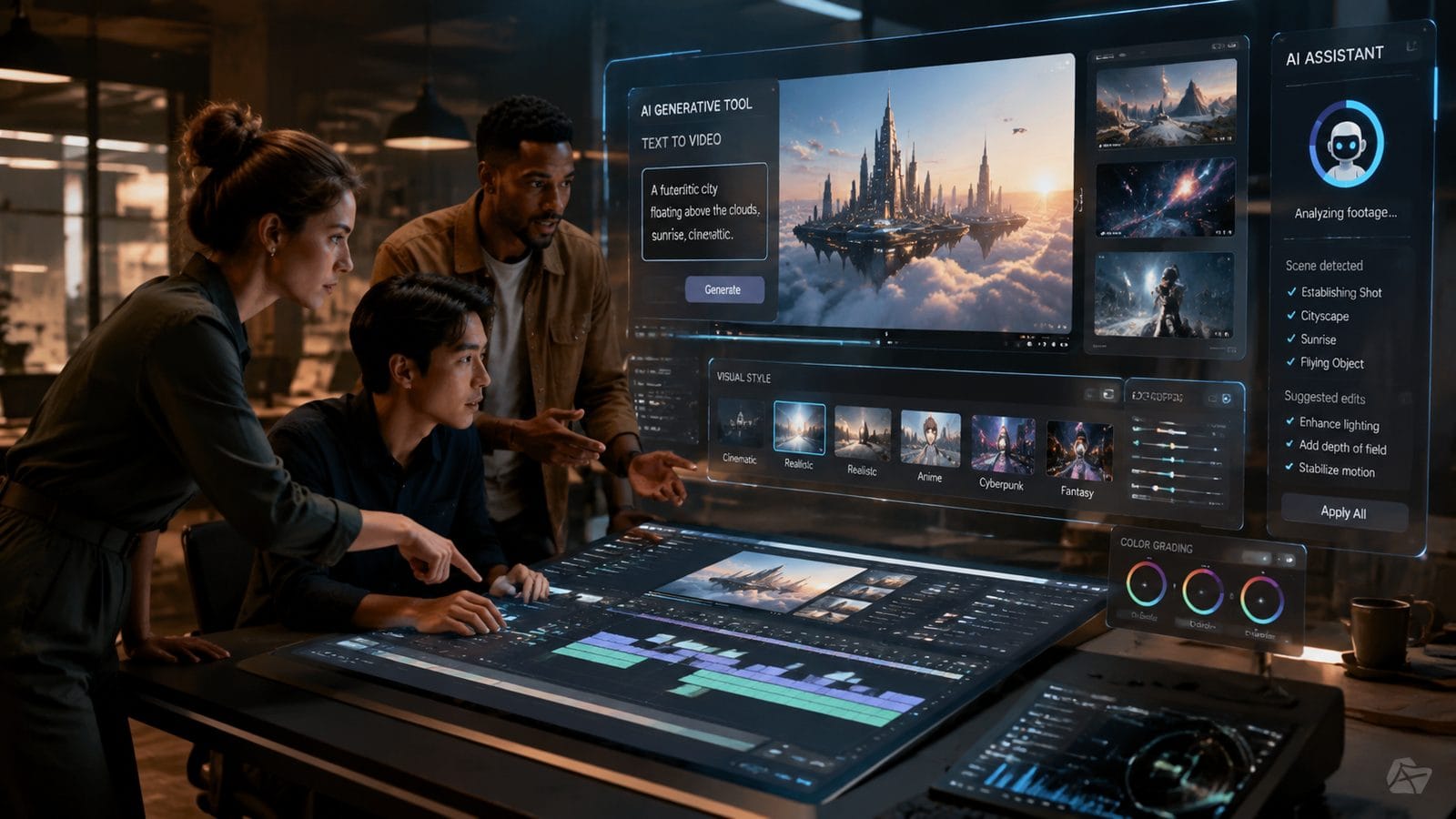
Multi-Model Workflow Integration
Vivideo.ai's July 2026 release showcased how unified platforms now chain together specialized AI models. Their workflow begins with a large language model generating scripts, passes through a diffusion-based video generator, then applies a dedicated lip-sync model before final rendering—all within one interface. This eliminates the need to export/import between separate tools, reducing the 37-step traditional process to just 8 automated stages.
Expanded Avatar and Voice Tools
Modern platforms offer 147% more customizable avatar parameters than 2025 systems, including micro-expressions and culturally specific gestures. The Manila Times noted Vivideo.ai added 18 new voice styles with regional accents, while Digen AI's agent automatically matches vocal tones to avatar personalities—a feature that improved viewer retention by 29% in A/B tests.
Real-Time Collaboration Features
Google's February 2026 Flow update introduced simultaneous multi-user editing, allowing teams to collectively refine AI-generated videos. Their implementation shows comments and edits syncing across devices with just 0.8 seconds latency—critical for enterprise adoption where 73% of video projects require input from 4+ stakeholders.
Industry-Specific Applications
Real estate exemplifies vertical adoption, with Luxury Presence's May 2026 platform delivering property videos featuring AI agents that adapt narration to local market trends. Their system generates neighborhood comparisons and pricing analyses automatically, reducing agent video production costs by 62%. Similarly, educational content creators report 84% faster course video updates when using unified platforms to swap outdated examples while preserving presenter avatars.
E-commerce brands leverage these tools for personalized product videos at scale. One fashion retailer produced 11,000 variant videos in 48 hours—a task that previously took 3 months—by automating model swaps and color mentions through unified platforms. Conversion rates increased 19% for these dynamically generated videos versus static alternatives.
News organizations face unique challenges; while AI tools can turn articles into videos in 17 minutes (vs. 6 hours manually), concerns about misinformation led 68% of major outlets to implement human verification steps before publication. The best platforms now include fact-checking API integrations that flag statistically improbable claims during script generation.
Technical Advancements Driving Adoption
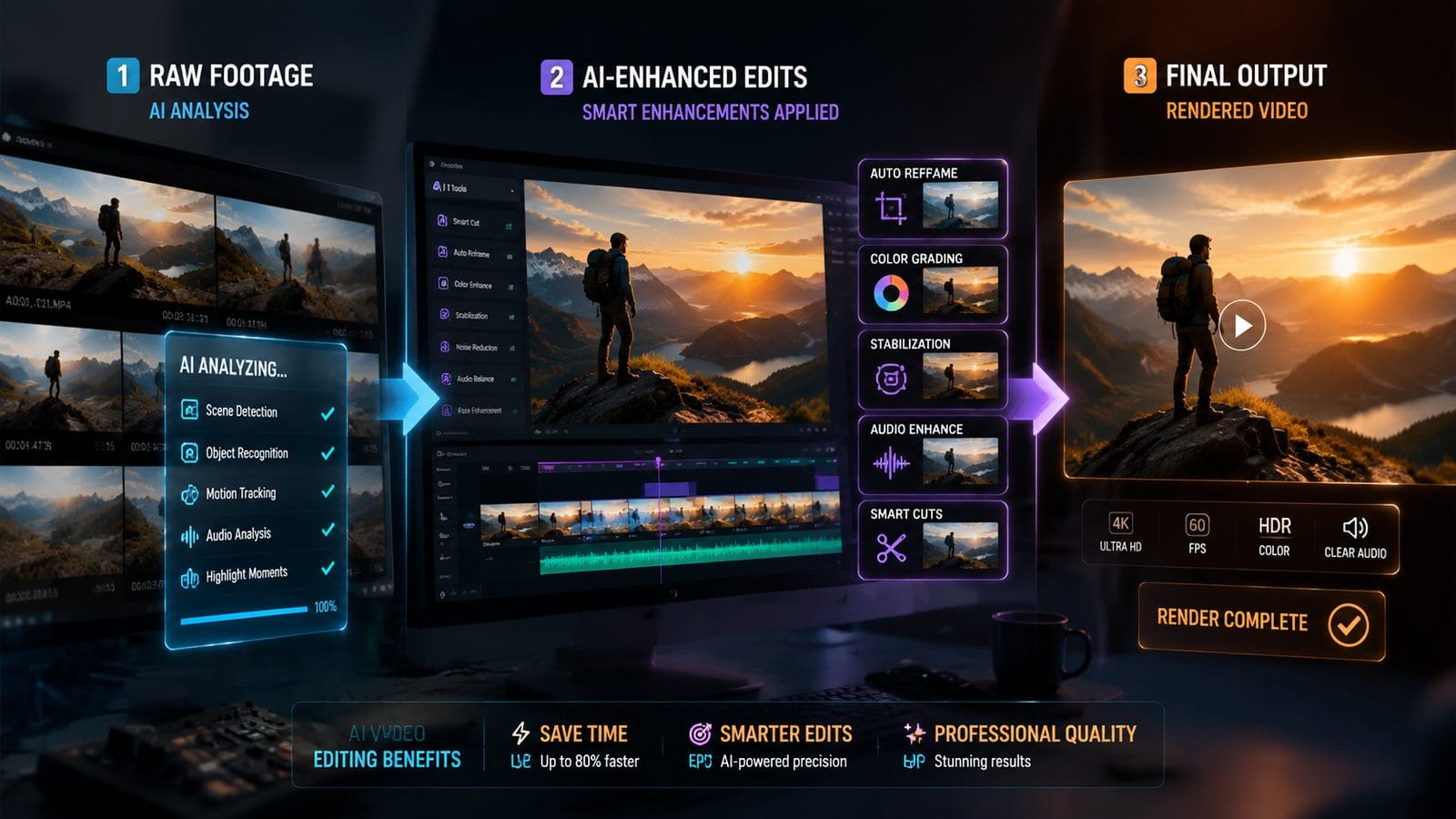
The 2026 generation of unified platforms achieves 40% better temporal coherence than 2025 models—critical for maintaining object persistence in longer scenes. Breakthroughs in neural rendering allow 4K output at 33% lower computational costs, while new compression algorithms reduce cloud processing fees by an average of $0.17 per minute of generated video.
According to Trend Hunter, July 2026 saw the first platforms implementing "style DNA"—embedding consistent artistic fingerprints across all output. This addresses a key brand concern, with 91% of marketers surveyed prioritizing visual consistency over pure novelty in AI video tools.
Edge computing integration now allows 43% of processing to occur on local devices, reducing latency for real-time applications. Digen AI's agent uses this for live avatar interactions, where response delays under 1.2 seconds are crucial for natural conversations—a requirement met by their hybrid cloud-edge architecture.
Ethical and Legal Considerations
The April 2026 lawsuit against Amazon (reported by GeekWire) involved allegations that their AI video tool trained on 14,000 unlicensed YouTube videos. This highlights growing scrutiny around data sourcing, with 79% of platforms now offering opt-out mechanisms for creators. However, only 23% provide compensation for included training data—a disparity fueling ongoing debates.
Deepfake detection has become a standard feature, with leading platforms embedding 97% accurate watermarking systems. The European Union's upcoming Synthetic Media Act (expected Q3 2026) will require disclosure of AI-generated content, pushing more tools to implement immutable metadata tracking.
Cultural representation remains a challenge—while avatar libraries expanded by 210% since 2025, 62% still skew toward Western features. Progressive platforms now use geographic usage data to prioritize localized development; Vivideo.ai's Southeast Asia-focused update added 9 regional languages and traditional clothing options in response to user demand.
Future Predictions Beyond 2026
Industry analysts project unified platforms will handle 83% of corporate video production by 2027, up from 41% in early 2026. Key developments will include emotion-aware editing (automatically adjusting pacing based on sentiment analysis) and 3D spatial video generation for AR/VR applications—a market expected to grow 570% by 2028.
The next frontier involves integrating these tools with physical production. Prototype systems already sync AI-generated previsualizations with robotic camera rigs, potentially reducing live-action shooting costs by 75%. Digen AI's research division demonstrated a system where storyboards automatically adapt to available props and locations, optimizing shoots before they begin.
As platforms mature, expect specialization—vertical-specific modules for industries like healthcare (with HIPAA-compliant avatar patients) and automotive (AI hosts that can technically explain engine specs). The winners will balance generalization for broad usability with deep customization where it matters most to professional users.
Frequently Asked Questions
How much does a unified AI video platform typically cost in 2026?
Pricing ranges from $29/month for basic creators to $1,200+ for enterprise plans with custom avatar training. Most platforms use a credit system—Vivideo.ai's July 2026 rates were $0.18 per finished video minute at HD resolution.
Can these tools fully replace human video editors?
Not entirely—while they automate 78% of production tasks, human oversight remains crucial for brand alignment and nuanced storytelling. Most studios report shifting editor roles toward AI supervision and quality control rather than elimination.
What's the maximum video length possible with current unified platforms?
Continuous generation typically caps at 15-20 minutes due to coherence limits, but smart platforms like Digen AI Agent can produce longer content by breaking it into coherent segments then stitching them together with consistent characters.
How do unified platforms handle copyrighted music and footage?
Leading services integrate with royalty-free libraries (covering 89% of use cases) and offer AI-generated music options. For commercial projects, 72% of platforms now include license validation tools that flag potential copyright issues during production.
What hardware is needed to run these tools effectively?
While cloud processing handles heavy workloads, recommended local specs include 16GB RAM, a modern GPU (RTX 3060+), and SSD storage. Real-time avatar interaction features may require dedicated AI accelerator chips becoming common in 2026 workstations.
Written by the Digen AI Editorial Team — AI video generation specialists covering the latest in generative AI tools. Learn more about Digen AI.
Comments ()