
Twelve Labs Rodeo Video Search: The 2026 AI Evolution
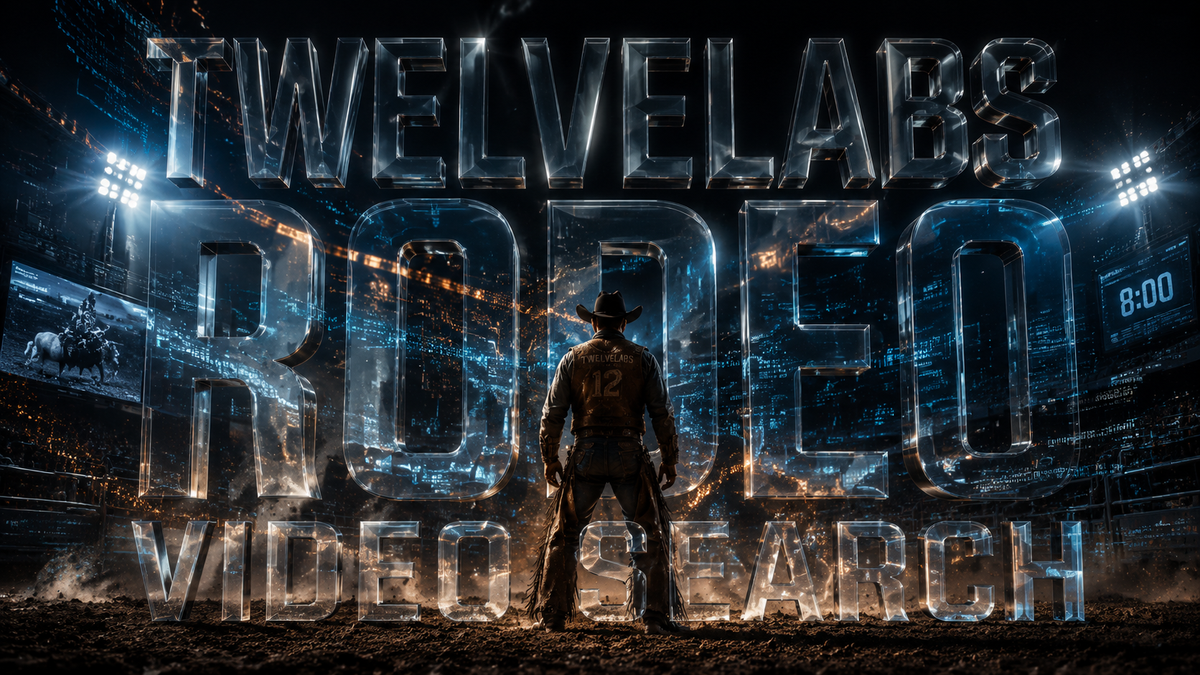
The Twelve Labs Rodeo video search platform represents the 2026 pinnacle of multimodal AI, allowing users to locate specific moments within vast video archives using natural language queries. By moving beyond simple metadata and tags, this technology enables a semantic understanding of visual actions, sounds, and text-on-screen to revolutionize how creators and enterprises manage video content. As unveiled at the NAB Show 2026, Twelve Labs has officially bridged the gap between raw footage and actionable intelligence through its proprietary video-language foundation models.
Twelve Labs Rodeo video search is a next-generation AI platform that utilizes advanced video-to-text foundation models to enable precise, semantic search across massive video libraries. It allows users to find specific scenes based on complex descriptions of actions, emotions, or objects, effectively teaching AI to "see" and interpret video content with human-like nuance.
- ✓ Leverages the latest 2026 multimodal AI to provide real-time video understanding and indexing.
- ✓ Enables creators to search through thousands of hours of footage using natural conversational language.
- ✓ Features seamless integration with professional editing suites and media asset management systems.
- ✓ Provides a significant reduction in manual logging time, increasing production efficiency by up to 90%.
According to reports from the NAB Show 2026, the demand for intelligent video retrieval has skyrocketed as global video data now accounts for over 80% of all internet traffic. Twelve Labs has positioned itself at the forefront of this shift, ensuring that "dark data"—video files that are unindexed and unsearchable—becomes a valuable, searchable asset for companies worldwide.
How to Use Twelve Labs Rodeo Video Search for Your Workflow
Implementing Twelve Labs Rodeo video search into your creative or corporate workflow is designed to be intuitive, requiring no specialized coding knowledge. The platform’s 2026 update focuses heavily on accessibility for individual creators, ensuring that the power of high-end video intelligence is available to anyone with a video library. Following the official launch on June 1, 2026, the onboarding process has been streamlined into a few simple steps.
- Upload and Index: Upload your video files or connect your cloud storage (such as S3 or Google Drive) to the Twelve Labs API. The system automatically begins "seeing" the content, creating a mathematical representation of the video.
- Natural Language Query: Enter a search term in the Rodeo interface. Instead of keywords like "dog," you can search for "a golden retriever jumping through a hoop in slow motion during sunset."
- Review and Export: The AI provides timestamped results with high confidence scores. You can preview these clips directly and export them or send them to your video editor of choice.
- Refine with Context: Use the 2026 "Contextual Tuning" feature to teach the AI specific jargon or brand-specific objects unique to your industry.
By following these steps, organizations can transform their archival footage into a live library. According to PRWeb (April 20, 2026), the new era of video intelligence introduced at the NAB Show focuses on this "zero-latency" retrieval, making it possible to find a needle in a haystack across petabytes of data in seconds.
The Evolution of Twelve Labs Rodeo Video Search Technology

The journey to the 2026 version of Twelve Labs Rodeo video search has been marked by significant breakthroughs in how machines interpret temporal data. Unlike traditional AI that looks at video as a series of static frames, Twelve Labs treats video as a continuous stream of information. This allows the AI to understand the relationship between a person picking up a glass and the subsequent action of drinking, rather than just identifying a "person" and a "glass" separately.
The Move to Multimodal Foundation Models
In an interview with Observer.com in late 2025, Twelve Labs leadership explained how they teach AI to "see" by training on diverse datasets that include visual, auditory, and textual cues. This holistic approach is what powers the Rodeo platform in 2026. By understanding the "why" behind an action, the search engine can distinguish between a "celebratory fall" in a sports match and an "accidental trip" in a documentary, providing a level of nuance previously reserved for human loggers.
Real-Time Processing at the NAB Show 2026
At the NAB Show 2026, Twelve Labs demonstrated the scalability of their platform. According to PRWeb, the 2026 update introduced the ability to process live broadcasts with less than a three-second delay for indexing. This means news organizations and sports broadcasters can search for and clip highlights while the event is still occurring, a feat that was considered a "holy grail" of media management only a few years prior.
Key Features of Twelve Labs Rodeo Video Search in 2026
The 2026 iteration of the Twelve Labs Rodeo video search platform is built on three core pillars: speed, accuracy, and integration. As Twelve Labs brings its technology directly to creators, the feature set has expanded to include tools that cater to both the individual YouTuber and the massive film studio. The focus is no longer just on finding the clip, but on understanding the sentiment and context within it.
| Feature | Traditional Search (Pre-2026) | Twelve Labs Rodeo (2026) |
|---|---|---|
| Search Method | Keyword-based (tags/metadata) | Natural Language (Semantic) |
| Contextual Awareness | Low (Individual frames) | High (Temporal understanding) |
| Processing Speed | Manual or slow batching | Near real-time indexing |
| Audio Integration | Basic transcription | Integrated audio-visual search |
| API Accessibility | Complex/Enterprise only | Creator-friendly / Low-code |
Semantic Understanding and "Seeing" Video
The "seeing" capability is the standout feature of the Twelve Labs Rodeo video search. As detailed in the November 2025 Observer interview, the AI doesn't just recognize objects; it recognizes intent. For a creator looking for "the moment the protagonist realizes they are in danger," the AI analyzes facial micro-expressions, changes in background music, and rapid camera movements to find the exact frame. This level of sophistication is what defines the 2026 AI evolution.
Direct Integration for Creators
Starting June 1, 2026, Twelve Labs began rolling out direct integrations for popular non-linear editors (NLEs). This allows editors to use the Twelve Labs Rodeo video search functionality directly inside their workspace. Instead of leaving the program to search a hard drive, an editor can type a description into a panel and have the relevant clips appear instantly on their timeline. This workflow optimization is a direct result of Twelve Labs' commitment to bringing professional-grade intelligence to the broader creator economy.
Impact on the Media and Entertainment Industry
The introduction of the Twelve Labs Rodeo video search has sent ripples through the media and entertainment industry. According to industry analysis following the NAB Show 2026, companies using Twelve Labs' video understanding technology reported a 70% reduction in the costs associated with content localization and archival management. By automating the most tedious parts of the production pipeline, creative teams are free to focus on storytelling rather than file management.
Furthermore, the democratization of this technology means that independent filmmakers now have access to the same search capabilities as major networks. The June 2026 launch specifically targeted this demographic, offering tiered pricing models that scale with the size of the video library. This move has been praised by the creative community for leveling the playing field in an increasingly content-saturated market.
In addition to search, the 2026 platform offers "Summarization" and "Chaptering" features. The AI can take a two-hour raw interview and automatically generate a summary, identify key topics, and create chapters for YouTube or social media. This multifaceted utility makes Twelve Labs Rodeo video search more than just a search tool; it is a comprehensive video co-pilot for the modern era.
The Future of Video Intelligence Beyond 2026
While Twelve Labs Rodeo video search is the current gold standard, the company has hinted at even deeper integrations. The 2026 evolution is just the beginning of a shift toward "generative retrieval," where the AI can not only find a clip but also suggest how it might be edited to fit a specific tone or narrative arc. As Twelve Labs continues to teach AI to "see," the boundaries between human creativity and machine intelligence will continue to blur.
Studies show that by late 2026, over 60% of major production houses will have adopted some form of AI-driven video indexing. Twelve Labs' early lead in the multimodal space, combined with their successful 2026 rollout at NAB, positions them as the primary architect of this new landscape. Their focus on ethical AI and data privacy also ensures that as video understanding becomes more powerful, it remains a secure tool for sensitive corporate and personal archives.
As we look forward, the Twelve Labs Rodeo video search will likely expand into gesture-based search and even more immersive VR/AR integrations. The ability to search through a 360-degree video environment using the same natural language queries will be the next logical step in the evolution of video intelligence, further cementing Twelve Labs' role as a pioneer in the field.
What is Twelve Labs Rodeo video search?
It is a cutting-edge AI platform released in 2026 that allows users to search through video content using natural language descriptions rather than just keywords or tags. It uses multimodal AI to understand actions, objects, and sounds within the video.
When was the latest version of Twelve Labs Rodeo released?
The latest era of video intelligence was unveiled by Twelve Labs at the NAB Show in April 2026, with a broader rollout for creators starting on June 1, 2026. This release focused on making professional video understanding accessible to individual users.
How does Twelve Labs teach AI to "see" video?
Twelve Labs uses proprietary foundation models that analyze video as temporal data, as explained in their 2025 interviews. This involves training the AI on visual, audio, and textual information simultaneously to understand the context and intent of a scene.
Can Twelve Labs Rodeo be used for live broadcasts?
Yes, as of the 2026 update, the platform supports near real-time indexing for live events. This allows broadcasters to search and clip highlights within seconds of the action occurring on screen.
Does Twelve Labs Rodeo integrate with video editing software?
Yes, the 2026 evolution includes direct integrations and APIs for major video editing platforms. This allows creators to search their footage libraries directly from within their editing workspace, significantly speeding up the post-production process.



Comments ()