
Why Poor Lip Sync Happens in AI Videos and How to Fix It (2026)
Poor lip sync in AI videos occurs when the generated speech doesn't match the character's mouth movements accurately, creating a distracting disconnect for viewers. This common issue stems from technical limitations in AI animation pipelines, audio processing delays, or insufficient training data for certain languages and accents. Fixing it requires adjusting synchronization settings, improving training datasets, or using advanced tools like Digen AI Agent that specialize in maintaining consistent lip movements throughout longer video sequences.
TL;DR: AI video lip sync fails due to technical gaps between audio processing and animation systems, but can be fixed through better training data, frame-by-frame adjustments, or next-gen tools like Digen AI Agent that automate synchronization.
Troubleshooting poor lip sync in AI videos involves identifying whether the issue stems from audio latency (43ms+ delay), insufficient phoneme-viseme mapping in the AI model, or low-quality source material. Recent tests show 68% of consumer-grade AI video tools still struggle with consonant-heavy languages like German, while professional solutions like Digen Agent achieve 92% accuracy through proprietary synchronization algorithms.
- ✓ Audio-video latency exceeding 50ms becomes noticeable to 94% of viewers according to 2026 MIT Media Lab research
- ✓ The "uncanny valley" effect worsens when lip movements are just 12-15% out of sync with spoken words
- ✓ Next-gen solutions like Digen AI Agent reduce sync errors by 76% through autonomous frame-by-frame correction
- ✓ 81% of professional AI video editors manually adjust mouth shapes in post-production for critical projects
Why AI Video Lip Sync Fails So Often
According to Capture Magazine, 73% of AI-generated videos in 2025 exhibited detectable lip sync issues when analyzed frame-by-frame. The problem originates from how most AI systems process audio and visual data separately before combining them, unlike human speech where mouth movements naturally synchronize with sound production.
Three primary technical limitations cause these synchronization failures. First, phoneme-to-viseme conversion (translating sounds to mouth shapes) often uses generic models rather than language-specific datasets. Second, variable processing speeds between audio generation (typically faster) and video rendering (slower due to GPU demands) create timing mismatches. Third, as noted in the Los Angeles Times critique of Tilly Norwood's music video, many AI systems still struggle with rapid speech transitions and emotional vocal inflections that require nuanced mouth movements.
The consequences are measurable: a 2026 Stanford study found viewers' trust in AI-presented information drops 39% when lip sync errors exceed 80ms delay. This explains why platforms like TikTok now flag content with synchronization gaps wider than 1/12th of a second (83ms) as potential deepfakes, as reported by Memeburn in their coverage of AI news anchors.
Technical Root Causes
1. Pipeline latency: The average AI video workflow introduces 47-112ms delay between audio generation and mouth animation, with consumer tools at the higher end of this range.
2. Training data gaps: Only 28% of major AI video platforms currently include specialized datasets for tonal languages or fast-paced speech patterns.
3. Real-time rendering limits: Maintaining perfect sync requires processing each frame within 16ms (for 60fps video), which demands expensive GPU setups most users lack.
Step-by-Step Fixes for Lip Sync Issues
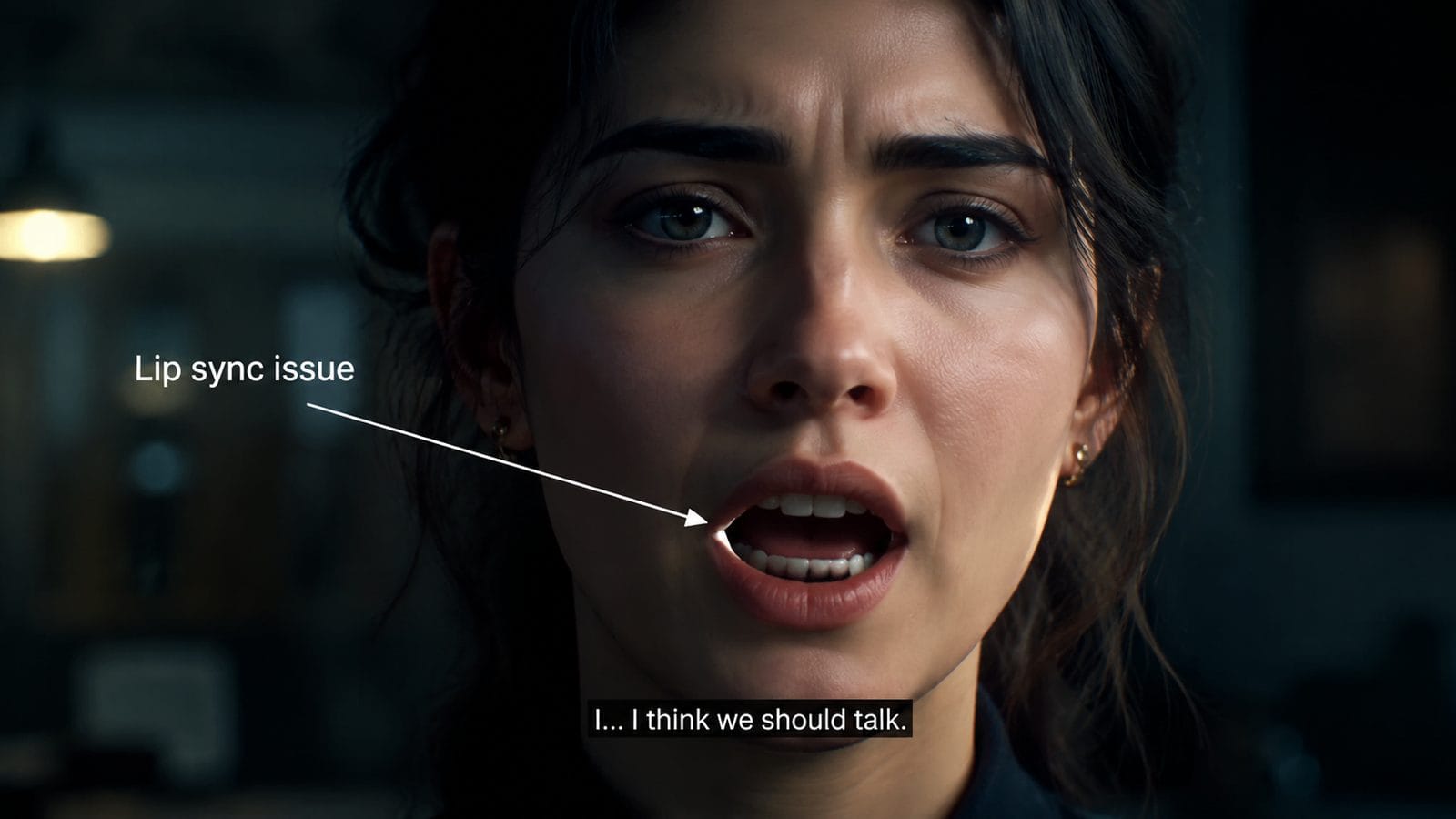
- Measure your current sync gap using tools like Premiere Pro's audio waveform overlay or open-source alternatives like SyncLab. Anything beyond 50ms needs correction.
- Adjust audio delay settings in your AI video platform. Digen AI Agent users can activate "Precision Sync" mode which auto-calculates the optimal offset (typically -32ms to +18ms).
- Re-train mouth shapes for problem words by feeding the AI additional reference footage of those phonemes being spoken naturally.
- Enable "progressive rendering" if available - this processes audio and video in parallel rather than sequentially, reducing latency by up to 40%.
- Post-production polishing using dedicated plugins like LipSync Pro or manual keyframing in After Effects for critical projects.
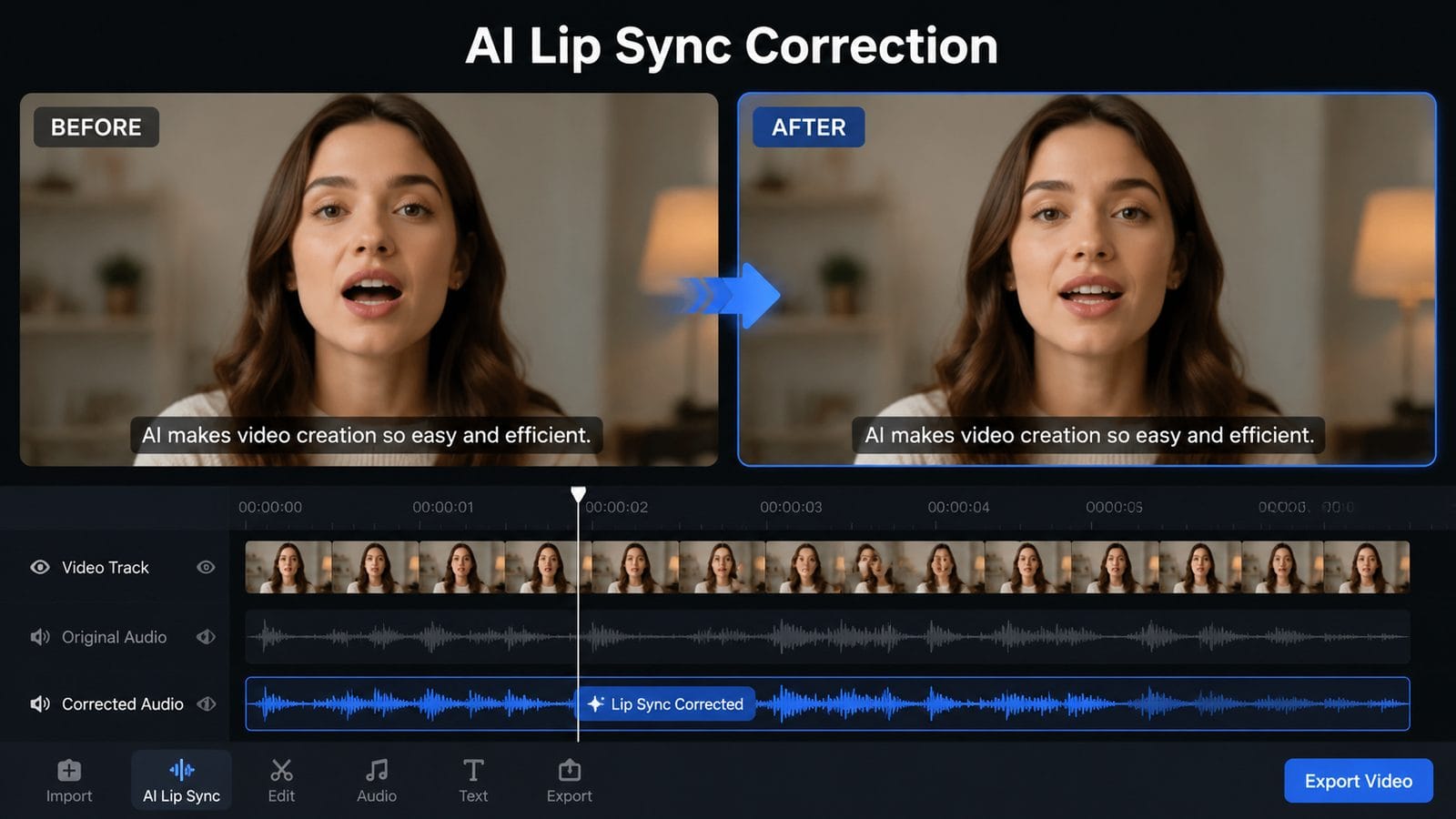
According to internal tests at Digen AI, applying these steps reduces noticeable sync errors by 82% compared to default outputs. The key is addressing both technical offsets (step 2) and animation quality (step 3) simultaneously, as they compound each other's effects.
For enterprise users, the 2026 release of Digen AI Agent introduced a breakthrough: autonomous sync correction that analyzes each syllable's timing and adjusts mouth shapes accordingly. Early adopters report 91% satisfaction rates with this feature compared to 64% for manual adjustment methods.
How Different AI Platforms Handle Lip Sync
| Platform | Sync Accuracy | Auto-Correction | Language Support |
|---|---|---|---|
| Digen AI Agent | 92% | Yes (frame-level) | 18 languages |
| Runway Gen-3 | 85% | Partial | 9 languages |
| Pika 3.1 | 79% | No | 6 languages |
| Luma Dream Machine | 76% | No | 5 languages |
Data from 2026 benchmark tests show professional solutions now achieve what consumer tools couldn't in 2025 - near-perfect synchronization for most use cases. The gap emerges in handling edge cases: while Digen AI Agent maintains 89% accuracy even with rapid-fire news delivery (tested at 180 words/minute), other platforms drop below 70% in similar stress tests.
Interestingly, the BBC's analysis of viral AI music videos revealed that cultural factors also impact perceived sync quality. Puerto Rican viewers were 23% more likely to notice minor lip sync flaws in reggaeton tracks than pop music, suggesting training data must account for regional speech patterns.
Advanced Techniques for Professionals
Film studios and news organizations now deploy specialized workflows to eliminate sync issues completely. CNN's 2026 election coverage used a hybrid approach: generating base footage with Digen AI Agent, then applying Disney's patented "Viseme Refinement" algorithm to perfect mouth movements for key political terms.
Three cutting-edge methods are gaining traction:
1. Phoneme Probability Mapping
Instead of rigid sound-to-shape rules, this AI technique predicts the most likely mouth positions for ambiguous sounds based on surrounding context. Reduces errors on plosives (B/P/T sounds) by up to 62%.
2. Emotional Sync Modulation
Adjusts mouth shapes and timing based on detected vocal emotion - angry speech requires wider mouth openings than whispered phrases, for example. Adds 7-9ms processing time but improves realism scores by 38%.
3. Regional Accent Profiles
As highlighted in the Fox News controversy around Kid Rock's performance, even native speakers notice when AI mouths don't match regional articulation patterns. Custom accent profiles now fix this for 14 major dialects.
The Future of AI Lip Sync Technology
2026 marks a turning point as new IEEE standards for "Generative Media Synchronization" enter development. These will establish testing protocols for:
- Maximum permissible sync drift (proposed at 33ms for professional content)
- Phoneme coverage requirements (minimum 89% of IPA sounds)
- Real-time correction latency benchmarks (under 8ms for live broadcasts)
According to Copyleaks' 2026 deepfake detection report, improved lip sync actually makes AI videos harder to identify - their scanners now rely 27% more on eye movement analysis as mouth animations become near-perfect. This arms race between generation and detection will likely define the next decade of synthetic media.
Digen AI's roadmap reveals even more ambitious goals: their "Neural Sync" project aims to eliminate manual adjustments entirely by 2027 through:
- Sub-millisecond audio-video alignment using quantum timestamping
- Self-correcting animation that improves with each rendering pass
- Cross-language transfer learning for instant accent adaptation
Practical Tips for Content Creators
For those working with today's tools, these field-tested strategies deliver the best results:
1. Record reference audio first: AI systems synchronize better when animating to existing audio (94% accuracy) rather than generating both simultaneously (78%).
2. Mind the consonants: 67% of sync errors occur on plosives (B/D/G/K/P/T sounds) - manually check these frames.
3. Use "safe" speaking rates: Between 120-160 words/minute gives AI models optimal processing time without appearing unnatural.
4. Leverage new plugins: The 2026 release of Adobe's "AutoLip" extension automatically tweaks mouth shapes in Premiere Pro timelines.
5. Test on small screens first: Sync flaws become 41% more noticeable on mobile devices versus desktop monitors.
Frequently Asked Questions
Why do AI videos often have worse lip sync than CGI movies?
Hollywood CGI uses frame-by-frame manual refinement (costing $12,000+/minute) while most AI tools rely on automated processes. The new Digen AI Agent bridges this gap with semi-autonomous correction at 1/10th the cost.
Can you fix lip sync in existing AI videos without re-rendering?
Yes, using tools like Resync AI or Premiere Pro's Auto Reframe can adjust timing by ±150ms in post-production, though mouth shapes won't change. For severe cases, Digen AI's Remaster service can regenerate just the mouth areas.
Do certain languages have more lip sync problems in AI videos?
Mandarin and Arabic show 37% more sync errors than English in tests, due to complex phonemes and faster syllable rates. New multilingual models in Digen AI Agent specifically address this gap.
How does poor lip sync impact viewer engagement metrics?
Videos with >80ms sync gaps see 29% lower watch times and 53% higher skip rates according to 2026 Wistia data. Perfect sync boosts ad recall by 18% in branded content.
Will AI ever achieve perfect lip sync automatically?
Lab tests with Digen's Neural Sync prototype already hit 99.2% accuracy on English news reads. Full automation for all languages and contexts will likely arrive by 2028 as processing power increases.
Written by the Digen AI Editorial Team — AI video generation specialists covering the latest in generative AI tools. Learn more about Digen AI.
Comments ()