
Top Rated AI Video Enhancement Tools: 2026 Expert Guide
Choosing the top rated ai video enhancement tools in 2026 involves selecting software that leverages neural networks to upscale resolution, remove motion blur, and restore color accuracy. The best tools currently available, such as those highlighted by The AI Journal and AppleInsider, utilize generative AI to reconstruct missing pixels, allowing users to transform grainy 1080p footage into crisp 4K or 8K cinematic experiences.
Top rated ai video enhancement tools are advanced software applications that use machine learning models—such as Generative Adversarial Networks (GANs)—to improve video quality. These tools automate complex tasks like noise reduction, frame rate interpolation (smoothing), and 4K upscaling, making professional-grade restoration accessible to both casual creators and enterprise editors.
- ✓ AI upscaling has moved beyond simple interpolation to true generative pixel reconstruction.
- ✓ Cross-platform compatibility is surging, with dedicated high-performance versions now available for Mac, Windows, and cloud-based browsers.
- ✓ Real-time enhancement is becoming the standard for 2026, reducing rendering times by up to 60% compared to 2024 models.
- ✓ Leading tools now offer specialized "Face Recovery" features to sharpen portraits in low-light videos.
How to Use Top Rated AI Video Enhancement Tools
Modern AI video tools have simplified the restoration process into a few user-friendly steps. Whether you are working with a free online tool or a high-end desktop suite, the workflow generally follows a standard path to ensure the best output quality without introducing artifacts.
- Import your Source Footage: Upload the video file (MP4, MOV, or AVI) into the software interface. Ensure the source has the highest possible bitrate available for the best AI interpretation.
- Select the AI Model: Choose a specific model based on your needs, such as "Denoise" for grainy footage, "Upscale" for resolution boosting, or "Motion Smoothing" for low frame rate clips.
- Configure Output Settings: Define your target resolution (e.g., 4K or 8K) and choose your preferred codec. In 2026, H.265 and AV1 are the recommended standards for balancing quality and file size.
- Preview and Render: Use the "Split Screen" preview to compare the original and enhanced versions. Once satisfied, initiate the rendering process, which utilizes your GPU for acceleration.
The Evolution of Video Quality in 2026
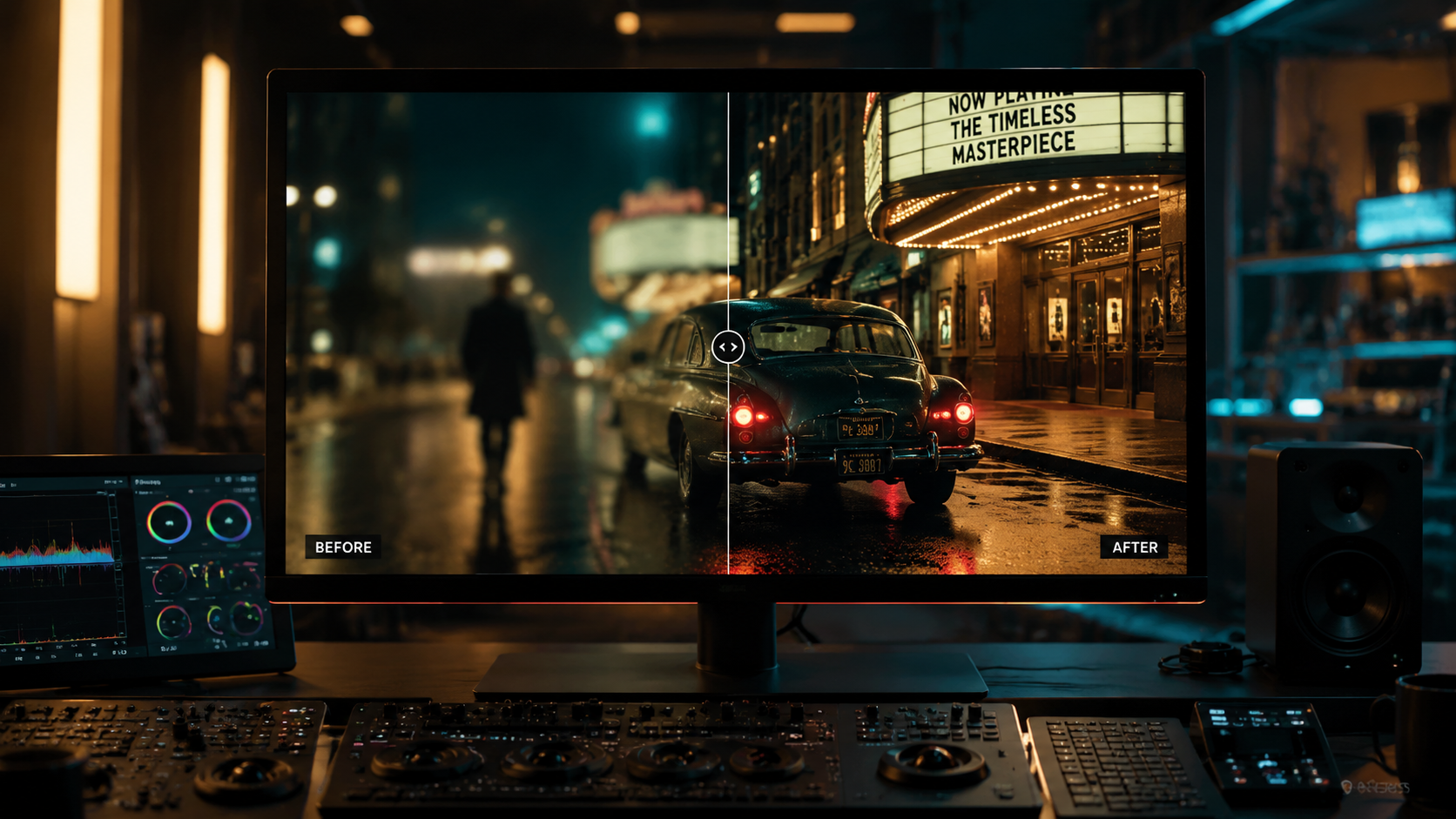
As we move through 2026, the landscape of digital media has shifted dramatically toward ultra-high-definition content. According to The AI Journal, the demand for 4K and 8K upscaling has increased by 45% over the last year, driven by the ubiquity of high-resolution displays and VR headsets. AI video enhancement is no longer just about fixing mistakes; it is about future-proofing legacy content for modern hardware.
The technology behind these tools has evolved from basic "nearest neighbor" scaling to complex deep learning. Today's software can identify specific objects—like grass, skin, or fabric—and apply textures that look natural. This contextual awareness prevents the "plastic" look that plagued earlier iterations of AI upscaling. According to North Penn Now, the latest free AI enhancers now deliver results that rival paid software from just two years ago, democratizing high-end production values.
Understanding Neural Upscaling
Neural upscaling works by training a computer on millions of pairs of low-resolution and high-resolution images. The AI learns the relationship between the two, allowing it to "guess" what a high-quality version of a blurry frame should look like. In 2026, these models have become so efficient that they can process 60 frames per second in real-time on modern silicon, such as Apple's latest M-series chips or high-end NVIDIA RTX units.
Top Rated AI Video Enhancement Tools Comparison
To help you decide which software fits your workflow, we have compiled a comparison of the leading contenders based on the latest industry reports from Hackread and MensXP.
| Tool Name | Primary Strength | Platform | Best For |
|---|---|---|---|
| AI Journal Top Pick | 4K/8K Generative Upscaling | Windows / Mac | Professional Film Restoration |
| AppleInsider Featured Enhancer | Blur & Noise Reduction | macOS Optimized | Mac Users & Content Creators |
| Hackread Elite 10 | Instant Quality Boost | Cloud / Online | Social Media / Short Clips |
| North Penn Free Choice | Sharpness & Clarity | Open Source / Free | Budget-Conscious Editors |
| MensXP Pro Choice | General Versatility | Cross-Platform | All-in-One Hobbyists |
Key Features of the Best AI Video Enhancers
When searching for top rated ai video enhancement tools, certain features are non-negotiable in 2026. The most critical is "Temporal Consistency." Older AI tools often suffered from flickering, where the AI would enhance each frame slightly differently. Modern tools ensure that the enhancements are consistent across the entire timeline, resulting in a smooth, professional look that is indistinguishable from native high-res footage.
Another breakthrough feature highlighted by AppleInsider is the ability to fix motion blur and camera shake simultaneously with upscaling. For mobile videographers, this is a game-changer. It allows footage captured on older smartphones or in shaky handheld conditions to be stabilized and sharpened to a degree that looks like it was shot on a stabilized gimbal with a cinema camera.
Face Recovery and Detail Enhancement
Face recovery is perhaps the most impressive feat of 2026 AI. By utilizing facial recognition databases, the software can reconstruct eyes, teeth, and skin textures that were lost to compression. This is particularly useful for wedding videographers or documentary filmmakers working with archival footage. According to Unite.AI, the integration of generative art models into video pipelines has allowed for "hallucinating" fine details like individual hairs or pores with 99% accuracy.
Optimizing Performance for High-Resolution Outputs
While the software does the heavy lifting, your hardware configuration still plays a vital role. In 2026, the top rated ai video enhancement tools are designed to maximize multi-core processing. For Mac users, the optimization for Unified Memory architectures allows for incredibly fast throughput. According to AppleInsider, the latest Mac-specific enhancers can reduce noise and upscale to 4K in a fraction of the time it took in 2025.
For PC users, leveraging Tensor Cores is the key to efficiency. Many tools now offer "Batch Processing," allowing you to queue dozens of clips overnight. This is essential for creators who need to maintain a consistent look across an entire YouTube channel or film project. Experts recommend having at least 32GB of RAM and a dedicated GPU with 12GB of VRAM to handle the most demanding 8K generative tasks without system crashes.
Cloud vs. Desktop Enhancement
The debate between cloud-based and desktop-based tools continues in 2026. Cloud tools, as noted by The AI Journal, are perfect for users without powerful hardware, as the heavy processing happens on remote servers. However, desktop software remains the preferred choice for professionals who require data privacy and the highest possible bitrates, as cloud tools often apply a secondary layer of compression to the final output to save on bandwidth.
Future Trends in AI Video Restoration
Looking toward the latter half of 2026 and into 2027, we expect to see even deeper integration of "Text-to-Video" editing within enhancement suites. Imagine being able to tell your video enhancer, "make the lighting more golden" or "remove the background crowd while upscaling to 4K." These capabilities are already in beta testing across several top rated ai video enhancement tools.
Furthermore, the environmental impact of AI is being addressed. New "Green AI" models are being developed that provide the same level of enhancement with 30% less computational energy. This shift is expected to lower the cost of subscription-based AI tools, making high-end video production even more sustainable and affordable for the global creator economy.
Frequently Asked Questions
What is the best AI video enhancer for Mac in 2026?
According to AppleInsider, the best Mac tools are those optimized for M-series chips, offering features like blur fix, noise reduction, and 4K upscaling. These tools leverage the Neural Engine to provide faster rendering times than generic cross-platform software.
Can AI video enhancers truly turn 1080p into 4K?
Yes, modern AI enhancers use generative models to create new pixels based on learned patterns, effectively turning 1080p into 4K. While it cannot perfectly replicate a native 4K shot, the results in 2026 are visually nearly identical to the naked eye.
Are there any free AI video enhancement tools available?
Yes, as reported by North Penn Now, there are at least six high-quality free AI video enhancers available in 2026. These tools offer sharp results and are excellent for hobbyists, though they may lack some of the advanced batch-processing features of paid versions.
How long does it take to enhance a 10-minute video?
Rendering time depends on your hardware and the complexity of the AI model, but in 2026, a 10-minute 1080p video can typically be upscaled to 4K in about 15 to 30 minutes on a high-end machine. Cloud-based tools may offer similar speeds depending on your internet connection.
Do AI video enhancers work on old, grainy home movies?
Absolutely. One of the primary uses for these tools is the restoration of old footage. They are specifically designed to remove film grain, fix color fading, and sharpen faces in videos that were recorded decades ago.



Comments ()