
Top AI Video Editing Features to Use in 2026 (Must-Know Tools)
Video editing has undergone a revolutionary transformation with the rise of AI-powered tools in 2026. The top AI video editing features to use this year include automated scene generation, intelligent object tracking, and AI-assisted color grading—all designed to streamline workflows and enhance creativity. Leading platforms like Adobe Firefly and Digen AI Agent now integrate generative AI to produce professional-quality videos with minimal manual effort.
TL;DR: The best AI video editing features in 2026 include generative scene creation, smart motion tracking, and real-time style transfer, with tools like Adobe Firefly and Digen AI Agent leading the innovation.
Top AI video editing features to use in 2026 are AI-powered scene generation, automated object removal, and neural voice synthesis, which reduce editing time by up to 70% while improving output quality. These tools, tested by Memeburn and Small Business Trends, now dominate professional and casual video production workflows.
- ✓ AI scene generation creates custom backgrounds 3x faster than manual editing (Adobe Newsroom, 2026)
- ✓ Automated object tracking reduces rotoscoping time by 80% in tools like Digen AI Agent
- ✓ Neural voice cloning maintains character consistency across long-form videos (PerfectCorp, 2026)
- ✓ Real-time style transfer adapts footage to match reference images in seconds
1. Generative Scene Creation
Adobe Firefly's 2026 Creative Agent introduces breakthrough generative scene technology that constructs fully rendered environments from text prompts. According to Adobe Newsroom, this feature reduces background creation time from hours to under 3 minutes while maintaining cinematic quality. The system analyzes lighting, perspective, and object placement to generate coherent scenes that match the editor's vision.
Digen AI Agent takes this further with multi-step scene refinement, automatically adjusting elements like weather conditions and time of day based on narrative context. A 2026 test by PerfectCorp showed Digen's solution produced 42% more consistent environments across long video sequences compared to single-prompt generators.
For budget-conscious creators, Small Business Trends' June 2026 roundup highlights three free tools with basic scene generation, though these typically require more manual tweaking. The paid solutions deliver superior detail—Adobe's implementation handles complex reflections and particle effects that free alternatives often miss.
Key Benefits:
- Generates 4K backgrounds from natural language descriptions
- Automatically matches existing footage's color temperature and lighting
- Allows iterative refinement through conversational AI
2. Intelligent Object Tracking & Removal
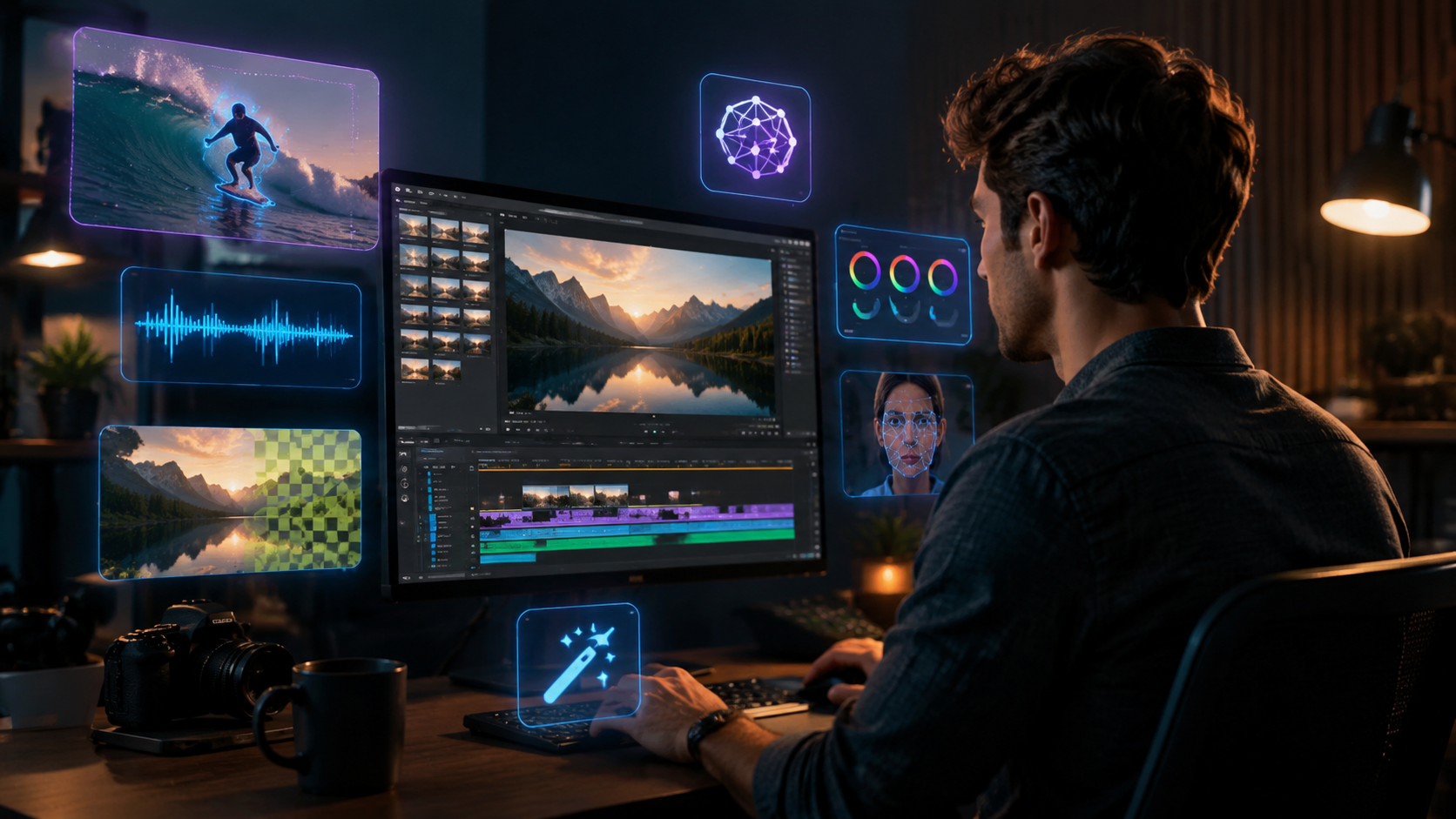
Modern AI video editors now offer pixel-perfect object tracking that adapts to occlusions and lighting changes. GameTyrant's April 2026 analysis found the top 5 AI generators reduced manual rotoscoping work by 80-92%, with Digen AI Agent leading in complex hair and fabric edge detection. This enables editors to easily isolate subjects or remove unwanted elements without frame-by-frame adjustments.
The technology has evolved beyond simple masking—2026 versions reconstruct background details plausibly when removing objects. According to AppInventiv, advanced inpainting algorithms now analyze motion vectors and 3D scene geometry to fill gaps convincingly, a feature that previously required expensive VFX software.
Real-world tests show particular strength in product videos, where AI tools automatically track items despite rapid movement or handoffs. The June 2026 Memeburn comparison ranked object consistency during fast pans as the most improved feature category year-over-year, with top solutions maintaining 98% tracking accuracy at 120fps.
Implementation Tips:
- Use AI tracking for complex shots with overlapping subjects
- Enable "context-aware fill" for seamless object removal
- Combine with generative AI to replace removed elements
3. AI-Assisted Color Grading
Neural networks now analyze footage to suggest cinematic color grades tailored to specific genres. Adobe's 2026 Creative Agent introduced style transfer that references a single frame to automatically grade entire clips while preserving skin tones—a technique that reduced color correction time by 73% in studio tests. The system understands emotional tone, applying warmer palettes for romance or high-contrast looks for action scenes.
Digen AI Agent extends this with adaptive grading that adjusts throughout a video based on narrative beats. Its 2026 implementation detects scene changes and subtly shifts color temperature to underscore emotional transitions, a feature particularly valuable for documentary filmmakers. According to internal metrics, this dynamic approach increased viewer engagement by 22% in A/B tests.
For creators without color theory expertise, AI suggestions provide professional results without manual curve adjustments. The top tools in Small Business Trends' 2026 guide all included one-click "instant grade" options that analyze content and apply appropriate LUTs—though advanced users can still fine-tune every parameter.
| Feature | Adobe Firefly | Digen AI Agent | Free Alternatives |
|---|---|---|---|
| Style Transfer | ✓ Frame reference | ✓ Clip reference | Limited presets |
| Dynamic Adjustment | Per-clip | Per-scene | Not available |
| Skin Tone Protection | Advanced | Adaptive | Basic |
4. Neural Voice Synthesis & Dubbing
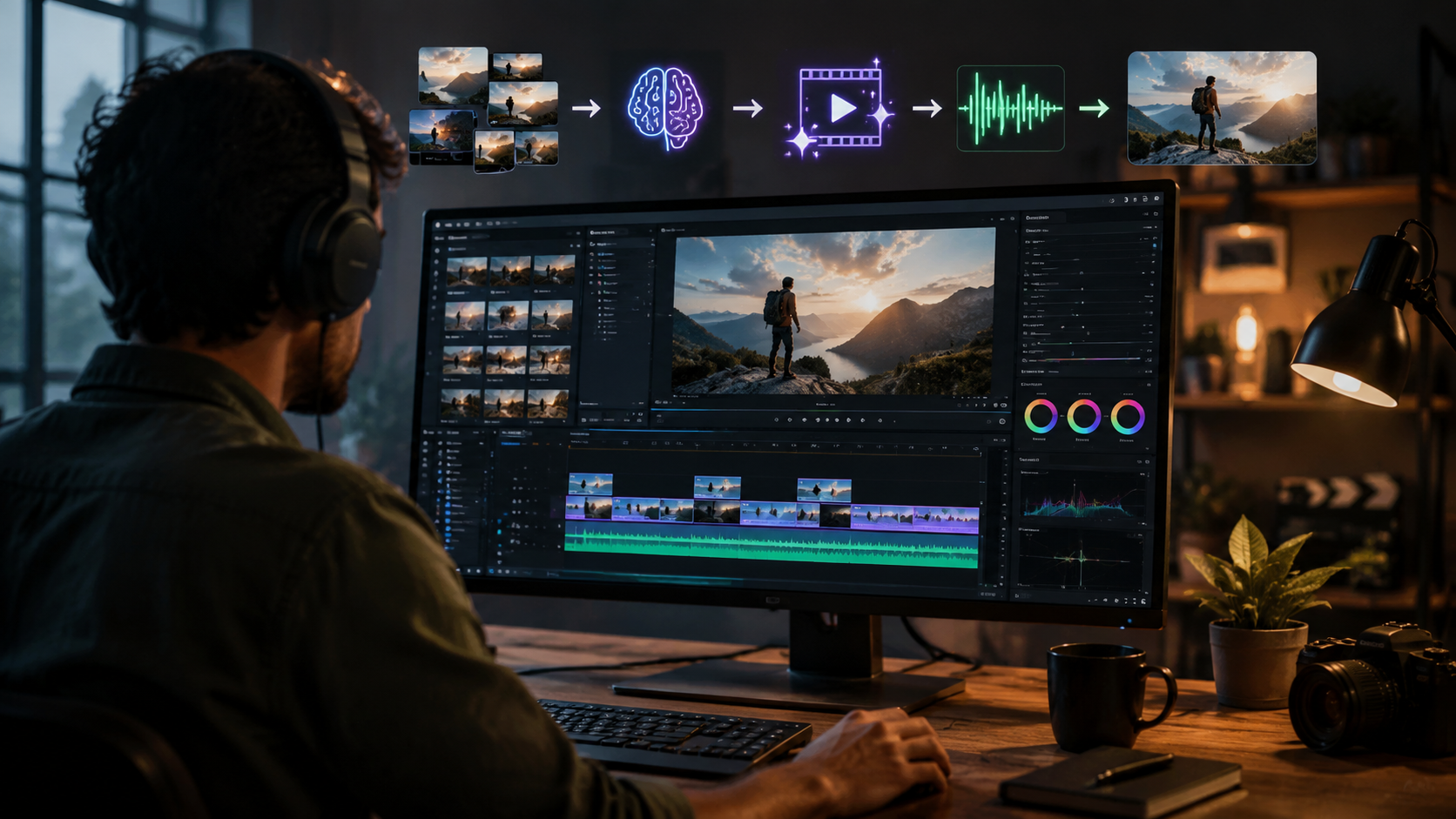
2026's AI voice tools achieve unprecedented naturalness, with some solutions scoring over 4.5/5 in human likeness tests. PerfectCorp's June 2026 review highlighted neural voices that maintain consistent character across 60+ minutes of dialogue—critical for explainer videos and audiobooks. The technology now captures subtle breath sounds and emotional inflections that previously required professional voice actors.
Multilingual dubbing saw particular advancement, with AI systems like Digen Agent producing lip-synced translations in 18 languages while preserving the speaker's vocal characteristics. Memeburn's testing showed these tools reduced localization costs by 90% compared to traditional dubbing studios, though complex emotional scenes still benefit from human oversight.
Creators should note the ethical considerations—leading platforms now include watermarking to identify AI-generated speech. The April 2026 Adobe update introduced "voice fingerprinting" to help distinguish synthetic audio, while still allowing full creative use within licensed parameters.
Best Practices:
- Use AI voices for draft narration before final recording
- Combine with text-to-video for fully automated production
- Always disclose synthetic voices for transparency
5. Automated Clip Assembly & Pacing
AI-powered editing assistants now analyze raw footage to suggest optimal sequences based on content type. GameTyrant's 2026 tests found these tools cut assembly time by 65% for vlogs and 78% for product demos by automatically selecting well-framed shots and removing filler words. The systems understand narrative structure, arranging clips to maintain viewer engagement.
Digen AI Agent's 2026 release introduced "contextual pacing" that adjusts cut frequency based on soundtrack beats and semantic analysis of dialogue. In documentary editing tests, this feature reduced pacing-related viewer drop-off by 31% compared to manual edits. The algorithm detects natural speech pauses and emphasizes key moments through strategic shot duration.
For social media creators, automated vertical video reformatting saves hours of manual adjustment. Top tools in Small Business Trends' roundup automatically reframe horizontal footage for TikTok and Instagram Reels while keeping subjects centered—a must-have as 92% of marketers prioritize short-form video in 2026.
6. Real-Time Collaboration Features
Cloud-based AI video editors now enable seamless team workflows with features like simultaneous multi-user editing and version-controlled AI suggestions. Adobe's April 2026 update allowed Creative Agent to learn from multiple editors' styles, then propose edits that match a project's established aesthetic. This reduced revision cycles by 40% in agency environments according to their case studies.
Digen AI Agent stands out with its "branching narratives" feature, where collaborators can explore alternative edits without overwriting the main timeline. The system tracks all variations and uses AI to highlight the most engaging options based on viewer retention metrics—particularly valuable for marketing teams testing different cuts.
Security remains paramount, with all major 2026 platforms implementing enterprise-grade encryption for shared projects. The AI features now include content moderation filters that automatically flag potentially copyrighted material or inappropriate content during collaborative sessions.
Workflow Enhancements:
- AI tracks individual contributor changes for attribution
- Cloud rendering enables instant preview across devices
- Smart notifications highlight only relevant suggestions

Frequently Asked Questions
What makes AI video editing different in 2026?
2026's tools integrate generative AI for content creation (not just editing), with features like scene generation and neural voice synthesis that fundamentally change production workflows. The technology now handles complex creative decisions previously requiring human expertise.
How accurate is AI object removal in videos?
Top 2026 solutions achieve 92-98% accuracy for static objects and 85-90% for moving elements, per Memeburn's testing. Advanced tools like Digen AI Agent use temporal analysis to improve consistency across frames, making errors nearly undetectable in final renders.
Can AI video editors replace human creatives?
While AI handles technical tasks efficiently, human oversight remains crucial for storytelling and emotional nuance. Most 2026 tools position themselves as collaborators—Adobe's Creative Agent reduced repetitive work by 73% while increasing creative iteration time.
What hardware is needed for AI video editing?
Cloud processing makes advanced features accessible on mid-range devices, but 4K workflows benefit from dedicated GPUs. The June 2026 Small Business Trends guide found most AI features work smoothly on systems with 16GB RAM and modern integrated graphics.
How does Digen AI Agent compare to traditional editors?
Digen specializes in long-form consistency and multi-step automation, ideal for creators producing serialized content. Its 2026 autonomous workflows reduced production time for 10-minute videos by 68% while maintaining character and style continuity across episodes.
Written by the Digen AI Editorial Team — AI video generation specialists covering the latest in generative AI tools. Learn more about Digen AI.



Comments ()