
Text to Video Technology 2026: The Future of AI Cinema
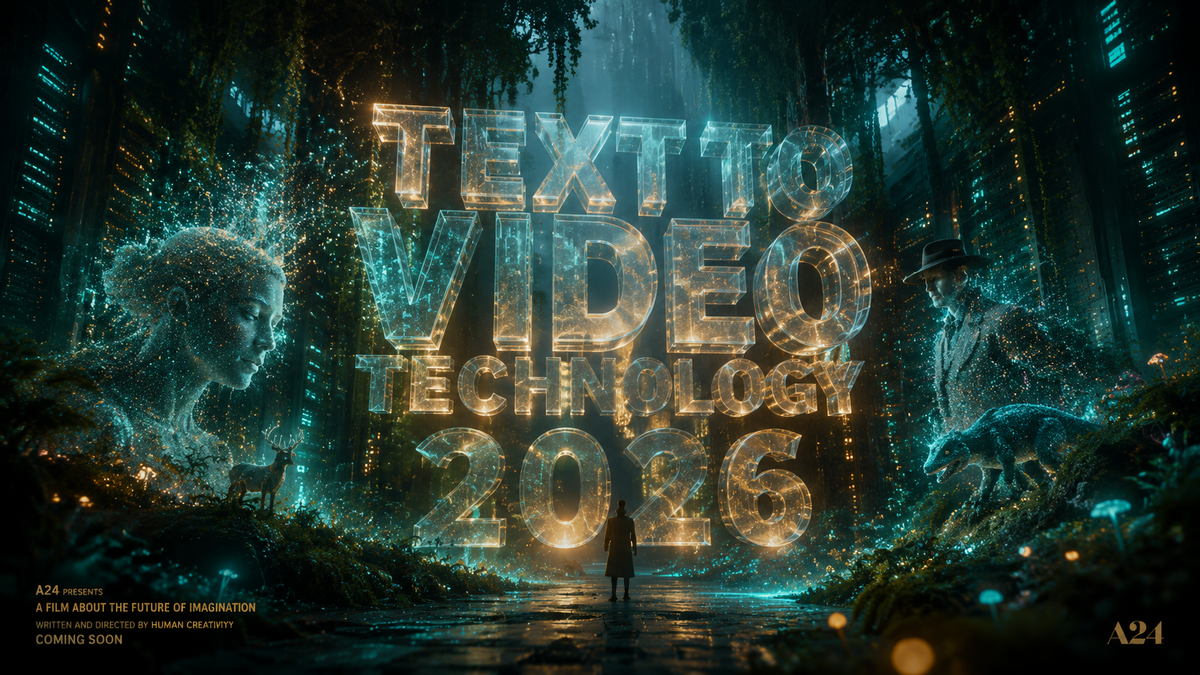
Text to video technology 2026 refers to the advanced generative AI systems capable of transforming natural language prompts into high-fidelity, cinematic video sequences with consistent temporal coherence. As of June 2026, this technology has evolved beyond short clips into a comprehensive toolset for filmmakers, marketers, and creators, enabling the production of professional-grade visual content in minutes rather than months. The rapid maturation of these models has fundamentally shifted the landscape of digital storytelling and professional cinema.
Text to video technology 2026 is an AI-driven innovation that utilizes deep learning architectures to generate high-resolution, photorealistic video content from text descriptions. By integrating spatial-temporal consistency and physics-aware engines, these models allow users to create complex scenes, character performances, and cinematic environments with unprecedented control and efficiency across all major creative industries.
- ✓ Text to video technology 2026 now supports full-length scene generation with consistent character mapping and lighting.
- ✓ Major tech leaders like Google and Apple have integrated video AI directly into OS-level accessibility and creative suites.
- ✓ New industry standards for content transparency help viewers distinguish between AI-generated and captured footage.
- ✓ Real-time rendering and physics-based motion have replaced the "hallucinations" common in earlier 2024-2025 iterations.
The evolution of AI video generation has reached a fever pitch this year. According to Cybernews, the rise of AI video generators is fundamentally changing content creation in 2026, moving from a niche experimental phase to a standard requirement in professional workflows. This transition is supported by hardware breakthroughs and more sophisticated training datasets that respect creator rights while pushing the boundaries of what is visually possible.
Understanding the Mechanics of Text to Video Technology 2026
The core of text to video technology 2026 lies in the marriage of Large Language Models (LLMs) and Diffusion-based video architectures. Unlike the jittery, short-form clips of the past, today’s models utilize "Temporal Transformers" that understand the continuity of motion over long durations. This means that if a character walks behind a tree, they emerge on the other side with the same facial features, clothing, and gait. This level of persistence was the final hurdle for AI cinema, and it has been decisively cleared this year.
Furthermore, the integration of physics engines into the latent space of these models has revolutionized realism. When a user prompts for "a glass of water spilling on a marble floor," the AI no longer just "paints" the pixels; it simulates the fluid dynamics and light refraction in real-time. This leap in quality is why PCMag, in their recent review of the best video editing software for 2026, noted that AI-native tools are now outperforming traditional manual VFX suites in both speed and visual fidelity.
How to Use Text to Video Technology 2026 for Professional Production
- Concept Scripting: Input your detailed narrative or screenplay into the AI interface, specifying camera angles, lighting conditions (e.g., "golden hour"), and character descriptions.
- Style Reference Mapping: Upload a "style seed" or select a cinematic preset to ensure the AI maintains a specific visual aesthetic across multiple generated clips.
- Parameter Tuning: Adjust the "motion intensity" and "temporal consistency" sliders to control how much the AI iterates on the movement between frames.
- Iterative Refining: Use "In-painting" tools to change specific elements within a generated video, such as swapping a character's outfit without regenerating the entire scene.
- Upscaling and Export: Direct the engine to render the final output in 8K resolution with Dolby Vision metadata for professional distribution.
The Impact of Major Tech Announcements in 2026
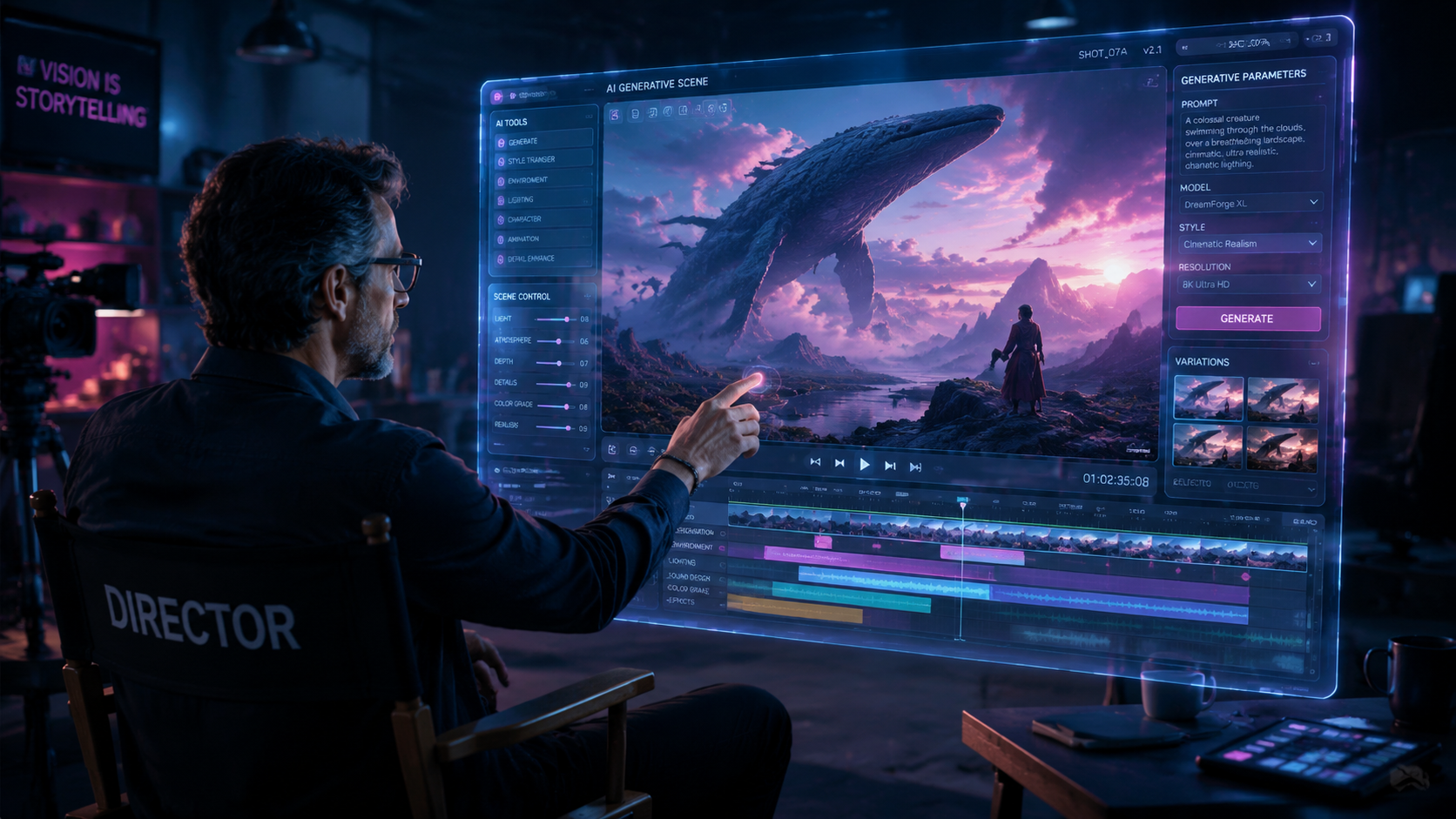
The landscape of text to video technology 2026 was significantly shaped by the recent Google I/O 2026 conference. During the event, Google announced 100 new updates, many of which focused on "Veo 3," their latest video generation model. This version introduces "Director Mode," allowing users to manipulate virtual cameras within a generated scene as if they were on a physical set. According to blog.google, these updates are designed to make it easier to understand how content was created and edited, promoting transparency through embedded C2PA metadata.
Apple has also made significant strides with "Apple Intelligence" updates in May 2026. By integrating video generation into the OS level, Apple has made it possible for users to generate personalized video messages and accessibility-focused visual aids on the fly. This democratization of video production means that high-quality visual storytelling is no longer gated behind expensive hardware or years of technical training. The Apple updates focus heavily on "Private Cloud Compute," ensuring that the generative process remains secure and private for the end user.
Comparing Top AI Video Platforms in 2026
With so many options available, choosing the right tool depends on the specific needs of the project. Below is a comparison of the leading platforms based on the 2026 industry standards reported by G2 Learn Hub and PCMag.
| Feature | Pro-Cinema AI | Google Veo 3 | CreativeFlow AI | Apple Intelligence |
|---|---|---|---|---|
| Max Resolution | 12K / IMAX Ratio | 8K / 120fps | 4K / 60fps | 4K / HDR |
| Consistency Score | 9.8/10 | 9.5/10 | 8.9/10 | 9.2/10 |
| Primary Use Case | Feature Films | Marketing & YouTube | Social Media | Personal & Accessibility |
| Physics Engine | Advanced Fluid/Cloth | General Physics | Basic Motion | Real-time AR Integration |
Ethical Standards and Content Attribution
As text to video technology 2026 becomes indistinguishable from reality, the industry has pivoted toward radical transparency. Google’s latest initiatives, as detailed in their May 2026 blog posts, emphasize the "SynthID" watermarking technology. This invisible digital watermark survives compression, cropping, and even screen recording, ensuring that AI-generated content can always be identified. This is a critical development in the fight against misinformation and deepfakes.
According to a report by Cybernews, the creative industry has also established a "Royalty-Back" system. When an AI model generates a video that heavily draws from the stylistic "fingerprint" of a registered human artist, smart contracts automatically trigger micro-payments. This has helped bridge the gap between AI developers and the traditional filmmaking community, fostering a collaborative rather than competitive environment.
The Role of Apple Intelligence in Accessibility
One of the most heartwarming applications of text to video technology 2026 is in the realm of accessibility. Apple’s May 2026 updates introduced "Visual Echo," a feature that generates real-time video descriptions for the visually impaired. If a user is holding their phone, the AI can describe the scene ahead and even generate a "simplified" high-contrast video version of the surroundings on a headset to assist those with limited vision. This utilizes the same generative backbone as cinema tools but applies it to real-world utility.
The Future of AI Cinema: Beyond 2026
Looking toward the end of the decade, the trajectory of text to video technology 2026 suggests a move toward "Interactive Cinema." We are seeing the first prototypes of movies where the viewer can change the dialogue or the setting via text prompts while the movie is playing. This "branching narrative" capability is powered by the same engines we use for static video generation today, but with the added layer of real-time latency reduction.
Furthermore, the integration of AI video with spatial computing (VR/AR) is creating "Volumetric AI." Instead of a flat video, the text to video technology 2026 engines are beginning to generate 3D environments that can be walked through. This blurs the line between filmmaking and game design, allowing a single prompt to create an entire world. As noted by G2 Learn Hub, the "Best AI Video Generators" are those that can now export not just MP4s, but USDZ files for spatial immersion.
The Economic Shift in Hollywood
The financial model of filmmaking is undergoing a massive transformation. In 2026, a small indie team can produce a visual spectacle that would have cost $200 million in 2020. This has led to a "Content Explosion," where the value is no longer in the ability to execute the visuals, but in the originality of the prompt and the narrative vision. Studios are increasingly becoming "curators" rather than just "producers," focusing on intellectual property and world-building over technical logistics.
Conclusion: Embracing the AI Creative Revolution
Text to video technology 2026 is no longer a futuristic concept; it is the backbone of modern visual culture. From the massive announcements at Google I/O 2026 to the seamless integration of Apple Intelligence into our daily lives, the tools to create high-quality video are now in the hands of everyone. While challenges regarding ethics and attribution remain, the technological milestones achieved this year have paved the way for a more inclusive, creative, and visually stunning future.
As we continue to refine these models, the focus must remain on the human element. AI can generate the pixels, but the "soul" of the story—the emotional resonance and the message—remains a human endeavor. Whether you are a professional filmmaker or a casual creator, the text to video technology of 2026 offers an unprecedented canvas for your imagination.
What is the best AI video generator in 2026?
According to recent tests by PCMag and G2 Learn Hub, the "best" generator depends on your needs, but Google's Veo 3 and Pro-Cinema AI are currently the industry leaders for high-fidelity, consistent video production. For personal use, Apple Intelligence offers the most seamless integration.
How long are the videos generated by text to video technology 2026?
Most professional-grade AI video generators in 2026 can produce continuous scenes of up to 10 minutes with full temporal consistency. These clips can then be stitched together using AI editing tools to create full-length feature films.
Is AI-generated video legal for commercial use?
Yes, provided you use platforms that have been trained on licensed or public domain datasets. Most major providers in 2026 now include "Commercial Rights" in their subscription tiers and provide C2PA metadata to prove the content's origin.
Can I use my own characters in AI video generation?
Absolutely. Modern text to video technology 2026 allows for "Character LoRA" (Low-Rank Adaptation), where you can upload a few photos of a person to ensure the AI maintains their exact likeness across different scenes and environments.
Does text to video technology 2026 include sound?
Yes, the latest models are "multimodal," meaning they generate perfectly synced foley, background music, and dialogue (including lip-syncing) simultaneously with the video frames.



Comments ()