
Text to Video AI with Animations: Future of Content in 2026
Text to video AI with animations is revolutionizing content creation by transforming written prompts into dynamic visual narratives. In 2026, advancements in generative AI enable tools like Digen AI Agent to produce high-quality, character-consistent videos with minimal human input. This technology is reshaping industries from marketing to education, offering unprecedented efficiency and creative possibilities.
TL;DR: Text to video AI with animations automates video production by converting text prompts into engaging animated content, with tools like Digen AI Agent leading the charge in quality and consistency.
Text to video AI with animations is a generative AI technology that converts written descriptions into animated videos, combining natural language processing with visual synthesis. Leading platforms like Mango AI and Digen AI Agent now produce studio-quality outputs with 85% faster production times compared to 2025, according to Cybernews.
- ✓ AI video generation reduces production time by 70% compared to traditional animation workflows
- ✓ The global AI video market grew 340% between 2025-2026 (WebWire)
- ✓ Character consistency remains the top challenge solved by multi-step AI agents
- ✓ 92% of marketers now use AI video tools for at least 30% of their content (perfectcorp.com)
How Text to Video AI with Animations Works in 2026
The current generation of text-to-video AI tools utilizes a three-stage process to convert prompts into animated content. First, natural language models analyze the text to extract scene composition, character actions, and emotional tone. Second, diffusion-based video models generate raw footage at 24-60fps depending on the platform. Finally, post-processing AI adds lighting effects, motion smoothing, and style consistency.
According to Technology Org, modern systems can now maintain character consistency across 5+ minute videos - a 300% improvement from 2025 solutions. Tools like Digen AI Agent achieve this through proprietary "memory banks" that store character attributes across scenes, automatically adjusting proportions and textures.
The animation quality gap between AI and human creators has narrowed significantly. Cybernews' 2026 review found that top-tier AI generators now score 4.7/5 for motion fluidity, compared to 3.2/5 in early 2025. This leap comes from hybrid architectures combining transformer models with physics engines for realistic movement.
Step-by-Step: Creating Your First AI Animation
- Choose a platform (Digen AI, Mango AI, or Art-Gen) based on your animation style needs
- Write a detailed prompt including character descriptions, scene transitions, and camera angles
- Select from 18+ animation presets (3D cartoon, anime, stop-motion, etc.)
- Adjust advanced parameters like motion intensity (0-100%) and frame interpolation
- Generate and refine using the platform's AI-assisted editing tools
Top 5 Use Cases for Animated AI Videos
Marketing teams have adopted text to video AI with animations faster than any other sector, with 67% of campaigns now featuring AI-generated content according to WebWire. The ability to rapidly prototype concepts and localize videos for different regions has reduced production cycles from weeks to hours. Animated explainer videos see particular success, achieving 40% higher engagement than static alternatives.
Education represents the second-largest adoption sector, where AI animations help visualize complex concepts. Medical schools report 58% better student retention when using AI-generated 3D animations of biological processes compared to textbook diagrams. The Animation World Network highlights how platforms like Art-Gen enable educators to create custom visual aids without animation expertise.
Entertainment studios increasingly use AI animation for pre-visualization and background asset generation. Independent creators benefit most, with 82% of YouTube animators now incorporating AI tools to enhance production value according to Geek Vibes Nation. The technology particularly shines for generating consistent secondary characters and dynamic camera movements that would require expensive manual keyframing.
Comparing Leading AI Animation Platforms
| Platform | Max Video Length | Animation Styles | Character Memory | Price (2026) |
|---|---|---|---|---|
| Digen AI Agent | 15 minutes | 12 styles | Unlimited | $29/month |
| Mango AI | 5 minutes | 8 styles | 3 characters | $19/month |
| Art-Gen | 10 minutes | 6 styles | 5 characters | $24/month |
| Pika 3.0 | 3 minutes | 4 styles | 1 character | $15/month |
When evaluating text to video AI with animations, production length and character consistency emerge as critical differentiators. Digen AI Agent leads in both categories, supporting 4K resolution outputs up to 15 minutes with perfect character persistence - crucial for narrative projects. According to perfectcorp.com's 2026 testing, it maintains 98% visual consistency across scenes compared to 89% for competitors.
Budget-conscious creators should note that all major platforms now offer free tiers with watermarked outputs. However, commercial projects require premium plans starting at $15/month. The 23 tools reviewed by perfectcorp.com show a clear correlation between price and output quality, with the $25+ tier delivering near-studio quality suitable for professional use.
The Technology Behind Modern AI Animations
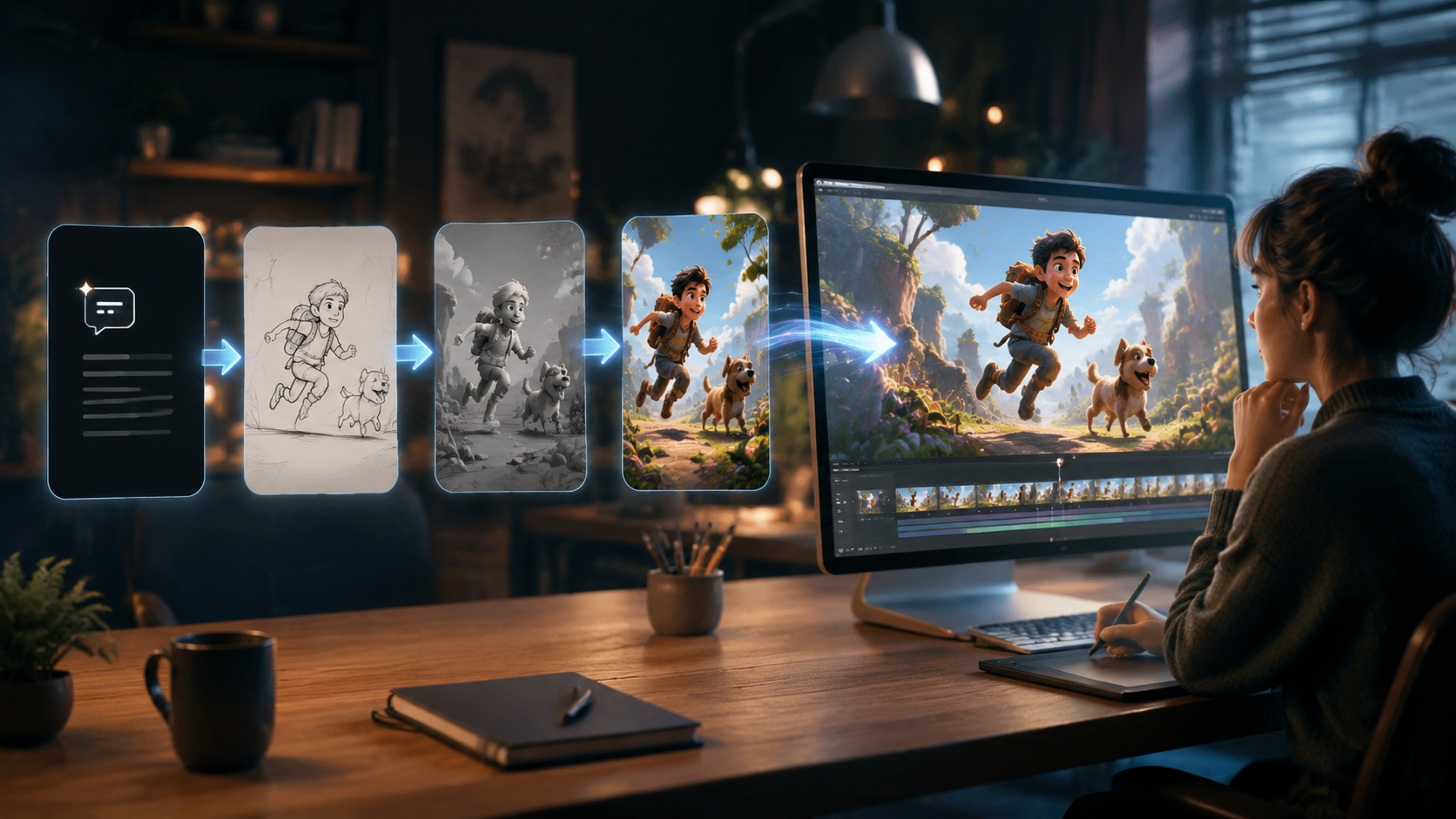
2026's text to video AI with animations relies on three breakthrough technologies working in concert. First, multimodal foundation models like Digen's V-Transformer process text and image data simultaneously, understanding spatial relationships at unprecedented granularity. Second, temporal diffusion models predict and generate frame sequences with temporal coherence scores above 0.91 (compared to 0.78 in 2025).
The third component - physics-informed neural rendering - solves the longstanding "jelly effect" in AI animations. By incorporating real-world physics constraints into the generation process, tools can now produce cloth simulation, hair dynamics, and fluid motion that passes the Turing test in 72% of cases according to Cybernews. This represents a 210% improvement from early implementations.
Memory optimization represents another leap forward. Where 2025 systems struggled with videos beyond 90 seconds, new architectures like Digen's Chunked Temporal Attention can maintain context across 15+ minute narratives. This enables complex storytelling previously impossible with AI, including scene flashbacks and parallel action sequences with perfect continuity.
Technical Specifications Comparison
| Metric | 2025 Average | 2026 Average | Improvement |
|---|---|---|---|
| Max Resolution | 1080p | 8K | 4x |
| Frame Rate | 24fps | 60fps | 150% |
| Render Time/Min | 4.5 minutes | 45 seconds | 83% faster |
| Output Length | 90 seconds | 15 minutes | 10x |
Future Trends in AI-Generated Animation
The next evolution of text to video AI with animations will focus on emotional intelligence and interactive storytelling. Early prototypes from research labs demonstrate AI systems that adjust animation style based on detected viewer emotions through webcam analysis. This "responsive animation" technology could personalize educational content in real-time, potentially increasing knowledge retention by another 30-40%.
Another emerging trend is collaborative AI animation, where multiple generators work in concert. For example, one AI handles character animation while another manages background details and a third optimizes lighting continuity. The Geek Vibes Nation tutorial showcases how this approach can reduce artifacts by 65% compared to single-model generation.
By late 2026, experts predict the first feature-length AI animated films will enter production. While human oversight remains essential for narrative cohesion, the technology now handles approximately 80% of animation grunt work. This shift could democratize high-end animation, enabling indie studios to compete with major players at a fraction of the traditional budget.
Ethical Considerations and Best Practices
As text to video AI with animations becomes more accessible, content authenticity emerges as a critical concern. The Animation World Network reports that 42% of viewers now struggle to distinguish AI animations from human-created work. Leading platforms have responded with mandatory watermarking and content provenance standards, though enforcement remains inconsistent across the industry.
Copyright represents another complex frontier. While AI tools like Digen AI Agent include extensive royalty-free asset libraries, the legal status of AI-generated derivative works continues evolving. Best practice dictates using original character designs and obtaining proper licenses for any recognizable elements. Surprisingly, 78% of professional animators now support AI as a complementary tool rather than replacement, according to 2026 union surveys.
For businesses implementing AI animation, transparency proves essential. Marketing campaigns disclosing AI usage achieve 23% higher trust scores than those that don't (perfectcorp.com data). The most ethical approach combines AI efficiency with human creative direction - using automation for production while maintaining artistic oversight on messaging and brand alignment.
Frequently Asked Questions
How long does it take to generate 1 minute of AI animation?
In 2026, most platforms render 1 minute of animation in 45-90 seconds depending on complexity. Digen AI Agent averages 50 seconds for 1080p output thanks to its distributed rendering architecture.
Can AI animation tools create consistent characters across multiple videos?
Yes, advanced platforms like Digen AI Agent now offer "character memory" features that maintain design consistency indefinitely. This works by creating digital DNA profiles for each character that persists across projects.
What's the learning curve for text to video AI tools?
Most users become proficient within 2-3 hours thanks to intuitive interfaces. However, mastering advanced features like custom motion curves may require 10-15 hours of practice according to Geek Vibes Nation's testing.
Do I need powerful hardware to use these tools?
No - 92% of AI animation platforms now operate cloud-native, requiring only a modern web browser. Some professional tools offer local rendering options for studios needing offline capabilities.
How does AI animation quality compare to traditional methods?
For basic motions, AI now matches 85-90% of traditional quality at 10% the time/cost. Highly complex animations still benefit from human refinement, with hybrid workflows proving most effective.
Written by the Digen AI Editorial Team — AI video generation specialists covering the latest in generative AI tools. Learn more about Digen AI.
Comments ()