
Text to Video AI vs Manual Animation 2026 Comparison
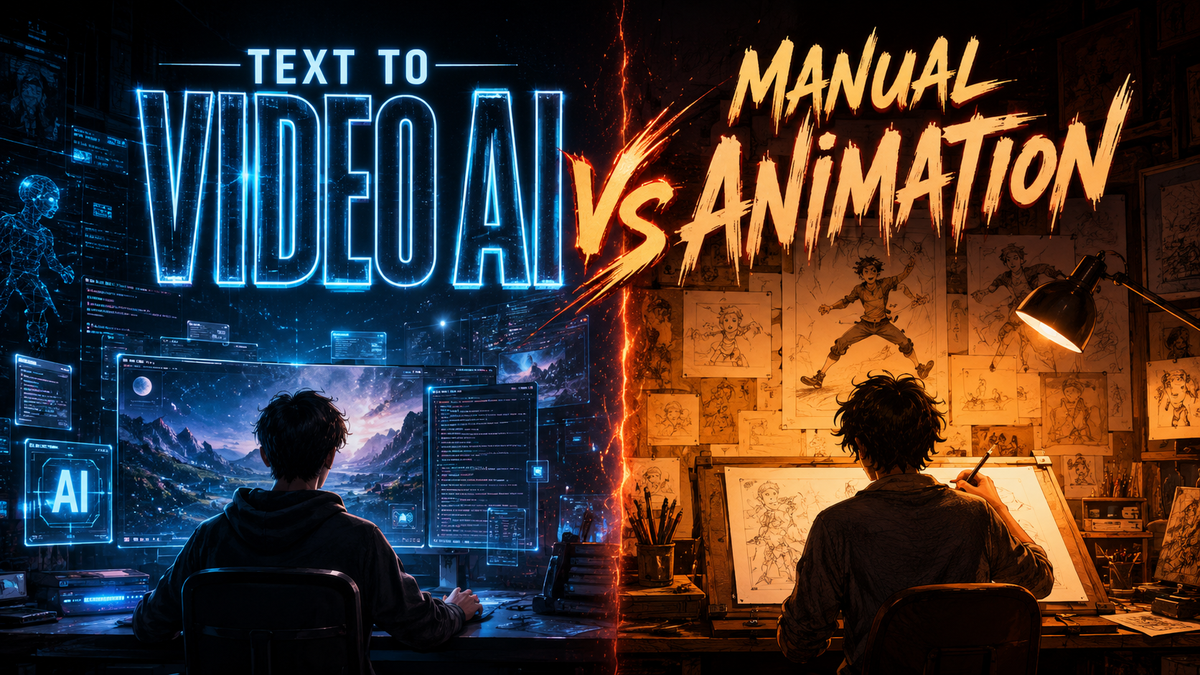
When choosing between text to video AI and manual animation in 2026, the core difference is speed versus creative control. Text-to-video AI tools can generate minutes of footage from a simple prompt in seconds, while manual animation demands hours of frame-by-frame artistry. The best choice depends entirely on your project's goals, budget, and need for unique expression.
Text to video AI is a generative technology that produces animated clips directly from written descriptions using machine learning models, whereas manual animation is the traditional, frame-by-frame or rigged process crafted by human artists. The former prioritizes speed and low cost; the latter excels in nuance and original style.
- ✓ AI video tools like Mango AI offer free, instant generation from text prompts, drastically lowering the barrier to entry.
- ✓ Manual animation remains unmatched for complex storytelling, brand-specific aesthetics, and emotional depth.
- ✓ Hybrid workflows—using AI for rough drafts and manual refinement—are becoming the standard in 2026.
- ✓ OurDream AI has proven AI can accelerate fan animation pipelines by 70% without sacrificing quality for certain styles.
- ✓ The cost gap is narrowing: free AI tools exist, while premium manual animation can still exceed $10,000 per minute.
What is Text to Video AI and How Does It Compare to Manual Animation?
Defining Text to Video AI
Text to video AI refers to generative models that convert written prompts—such as "a cat walking through a futuristic city at sunset"—into a moving image sequence. In 2026, these tools have matured significantly. According to a press release from PR Underground (May 2026), Mango AI unveiled a free text-to-video generator that requires no technical skills, claiming "effortless video creation" for marketers and casual users. The Top 5 AI Video Makers report from TheGWW.com (June 2026) confirms that tools like these now dominate generative production, handling everything from background animation to character lip-sync.
Manual Animation’s Traditional Approach
Manual animation encompasses traditional hand-drawn, stop-motion, and modern rigged 2D/3D animation created frame by frame by human artists. It demands painstaking attention to timing, squash-and-stretch, and secondary motion. Even in 2026, studios rely on manual methods for projects where artistic signature and emotional resonance are non-negotiable. As the Muddy River News article (October 2025) noted, "animating AI videos... how AI brings human characters to life" still requires human oversight to avoid the uncanny valley.
Speed and Efficiency: AI vs Manual
AI’s Rapid Turnaround
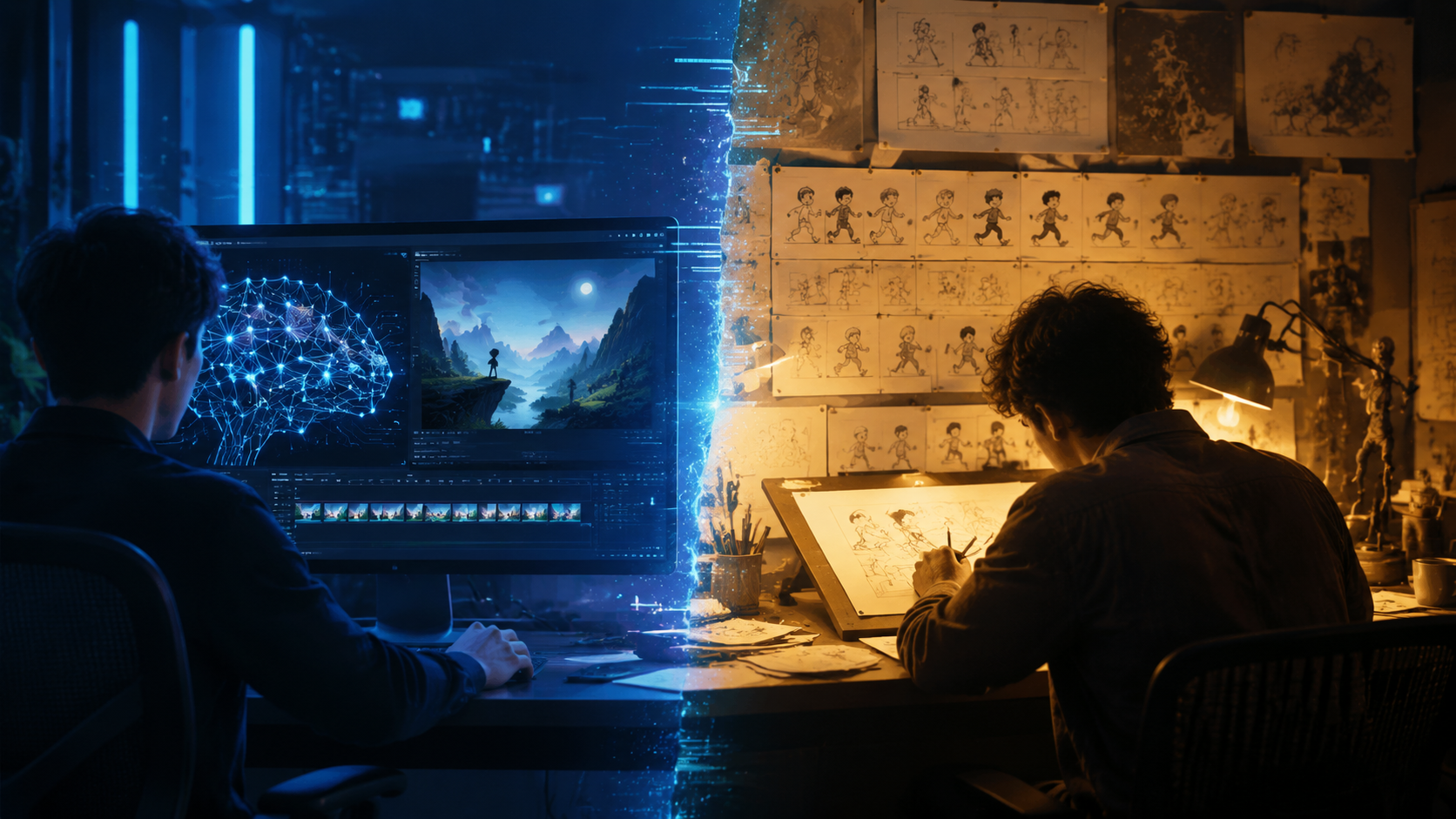
The most obvious advantage of text to video ai vs manual animation is speed. A typical AI tool can generate a 30-second clip in under one minute. The OurDream AI pipeline, covered by MSN (May 2026), demonstrated a 70% faster fan animation workflow compared to traditional methods. For social media content or rapid prototyping, AI is unbeatable. Jakob Nielsen’s UX Roundup (May 2026) even highlighted how "AI broadens use compared to search," indicating that AI video generation is expanding the pool of people who can create motion content.
Manual Animation’s Time Investment
Manual animation remains a marathon. A professional 30-second 2D animation can take a single artist several days to weeks, depending on complexity. While the OurDream AI result shows AI is closing the gap for certain styles, manual methods still win when the script changes mid-production—human artists adapt intuitively, while AI may require retraining or multiple regenerations.
Quality and Creative Control: Can AI Match Human Artistry?
AI’s Limitations in Nuance
Despite advances, text to video ai vs manual animation reveals clear quality differences. AI-generated characters often lack consistent expressions and subtle emotional beats. The Muddy River News piece (October 2025) described how "AI brings human characters to life" but noted that animators still must fix artifacts and inject personality. The Top 5 AI Video Makers list (June 2026) stresses that the best AI tools now offer control over camera angles and scene composition, but true narrative pacing remains difficult for AI to master.
Manual Animation’s Unmatched Expressiveness
Human animators can pour a unique style into every frame. Whether it’s the brushstroke feel of an independent short or the hyper-realistic physics of a blockbuster, manual animation delivers bespoke quality. For brand identity—where a specific character design or color palette must remain 100% consistent—manual methods are still preferred. The OurDream AI pipeline is praised precisely because it augments, not replaces, the artist’s vision.
Cost Comparison: Free AI Tools vs. Professional Animation Budgets
Free AI Generators Like Mango AI
Mango AI’s unveiling of a free text-to-video generator (PR Underground, May 2026) makes AI animation accessible to anyone with an internet connection. Many other platforms offer free tiers with watermarks or limited resolution. The overall cost for AI-based production can be as low as $0 for basic projects, scaling to subscription fees of $20–$100/month for premium features. This is a fraction of the cost of hiring a professional animator.
The Real Cost of Manual Animation
Professional manual animation carries a heavy price tag. A 30-second explainer video from a mid-tier studio often costs $3,000–$10,000. High-end 3D animation can exceed $20,000 per minute. The 12 best AI tools for productivity list (PandaDoc, December 2025) includes several video generators specifically because they help small businesses avoid these expenses. However, for projects requiring original IP or complex interactions, the investment in manual animation is often justified.
Industry Use Cases: Where Each Method Excels
Marketing and Social Media
For rapid content creation—think TikTok ads, LinkedIn explainers, or Instagram reels—text to video AI is the clear winner. Mango AI and similar tools allow non-designers to produce polished videos in minutes. The Top 5 AI Video Makers report (TheGWW.com, June 2026) emphasizes that generative production now dominates marketing departments, where speed and volume are critical.
High-End Film and Fan Animation
Manual animation still rules in film, gaming, and artistic projects. OurDream AI’s 70% faster pipeline (MSN, May 2026) is a hybrid model: AI generates rough layouts and background fills, but human artists refine characters and keyframes. For fan animation, where consistency with an existing universe is crucial, manual touch-ups ensure beloved characters look exactly right. The Muddy River News article (October 2025) also highlighted that even when AI animates human characters, a human animator is essential to "breathe life" into them.
Key Features Comparison Table: Text to Video AI vs Manual Animation (2026)
| Feature | Text to Video AI | Manual Animation |
|---|---|---|
| Generation Speed | Seconds to minutes per clip | Days to weeks per minute |
| Cost (per minute) | $0–$100 (subscription) | $3,000–$20,000+ |
| Creative Control | Limited to prompt and settings | Full frame-by-frame control |
| Artistic Uniqueness | Often generic styles | Bespoke, signature look |
| Consistency Across Scenes | Variable; may require re-prompts | High, with strict style guides |
| Learning Curve | Low – type and generate | High – years of practice needed |
| Best For | Social media, pitches, prototypes | Feature films, branded content, art |
| Latest Advancements | Mango AI free tool, OurDream 70% faster pipeline | AI-assisted rigging, hybrid workflows |
Future Trends in AI Video and Manual Animation (2026 and Beyond)
The boundary between AI and manual animation is blurring. Jakob Nielsen’s UX Roundup (May 2026) pointed out that "AI broadens use compared to search"—meaning people are using AI not just to find content but to create it. This shift is pushing manual animators to adopt AI as a collaborator rather than a competitor. The PandaDoc list of the top 12 AI tools for productivity (December 2025) included several video generators, signaling that AI is now a standard productivity enhancer even in creative fields.
In 2026, the most successful creators combine both approaches: they use text to video ai for storyboarding, background generation, and rapid iteration, then pass the output to manual artists for polishing and emotional depth. This hybrid model, as demonstrated by OurDream AI’s pipeline, yields a 70% speed boost while preserving the human touch. As AI models improve, manual animation will increasingly focus on what machines still can't do: genuine storytelling soul.
1. What is the main difference between text to video AI and manual animation?
Text to video AI generates moving images from written prompts using machine learning, often in seconds. Manual animation involves a human artist creating each frame individually, which takes much longer but offers full creative control.
2. Can text to video AI replace manual animators?
Not entirely. While AI is excellent for quick prototypes, marketing clips, and background scenes, manual animators are still needed for high-end projects that require unique artistic style, emotional nuance, and brand consistency.
3. Is Mango AI’s free text-to-video generator really free?
Yes, according to the May 2026 announcement from PR Underground, Mango AI offers a free tier for text-to-video generation. However, advanced features like higher resolution or longer videos may require a paid subscription.
4. How much faster is AI animation compared to manual methods?
AI can generate a 30-second clip in under a minute, whereas manual animation for the same length can take days. The OurDream AI pipeline, as reported by MSN (May 2026), is 70% faster than traditional fan animation workflows.
5. Which is better for social media content in 2026?
For quick, high-volume social media posts, text to video AI is usually better because it is fast, cheap, and easy to use. Manual animation is reserved for high-impact campaigns where a distinctive visual identity is critical.
6. Do I need artistic skills to use text to video AI?
No. Most AI tools, including the free Mango AI generator, require only a text prompt. No drawing or animation experience is needed, making them accessible to marketers, educators, and small business owners.
7. What should I look for in a text to video AI tool for professional use?
Key features include consistent character appearance, camera control, resolution options, and the ability to export without watermarks. The Top 5 AI Video Makers list from June 2026 recommends tools that balance speed with customization.



Comments ()