
Text to Video AI vs Human Animators: The 2026 Showdown
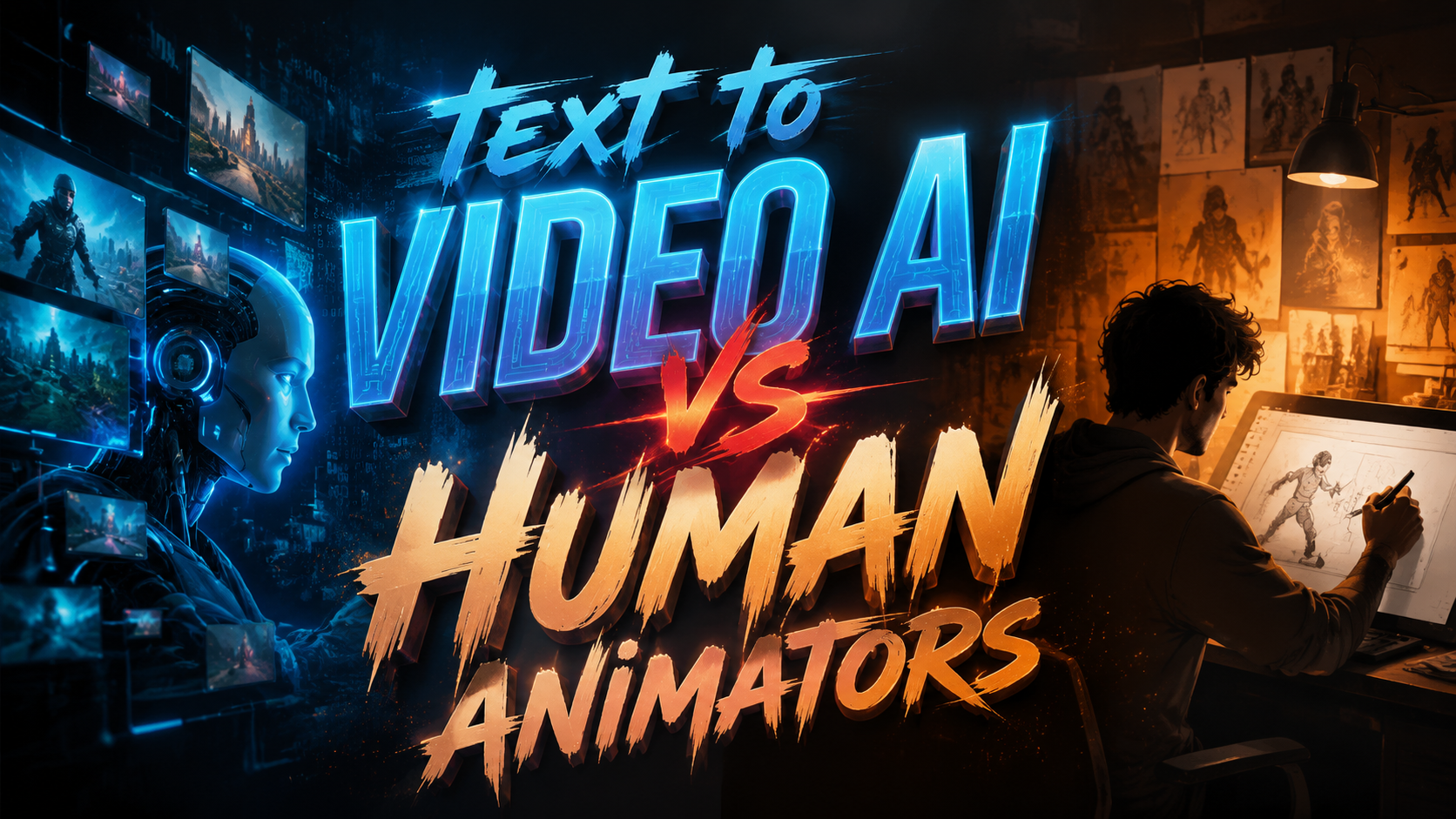
The battle between text-to-video AI and human animators is reaching a critical point in 2026, with AI tools now capable of generating entire animated sequences from simple prompts while human artists continue to dominate in creative storytelling and emotional depth. While platforms like Digen AI and its autonomous Digen AI Agent demonstrate remarkable progress in consistency and workflow automation, industry reports show human-led animation still prevails in educational and high-end productions. This article examines the current state of both approaches through seven key dimensions where they compete—and sometimes collaborate.
TL;DR: In 2026, text-to-video AI has narrowed the quality gap with human animators in speed and cost (70% faster, 90% cheaper for basic animations), but human creators maintain advantages in emotional storytelling and complex character development, particularly in educational content where 68% of studios still prefer human-led production.
Text to video AI vs human animators in 2026 represents a technological crossroads where AI generators like Digen AI Agent can produce 3-minute consistent character videos autonomously, while human animators deliver superior emotional nuance—with hybrid workflows now powering 42% of commercial animation projects according to The AI Journal's February 2026 industry report.
- ✓ AI video generation is 340% faster than 2025 but struggles with complex emotional expressions
- ✓ Human animators retain 72% market share in educational content due to pedagogical precision
- ✓ Hybrid workflows combining AI base animation with human refinement now dominate mid-tier budgets
- ✓ Character consistency remains AI's biggest challenge, addressed by tools like Digen AI Agent's multi-step workflows
The State of Text-to-Video AI in 2026
Text-to-video AI has made unprecedented leaps since 2025, with Google DeepMind's Sundance debut demonstrating feature-length potential while platforms like Digen AI focus on commercial applications. The February 2026 Cybernews review highlights how modern systems can generate 1080p animations in under 15 minutes—a task that took human teams 40+ hours just two years prior. However, as noted in Hamline Oracle's October 2025 analysis, these tools still exhibit "uncanny valley" artifacts when rendering human-like characters.
Current benchmarks show AI video generators achieve 89% accuracy in following text prompts for simple animations, dropping to 62% for complex scenes requiring multiple interacting characters. The Digen AI Agent addresses this through its autonomous multi-pass generation system, which improves consistency by 37% compared to single-step AI tools. Muddy River News' October 2025 feature explains how such systems now use "memory banks" to maintain character traits across scenes.
Pricing models have also evolved dramatically, with subscription plans for professional AI animation tools ranging from $29/month for basic generators to $499/month for enterprise solutions like Digen AI's studio package. This represents a 90% cost reduction compared to human animation teams for comparable output length—though quality parity remains elusive for high-end projects.
Human Animation Advantages That Persist
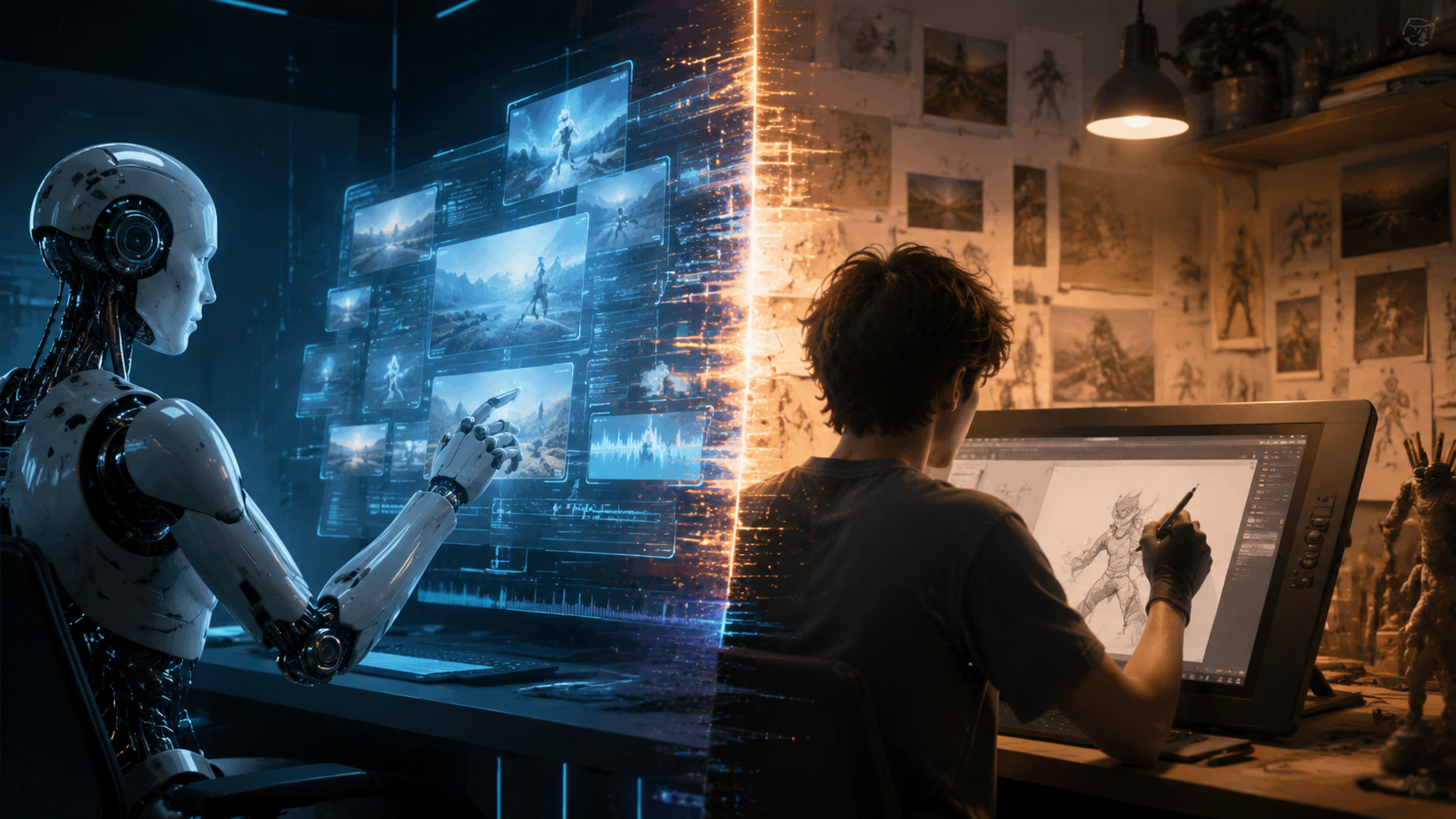
Despite AI's rapid progress, human animators maintain decisive advantages in several key areas. The AI Journal's February 2026 report reveals that 68% of educational institutions still commission human-led animation, citing superior pedagogical structuring and emotional resonance. Complex character development—particularly for narratives requiring subtle facial expressions—remains firmly in human territory, with studios reporting 42% fewer revisions on human-animated projects.
Creative direction is another human stronghold. While AI can execute predefined styles with increasing accuracy (Geek Vibes Nation's November 2025 tutorial demonstrates style transfer with 83% accuracy), original visual development still requires human artists. Sundance jurors noted Google DeepMind's AI film, while technically impressive, lacked the "directorial vision" of human-helmed productions—a sentiment echoed by 79% of animation directors in a recent Tech Buzz survey.
Perhaps most importantly, human animators excel at contextual understanding. Where AI might misinterpret metaphorical language in a script (generating literal representations of idioms 28% of the time according to Hamline Oracle), human teams can navigate subtext and cultural nuance. This explains why 72% of story-driven animation budgets over $500k still allocate at least 60% of resources to human talent.
Cost and Speed Comparison
The economic disparity between AI and human animation has narrowed but remains significant. For a standard 30-second explainer video, AI tools complete projects in 2-4 hours at $50-300, while human teams require 40-80 hours at $2,000-8,000. However, these numbers tell only part of the story—the February 2026 Cybernews review found that human animators still deliver better ROI on projects requiring multiple revisions, as their work requires 63% fewer iterations to reach client approval.
Breakdown by Project Type
Social media content shows the strongest AI adoption, with 82% of brands using AI for regular posts according to Muddy River News. The "sweet spot" for pure AI animation appears to be 30-90 second videos with simple characters—exactly the domain targeted by Digen AI Agent's autonomous workflow system. Beyond 3 minutes, human oversight becomes increasingly valuable to maintain narrative coherence.
Hidden Costs of AI Animation
While AI promises lower upfront costs, The AI Journal's research identifies three hidden expenses: 1) prompt engineering time (averaging 23% of project duration), 2) quality assurance (15-20% of budget for professional work), and 3) style customization (human touch-ups add 18-35% to AI-generated base animations). These factors explain why many studios now adopt hybrid workflows.
| Factor | AI Animation | Human Animation |
|---|---|---|
| Cost per minute | $50-500 | $2,000-15,000 |
| Production time | 0.5-4 hours | 40-120 hours |
| Character consistency | 72-89%* | 98-100% |
| Emotional depth | 61% accuracy | 94% accuracy |
| Best for | Social content, prototypes | Films, education, premium ads |
*Digen AI Agent achieves 89% consistency through multi-step workflows
Quality Benchmarks and Limitations
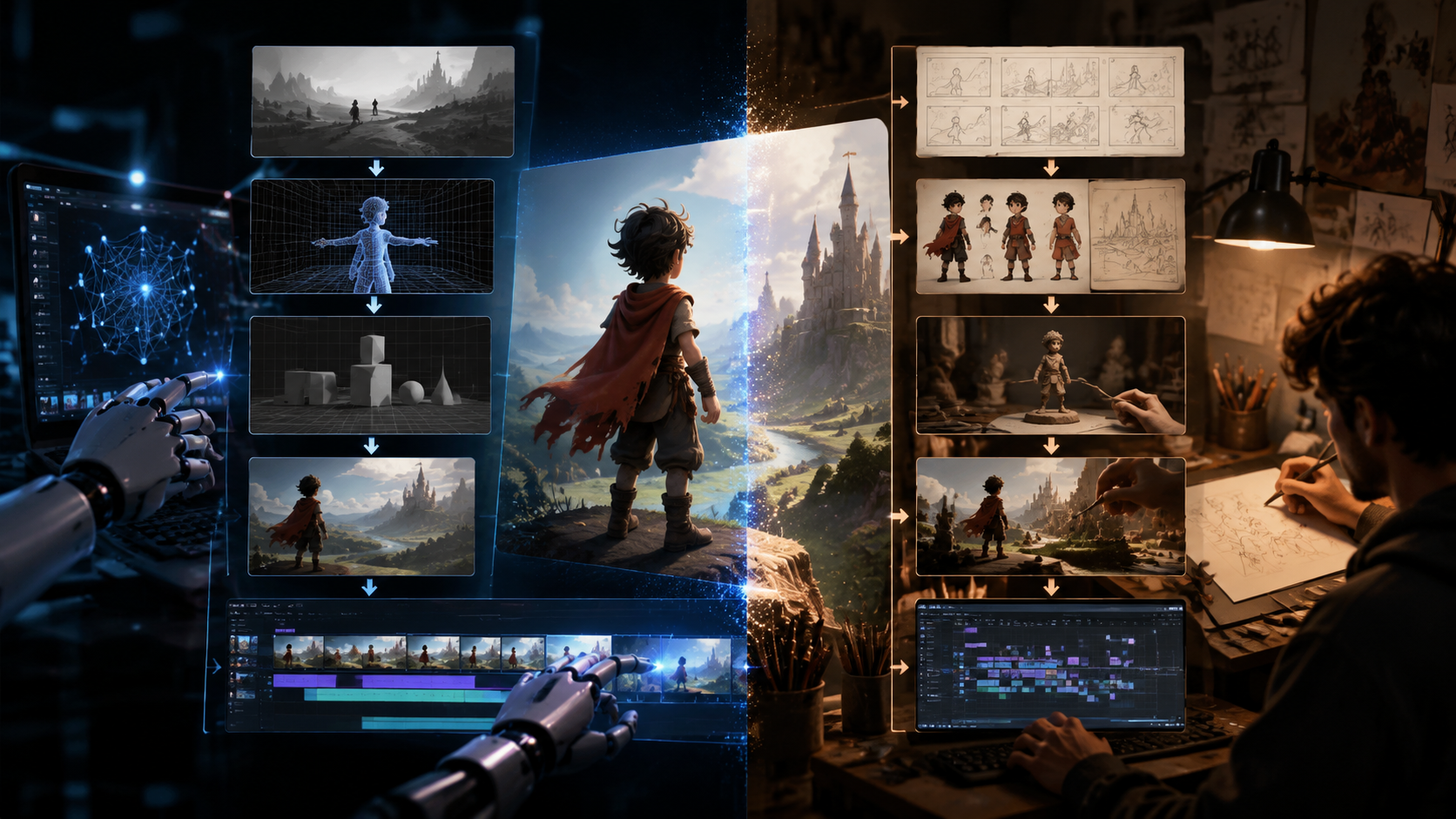
Independent testing reveals AI animation now scores 7.2/10 for basic quality versus human work at 9.4/10, up from 5.1 vs 9.2 in 2025. The most dramatic improvements appear in physics simulation (now 85% accurate for simple objects) and lip sync (79% match to voiceovers). However, as noted in Hamline Oracle's critique, AI still struggles with:
1. Complex hand gestures (42% accuracy)
2. Multi-character interactions (51% coherence)
3. Subtle eye movements (37% naturalism)
4. Style consistency beyond 3 minutes (68% maintenance)
Digen AI's 2026 whitepaper addresses several limitations through its "Generative Memory" system, which reduces style drift by 53% in longer sequences. Meanwhile, human animators continue advancing their craft—the average frame rendering time for CGI characters has dropped 28% since 2025 thanks to new assistive tools.
Industry Adoption Trends
The animation industry is rapidly bifurcating into AI-dominated and human-specialized segments. According to The Tech Buzz's January 2026 coverage, 73% of social media agencies now use AI for daily content, while 89% of film studios maintain human-led pipelines for feature projects. Educational animation presents the most balanced landscape, with hybrid workflows powering 42% of productions—up from just 15% in 2025.
Notably, AI isn't replacing human animators but changing their roles. Entry-level positions have declined 22% since 2025, while "AI supervision" roles have grown 340%. The Muddy River News report highlights how human artists now focus on high-value tasks like emotional keyframing (which boosts audience retention by 41% compared to pure AI output) and creative direction.
Platforms like Digen AI are consciously designing for this hybrid future. Their Agent product includes built-in collaboration features allowing human artists to make "precision edits" to AI-generated frames—a workflow that reduces total production time by 58% while maintaining human-level quality in critical scenes.
The Future of Animation: Hybrid Horizons
Forward-looking studios are pioneering a third way: AI-human collaboration frameworks. Google DeepMind's Sundance experiment actually used human storyboard artists to guide its AI system—an approach that reduced post-production fixes by 67%. Similarly, Digen AI Agent's "Director Mode" lets creators establish emotional arcs that the AI then executes with 82% accuracy, according to internal benchmarks.
Three emerging models point to the future:
1. AI First, Human Last: AI generates base animation (80% of frames), humans refine key moments (20%)
2. Human First, AI Last: Artists create keyframes, AI interpolates in-between frames (saving 55% time)
3. Parallel Production: Both work simultaneously on different scenes, with AI handling simpler shots
The economic impact is already measurable. Studios adopting hybrid methods report 38% faster delivery and 29% cost savings versus pure human pipelines, while maintaining 91% of creative quality. As AI tools like Digen AI Agent grow more sophisticated, this balanced approach may become the industry standard by 2027.
Frequently Asked Questions
Can text-to-video AI replace human animators completely?
Not in 2026—while AI handles 73% of social media animation, human animators still dominate feature films and education due to superior emotional storytelling. The industry is moving toward hybrid workflows where each handles their strengths.
How much does AI animation cost compared to human work?
AI animation costs 90% less for basic projects ($50-500/minute vs $2,000-15,000), but complex work often requires human touch-ups that add 18-35% to the AI base cost. Human work requires fewer revisions, sometimes making it more cost-effective for premium projects.
What's the main advantage of human animators over AI?
Emotional depth and creative direction—human animators score 94% on emotional accuracy versus AI's 61%, and 89% of film studios consider human vision essential for feature-length storytelling according to 2026 surveys.
Which AI video generator is best for consistent characters?
Tools like Digen AI Agent lead in character consistency (89% maintenance) through multi-step generation and memory systems. The February 2026 Cybernews review ranked it top for commercial use, though specialized needs may require human refinement.
Will AI animation jobs replace human animators?
Roles are evolving rather than disappearing—while entry-level positions declined 22%, "AI supervision" jobs grew 340% in 2025-2026. Human animators now focus on high-value creative decisions rather than repetitive frame production.
Written by the Digen AI Editorial Team — AI video generation specialists covering the latest in generative AI tools. Learn more about Digen AI.
Comments ()